The Aztecs
 78
78

The Aztecs
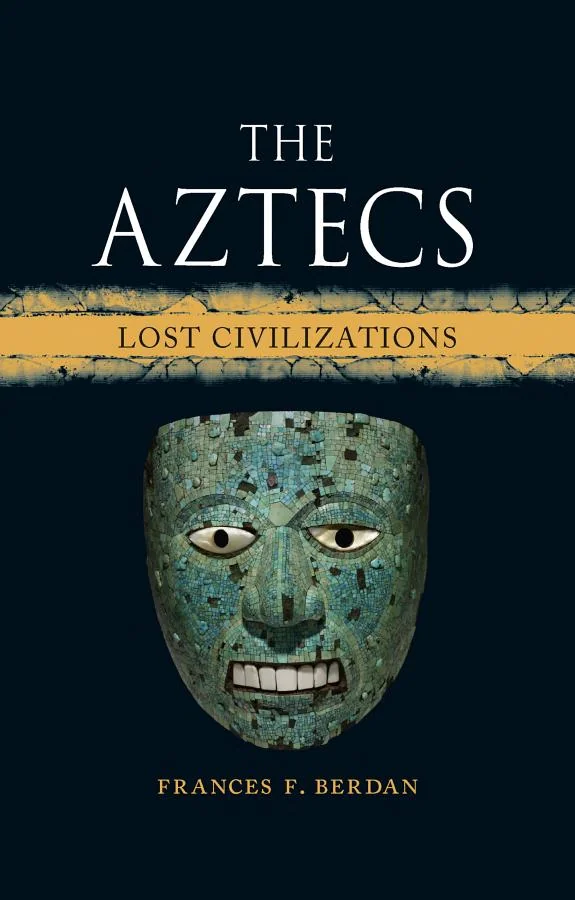
Frances F. Berdan’s "The Aztecs" offers a meticulously researched and surprisingly detailed portrait of this foundational Mesoamerican civilization. Rather than relying on sensationalism, Berdan focuses on the intricate societal structures, the mechanics of empire, and the intellectual life of the Aztecs. One particular strength is the careful exposition of their scientific and artistic achievements, effectively challenging outdated stereotypes. The section on palace life and etiquette, for instance, reveals a level of social refinement often overlooked. If there's a limitation, it's that the sheer density of information, while valuable, might occasionally feel overwhelming for the casual reader seeking a more narrative flow. However, the factual depth is undeniable. Berdan provides a grounded, scholarly account that illuminates the complexities of Aztec society.
📝 Description
78
Frances F. Berdan's 1989 book moves beyond simplistic portrayals of Aztec civilization.
Frances F. Berdan's "The Aztecs" offers a detailed look at the civilization that dominated Mesoamerica. The book moves past common stereotypes to show the complexity of Aztec society. It examines the social structures, from the empire's growth to the rules of palace life. Berdan also discusses their worldview, including their origin stories and the role of ritual, such as human sacrifice. The work highlights their achievements in technology and art, showing their advanced construction, fine arts, and scientific knowledge, which counters the idea of them being a "stone age" people.
This study places the Aztecs within the larger history of Mesoamerica. It acknowledges their connections to earlier cultures like the Maya and their later encounters with the Spanish. Berdan focuses on the period of Aztec power, roughly from the 1300s to the 1500s, a time of considerable expansion. The book compares Aztec achievements in society and technology to those of other cultures at the time. It also corrects misunderstandings stemming from early Spanish accounts written after the conquest.
While not explicitly about esoteric practices in the modern sense, Berdan's work illuminates the complex cosmology and ritual life of the Aztecs, which formed the bedrock of their worldview. Their engagement with concepts of cyclical time, divine intervention, and the sacred nature of human sacrifice offers a window into a fundamentally different understanding of reality and humanity's place within it. This approach provides valuable context for understanding the deeper, often misunderstood, spiritual and symbolic dimensions of ancient Mesoamerican cultures, which are of interest to those studying comparative religion and ancient belief systems.
💡 Why Read This Book?
• Gain an understanding of Aztec societal structure beyond conquest narratives, focusing on details like palace etiquette and administrative systems as explored in Berdan's analysis of empire-building. • Appreciate the sophistication of Aztec science and art, moving past "stone age" labels by examining their achievements in fields like featherwork and monumental architecture. • Grasp the nuances of Aztec origin myths and their role in legitimizing power, as detailed in the book's exploration of their cosmological beliefs.
⭐ Reader Reviews
Honest opinions from readers who have explored this book.
❓ Frequently Asked Questions
What were the primary achievements of the Aztec civilization according to Berdan?
Frances F. Berdan highlights remarkable achievements, including the construction of impressive temples, the creation of fine arts using precious stones and feathers, the development of sophisticated poetry, and advancements in scientific study, countering the 'stone age' stereotype.
How does "The Aztecs" by Frances F. Berdan address human sacrifice?
The book examines human sacrifice as a complex ritualistic practice within the Aztec worldview, exploring its role in their cosmology and societal structure, rather than presenting it as a simplistic act of barbarism.
What aspects of Aztec daily life are covered in the book?
Berdan's work sheds light on various facets of daily life, including the intricacies of palace life, refined etiquette, social hierarchies, and the economic systems that supported their society.
When was Frances F. Berdan's "The Aztecs" first published?
The original publication date for Frances F. Berdan's "The Aztecs" was July 7, 2021.
Does the book discuss Aztec mythology and belief systems?
Yes, the book delves into Aztec origin myths and their broader cosmological understanding, exploring how these beliefs shaped their society and legitimized their rule.
Is "The Aztecs" suitable for beginners interested in ancient history?
While dense with scholarly detail, the book provides a comprehensive overview of Aztec civilization, making it valuable for serious beginners seeking a nuanced understanding beyond popular accounts.
🔮 Key Themes & Symbolism
Empire and Social Hierarchy
Berdan's work meticulously dissects the mechanics of Aztec empire-building, detailing how they extended their influence and managed conquered territories through tribute and administration. The book illuminates the rigid social hierarchy, from the ruling elite and nobility to the commoners and slaves, explaining the complex social stratification that underpinned their society and daily life within cities like Tenochtitlan.
Cosmology and Ritual
The book looks at the intricate Aztec cosmology, exploring their pantheon of deities, the significance of origin myths, and their understanding of the cosmos. It examines the role of ritual, including the controversial practice of human sacrifice, not as mere brutality but as a fundamental component of their religious and political system, intended to maintain cosmic order and appease the gods.
Artistic and Scientific Prowess
Challenging simplistic "stone age" labels, Berdan showcases the remarkable artistic and scientific achievements of the Aztecs. The work details their sophisticated craftsmanship in areas like featherwork, lapidary arts, and the construction of monumental architecture such as the Templo Mayor. It also touches upon their knowledge of astronomy, mathematics, and calendrical systems, revealing a society of considerable intellectual depth.
Palace Life and Etiquette
Beyond grand temples and warfare, "The Aztecs" provides insight into the refined aspects of Aztec life, particularly within the royal courts and noble households. Berdan details the complex rules of etiquette, the customs governing social interactions, and the luxurious lifestyles of the elite, painting a picture of a sophisticated civilization with established protocols for governance and social conduct.
💬 Memorable Quotes
Direct passages from the work, attributed to the author.
“Their achievements were remarkable.”
— This concise statement serves as a central thesis, urging readers to reconsider the Aztec civilization beyond common stereotypes and appreciate their sophisticated cultural and technological advancements.
“They constructed lofty temples and produced fine arts in precious stones, gold, and shimmering feathers.”
— This highlights the tangible evidence of Aztec sophistication, emphasizing their architectural prowess and mastery of intricate artistic techniques using valuable materials, directly countering notions of a primitive society.
“They crafted beautiful poetry and studied the sciences.”
— This points to the intellectual and creative life of the Aztecs, underscoring their contributions to literature and their engagement with scientific inquiry, demonstrating a well-rounded civilization.
“While the Aztecs are often described as “stone age,” their achievements were remarkable.”
— This directly confronts a prevalent misconception, setting the stage for the book's detailed exploration of Aztec advancements in various fields, from construction to the arts and sciences.
💡 Key Ideas
Editorial paraphrase of the work's core concepts — not direct quotes.
She casts her net wide, covering topics as diverse as ethnicity, empire-building, palace life, etiquette, origin myths, and human sacrifice.
This summarizes the comprehensive scope of Berdan's research, indicating that the book offers a holistic view of Aztec society, touching upon political, social, religious, and cultural dimensions.
🌙 Esoteric Significance
Tradition
While "The Aztecs" is primarily a historical and anthropological text, its exploration of Aztec cosmology, ritual, and symbolism offers points of connection to broader esoteric traditions interested in indigenous spiritual systems. It provides empirical data for comparative studies, allowing practitioners and scholars to examine parallels or divergences with traditions like Shamanism, Hermeticism, or Theosophy in their understanding of creation myths, cyclical time, and the relationship between humanity and the divine.
Symbolism
The Aztec worldview is rich with potent symbols. The feathered serpent, Quetzalcoatl, represents creation, knowledge, and the wind, a complex deity found in various Mesoamerican cultures. The obsidian mirror, often associated with Tezcatlipoca, symbolizes divination, sorcery, and the underworld, reflecting hidden truths. The cyclical nature of Aztec time, represented by their intricate calendars, speaks to a profound understanding of cosmic rhythms and destiny, themes resonant within esoteric thought.
Modern Relevance
Contemporary practitioners of indigenous spirituality and scholars of comparative religion continue to draw on detailed historical accounts like Berdan's to understand and respectfully engage with Aztec traditions. The book's insights into their societal organization, spiritual practices, and worldview inform modern discussions on decolonization, cultural heritage, and the revitalization of indigenous knowledge systems. Thinkers exploring themes of empire, belief, and human potential find valuable case studies within the Aztec civilization.
👥 Who Should Read This Book
• Students of anthropology and archaeology seeking foundational knowledge on Mesoamerican civilizations, particularly those interested in the social, political, and religious structures of the Aztec empire. • Readers passionate about ancient history and comparative religion who wish to understand complex belief systems, ritual practices, and the development of sophisticated societies beyond Eurocentric perspectives. • Individuals interested in the arts and sciences of pre-Columbian cultures, looking for detailed accounts of Aztec craftsmanship, architecture, and scientific understanding.
📜 Historical Context
Frances F. Berdan's "The Aztecs" engages with the long history of Mesoamerica, particularly the period of Aztec dominance from the 14th to the early 16th century. This era followed the decline of earlier civilizations like the Maya, and preceded the dramatic upheaval of the Spanish conquest initiated in 1519. Berdan situates Aztec society within this dynamic context, acknowledging their imperial ambitions and the complex interactions that defined their world. The intellectual currents of the time, both within Mesoamerica and later in Europe through early chroniclers like Bernal Díaz del Castillo, shaped perceptions of Aztec culture. Berdan's work emerged in a scholarly landscape long influenced by both archaeological discoveries and historical interpretations, often grappling with colonial biases. The book implicitly responds to decades of scholarship, aiming to provide a balanced view of a civilization frequently misunderstood.
📔 Journal Prompts
The structure of Aztec palace life and its governing etiquette.
The symbolic meaning of Aztec origin myths in relation to their worldview.
The societal role of human sacrifice within the Aztec religious system.
Comparisons between Aztec scientific studies and other ancient civilizations.
The representation of Aztec ethnicity in the context of empire-building.
🗂️ Glossary
Tenochtitlan
The capital city of the Aztec Empire, founded on an island in Lake Texcoco. It was a major center of political, religious, and economic activity, known for its impressive architecture and complex infrastructure.
Quetzalcoatl
A major deity in the Aztec pantheon, often depicted as a feathered serpent. He was associated with wind, wisdom, fertility, and the morning star, playing a significant role in Aztec mythology and creation stories.
Templo Mayor
The main temple of the Aztec capital, Tenochtitlan. Dedicated to the gods Tlaloc and Huitzilopochtli, it was a central site for religious ceremonies, including important rituals and sacrifices.
Mesoamerica
A historical and cultural region in the Americas, extending from central Mexico southwards through Belize, Guatemala, El Salvador, Honduras, Nicaragua, and northern Costa Rica. It was home to numerous advanced indigenous civilizations.
Huitzilopochtli
The patron deity of the Mexica people (Aztecs), Huitzilopochtli was the god of war, sun, and human sacrifice. He was believed to guide the Aztecs in their migrations and conquests.
Lapidary Arts
The art of carving, engraving, or polishing precious or ornamental stones. The Aztecs were skilled in lapidary arts, creating intricate objects from jade, turquoise, and other valuable materials.
Cosmology
The study or theory of the origin and natural arrangement of the universe. Aztec cosmology involved a complex understanding of the heavens, earth, underworld, and the cyclical nature of time and creation.
This book appears in 1 collection
🔮 Readers Also Liked
Browse all →








From the “Lost Civilizations” Collection
View all →





More Free Esoteric History & Biography Books
View all →