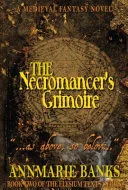
The Necromancer's Grimoire
 79
79

The Necromancer's Grimoire
Annmarie Banks's The Necromancer's Grimoire attempts to fuse historical adventure with occult themes, centering on Nadira's burgeoning necromantic powers during a Renaissance quest. The novel's strength lies in its ambitious premise: a young woman discovering formidable arcane abilities while entangled with the mysteries of the Knights Templar and their lost knowledge from centuries prior. The setting, Istanbul at the dawn of the Renaissance, offers a rich historical canvas. However, the narrative sometimes struggles under the weight of its own ambition. The pacing, particularly concerning Lord Montrose's impatience, feels somewhat rushed, and certain plot developments could benefit from more thorough exploration. A compelling moment involves Nadira's initial attempts to control her powers, showcasing the internal conflict between ambition and fear. Ultimately, The Necromancer's Grimoire is a commendable effort that, while occasionally uneven, provides an intriguing look at a hidden path to power.
📝 Description
79
Annmarie Banks's The Necromancer's Grimoire, published in 2013, follows a young woman discovering dangerous magic.
The Necromancer's Grimoire is set in the early Renaissance, focusing on Nadira, a woman who uncovers a potent, potentially destructive power within herself. Her search for lost Templar knowledge in Istanbul becomes entangled with ancient secrets and her own fate. The novel will interest readers of historical fantasy with occult elements. Those who appreciate narratives blending personal power, historical puzzles, and secret societies, especially the Knights Templar, will find it appealing. It suits readers who enjoy adventure, arcane lore, and character development.
The story unfolds during the Renaissance, a time of significant intellectual and cultural change in Europe. This period saw a renewed interest in classical texts and esoteric philosophy. The narrative references The Hermetica of Elysium and the Knights Templar, placing it within a milieu fascinated by rediscovered ancient wisdom and the supposed hidden knowledge of chivalric orders. This era also witnessed a rise in alchemical, astrological, and Neoplatonic studies, often pursued alongside new scientific investigations.
This novel is situated within the broader tradition of Renaissance esotericism, a period where figures explored occult philosophies alongside burgeoning scientific inquiry. The inclusion of the Knights Templar and references to texts like The Hermetica of Elysium place the narrative within a milieu that valued rediscovered ancient wisdom and the hidden lore of chivalric orders. The era saw a significant surge in alchemical, astrological, and Neoplatonic studies, often pursued by those interested in secret societies and hidden knowledge.
💡 Why Read This Book?
• Gain insight into the esoteric interpretations of Renaissance-era secret societies, specifically how the Knights Templar's lost history is presented through Nadira's quest in Istanbul. • Explore the narrative's depiction of latent magical power, focusing on Nadira's internal struggle to master abilities linked to necromancy as detailed in the early 2013 publication. • Understand the fictionalized role of texts like 'The Hermetica of Elysium' in awakening esoteric knowledge and shaping a protagonist's destiny within a historical fantasy context.
⭐ Reader Reviews
Honest opinions from readers who have explored this book.
❓ Frequently Asked Questions
What is the primary focus of The Necromancer's Grimoire?
The novel centers on Nadira, a young woman who discovers powerful necromantic abilities and embarks on a quest to Istanbul to uncover lost Templar knowledge, exploring her struggle to control her newfound power.
When was The Necromancer's Grimoire first published?
The book was first published in 2013 by author Annmarie Banks.
What historical period does the book take place in?
The story is set at the dawn of the Renaissance, a period of significant cultural and intellectual change in Europe.
What role do the Knights Templar play in the story?
The Knights Templar are central to the plot, as Nadira's quest involves uncovering knowledge they lost 200 years prior to the story's setting.
What esoteric influences are present in the book?
The book references 'The Hermetica of Elysium' and deals with themes of arcane power, secret knowledge, and the potential dangers of uncontrolled magical abilities.
Who is the main protagonist of The Necromancer's Grimoire?
The main protagonist is Nadira, a young woman who finds herself on a path to great power, grappling with its control and potential consequences.
🔮 Key Themes & Symbolism
The Awakening of Latent Power
The novel explores the sudden emergence of powerful, potentially destructive abilities within Nadira. This theme explores the internal conflict of mastering the arcane, particularly necromancy, and the psychological toll it takes. Her journey is not just about acquiring power but about understanding its origins and the responsibility that accompanies it, as hinted by her study of esoteric texts like 'The Hermetica of Elysium'.
Lost Templar Knowledge
Central to the plot is the quest for forgotten lore supposedly lost by the Knights Templar centuries before the Renaissance setting. This lost knowledge represents hidden historical currents and esoteric secrets that powerful organizations sought to control or conceal. The narrative uses this mystery to drive the adventure and to connect Nadira's personal destiny with a grand, historical conspiracy.
Destiny vs. Free Will
Nadira finds herself on a predetermined path to great power, but the narrative questions whether she can truly control her fate or if she will be consumed by it. This conflict highlights the tension between destiny and personal agency, especially when dealing with forces beyond ordinary comprehension. Her choices in Istanbul and her interactions with figures like Lord Montrose shape her ultimate trajectory.
The Renaissance Occult Revival
The book is set against the backdrop of the Renaissance, a period marked by renewed interest in ancient philosophies, Hermeticism, and mystical traditions. It taps into the era's intellectual ferment, where figures explored alchemy, astrology, and Neoplatonism alongside burgeoning scientific thought, suggesting a world ripe for the rediscovery of arcane arts.
💬 Memorable Quotes
Direct passages from the work, attributed to the author.
“Power sought is often power lost, but power within... that is a different kind of hunger.”
— This statement suggests a distinction between external, sought-after power (like Templar secrets) and innate, internal power. It implies that internal power, like Nadira's necromancy, is more fundamental and perhaps more dangerous due to its intrinsic nature.
“Istanbul holds traces of the Templars' past, but the key isn't in the stones, it's in the blood.”
— This implies that the lost Templar knowledge is not merely historical information but something intrinsically linked to lineage or specific individuals. It points towards Nadira's personal connection being the crucial element, rather than just physical discovery.
“The Hermetica speaks of shadows as mere absence of light; my path teaches shadows have substance.”
— This contrasts a philosophical understanding of shadows with a practical, perhaps necromantic, one. It suggests that the book explores a more tangible, active form of 'shadow' or dark power than typically understood in esoteric traditions.
“Lord Montrose saw only the mission; he never considered the cost to the one who carries the burden.”
— This highlights the conflict between pragmatic, goal-oriented characters like Montrose and the personal struggles of those directly involved in dangerous quests. It emphasizes the human toll of pursuing arcane objectives.
“To command the dead is to understand the silence that binds them, a silence few dare to hear.”
— This interpretation of necromancy suggests it's not just about raising spirits, but about understanding profound existential truths found in the state of death. It implies a deep, perhaps dangerous, wisdom accessible only to those who confront mortality directly.
🌙 Esoteric Significance
Tradition
The work draws heavily from Western Esotericism, particularly Hermeticism, as evidenced by the mention of 'The Hermetica of Elysium.' It engages with themes of latent power and the adept's journey, common in magical traditions. While focusing on necromancy, it also touches upon the pursuit of lost knowledge often associated with Rosicrucianism and Templar lore, positioning itself within a lineage concerned with ancient secrets and personal transformation.
Symbolism
The 'Grimoire' itself symbolizes a compendium of hidden, often forbidden, knowledge. Istanbul represents a nexus of ancient cultures and mystical crossroads, a fitting stage for uncovering lost Templar secrets. Nadira's struggle with her power embodies the archetypal conflict between light and shadow within the initiate, where control over darker forces is paramount.
Modern Relevance
Contemporary practitioners of modern occultism, particularly those interested in shadow work, Hermetic philosophy, and historical magical traditions, might find resonance in the book's exploration of power dynamics and arcane knowledge. The narrative's focus on personal transformation through confronting dangerous forces aligns with modern therapeutic and spiritual approaches to self-mastery and shadow integration.
👥 Who Should Read This Book
• Students of Renaissance history and occultism interested in fictionalized explorations of secret societies and esoteric texts like the Hermetica. • Readers of historical fantasy seeking narratives that blend adventure with themes of personal power and arcane discovery, particularly involving figures like the Knights Templar. • Aspiring practitioners or enthusiasts of Western Esotericism who appreciate stories studying the complexities and potential dangers of mastering forbidden knowledge.
📜 Historical Context
The Necromancer's Grimoire is set during the Renaissance, a period (roughly 14th to 17th centuries) characterized by a fervent rediscovery of classical texts and a burgeoning interest in esoteric philosophies. This era saw the rise of Hermeticism, Neoplatonism, and alchemy, often pursued by scholars like Marsilio Ficino and Pico della Mirandola, who sought to reconcile ancient wisdom with Christian theology. The novel's inclusion of the Knights Templar taps into persistent legends surrounding the order's alleged possession of secret knowledge, which gained traction during and after their suppression in the early 14th century. This historical milieu was also fertile ground for competing intellectual currents, including scholasticism and early humanism. While direct contemporary reception of Banks's fictional work is not applicable, the narrative reflects the fascination with lost knowledge and hidden power that defined much of the Renaissance intellectual landscape, a fascination also explored by contemporaries of the period such as Agrippa von Nettesheim.
📔 Journal Prompts
Nadira's quest for Templar secrets: what historical mysteries fascinate you most?
The substance of shadows: how do you perceive the intangible forces in your life?
Mastering latent power: what internal battles mirror Nadira's struggle?
The cost of knowledge: reflect on a time a pursuit demanded significant personal sacrifice.
The traces of Istanbul: consider a place that feels historically charged for you.
🗂️ Glossary
Necromancy
A form of magic involving the evocation of the dead, either to gain knowledge, power, or to communicate with the spirit world. It is often depicted as a dangerous and forbidden art.
Renaissance
A period in European history, roughly from the 14th to the 17th century, marked by a revival of classical art, architecture, literature, and learning, often accompanied by a renewed interest in esoteric and philosophical traditions.
Knights Templar
A medieval Catholic military order, founded around 1119, known for its role in the Crusades. Legends persist about their possession of secret knowledge and relics, particularly after their suppression in the early 14th century.
The Hermetica
A body of Greco-Egyptian philosophical and religious writings composed in Greek in the second and third centuries AD, attributed to Hermes Trismegistus. They cover a range of topics including cosmology, astrology, alchemy, and theurgy.
Grimoire
A textbook of magic, or textbook of ceremonial magic, that includes instructions on how to create magical tools, objects, and rituals, often containing lists of spirits that can be summoned, protection symbols, and spells.
Esoteric
Intended for or likely to be understood by only a small number of people with a specialized knowledge or interest. It refers to teachings or practices that are secret or mysterious.
Lord Montrose
A character within The Necromancer's Grimoire, depicted as impatient and focused on the mission objective, contrasting with Nadira's internal struggles and the deeper implications of their quest.
This book appears in 1 collection
🔮 Readers Also Liked
Browse all →








From the “Templar Knights” Collection
View all →
![EBOOK COLLECTION ( PART 8) [ CSI][h 33t]](/img/thumb/ebook-collection-part-8-csi-h-33t.webp)


More Free Occult Philosophy Books
View all →