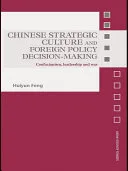
Chinese Strategic Culture and Foreign Policy Decision-Making
 81
81

Chinese Strategic Culture and Foreign Policy Decision-Making
Feng's "Chinese Strategic Culture and Foreign Policy Decision-Making" offers a crucial corrective to analyses of China's rise that rely too heavily on structural international relations theory. By foregrounding the influence of historical experience and cultural frameworks, the work provides a more textured understanding of Beijing's foreign policy calculus. A notable strength lies in its detailed examination of how past grievances, particularly those stemming from the "century of humiliation," continue to shape contemporary strategic thinking, a point powerfully illustrated when discussing the South China Sea disputes. However, the book occasionally struggles to fully reconcile the abstract concept of "strategic culture" with concrete, observable policy shifts, leaving some readers wanting a more direct causal link. The discussion of the "tributary system" as a potential historical echo in modern policy is particularly insightful, though its direct applicability remains a point of debate. Ultimately, Feng's contribution is a valuable, if sometimes densely argued, exploration of the ideational underpinnings of Chinese foreign policy.
📝 Description
81
In 2007, Huiyun Feng's book examined China's foreign policy beyond international system structures.
Huiyun Feng's 2007 study investigates China's foreign policy decision-making, particularly as the nation gained global prominence. The work moves past analyses focused solely on international system structures to incorporate internal factors that shape Beijing's external relations. Feng examines how historical narratives and cultural predispositions influence China's strategic outlook, offering an alternative to approaches that prioritize systemic pressures.
The book considers "strategic culture" as it applies to China, detailing how ingrained historical experiences and philosophical traditions inform its foreign policy choices. This contrasts with materialist explanations rooted in power politics and the international system. Feng analyzes the perception of historical grievances and China's ambition to regain a central global position, evaluating whether these arise from genuine intent or are interpretations of systemic constraints. The work was published at a time of intense debate about China's rise, with scholars divided between structural realists viewing China as a potential challenger and those emphasizing its unique historical and cultural dimensions.
This book engages with the tradition of understanding state behavior through the lens of cultural and historical context, rather than solely through materialist or structural explanations. It positions China's foreign policy within a framework that acknowledges the weight of historical memory and philosophical underpinnings, suggesting these are not mere byproducts but active forces in shaping national strategy. This approach aligns with scholarship that seeks to uncover the deeper, often implicit, logics that guide a nation's interactions on the world stage, moving beyond immediate geopolitical calculations to consider enduring cultural dispositions.
💡 Why Read This Book?
• Understand how China's historical "century of humiliation" influences its contemporary foreign policy, offering insights beyond standard realist theories. • Grasp the concept of "strategic culture" as applied to China, learning how philosophical traditions and historical narratives shape its global outlook. • Gain a nuanced perspective on China's rise by examining its decision-making through the lens of cultural and historical factors, not just international system pressures.
⭐ Reader Reviews
Honest opinions from readers who have explored this book.
❓ Frequently Asked Questions
What is the primary focus of "Chinese Strategic Culture and Foreign Policy Decision-Making"?
The book's primary focus is on analyzing the motivations and decision-making processes behind China's foreign policy, emphasizing the influence of its unique strategic culture and historical experiences.
When was "Chinese Strategic Culture and Foreign Policy Decision-Making" first published?
The book was first published on June 11, 2007, a period marked by intense academic and policy debate surrounding China's growing global influence.
How does this book differ from traditional analyses of China's foreign policy?
It moves beyond structural explanations focusing solely on the international system. Instead, it integrates analyses of China's historical narratives, cultural predispositions, and internal decision-making dynamics.
What academic debates does the book engage with?
It engages with major debates concerning China's rise, particularly contrasting traditional Realist views of China as a revisionist power with cultural and historical analyses of its intentions.
Who is the author of "Chinese Strategic Culture and Foreign Policy Decision-Making"?
The author is Huiyun Feng, whose work delves into the complexities of China's strategic thinking and its implications for international relations.
What key concepts are explored in relation to China's foreign policy?
The book explores concepts such as "strategic culture," the impact of historical grievances (like the "century of humiliation"), and the perception of China's quest for a central global position.
🔮 Key Themes & Symbolism
Strategic Culture as Lens
The work posits that China's "strategic culture"—a complex interplay of historical memory, philosophical underpinnings, and ingrained national narratives—profoundly shapes its foreign policy choices. This perspective challenges purely materialist or systemic explanations, suggesting that deeply held beliefs about historical injustices and China's rightful place in the world are critical drivers. It explores how concepts derived from ancient Chinese thought might manifest in modern geopolitical calculations, offering a unique angle for understanding state behavior beyond conventional IR theory.
Historical Grievances and National Identity
A central theme is the enduring impact of historical grievances, particularly the "century of humiliation" (roughly 1839-1949), on China's contemporary foreign policy outlook. Feng examines how this collective memory fuels a desire to restore national pride and a perceived rightful status on the global stage. This historical consciousness informs perceptions of threats and opportunities, influencing strategic decisions and the articulation of national interests, moving beyond simple power calculations to encompass identity and historical justice.
Revisionism vs. Systemic Adaptation
The book navigates the debate over whether China is a "revisionist power" seeking to overturn the existing international order or a state adapting to systemic pressures. Feng suggests that understanding China's motivations requires looking beyond its material capabilities and perceived intentions. By analyzing its strategic culture, the work offers a framework for interpreting China's actions not solely as aggressive challenges but as responses shaped by its unique historical trajectory and cultural context.
Decision-Making Dynamics
Beyond broad cultural influences, the work probes the actual processes of foreign policy decision-making within China. It examines how internal bureaucratic dynamics, elite perceptions, and the interpretation of external signals interact with the broader strategic culture. This offers a look at how abstract historical and cultural factors are translated into concrete policy choices, providing a more granular understanding of statecraft in practice.
💬 Memorable Quotes
Direct passages from the work, attributed to the author.
“Most scholarly works on China’s rise approach the question at a structural level by looking at the international system and the systemic impact on China’s foreign policy.”
— This statement highlights the book's departure from common analytical frameworks in international relations, setting the stage for its focus on internal cultural and historical factors influencing China's global actions.
“Traditional Realist theorists define China as a revisionist power eager to address wrongs done to them in history.”
— This points to a key debate the book engages with, contrasting the Realist perspective with its own emphasis on the nuanced role of historical memory and strategic culture in shaping China's foreign policy.
“Some cultural and historical analyses...”
— This phrase indicates the book aligns with and expands upon analyses that prioritize China's unique historical experiences and cultural norms over purely systemic explanations for its foreign policy behavior.
“Examining the major academic and policy debates over China’s rise and related policy issues, this book looks into the motivations and intentions of a rising China.”
— This serves as an introductory thesis statement, framing the book's objective: to dissect the underlying reasons and goals driving China's increasing global presence and influence.
💡 Key Ideas
Editorial paraphrase of the work's core concepts — not direct quotes.
The work explores the interplay between historical narratives and contemporary strategic outlook.
This paraphrased concept emphasizes the book's core argument that China's past experiences and the stories it tells about itself are fundamental to understanding its current foreign policy decisions and future aspirations.
🌙 Esoteric Significance
Tradition
While not strictly an esoteric text in the Western Hermetic or Kabbalistic sense, this work engages with traditions of thought that explore the deep-seated, often unconscious, patterns influencing collective behavior and national identity. It aligns with traditions that view history and culture not merely as factual records but as living forces shaping present consciousness and action. Its focus on the 'unseen' influences of historical memory and cultural archetypes on statecraft echoes broader esoteric inquiries into the nature of collective psyche and destiny.
Symbolism
The "century of humiliation" functions as a potent symbolic motif, representing a collective wound and a catalyst for national resurgence. This narrative acts as a symbolic anchor for China's foreign policy, framing its actions as a reclaiming of lost dignity and power. The concept of "strategic culture" itself can be seen as a symbolic framework, representing the internalized wisdom and historical lessons that guide a nation's destiny, akin to how archetypes function in psychological or spiritual traditions.
Modern Relevance
Contemporary thinkers analyzing geopolitical shifts, particularly concerning Sino-American relations and China's role in Asia, frequently draw upon the foundational concepts presented in this book. Schools of thought focusing on identity politics in international relations and cultural constructivism find Feng's analysis particularly relevant. Modern practitioners of strategic foresight and geopolitical analysis who seek to understand China's long-term objectives often reference the importance of historical context and cultural underpinnings highlighted by Feng.
👥 Who Should Read This Book
• Students of International Relations and East Asian Studies seeking to move beyond structural theories to understand the cultural drivers of foreign policy. • Policymakers and analysts focused on China requiring a deeper comprehension of Beijing's strategic mindset rooted in historical experience. • Readers interested in comparative political culture and how historical narratives shape national identity and geopolitical behavior globally.
📜 Historical Context
Published in 2007, Huiyun Feng's "Chinese Strategic Culture and Foreign Policy Decision-Making" arrived during a period of intense international focus on China's rapid economic growth and its implications for global power dynamics. The academic landscape was dominated by debates between structural realists, such as John Mearsheimer, who predicted a more assertive, potentially revisionist China due to its rising power, and scholars emphasizing China's unique civilizational and historical context. Feng's work directly engaged with this dichotomy, arguing that purely structural analyses were insufficient. It sought to provide a more nuanced understanding by incorporating the concept of "strategic culture," influenced by thinkers like Alastair Johnston. While not subject to major censorship, the book contributed to a growing body of scholarship that challenged simplistic interpretations of China's intentions, offering a more culturally informed perspective amidst ongoing geopolitical discussions.
📔 Journal Prompts
The "century of humiliation" as a symbolic narrative: how does this historical framing influence current foreign policy?
Analyze the concept of "strategic culture" in relation to a non-Chinese nation-state.
Contrast the book's perspective on China's rise with a purely structural realist explanation.
How might the historical grievances discussed in the book manifest in contemporary diplomatic language?
Reflect on the role of historical memory in shaping a nation's perceived interests and threats.
🗂️ Glossary
Strategic Culture
A set of shared beliefs, values, norms, and cognitive frameworks within a state that shape its perceptions of security and its approach to foreign policy and military strategy.
Revisionist Power
In international relations theory, a state that seeks to alter the existing international system, norms, or power distribution, often challenging the status quo.
Structural Level Analysis
An approach in international relations that emphasizes the role of the international system's structure (e.g., distribution of power, anarchy) in shaping state behavior, often downplaying internal factors.
Century of Humiliation
A period in Chinese history, roughly from the mid-19th century to the mid-20th century, characterized by foreign invasions, unequal treaties, and foreign occupation, which profoundly impacted national identity and foreign policy.
Realist Theory
A major school of thought in international relations that emphasizes state power, national interest, and the anarchic nature of the international system as primary drivers of foreign policy.
Systemic Impact
The influence exerted by the broader international system, including power balances, alliances, and international norms, on the foreign policy decisions of individual states.
Cultural Analysis
An approach that examines the role of cultural factors, traditions, values, and historical narratives in shaping a state's foreign policy and decision-making processes.