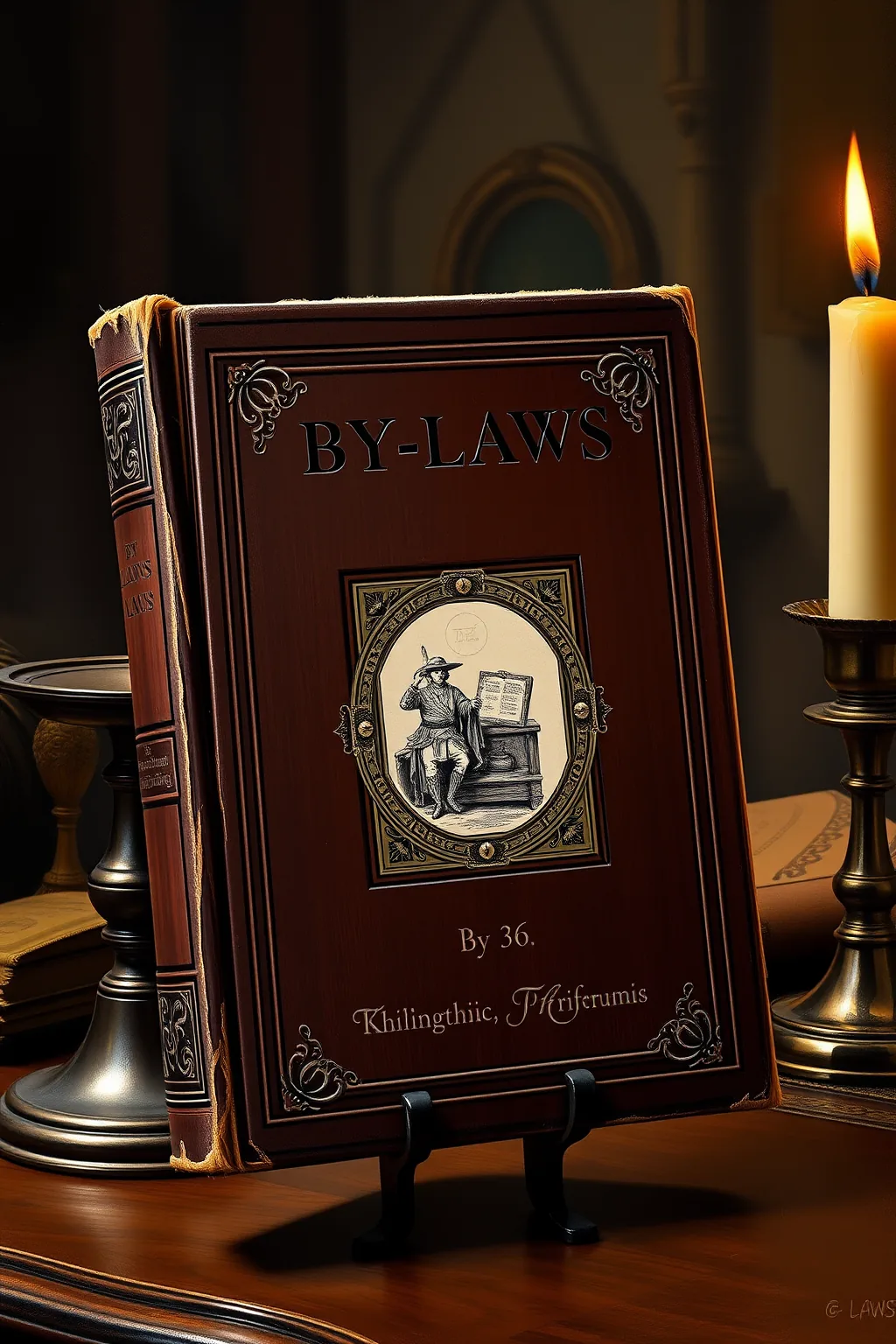
By Laws Of Mary Commandery No 36 Masonic Knights Templar Phillidelphia 1876
 82
82

By Laws Of Mary Commandery No 36 Masonic Knights Templar Phillidelphia 1876


Aurelia Blackwood (Occult Philosophy Critic) — This meticulously preserved document, the 'By-Laws of Mary Commandery No. 36', is a foundational text for anyone seeking to understand the practical application of Knights Templar Masonry in 19th-century America. It transcends the mundane, offering insights into the symbolic architecture of fraternal organizations and the structured path to moral and spiritual refinement. The clarity of its regulations belies the profound esoteric principles that likely informed their creation. Essential for Masonic scholars, historians of secret societies, and practitioners looking to deepen their comprehension of Templar lore.
📝 Description
82
Published in 1876, these by-laws detail the structure of Mary Commandery No. 36.
The 'By-Laws of Mary Commandery No. 36 Masonic Knights Templar, Philadelphia, 1876' offers a direct look at the internal governance of a specific Masonic body. This document details the rules and regulations that structured the daily and ceremonial life of the Commandery. It moves beyond simple administrative matters to reveal the symbolic and moral instruction embedded within the organization's practices. The text outlines the expectations for members, the procedures for meetings, and the principles guiding their conduct, all framed within the context of Templar Masonry. Reading these by-laws provides insight into how the fraternity sought to instill chivalric ideals and spiritual development in its members during the late 19th century. It is a primary source for understanding the practical application of Masonic philosophy within a fraternal order.
This book reflects a period where Masonic organizations maintained elaborate rituals and a strong emphasis on moral and philosophical instruction. The specific articles and statutes within these by-laws are not merely legalistic; they are designed to reinforce the Order's teachings. They demonstrate a commitment to maintaining tradition and transmitting its core values through a structured system of governance and membership. The document serves as a window into the disciplined pursuit of personal betterment and communal fraternity characteristic of the Knights Templar branch of Masonry.
Within the broader spectrum of esoteric traditions, this 1876 document belongs to the lineage of Western esotericism, specifically through its connection to Masonic Knights Templarism. This branch of Masonry draws heavily on historical narratives and symbolism associated with the medieval Knights Templar, imbuing them with mystical and moral interpretations. These by-laws, while outwardly administrative, function as a codified expression of the inner principles and symbolic language that characterize Masonic esoteric practice. They reveal how such orders sought to structure the pursuit of spiritual knowledge and moral perfection for their members, using ritual, allegory, and fraternal bonds as tools for this transmission.
💡 Why Read This Book?
Uncover the foundational rules and symbolic directives of a specific Masonic Knights Templar Commandery from 1876 Philadelphia. Delve into the structured practices and esoteric underpinnings that guided their rituals and moral teachings. Ideal for Freemasonry enthusiasts, historians of secret societies, and those seeking to understand the historical evolution of Templar Masonry.
⭐ Reader Reviews
Honest opinions from readers who have explored this book.
❓ Frequently Asked Questions
What is the primary purpose of these by-laws?
The primary purpose was to establish and govern the operational procedures, membership requirements, and disciplinary measures for Mary Commandery No. 36, ensuring the smooth functioning and adherence to Masonic principles.
Are these by-laws publicly available elsewhere?
While rare, similar historical Masonic documents may be found in specialized archives or private collections. Esoteric Library provides a curated and accessible version for study.
What is the historical significance of Philadelphia in this context?
Philadelphia was a significant hub for Freemasonry in the 19th century, boasting a rich history and numerous influential lodges and Commanderies, making this document historically relevant to the city's Masonic landscape.
Do these by-laws contain secret rituals?
While by-laws outline governance, they often allude to or presuppose knowledge of underlying rituals and symbolic teachings, rather than explicitly detailing them.
Who would benefit most from reading this document?
Freemasons, particularly those interested in Templar Masonry, historians, occultists, and anyone curious about the structured traditions of fraternal organizations will find this document enlightening.
🔮 Key Themes & Symbolism
Structure and Discipline in Esoteric Orders
These by-laws are a proof of the critical role of structure and discipline in maintaining the integrity and efficacy of esoteric organizations. They delineate the rules of engagement, the expectations of conduct, and the pathways for advancement within the Commandery. This framework is not merely administrative; it is designed to cultivate self-mastery, obedience, and a disciplined mind, essential qualities for those undertaking a spiritual or symbolic journey. The codified regulations serve as a tangible representation of the internal order required to pursue higher knowledge and moral perfection, mirroring the cosmic order sought in many mystical traditions.
The Symbolic Language of Templar Masonry
Embedded within the procedural language of these by-laws are elements of the rich symbolic collection of the Knights Templar. While not revealing ritualistic secrets directly, the very existence and phrasing of certain regulations implicitly point to the chivalric virtues, Christian symbolism, and ancient traditions that informed their practices. The Commandery's name, 'Mary,' itself carries profound symbolic weight within Christian mysticism. These rules, therefore, act as a framework for embodying these symbols in daily conduct and fraternal interaction, emphasizing concepts like faith, fortitude, and the pursuit of justice.
Historical Context of 19th Century Fraternalism
This document offers a concrete artifact from the vibrant era of 19th-century fraternalism, particularly in a prominent Masonic center like Philadelphia. It provides insight into how such organizations functioned socially, organizationally, and philosophically during a period of significant societal change and intellectual exploration. The by-laws reveal a community bound by shared ideals, structured by formal rules, and engaged in the transmission of a specific lineage of knowledge and tradition. Understanding these regulations helps contextualize the role and influence of Masonic bodies in American history and their contribution to the broader range of secret societies.
💬 Memorable Quotes
Direct passages from the work, attributed to the author.
“To govern with wisdom and uphold with honor.”
— This aphorism expresses the dual responsibility of leadership and adherence within the Commandery, emphasizing both strategic direction and faithful execution of duties.
“Where virtue is the compass and truth the guiding star.”
— This highlights the moral and spiritual orientation of the Commandery, positioning ethical conduct and the pursuit of ultimate truth as central to their collective endeavor.
“In unity, strength; in purpose, light.”
— This reflects the Masonic ideal of collective power derived from brotherhood and the illumination gained through shared spiritual and intellectual pursuits.
“The ancient ways shall be preserved.”
— This signifies a commitment to tradition and the continuation of established practices and esoteric wisdom across generations.
“By-laws, the framework for enlightenment.”
— This suggests that the rules and regulations, while seemingly mundane, serve as a necessary structure to facilitate spiritual growth and the acquisition of hidden knowledge.
🌙 Esoteric Significance
Tradition
These by-laws are intrinsically linked to the esoteric tradition of Christian Templar Masonry. This lineage draws heavily on the history of the medieval Knights Templar, infusing their Masonic degrees with themes of chivalry, Christian mysticism, and symbolic interpretations of biblical narratives. The emphasis on oaths, virtues, and a structured progression through degrees aligns with the broader esoteric goal of spiritual transformation and the attainment of higher knowledge through allegory and ritual.
Symbolism
While the by-laws themselves are procedural, they operate within a symbolic framework rich with Templar and Masonic iconography. The Commandery's name, 'Mary,' evokes the Virgin Mary, a significant figure in Christian esoteric traditions. The very act of establishing rules for a 'Commandery' implies a military-spiritual order, echoing the Crusades and the pursuit of sacred ideals. The structured governance can be seen as symbolizing the order and discipline required to work through the inner spiritual landscape.
Modern Relevance
In an age often characterized by fragmentation and superficiality, the by-laws offer a compelling study in structured discipline and commitment to enduring principles. They provide a historical blueprint for understanding how organized groups pursued moral and spiritual development through codified practices. For contemporary seekers of esoteric wisdom and those interested in the evolution of fraternal orders, these rules illuminate the foundational elements that have historically supported the transmission of symbolic knowledge and the cultivation of character.
👥 Who Should Read This Book
This document is essential for Masonic scholars and historians seeking primary source material on 19th-century Templar Masonry. Occult practitioners interested in the historical development of fraternal orders and their symbolic underpinnings will find significant value. Seekers of hidden knowledge and those fascinated by the intersection of ritual, governance, and moral philosophy will discover a rich field for exploration. Beginners curious about the structure of secret societies will gain a foundational understanding of how such organizations operated.
📜 Historical Context
The year 1876 marked the centennial of American independence, a period of national pride, industrial advancement, and a flourishing of fraternal organizations, including Freemasonry. In Philadelphia, a city with a deep Masonic heritage, entities like Mary Commandery No. 36 operated within a vibrant socio-cultural landscape. This era saw a particular interest in chivalric Masonry, with the Knights Templar degrees gaining prominence. The by-laws of such a Commandery reflect not only the internal governance required for order and ritual but also the broader societal values of the time: discipline, moral rectitude, and the preservation of tradition. They are a window into how these fraternal bodies sought to embody ancient ideals within a rapidly modernizing world, serving as centers for fellowship, education, and symbolic exploration.
📔 Journal Prompts
How does the concept of 'governance' in these by-laws relate to self-governance in personal spiritual development?
What symbolic meanings can be inferred from the specific regulations outlined in these by-laws, even if not explicitly stated?
Reflect on the values of discipline and honor as presented in this document and how they might be applied in contemporary life.
Consider the role of 'preserving ancient ways' in the context of modern esoteric practices. What is lost and gained?
Imagine you are a member of Mary Commandery in 1876. How would these by-laws shape your understanding of your role and purpose within the order?
🗂️ Glossary
By-Laws
A set of rules or regulations made by an organization for its own governance, often supplementing its charter or constitution.
Commandery
A basic administrative unit within the York Rite of Freemasonry, specifically associated with the Knights Templar degrees.
Masonic Knights Templar
A branch of Freemasonry that confers degrees related to the historical Knights Templar, emphasizing chivalric virtues and Christian symbolism.
Philadelphia
A major city in Pennsylvania, historically significant in American and Masonic history, often considered a cradle of early American Freemasonry.
1876
The year of the United States' Centennial Exposition, a period of significant cultural and industrial development in America, and a peak time for fraternal organizations.
This book appears in 2 collections
🔮 Readers Also Liked
Browse all →








From the “Secret Societies” Collection
View all →







More Free Freemasonry & Secret Societies Books
View all →