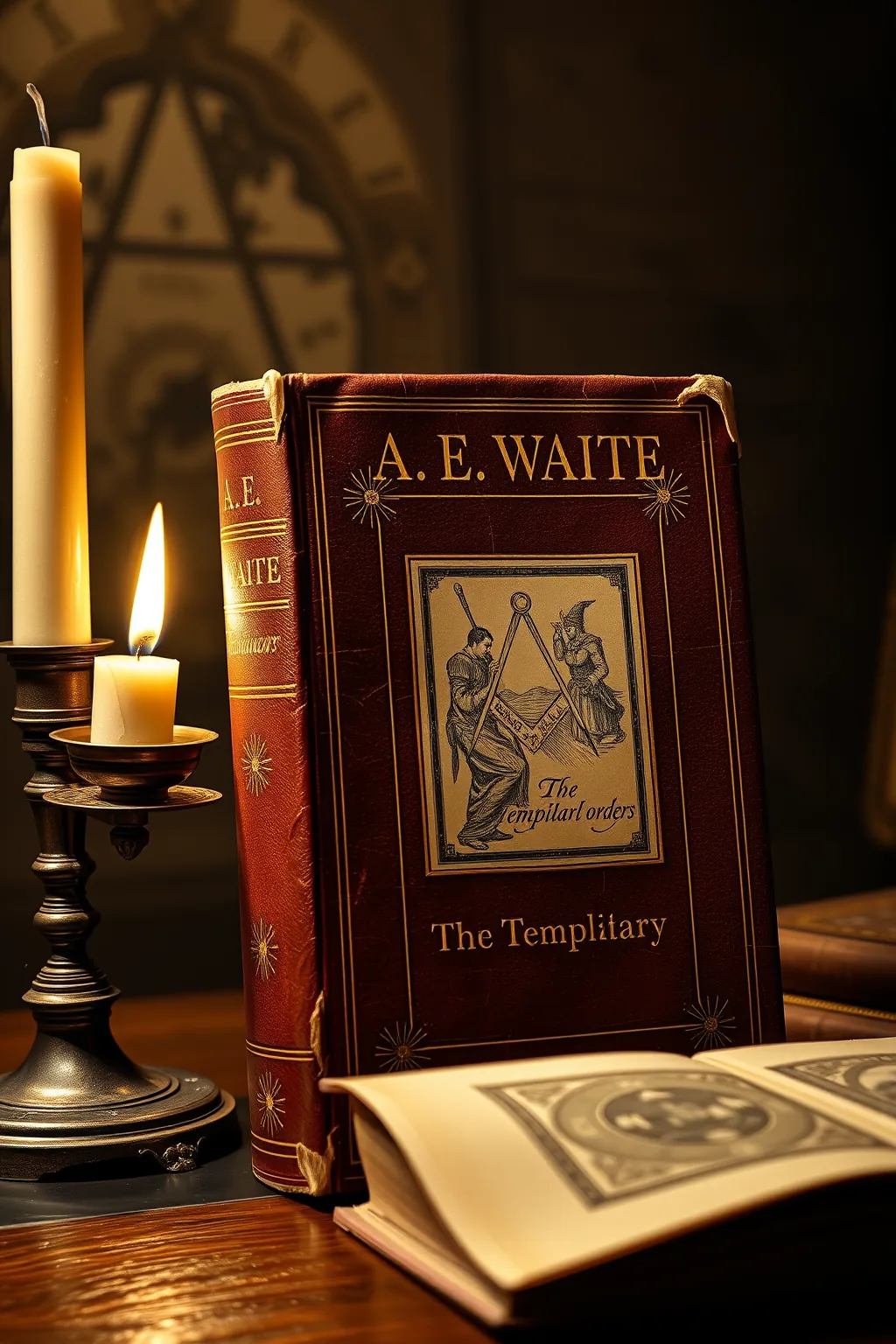
A. E Waite The Templar Orders In Freemasonry
 73
73

A. E Waite The Templar Orders In Freemasonry


A. E Waite's "The Templar Orders in Freemasonry" is a must-read for modern esoteric seekers. Waite's scholarly approach and deep knowledge of occult traditions make this book a valuable resource for understanding the intricate web of symbols and rituals that connect the Knights Templar and Freemasonry. The book's historical context and detailed analysis provide a rich tapestry of information that is both enlightening and engaging. Waite's writing style is accessible yet profound, making complex esoteric concepts understandable to a wide audience. For those interested in the hidden histories and mystical traditions of secret societies, this book is an invaluable addition to any library. The insights gained from reading "The Templar Orders in Freemasonry" can enhance one's understanding of the occult and provide a deeper appreciation for the mysteries that have captivated humanity for centuries.
📝 Description
73
A. E. Waite's 1911 book examines the historical and symbolic connections between Templarism and Freemasonry.
Published in 1911, 'The Templar Orders in Freemasonry' by A. E. Waite approaches the subject from a historical and symbolic perspective. Waite sought to understand the lineage and meaning behind the various Templar degrees that had become integrated into Masonic practice by his time. The book details the evolution of these orders, tracing their supposed origins and the symbolic language they employed.
Waite's work is characterized by his detailed research into primary sources and his analytical approach to esoteric symbolism. He scrutinizes the claims of direct Templar succession and the interpretations of Masonic writers who championed such links. The text is dense with references to rituals, allegories, and historical figures relevant to both the Knights Templar and Freemasonry. It aims to clarify the nature of these connections, distinguishing between historical fact and symbolic association.
This book is not a simple celebration of Masonic lore but a critical examination of its esoteric underpinnings. Waite’s careful scholarship invites readers to consider the development of Masonic ritual and symbolism through the lens of Templar history. The resulting work offers a deep dive into a specific current within esoteric Freemasonry.
This work sits within the tradition of Western Esotericism, specifically concerning Masonic studies and the occult revival of the late 19th and early 20th centuries. Waite, a prominent figure in this revival, focused on interpreting the symbolic systems of secret societies. His approach aimed to uncover a hidden spiritual or philosophical meaning within their rituals and traditions, often linking them to older esoteric currents. 'The Templar Orders in Freemasonry' is an example of this scholarly yet spiritually oriented investigation into the occult dimensions of fraternal orders.
💡 Why Read This Book?
Reading "The Templar Orders in Freemasonry" today offers readers a unique opportunity to explore the esoteric connections between two of history's most enigmatic secret societies. By delving into this book, readers can gain a deeper understanding of the mystical traditions and hidden knowledge that have shaped Freemasonry and the Knights Templar. This book is particularly valuable for those seeking to uncover the hidden histories and symbols that underpin these ancient orders. Whether you are a student of the occult, a Freemason, or simply curious about the mysteries of secret societies, this book provides a wealth of information and insights that can enrich your esoteric journey.
⭐ Reader Reviews
Honest opinions from readers who have explored this book.
❓ Frequently Asked Questions
What is the main focus of "The Templar Orders in Freemasonry"?
The main focus of this book is the esoteric connections between the Knights Templar and Freemasonry, exploring their shared symbols, rituals, and hidden knowledge.
Is this book suitable for beginners in the occult?
Yes, A. E Waite's writing style is accessible, making it a great resource for both beginners and experienced esoteric seekers.
What historical context does the book provide?
The book offers a comprehensive historical context, detailing the influence of the Templars on Freemasonic rituals and the esoteric philosophies that bind these two secret societies.
🔮 Key Themes & Symbolism
Templar History
Waite meticulously traces the historical roots of the Knights Templar, uncovering their influence on Freemasonry. This theme studies the mysteries of the Templar Order, their rituals, and their eventual suppression, providing a mystical angle on their enduring legacy.
Symbolism and Rituals
The book examines the strong symbolism and rituals of Freemasonry, drawing parallels with the Templar Orders. Waite's analysis reveals the hidden meanings behind these symbols, offering readers a deeper understanding of the esoteric traditions that bind these secret societies.
Esoteric Philosophy
Waite explores the philosophical underpinnings of Freemasonry and the Templar Orders, highlighting their shared belief in hidden knowledge and spiritual enlightenment. This theme invites readers to contemplate the deeper philosophical significance of these secret societies' teachings.
💬 Memorable Quotes
Direct passages from the work, attributed to the author.
“Freemasonry is a path to spiritual enlightenment through symbolism and ritual.”
— Waite's insight into the esoteric practices of Freemasonry reveals their potential for spiritual growth.
“Hidden knowledge is the heart of esoteric traditions.”
— Waite's exploration of hidden knowledge emphasizes its central role in the mystical practices of secret societies.
💡 Key Ideas
Editorial paraphrase of the work's core concepts — not direct quotes.
The Templars were the guardians of a secret that transcended time.
This line underscores the enduring mystique of the Templar Orders and their role as keepers of ancient wisdom.
The Templar legacy lives on in the rituals and symbols of Freemasonry.
This quote highlights the historical and mystical connection between the Templars and Freemasons.
The Templars and Freemasons share a common quest for spiritual truth.
This line underscores the philosophical alignment between these two enigmatic orders.
🌙 Esoteric Significance
Tradition
This book belongs to the Hermetic tradition, focusing on the mystical and esoteric aspects of Freemasonry and the Templar Orders. Waite's exploration of hidden knowledge and ancient symbolism aligns with the Hermetic quest for spiritual enlightenment.
Symbolism
Key symbols in the book include the Cross and the Compass, representing the Templar and Freemasonic quests for spiritual truth. Waite studies the esoteric meanings of these symbols, revealing their deeper significance in the context of these secret societies.
Modern Relevance
Today, 'The Templar Orders in Freemasonry' remains a central to esoteric literature, inspiring modern practitioners and scholars of the occult. Its exploration of hidden knowledge and mystical symbolism continues to resonate with seekers of spiritual enlightenment and hidden truths.
👥 Who Should Read This Book
Beginners interested in esoteric studies will find this book an accessible introduction to the mystical world of Freemasonry and the Templar Orders. Scholars of occult history will appreciate Waite's meticulous research and esoteric insights. Spiritual seekers will be drawn to the book's exploration of hidden knowledge and spiritual enlightenment. Practitioners of esoteric arts will benefit from Waite's deep understanding of symbolism and ritual.
📜 Historical Context
Written in an era of renewed interest in occult and esoteric studies, 'The Templar Orders in Freemasonry' provides a timely exploration of the historical and mystical connections between the Knights Templar and Freemasonry. Published during a period of significant social and intellectual upheaval, Waite's work offered readers a refuge in the mysteries of the past, inviting them to contemplate the deeper philosophical significance of these secret societies. The book's influence can be seen in the resurgence of interest in Freemasonry and Templar history, inspiring countless seekers of hidden knowledge and spiritual enlightenment.
📔 Journal Prompts
Reflect on the historical significance of the Templar Orders and their influence on Freemasonry.
Consider the esoteric meanings behind the symbols and rituals of Freemasonry.
Explore the philosophical underpinnings of secret societies and their quest for hidden knowledge.
How do the Templar Orders and Freemasonry contribute to spiritual enlightenment?
What are the modern implications of Waite's exploration of esoteric traditions?
🗂️ Glossary
Templar Orders
The Knights Templar, a medieval Christian military order known for their mystical practices and hidden knowledge.
Freemasonry
A secret society that uses symbolism and rituals to promote spiritual and philosophical growth.
Esoteric
Relating to knowledge that is hidden or secret, often pertaining to mystical or occult practices.
Hermetic Tradition
A philosophical and spiritual tradition based on the writings of Hermes Trismegistus, focusing on the pursuit of hidden knowledge and spiritual enlightenment.
Symbolism
The use of symbols to represent abstract ideas or concepts, often in the context of esoteric or mystical practices.
This book appears in 2 collections
🔮 Readers Also Liked
Browse all →






From the “Secret Societies” Collection
View all →




More Free Freemasonry & Secret Societies Books
View all →