Democratic Enlightenment
 79
79

Democratic Enlightenment
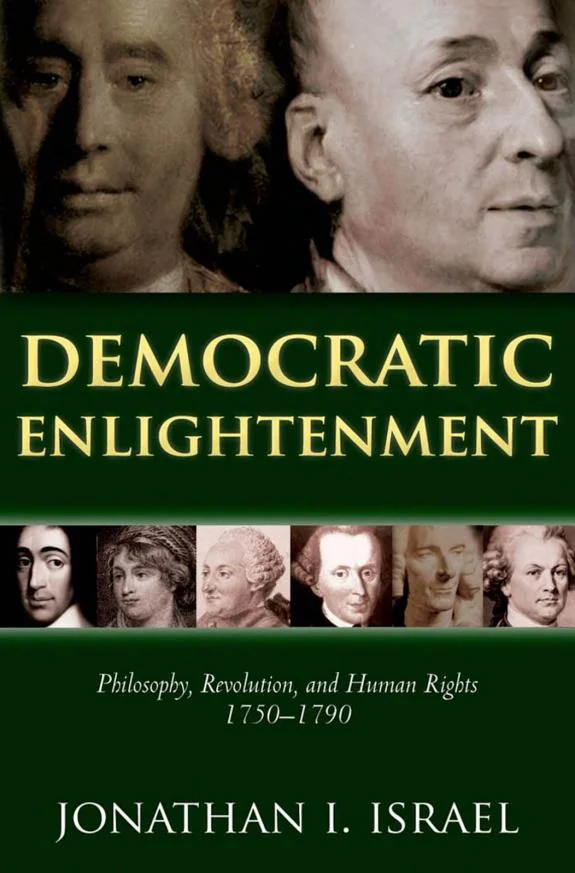
Jonathan Israel's "Democratic Enlightenment" presents a formidable argument for a specific, radical philosophical lineage as the true progenitor of modern democracy. He meticulously traces this lineage through the late Enlightenment, identifying key figures like Diderot and d'Holbach as central to the revolutionary fervor. One undeniable strength is the sheer depth of Israel's scholarship, drawing on extensive primary sources to reconstruct a compelling intellectual history. However, the book's relentless focus on this singular "Radical Enlightenment" current occasionally feels like it overlooks the complex interplay of other social and political forces that shaped the French Revolution. Israel's detailed analysis of the philosophes' writings, particularly their critiques of established religion and monarchy, is where the work truly shines. The verdict: a vital, albeit narrowly focused, reinterpretation of Enlightenment thought and its democratic legacy.
📝 Description
79
Jonathan Israel's 2013 book argues a radical philosophical current drove the French Revolution.
Jonathan Israel's "Democratic Enlightenment" revisits the intellectual history of the late Enlightenment, proposing that a specific, often overlooked radical philosophical current was the primary intellectual force behind the French Revolution and later democratic movements. Israel identifies a cohort of thinkers whose ideas, born from reason and opposition, significantly shaped Western political thought. He contrasts this "Radical Enlightenment," marked by materialism, secularism, and individual liberty, with the "Moderate Enlightenment." The book details how these radical ideas directly inspired revolutionary actions and continue to influence modern discussions on democracy, secularism, and human rights. Published amidst scholarly discussion on the Enlightenment's impact, Israel's work challenges interpretations that minimize its radical philosophical contributions. He brings attention to figures and ideas that later historical accounts either marginalized or obscured, aiming to reassert the intellectual lineage of the Enlightenment's most transformative and debated aspects.
This study is aimed at serious academics in intellectual history, political philosophy, and the Enlightenment period. It will also interest readers concerned with the origins of modern democratic concepts and those who value thorough historical revisionism. Individuals seeking to grasp the deep origins of Western political systems, beyond standard narratives, will find this analysis especially valuable. It is not intended for superficial reading but for those prepared to engage with substantial historical arguments.
While not strictly esoteric in the occult sense, "Democratic Enlightenment" engages with a tradition of radical thought that often operated outside mainstream intellectual discourse. This tradition, stemming from figures like Spinoza and extending through the materialist philosophers of the French Enlightenment, championed reason, skepticism, and individual autonomy against established religious and political authority. Israel's work seeks to illuminate this submerged intellectual current, which, though perhaps not widely practiced in ritual, represented a profound challenge to prevailing worldviews and laid groundwork for secular democratic societies. It concerns the 'esoteric' nature of ideas that were suppressed or ignored by dominant powers.
💡 Why Read This Book?
• You will learn about the specific philosophical lineage of the "Radical Enlightenment," understanding how thinkers like Diderot provided the intellectual scaffolding for the French Revolution, a nuanced view distinct from broader Enlightenment narratives. • You will gain a clearer grasp of the intellectual battles fought during the late 18th century, specifically how materialist and secular philosophies directly challenged traditional authority, as detailed in the book's examination of the period around 1789. • You will feel equipped to critically assess modern democratic theory by tracing its roots to 18th-century debates, recognizing how concepts championed by figures like Jean-Jacques Rousseau, as discussed by Israel, continue to shape political discourse.
⭐ Reader Reviews
Honest opinions from readers who have explored this book.
❓ Frequently Asked Questions
What is the "Radical Enlightenment" as defined by Jonathan Israel?
Israel defines the "Radical Enlightenment" as a distinct philosophical current emphasizing reason, materialism, secularism, and individual liberty. It stood in opposition to more moderate Enlightenment thought and provided the intellectual impetus for revolutionary movements, particularly the French Revolution.
Which key figures does "Democratic Enlightenment" focus on?
The book prominently features figures such as Denis Diderot, Baron d'Holbach, and Jean-Jacques Rousseau. Israel analyzes their writings and philosophical contributions as central to the development of radical democratic and republican ideas during the late Enlightenment.
How does Israel connect the Enlightenment to modern democracy?
Israel argues that the core ideas of the "Radical Enlightenment"—secularism, reason, and individual rights—formed the intellectual bedrock of modern Western democracy. He demonstrates a direct line of influence from 18th-century philosophes to contemporary democratic institutions and debates.
What was the intellectual climate of the late Enlightenment?
The late Enlightenment, particularly the period leading up to the French Revolution, was characterized by intense philosophical debate. Israel highlights the clash between radical materialist thinkers advocating for sweeping societal change and more moderate factions, alongside ongoing challenges to monarchical and religious authority.
Does "Democratic Enlightenment" discuss censorship or suppression of ideas?
Yes, the work explores how radical ideas faced significant opposition and attempts at suppression. Israel details the intellectual battles and the risks undertaken by thinkers who challenged established religious and political orders during the 18th century.
What distinguishes Israel's "Democratic Enlightenment" from other histories of the Enlightenment?
Israel's book distinguishes itself by isolating and championing a specific "Radical Enlightenment" as the primary driver of democratic thought. It actively challenges prevailing interpretations that might dilute or overlook the influence of these more extreme philosophical currents.
🔮 Key Themes & Symbolism
The Radical Enlightenment
This theme centers on Israel's thesis of a distinct "Radical Enlightenment" that diverged sharply from more moderate intellectual currents of the 18th century. It was characterized by a commitment to materialism, atheism, secularism, and radical individualism, directly challenging established religious and monarchical authority. The work details how these ideas, propagated by figures like d'Holbach, provided the intellectual arsenal for revolutionary change, arguing that this radical strand is the true, often obscured, foundation of modern democratic thought and practice.
Philosophes as Revolutionaries
Israel reframes the philosophes not merely as intellectuals but as active ideological architects of revolution. He meticulously examines their writings, correspondence, and public engagement, demonstrating how their philosophical critiques of superstition, inequality, and tyranny directly translated into revolutionary demands. The book highlights specific moments and texts where these thinkers laid the groundwork for republicanism and popular sovereignty, arguing their influence was direct and transformative, not merely abstract.
Secularism and Reason's Triumph
A core tenet explored is the ascendance of secularism and reason as the ultimate arbiters of truth and governance. The "Radical Enlightenment" thinkers, as presented by Israel, systematically dismantled religious dogma and metaphysical claims, advocating for a society governed by rational principles and empirical evidence. This theme underscores the profound shift away from divine right and towards humanistic, reason-based political structures, a shift that remains central to ongoing debates about the role of religion in public life.
The Genealogy of Modern Democracy
The book constructs a specific intellectual genealogy for modern Western democracy, tracing its lineage directly back to the philosophical controversies of the late Enlightenment. Israel argues against more diffuse or purely pragmatic accounts of democracy's origins, insisting on the primacy of radical philosophical ideas. This theme emphasizes how concepts of equality, liberty, and popular sovereignty, as articulated and debated in the 1700s, are directly inherited and continue to inform contemporary political systems and struggles.
💬 Memorable Quotes
Direct passages from the work, attributed to the author.
“The Enlightenment's radical wing provided the intellectual powerhouse of the French Revolution.”
— This statement expresses Israel's central thesis: that the most transformative and revolutionary aspects of the French Revolution were directly fueled by a specific, radical philosophical movement rather than broader societal or economic factors alone.
“Mainstream thinking often overlooks the crucial role of philosophe-revolutionnaires.”
— This highlights Israel's revisionist approach, suggesting that conventional historical accounts have marginalized or ignored the direct intellectual impact of radical Enlightenment thinkers, thereby distorting our understanding of the period's most significant events.
“Ideas from the 1700s connect directly with modern Western democracy.”
— This interpretation emphasizes the enduring legacy of Enlightenment thought, specifically the radical strain, and its direct, unbroken line of influence on the political structures and ideals of contemporary democratic societies.
“The work challenges established narratives of the late Enlightenment.”
— This phrase captures the book's argumentative stance. It positions "Democratic Enlightenment" as a work of historical revisionism, actively seeking to correct what the author perceives as inaccuracies or omissions in previous interpretations of the Enlightenment era.
💡 Key Ideas
Editorial paraphrase of the work's core concepts — not direct quotes.
Materialism and secularism were the core tenets of the radical current.
This paraphrase points to the fundamental philosophical underpinnings Israel identifies within the "Radical Enlightenment," emphasizing its rejection of religious and supernatural explanations in favor of a purely materialist and rationalist worldview.
🌙 Esoteric Significance
Tradition
While not strictly an esoteric text in the vein of Hermeticism or Kabbalah, "Democratic Enlightenment" engages with a philosophical tradition that shares certain foundational principles with esoteric thought. The emphasis on reason, the critique of dogma, and the pursuit of liberation from oppressive structures (religious and political) echo themes found in Gnostic and certain strands of Renaissance Neoplatonism. Israel's "Radical Enlightenment" can be seen as a secularized manifestation of an age-old impulse towards uncovering hidden truths and challenging established orthodoxies through intellectual rigor, albeit divorced from mystical or supernatural frameworks.
Symbolism
The book's symbolism is largely intellectual rather than visual. Key symbolic motifs include the "light" of reason dispelling the "darkness" of superstition and ignorance—a classic Enlightenment trope with esoteric resonances. The dismantling of religious authority and the establishment of secular governance function symbolically as a rejection of imposed, external hierarchies in favor of internally derived principles of autonomy and self-governance. The "philosophe" themselves becomes a symbol of the enlightened individual, capable of critical thought and societal transformation, akin to the adept or initiate seeking higher knowledge.
Modern Relevance
Contemporary thinkers and movements focused on secularism, critical theory, and the philosophical underpinnings of democracy find significant resonance in Israel's work. Activists and academics engaged in debates about the separation of church and state, the role of reason in public discourse, and the historical roots of human rights often cite Israel's research. His meticulous tracing of radical ideas from the 18th century provides a robust intellectual framework for understanding ongoing political and social struggles that seek to establish rational, secular, and egalitarian societies, drawing a clear line from the salons of Paris to modern political activism.
👥 Who Should Read This Book
• Students of Western intellectual history: Gain a revised understanding of the Enlightenment, focusing on the radical philosophical currents that directly influenced revolutionary movements and modern democratic theory. • Political philosophers and theorists: Deepen your grasp of the historical origins of democratic concepts like secularism, reason, and individual liberty by examining their 18th-century philosophical battles. • Readers interested in the French Revolution: Understand the crucial, often overlooked, intellectual engine driving the revolution, moving beyond purely social or economic explanations.
📜 Historical Context
Jonathan Israel's "Democratic Enlightenment," published in 2013, emerged within a vibrant scholarly landscape still actively debating the meaning and legacy of the Enlightenment. The work directly confronts dominant interpretations that often present the Enlightenment as a more homogenous or moderate movement. Israel's argument specifically targets the perceived neglect of a "Radical Enlightenment"—a current driven by materialism, secularism, and radical egalitarianism. He positions thinkers like Denis Diderot and Baron d'Holbach at the forefront of this revolutionary intellectual wave, contrasting their impact with the more cautious reformist ideas of figures often associated with the "Moderate Enlightenment." The book implicitly engages with the work of historians like Peter Gay, whose earlier scholarship emphasized a more unified Enlightenment spirit. Israel's rigorous scholarship aims to reassert the primacy of radical philosophical ideas, particularly those that directly fueled the French Revolution of 1789 and its subsequent political transformations, challenging the notion that these were purely socio-economic phenomena.
📔 Journal Prompts
The intellectual powerhouse of the French Revolution: How did the "Radical Enlightenment" specifically manifest in revolutionary actions?
The critique of superstition by philosophes: What parallels exist between 18th-century arguments against religious dogma and contemporary critiques of misinformation?
Materialism and secularism as foundational tenets: Reflect on the implications of these principles for modern governance and societal structures.
Connections between 18th-century philosophes and modern democracy: Identify one specific idea from the book that continues to shape contemporary political discourse.
The concept of the 'Moderate Enlightenment' versus the 'Radical Enlightenment': Analyze the distinctions and their historical significance.
🗂️ Glossary
Radical Enlightenment
A term coined by Jonathan Israel to describe a specific philosophical current within the broader Enlightenment characterized by materialism, atheism, secularism, and radical egalitarianism, which he argues was the primary intellectual driver of the French Revolution.
Moderate Enlightenment
The more conventional stream of Enlightenment thought, as distinguished by Israel, which tended towards deism, reform rather than revolution, and a less radical challenge to existing social and political structures.
Philosophe
An 18th-century French man of letters and thinker who engaged in social and political reform. In Israel's work, this term often refers specifically to those associated with the Radical Enlightenment.
Materialism
In the context of the Radical Enlightenment, the philosophical view that matter is the fundamental substance in nature, and that all phenomena, including consciousness and thought, can be explained in terms of material interactions.
Secularism
The principle of separation of the state from religious institutions. In the Radical Enlightenment, this often extended to a critique of religious authority and dogma in public life and governance.
Republicanism
A political ideology centered on the concept of a republic, in which supreme power is held by the people and their elected representatives, and which has an elected or nominated president rather than a monarch.
Diderot
Denis Diderot (1713-1784), a key figure of the French Enlightenment and a prominent proponent of materialist and atheistic philosophy, central to Israel's thesis of the Radical Enlightenment.
This book appears in 1 collection
🔮 Readers Also Liked
Browse all →




From the “Enlightenment” Collection
View all →





More Free Esoteric History & Biography Books
View all →