Egypt's Mysterious Pyramids
 74
74

Egypt's Mysterious Pyramids
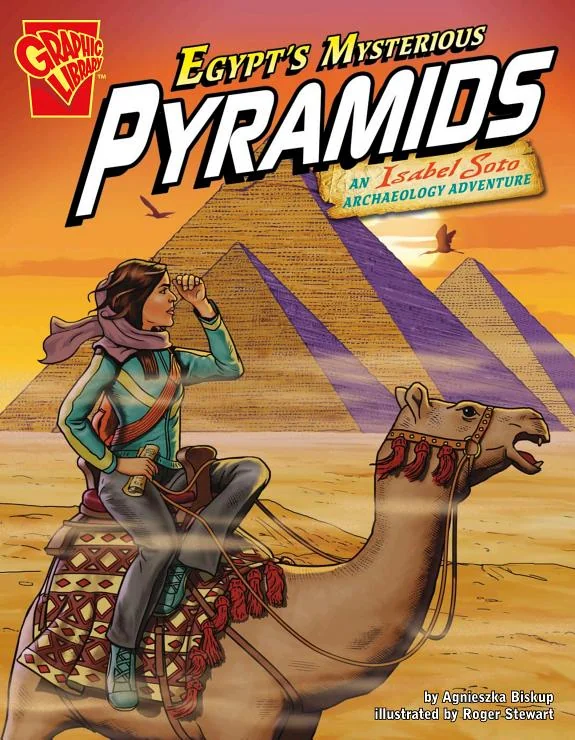
Agnieszka Biskup’s Egypt's Mysterious Pyramids offers a visually driven approach to a subject rich with historical and speculative inquiry. The graphic novel format is its primary strength, allowing complex ideas about pyramid construction and ancient Egyptian cosmology to be rendered in an accessible, engaging manner. Isabel Soto's adventure provides a narrative thread that, while sometimes straightforward, effectively guides the reader through various theories and historical snippets. However, the book occasionally sacrifices depth for breadth, with some explanations feeling truncated due to the visual medium's constraints. A particularly striking sequence involves Isabel examining the precision of the pyramid's base, hinting at sophisticated surveying techniques that fuel ongoing debate. While not a scholarly treatise, it succeeds in sparking curiosity about ancient wonders. It serves as an imaginative gateway, rather than an exhaustive study, for budding Egyptophiles.
📝 Description
74
Agnieszka Biskup's 2012 graphic novel reimagines ancient Egyptian pyramid construction through a fictional quest.
Egypt's Mysterious Pyramids follows Isabel Soto as she seeks to understand the monumental architecture of ancient Egypt. Published in 2012, this graphic novel uses its visual format to combine a narrative adventure with historical facts about the pyramids. The story aims to make complex subjects accessible to a younger audience and general readers.
It covers topics like the pyramids' purpose, construction techniques, and the societal roles of pharaohs. The book also touches on ancient Egyptian spiritual beliefs and astronomical alignments found in structures like the Great Pyramid of Giza. Biskup frames these elements within Isabel's journey, encouraging curiosity about the mysteries surrounding these ancient wonders. The graphic novel format is suited for those who enjoy visual storytelling.
This graphic novel engages with popular esoteric interpretations of ancient Egypt, a tradition that often questions conventional archaeological narratives. It touches upon theories regarding advanced knowledge in ancient civilizations and alternative explanations for the pyramids' origins and purpose. Such themes align with broader esoteric interests in hidden histories and the spiritual significance of ancient sites, presenting these ideas through a fictional lens for a young adult audience.
💡 Why Read This Book?
• Learn about the practical challenges and potential engineering feats involved in constructing the Great Pyramid of Giza, understanding the scale of ancient Egyptian labor and organization. • Explore speculative theories regarding the astronomical alignments of the pyramids, a concept that continues to fascinate researchers and enthusiasts alike. • Engage with the narrative of Isabel Soto's quest for knowledge, experiencing a fictionalized adventure that brings the mystique of ancient Egypt to life through dynamic illustrations.
⭐ Reader Reviews
Honest opinions from readers who have explored this book.
❓ Frequently Asked Questions
What specific pyramid is central to the story in Egypt's Mysterious Pyramids?
The book primarily focuses on the Great Pyramid of Giza, built for Pharaoh Khufu around 2580–2560 BCE. It explores various theories surrounding its construction and purpose.
Who is the main character in Egypt's Mysterious Pyramids?
The protagonist is Isabel Soto, a young adventurer who embarks on a journey to uncover the secrets of Egypt's great pyramids.
What makes the graphic novel format suitable for this topic?
The graphic novel format allows for the visual representation of complex architectural details, ancient Egyptian landscapes, and speculative theories, making the subject matter more accessible and engaging for a broad audience.
Does the book present only conventional historical views on the pyramids?
No, the book explores a range of theories, including those that go beyond standard archaeological explanations, touching upon the esoteric and mysterious aspects associated with the pyramids.
When was Egypt's Mysterious Pyramids first published?
Egypt's Mysterious Pyramids was first published in 2012, reflecting contemporary interest in ancient mysteries and alternative historical perspectives.
Is the book suitable for younger readers interested in history?
Yes, its graphic novel format and adventure narrative make it suitable for young adult readers and those new to the topic of ancient Egypt.
🔮 Key Themes & Symbolism
Pyramid Construction Mysteries
The book explores the enduring questions surrounding how the ancient Egyptians constructed such monumental structures. It presents various hypotheses, from conventional explanations involving vast labor forces and ingenious scaffolding to more speculative theories about advanced knowledge or lost technologies, encouraging readers to ponder the sheer scale and precision involved in projects like the Pyramid of Giza.
Ancient Egyptian Cosmology
Central to understanding the pyramids is grasping the ancient Egyptian worldview. The narrative touches upon their beliefs regarding the afterlife, the divine nature of pharaohs, and the cosmic order. The book explores how these spiritual and philosophical underpinnings likely motivated the creation of these massive tombs and their intricate internal designs.
The Quest for Lost Knowledge
Through Isabel Soto's journey, the book frames the pyramids as repositories of ancient wisdom. It taps into the allure of discovering forgotten secrets and advanced understanding possessed by past civilizations. This theme encourages readers to consider what knowledge might have been lost and what clues the ancient structures might still hold.
Visual Storytelling of History
The graphic novel format itself is a key theme, demonstrating how visual art can interpret and convey historical and speculative concepts. The illustrations bring to life the grandeur of the pyramids, the Egyptian landscape, and the protagonist's discoveries, offering a unique perspective that complements traditional historical accounts.
💬 Memorable Quotes
Direct passages from the work, attributed to the author.
“The precision of the base is astonishing, even by today's standards.”
— This statement highlights the incredible accuracy of ancient Egyptian builders, particularly concerning the Great Pyramid of Giza. It suggests a level of surveying and alignment skill that continues to impress modern engineers and fuels speculation about their methods.
“These structures were not just tombs, but conduits to the stars.”
— This interpretation points to theories linking the pyramids' orientation and design to astronomical observations and beliefs about the afterlife. It suggests a cosmic purpose beyond simple burial, connecting the earthly realm with celestial journeys.
“Isabel felt the weight of millennia pressing down.”
— This evocative phrase captures the profound sense of history and mystery that the pyramids inspire. It conveys the emotional impact of standing before these ancient monuments and contemplating the civilizations that created them.
“Was their knowledge truly lost, or merely hidden?”
— This question directly addresses the central theme of uncovering ancient secrets. It implies that the wisdom of past civilizations, particularly concerning monumental construction and cosmology, might still be accessible if the right keys are found.
“The Nile birthed a civilization capable of wonders.”
— This sentiment emphasizes the crucial role of the Nile River in the development of ancient Egyptian culture and its remarkable achievements. It serves as a reminder that the unique environment fostered the conditions for such monumental undertakings.
🌙 Esoteric Significance
Tradition
This work draws loosely from modern esoteric traditions that view ancient sites, particularly the Egyptian pyramids, as repositories of lost knowledge and spiritual technology. While not strictly adhering to a specific lineage like Hermeticism or Gnosticism, it carries the Theosophical interest in ancient civilizations possessing advanced wisdom, often reinterpreting historical structures through a lens of hidden meaning and cosmic purpose.
Symbolism
The pyramids themselves are potent symbols of ascension, stability, and the connection between the earthly and divine. Within the book's context, they can represent hidden knowledge, the journey of the soul, and the enduring power of human ingenuity or even pre-human intelligence. The narrative may also explore motifs related to the Nile, hieroglyphs, and pharaonic iconography as keys to unlocking these deeper meanings.
Modern Relevance
The enduring fascination with Egypt's pyramids, as depicted in this book, continues to influence contemporary popular culture and fringe spiritual movements. It appeals to modern interest in ancient astronaut theories, sacred geometry, and the search for evidence of advanced ancient technologies. Thinkers and practitioners exploring these themes often cite the pyramids as primary examples, keeping the speculative interpretations alive.
👥 Who Should Read This Book
• Young adult readers and educators seeking engaging introductions to ancient Egyptian history and mythology through visual storytelling. • Enthusiasts of speculative history and alternative archaeology interested in exploring popular theories about pyramid construction and purpose. • Individuals curious about the esoteric interpretations of ancient sites who prefer narrative-driven content over dense academic texts.
📜 Historical Context
Published in 2012, Agnieszka Biskup's Egypt's Mysterious Pyramids emerged during a period of sustained popular interest in ancient mysteries and alternative historical narratives. The early 21st century saw a proliferation of documentaries, books, and online content exploring speculative theories about ancient civilizations, often focusing on Egypt. While mainstream archaeology attributes the construction of the Great Pyramid of Giza to Pharaoh Khufu around 2580–2560 BCE, alternative theories, including those involving extraterrestrial influence or lost super-civilizations, continued to gain traction in popular culture. This book taps into that fascination, presenting these ideas within an accessible graphic novel format. Unlike academic discourse, which largely dismisses these fringe theories, Biskup's work engages with them directly, reflecting a broader cultural trend that often prioritizes enigma over established fact, a stark contrast to the rigorous methodologies championed by Egyptologists like Zahi Hawass.
📔 Journal Prompts
The precision of the Great Pyramid's base as a symbol of ancient knowledge.
Isabel Soto's imagined discovery of hidden chambers within the pyramids.
The contrast between conventional archaeological explanations and speculative theories about pyramid construction.
Reflecting on the motivations behind building such monumental structures in ancient Egypt.
The role of the Nile River in fostering the civilization that built the pyramids.
🗂️ Glossary
Great Pyramid of Giza
The largest of the three pyramids in Giza, Egypt, built as a tomb for the Fourth Dynasty Egyptian pharaoh Khufu around 2580–2560 BCE. It is renowned for its immense size and precise construction.
Pharaoh
The title given to the rulers of ancient Egypt, considered divine or semi-divine figures who held absolute political and religious authority over the kingdom.
Cosmology
The study of the origin, evolution, and eventual fate of the universe. In the context of ancient Egypt, it refers to their understanding of the structure and workings of the cosmos and humanity's place within it.
Hieroglyphs
The formal writing system used in ancient Egypt, combining logographic, syllabic, and alphabetic elements. Often found inscribed on tomb walls and monuments.
Afterlife
The ancient Egyptian belief in a continued existence after death, for which elaborate preparations, including mummification and tomb construction, were undertaken.
Scaffolding
A temporary structure used to support workers and materials during the construction or repair of buildings. Theories about pyramid construction often involve complex scaffolding systems.
Esoteric
Intended for or likely to be understood by only a small number of people with a specialized knowledge or interest; relating to mystical, spiritual, or occult beliefs.
This book appears in 1 collection
🔮 Readers Also Liked
Browse all →








From the “Pyramids” Collection
View all →


More Free Occult Philosophy Books
View all →