In Search of Lemuria
 72
72

In Search of Lemuria
Mark Williams' "In Search of Lemuria" is less an archaeological investigation and more an intellectual cartography of a persistent myth. The book excels in tracing the lineage of the Lemurian concept, demonstrating its surprising reach from ancient Indian texts to the speculative pronouncements of Edgar Cayce. Williams meticulously maps how this idea of a lost continent functions as a potent symbol for spiritual origins and lost paradises across disparate cultures. A particular strength lies in its clear exposition of how figures like Madame Blavatsky embedded Lemuria within the evolutionary schema of her Root Races. However, the work occasionally feels more like a compilation of references than a deeply analytical text. While the breadth of sources is impressive, a more critical examination of the origins of these myths, beyond their later esoteric interpretations, might have added further depth. The book's value lies in its comprehensive overview of Lemuria's presence in occult and New Age thought. Williams’ survey of Lemuria’s symbolic weight in global mythologies provides a solid foundation for further inquiry.
📝 Description
72
Mark Williams' 2001 book examines Lemuria not as a place, but as a persistent archetype in global myth.
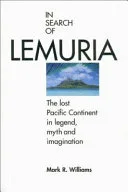
First published in 2001, Mark Williams' "In Search of Lemuria" investigates the enduring myth of a lost southern continent, often confused with Mu. Williams approaches Lemuria not as a geological fact, but as a powerful archetype embedded in indigenous cosmologies and esoteric traditions worldwide. He traces its conceptual origins through ancient Hindu scriptures, Australian Aboriginal oral histories, Polynesian creation narratives, and the lore of American Indians. The book frames Lemuria as a spiritual counterpart to Atlantis, detailing its appearance in the speculative theories of occult figures like Madame Blavatsky and the visions of Edgar Cayce.
This work is suited for readers interested in the less charted territories of history and mythology. It is particularly relevant for those drawn to comparative religion, ancient civilizations, and New Age philosophies. Individuals familiar with Lemuria through Theosophy, Edgar Cayce's prophecies, or modern channeling will find it a helpful survey. The book appeals to a curious mindset, seeking to understand how a singular, often overlooked concept can influence diverse cultures and spiritual movements over time. It offers a distinct perspective on global myths and the human desire for lost paradises.
The concept of Lemuria gained significant attention in the late 19th and early 20th centuries, a time of widespread anthropological speculation and occult revival. Helena Blavatsky, the founder of the Theosophical Society, was instrumental in popularizing Lemuria as the origin of humanity's root races in her 1888 book "The Secret Doctrine." This era also featured figures like Augustus Le Plongeon, who interpreted Mayan inscriptions to support the existence of advanced ancient civilizations. Williams places his study within this historical current, acknowledging the influence of these early esoteric thinkers and their engagement with ancient lore.
💡 Why Read This Book?
• Understand the origins and spread of the Lemurian mythos, tracing its roots back to 19th-century Theosophy and figures like Madame Blavatsky. • Explore how the concept of Lemuria functions as a symbolic 'lost homeland' across various indigenous traditions and occult speculations. • Gain insight into the enduring appeal of lost continents in spiritual thought, contrasting Lemuria with Atlantis in esoteric circles.
⭐ Reader Reviews
Honest opinions from readers who have explored this book.
❓ Frequently Asked Questions
When was "In Search of Lemuria" first published?
Mark Williams' "In Search of Lemuria" was first published in 2001, contributing to the ongoing exploration of esoteric and lost civilization myths in the early 21st century.
What is the main difference between Lemuria and Atlantis in esoteric literature?
In esoteric traditions, Atlantis is often depicted as a technologically advanced but spiritually declining civilization, while Lemuria is frequently portrayed as an older, more spiritually pure, and less materially focused ancestral homeland.
Which ancient mythologies are cited as evidence for Lemuria?
The book references Hindu mythology, the traditions of Australian Aborigines, Polynesian creation stories, and the lore of various American Indian tribes as potentially containing echoes of the Lemurian concept.
Who were key figures in popularizing the idea of Lemuria before Mark Williams' book?
Key figures include Helena Blavatsky, who introduced Lemuria in her Theosophical writings, and Edgar Cayce, whose psychic readings also discussed a lost continent often identified with Lemuria.
Does "In Search of Lemuria" present geological evidence for the continent?
No, the book primarily focuses on the mythic, symbolic, and spiritual dimensions of Lemuria, examining its presence in folklore and esoteric thought rather than presenting geological or archaeological proof.
What is the 'Root Race' theory mentioned in relation to Lemuria?
The 'Root Race' theory, popularized by Theosophy, suggests successive evolutionary stages of humanity. Lemuria is often associated with an earlier root race, preceding the Atlantean and current Aryan races.
🔮 Key Themes & Symbolism
Lemuria as Archetypal Homeland
The work examines Lemuria not as a literal lost continent but as a powerful archetype of an ancestral spiritual origin. This concept resonates across cultures, appearing in Hindu myths, Aboriginal Dreamtime stories, and Polynesian lore. Williams traces how this idea of a primal, paradisiacal homeland serves a deep psychological and spiritual need for connection to a lost, pure past, distinct from the more technologically tinged mythos of Atlantis.
Theosophical Influence on Lemurian Lore
A significant portion of the book details how Helena Blavatsky and Theosophy integrated Lemuria into their grand narrative of human evolution. Lemuria is presented as the cradle of one of humanity's earlier 'Root Races,' characterized by spiritual development rather than material advancement. This framework, outlined in "The Secret Doctrine," provided a potent esoteric interpretation that influenced subsequent New Age thinkers and psychics.
Comparative Mythology and Esoteric Symbolism
Williams explores the parallels between Lemurian narratives and various indigenous cosmologies, suggesting a shared, albeit fragmented, memory or symbolic representation of a primordial land. The book analyzes how figures like Edgar Cayce interpreted these myths through psychic means, further solidifying Lemuria's place in esoteric speculation as a counterpoint to Atlantis, representing a more ancient, spiritual epoch.
The Persistence of Lost Continent Myths
The book addresses why the idea of lost continents like Lemuria and Atlantis continues to capture the imagination. It posits that these myths fulfill a yearning for lost wisdom, spiritual unity, and a connection to a more perfect past. Williams illustrates how these narratives function as symbolic landscapes for exploring humanity's origins and its potential future spiritual evolution.
💬 Memorable Quotes
Direct passages from the work, attributed to the author.
“Lemuria lives on in the mythology of Hindus and Australian Aborigines, Polynesians and American Indians.”
— This highlights the book's central thesis: that the concept of Lemuria, despite its obscurity in mainstream history, is deeply embedded in the foundational narratives of diverse global cultures.
“Its place is likewise secure beside Atlantis in the metaphysical speculations of Occult pioneers Madame Blavatsky and Edgar Cayce.”
— This points to Lemuria's established position within the esoteric canon, often discussed in conjunction with Atlantis, and emphasizes its role in the speculative frameworks of influential occult figures.
“The lost continent of Lemuria, the land of Mu, is a place that history has nearly forgotten.”
— This opening statement frames Lemuria as a spectral presence, a civilization relegated to the margins of historical record yet persisting powerfully in collective consciousness and spiritual traditions.
“New Age channelers and soothsayers continue to invoke its memory.”
— This indicates the enduring relevance and adaptation of the Lemurian mythos within contemporary spiritual movements, showing its continued use as a source of inspiration and esoteric knowledge.
“The work explores how Lemuria functions as a spiritual counterpoint to Atlantis.”
— This interpretation suggests that Lemuria is often conceptualized in opposition to Atlantis, perhaps representing a more primal, spiritual, or feminine energy compared to the latter's association with advanced technology and potential societal collapse.
🌙 Esoteric Significance
Tradition
The work engages directly with the Theosophical tradition, which synthesized elements from Eastern religions (particularly Hinduism and Buddhism) with Western esotericism. Lemuria, as conceptualized by Blavatsky, fits within this lineage as a key component of a vast, occult cosmology detailing the evolution of humanity through successive 'Root Races' and planetary chains.
Symbolism
Key symbols include the 'lost continent' itself, representing an original spiritual unity and a lost golden age. The concept of 'Root Races' is central, with Lemurians often depicted as more spiritually developed and less physically dense than later human types. The idea of 'Mu,' sometimes conflated with Lemuria, also carries symbolic weight as a primordial motherland.
Modern Relevance
Contemporary New Age spirituality, channeling, and certain branches of alternative history continue to draw on the Lemurian mythos. Thinkers and practitioners exploring themes of ancient wisdom, pre-diluvian civilizations, and humanity's spiritual origins often reference Lemuria as a source of lost knowledge or a model for a more harmonious existence.
👥 Who Should Read This Book
• Students of Theosophy and Helena Blavatsky's teachings, seeking to understand the origins and context of the Lemurian concept within her broader cosmology. • Researchers in comparative mythology and folklore, interested in how the idea of lost continents appears across disparate global traditions. • Enthusiasts of Edgar Cayce and New Age spirituality, who wish to explore the psychic interpretations and enduring legacy of Lemuria in modern esoteric thought.
📜 Historical Context
The concept of Lemuria emerged prominently in the late 19th century, a period marked by intense interest in ancient civilizations, comparative mythology, and the burgeoning field of occultism. Helena Blavatsky's Theosophical Society, founded in 1875, was instrumental in popularizing Lemuria as the homeland of one of humanity's earlier 'Root Races' in her 1888 publication, "The Secret Doctrine." This idea resonated within a spiritual climate seeking origins beyond conventional biblical narratives, often influenced by interpretations of ancient Sanskrit texts and early anthropological theories. Contemporaries like Augustus Le Plongeon were similarly exploring ancient American civilizations. Theosophy's framework provided a cosmic evolutionary context for Lemuria, positioning it as a more ancient and spiritually advanced civilization than the popularly discussed Atlantis. While mainstream academia largely dismissed these theories, they found fertile ground within esoteric circles and later, the New Age movement, shaping speculative thought about lost worlds and human origins.
📔 Journal Prompts
The persistence of Lemuria across indigenous mythologies: How does this shared archetype reflect a collective human yearning?
Madame Blavatsky's 'Root Races': What does the conceptualization of Lemuria as an early stage of human evolution suggest about spiritual progress?
The symbolic contrast between Lemuria and Atlantis: What qualities does each lost continent represent in the esoteric imagination?
The role of psychic readings, like those of Edgar Cayce, in shaping the modern Lemurian narrative: How does channeled information influence historical myth?
The idea of a forgotten history: Reflect on the allure of lost civilizations and their potential lessons for contemporary society.
🗂️ Glossary
Lemuria
A hypothetical lost continent, often located in the Indian or Pacific Ocean, popularized in the 19th century by occultists like Helena Blavatsky as the homeland of an ancient human race.
Mu
A name for a lost continent, sometimes used interchangeably with Lemuria, popularized by Augustus Le Plongeon and later James Churchward, associated with Pacific or Atlantic locations.
Theosophy
A spiritual movement founded by Helena Blavatsky in 1875, aiming to synthesize Eastern and Western esoteric traditions, and positing a complex cosmology of human and planetary evolution.
Root Races
A Theosophical concept describing successive stages of human evolution on Earth, with Lemuria and Atlantis representing earlier major stages before the current Aryan Root Race.
Edgar Cayce
An American psychic known for his 'Sleeping Prophet' readings, which often included details about past lives, Atlantis, and Lemuria, influencing New Age thought.
Akashic Records
In esoteric traditions, a compendium of all universal events, thoughts, and emotions that have ever occurred. Believed by some to be accessible through psychic or meditative means.
Occult Pioneers
Refers to influential figures in the late 19th and early 20th centuries who developed and popularized esoteric philosophies and spiritual systems, such as Madame Blavatsky and Rudolf Steiner.