Monarchisms in the Age of Enlightenment
 82
82

Monarchisms in the Age of Enlightenment
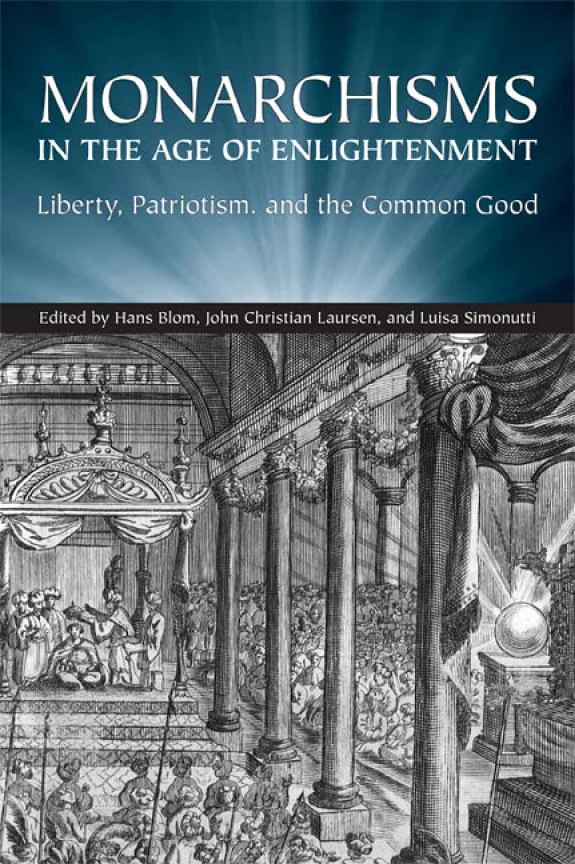
The tendency to sideline monarchist thought in favor of republican narratives has long been a blind spot in Enlightenment historiography. Laursen and Blom's collection, *Monarchisms in the Age of Enlightenment*, offers a much-needed corrective, demonstrating that monarchy was far from a defunct concept. The strength of the volume lies in its meticulous examination of how thinkers in the 17th and 18th centuries actively defended and re-articulated monarchical principles as responses to political chaos. A particularly insightful essay explores how the perceived failures of the English Commonwealth influenced subsequent debates on governance. However, the collection occasionally suffers from a dense academic style that may deter readers less familiar with the intricacies of early modern political theory. One limitation is the lack of a unified, overarching theoretical framework connecting all essays, leading to some fragmentation. Despite this, the book provides a valuable service by illuminating a neglected dimension of Enlightenment political discourse, proving that the monarchical idea remained a potent force.
📝 Description
82
This 2016 collection challenges the focus on republicanism in 17th and 18th century political thought.
Monarchisms in the Age of Enlightenment reconsiders the political philosophies of the 17th and 18th centuries. The essays collected here argue against the common historical view that this era was solely defined by the rise of republicanism. Instead, they show the intellectual endurance and significance of monarchical ideas. The contributors examine how thinkers responded to perceived weaknesses in republican experiments, finding in monarchy a means to achieve stability and order. The book is aimed at academics and advanced students in political theory, intellectual history, and early modern European studies.
It is particularly useful for those interested in the foundations of Western political thought beyond the standard republican narrative. Readers will gain insight into the intellectual justifications for monarchy during a time of considerable change and debate. The collection also speaks to those studying the development of statecraft. The period between the Glorious Revolution and the French Revolution was a fertile ground for political concepts, and this work highlights the persistent arguments for monarchical rule.
While the Enlightenment is often associated with secular reason and the rise of republican ideals, this collection reveals a persistent undercurrent of thought that defended monarchy. These arguments, often rooted in appeals to divine right or natural law, represent a significant, though often overlooked, tradition within the era's intellectual discourse. The book highlights how these concepts provided frameworks for understanding political order and stability, even as revolutionary ideas gained traction.
💡 Why Read This Book?
• Understand the intellectual justifications for monarchy beyond mere tradition, learning how thinkers like Filmer defended it against republican critiques in the context of the 17th century. • Gain a nuanced perspective on Enlightenment political thought by seeing how monarchy was presented as a solution to the instability of republican experiments, a counterpoint to the standard narrative. • Explore the concept of the ‘body politic’ as conceptualized by monarchists, understanding its symbolic and functional roles in maintaining state order during the turbulent 18th century.
⭐ Reader Reviews
Honest opinions from readers who have explored this book.
❓ Frequently Asked Questions
What historical period does 'Monarchisms in the Age of Enlightenment' primarily cover?
The book focuses on the intellectual landscape of the 17th and 18th centuries, a period marked by significant political upheaval and philosophical debate across Europe, particularly concerning forms of governance.
How does this book challenge traditional views of Enlightenment political thought?
It contests the notion that Enlightenment thinkers were solely focused on republicanism, demonstrating the continued intellectual importance and sophisticated defense of monarchical ideas as valid solutions to political instability.
Who are some of the key thinkers whose ideas on monarchy are discussed?
While not all are explicitly detailed in the blurb, the work engages with the broader currents of thought that included figures like Hobbes and Locke, and likely examines later proponents and critics of monarchy.
What is the main argument regarding republicanism in the book?
The book argues that many Enlightenment thinkers viewed republican experiments with skepticism due to perceived chaos and violence, and thus saw monarchy as a more stable and effective form of government.
Is this book suitable for a general reader interested in history?
While it offers valuable historical context, the book is primarily aimed at an academic audience and may require prior knowledge of political theory and early modern European history.
What is the significance of examining 'monarchisms' rather than just 'monarchy'?
The plural 'monarchisms' suggests the book explores the diverse range of theories and justifications for monarchical rule, acknowledging that it was not a monolithic concept but encompassed various philosophical approaches.
🔮 Key Themes & Symbolism
Monarchy as Stability
This theme explores how 17th and 18th-century thinkers posited monarchy not as an archaic system, but as a deliberate answer to the perceived chaos and violence inherent in republican governance. The collection examines arguments that the singular authority of a monarch provided a necessary bulwark against factionalism and instability, contrasting this with the perceived fragility of popular sovereignty during this era.
Republicanism's Perceived Failures
A central focus is the critique of republican experiments that emerged during the period. The book investigates how the perceived shortcomings of these systems—such as civil unrest or ineffective administration—were leveraged by proponents of monarchy. It highlights instances where the instability following republican attempts was used as evidence for the necessity of monarchical order, thereby re-framing the political discourse of the Enlightenment.
Diverse Monarchical Theories
The collection moves beyond a monolithic understanding of monarchy to present its various theoretical underpinnings during the Enlightenment. It examines how concepts like divine right, natural law, and the monarch's role as a symbolic unifier were articulated and defended. This reveals a complex intellectual tradition that adapted and responded to contemporary challenges, rather than simply clinging to tradition.
The Enlightenment's Political Spectrum
By highlighting the intellectual currents supporting monarchy, the book expands our understanding of the Enlightenment's political spectrum. It demonstrates that the era was not solely a march towards democracy or republicanism, but a dynamic period where various forms of governance were debated and defended with considerable intellectual rigor, including sophisticated arguments for the continuation of monarchical rule.
💬 Memorable Quotes
Direct passages from the work, attributed to the author.
“Many thinkers of the seventeenth and eighteenth centuries saw monarchy as a solution to instability, chaos, and violence.”
— This highlights the core thesis that monarchy was not merely a historical artifact but an actively considered political solution during the Enlightenment, positioned against the perceived dangers of republicanism.
“Historians of early-modern European political thought have tended to neglect the concept of monarchy and monarchism.”
— This points to a historiographical gap the book aims to fill, suggesting that a focus on republicanism has led to an incomplete understanding of the intellectual debates of the Enlightenment.
“The work illustrates that many thinkers viewed monarchy as a solution to the chaos of experiments with republican government.”
— This emphasizes the pragmatic and responsive nature of monarchist thought during the period, framing it as an intellectual response to the practical problems encountered with alternative political systems.
“The collection aims to correct the imbalance in historical focus towards republicanism.”
— This articulates the book's scholarly objective: to rebalance the historical narrative by giving due attention to the often-underestimated significance of monarchical political philosophy.
“The period saw thinkers grappling with the perceived failures of republican experiments.”
— This suggests that the arguments for monarchy presented in the book are often framed in opposition to, and as a reaction against, the perceived negative outcomes of republican political endeavors.
🌙 Esoteric Significance
Tradition
While not overtly esoteric in a mystical sense, the book touches upon traditions of political theology and the divine right of kings, which have historical connections to more esoteric doctrines concerning cosmic order and divinely appointed rulers. These ideas can be seen as part of a broader metaphysical framework underpinning political authority, linking the temporal realm to a perceived higher order, a concept explored in various Hermetic and Gnostic traditions.
Symbolism
The concept of the 'Monarch' itself can be viewed as a potent symbol of unity, order, and the divine principle made manifest in the earthly realm. The 'Crown' symbolizes sovereignty and legitimacy, while the 'Throne' represents stable authority. In esoteric traditions, these symbols often represent a hierarchical cosmic order, with the earthly ruler mirroring a celestial governor, embodying a principle of centralized, divinely sanctioned power.
Modern Relevance
Contemporary discussions on political authority, national identity, and the critique of democratic systems sometimes echo themes found in monarchist thought. Thinkers exploring alternative political structures, or those disillusioned with the perceived fragmentation of modern democracies, might draw inspiration from the historical arguments for unified, stable leadership as presented in this collection.
👥 Who Should Read This Book
• Advanced students of political philosophy and intellectual history seeking to understand the full spectrum of Enlightenment political thought beyond republicanism. • Scholars of early modern Europe interested in reassessing the justifications and theoretical underpinnings of monarchical governance during a period of intense political change. • Readers curious about the intellectual counterpoints to revolutionary ideals, who wish to explore why monarchy remained a significant political concept debated throughout the 17th and 18th centuries.
📜 Historical Context
The Age of Enlightenment, spanning roughly the 17th and 18th centuries, was a period of profound intellectual and political transformation in Europe. While often characterized by the rise of rationalism and the advocacy for republican ideals, *Monarchisms in the Age of Enlightenment* argues for the continued relevance of monarchical thought. This era witnessed intense debates following events like the English Civil War and the rise of thinkers such as John Locke, whose ideas on governance were influential. The collection challenges the historiographical tendency to focus solely on the development of republicanism, highlighting how thinkers like Sir Robert Filmer, though controversial, represented a significant strand of thought. The essays likely engage with contemporaries and intellectual precursors who defended various forms of monarchy as bulwarks against the perceived chaos of popular rule, responding to the intellectual currents that also fueled revolutionary sentiment.
📔 Journal Prompts
The perceived chaos of republican experiments during the 17th and 18th centuries.
Monarchy as a proposed solution to political instability.
The historical neglect of monarchism in Enlightenment studies.
Analyzing the arguments for absolute versus constitutional monarchy.
The symbolic representation of the monarch in political discourse.
🗂️ Glossary
Monarchism
The political principle or system that advocates for or supports monarchy as a form of government, emphasizing the role of a single sovereign ruler.
Republicanism
A political ideology that advocates for a state in which supreme power is held by the people and their elected representatives, rather than a monarch.
Age of Enlightenment
An intellectual and cultural movement in the 17th and 18th centuries emphasizing reason, individualism, and skepticism towards traditional authority, which profoundly influenced Western political thought.
Divine Right of Kings
The doctrine that kings derive their authority from God, not from their subjects, and are therefore not accountable to earthly power.
Body Politic
A metaphor used to represent the people of a nation or state as a single, unified entity, often personified by the sovereign.
Historiography
The study of the writing of history, including the methods, theories, and assumptions used by historians.
Factionalism
The tendency for people to divide into opposing groups or factions within a larger group, often leading to conflict and instability.
This book appears in 1 collection
🔮 Readers Also Liked
Browse all →








From the “Enlightenment” Collection
View all →





More Free Esoteric History & Biography Books
View all →