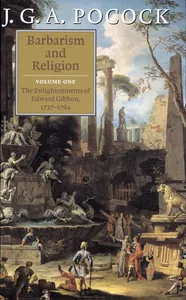
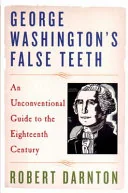
George Washington's False Teeth
 83
83

George Washington's False Teeth
Darnton's essays in *George Washington's False Teeth* offer a welcome corrective to the sometimes overblown celebrations of the Enlightenment. He demonstrates a meticulous command of his sources, particularly in dissecting the practical realities and limited reach of certain intellectual currents. A notable strength is his ability to re-examine familiar historical terrain with fresh skepticism, as seen in his discussion of how the symbolic power of Reason and Liberty may have been more potent in later retellings than in the lived experience of the 18th century. However, the collection can occasionally feel like a series of tightly argued academic interventions, perhaps lacking a broader narrative thread that might draw in a less specialized reader. The central argument for a 'scaled-down' interpretation, while intellectually rigorous, might leave some yearning for a more definitive exploration of what *did* endure. Ultimately, Darnton provides a valuable, albeit sometimes dense, scholarly reappraisal of a pivotal era.
📝 Description
83
Robert Darnton's 2003 essays question the traditional narrative of the French Enlightenment.
Published in 2003, Robert Darnton's collection of essays, *George Washington's False Teeth*, takes a critical look at the intellectual and cultural history of the French Enlightenment. Instead of celebrating it as a period of universal progress, Darnton argues for a more limited view of its impact. He revisits key debates about the public sphere and the spread of ideas, engaging with scholars like Jürgen Habermas and Michel Foucault. Darnton examines how Enlightenment ideals interacted with the daily lives of ordinary people, suggesting that their reach was not as extensive as often portrayed.
This volume is suited for readers interested in historical revisionism and the questioning of established historical interpretations. It is particularly relevant for students and scholars of 18th-century European history who wish to understand how the significance of historical movements is debated and constructed. Darnton's work challenges the idea of a single, teleological march of progress, offering a more cautious assessment of the Enlightenment's immediate and long-term influence.
While not strictly an esoteric text in the occult sense, Darnton's work engages with the 'esotericism' of historical interpretation itself. It scrutinizes how grand narratives about intellectual movements are built, debated, and often mythologized over time. By challenging the widely accepted, almost sacred, status of the Enlightenment as a singular force for modernity, Darnton reveals the constructed nature of historical significance. This analytical approach to the formation of collective memory and intellectual tradition aligns with a broader concern found in some esoteric traditions: the critical examination of accepted truths and the revelation of underlying structures of belief.
💡 Why Read This Book?
• Understand how historical narratives are constructed by examining Darnton's argument for a 'scaled-down interpretation' of the Enlightenment's significance, moving beyond simplistic celebratory accounts. • Gain insight into the dissemination of ideas during the 18th century by exploring Darnton's analysis of the gap between elite thought and popular reception. • Re-evaluate the impact of the Enlightenment by considering specific historical examples and questioning the retrospective idealization of the period, as discussed in his essays.
⭐ Reader Reviews
Honest opinions from readers who have explored this book.
❓ Frequently Asked Questions
What is the central argument of Robert Darnton's *George Washington's False Teeth*?
The book argues for a more modest and less universally transformative view of the Enlightenment, challenging the idea that its ideals immediately or broadly reshaped society in the 18th century.
What historical period does *George Washington's False Teeth* primarily focus on?
The collection concentrates on the Enlightenment in France, specifically examining the intellectual and social currents of the 18th century.
Who is Robert Darnton and why is he significant?
Robert Darnton is a prominent historian specializing in the Enlightenment and the history of the book. His work is known for its detailed social and cultural analyses.
Does the book discuss George Washington's false teeth literally?
No, the title is metaphorical. It uses the anecdote of Washington's dentures to represent the gap between appearance and reality, and the challenges of historical interpretation.
What kind of readership would appreciate this collection?
Readers interested in historiography, the French Enlightenment, the history of ideas, and scholarly debates about the impact of intellectual movements will find it valuable.
When was *George Washington's False Teeth* first published?
The collection was first published in 2003, reflecting scholarly discussions and reassessments of the Enlightenment at the turn of the 21st century.
🔮 Key Themes & Symbolism
Revisioning the Enlightenment
Darnton challenges the monolithic view of the Enlightenment as a uniformly progressive force that instantly modernized society. He argues for a 'scaled-down interpretation,' suggesting that its immediate impact on the broader population was less pervasive than often assumed. This involves scrutinizing how Enlightenment ideals were understood and applied in practice, often revealing a significant gap between the pronouncements of philosophes and the lived realities of 18th-century France.
The Public Sphere and Its Limits
The collection engages with concepts like the public sphere, a space for rational discourse crucial to Enlightenment thought. However, Darnton probes the actual reach and accessibility of this sphere. He questions whether these discussions truly permeated all levels of society or remained confined to intellectual elites, thereby moderating the era's claims to universal reason and widespread societal transformation.
Historiography and Memory
A central theme is the way historical periods are remembered and interpreted. Darnton examines how subsequent generations have constructed narratives about the Enlightenment, often imbuing it with a significance and coherence it may not have possessed at the time. This involves analyzing the selective emphasis on certain figures and ideas, and the tendency to project modern values onto past intellectual movements.
The Social History of Ideas
Darnton applies principles of social history to the history of ideas. He moves beyond analyzing texts in isolation to consider their circulation, reception, and practical implications within specific social contexts. This approach seeks to understand how abstract philosophical concepts interacted with everyday life and social structures in 18th-century France.
💬 Memorable Quotes
Direct passages from the work, attributed to the author.
“The Enlightenment was not a single, monolithic movement.”
— This statement captures Darnton's core argument, urging readers to avoid treating the Enlightenment as a uniform phenomenon. It suggests a need to examine its diverse strands and varying impacts across different social strata and geographical regions.
“We must scale down our interpretation of the Enlightenment.”
— This is a direct call to revise traditional, often celebratory, narratives of the Enlightenment. Darnton advocates for a more cautious and evidence-based assessment of its actual achievements and societal penetration during the 18th century.
“The gap between the philosophes and the people.”
— This phrase highlights a key analytical focus: the disconnect between the intellectual elite and the broader populace. It implies that Enlightenment ideas may not have translated directly or universally into popular consciousness or practice.
“The construction of historical significance.”
— This points to Darnton's interest in how and why certain historical periods or movements come to be seen as important. It suggests that historical significance is not inherent but is actively shaped through interpretation and narrative.
💡 Key Ideas
Editorial paraphrase of the work's core concepts — not direct quotes.
Reason and its practical limitations in the 18th century.
This paraphrased concept reflects Darnton's examination of how the abstract ideal of 'Reason' fared when confronted with the complexities and constraints of actual life in the period, questioning its pervasive influence.
🌙 Esoteric Significance
Tradition
While not explicitly tied to a single esoteric lineage, Darnton's work appeals to traditions that emphasize hidden knowledge, hidden histories, and the critique of surface appearances. His focus on the gap between proclaimed ideals and lived realities aligns with Gnostic or Hermetic traditions that often highlight the illusory nature of the material world and the importance of discerning underlying truths. The book encourages a critical examination of dominant narratives, akin to esoteric practices that seek to unveil concealed structures of power or understanding.
Symbolism
The titular 'false teeth' serve as a potent symbol. In an esoteric context, they can represent artifice, deception, or the imperfect, prosthetic nature of human attempts to achieve perfection or completeness. Washington, a figure of immense historical gravitas, is presented with a physical imperfection, symbolizing the gap between the public image of foundational figures and their private realities, or the often-unseen mechanisms that support societal structures.
Modern Relevance
Contemporary scholars and practitioners interested in critical theory, the sociology of knowledge, and the deconstruction of historical myths find Darnton's approach highly relevant. His methods inform studies of how dominant ideologies are formed and maintained, and how to analyze the social conditions that mediate the reception of ideas. This appeals to modern 'esoteric' discussions about paradigm shifts and the critique of established intellectual frameworks, encouraging a deeper, more skeptical engagement with foundational historical and philosophical concepts.
👥 Who Should Read This Book
• Students of intellectual history and the French Enlightenment seeking to move beyond celebratory accounts and engage with critical scholarship. • Readers interested in the social history of ideas who want to understand how abstract concepts were received and lived in 18th-century France. • Historians and cultural critics examining the construction of historical narratives and the mythologizing of past eras.
📜 Historical Context
Published in 2003, *George Washington's False Teeth* engages with the ongoing scholarly reassessment of the Enlightenment that gained momentum in the late 20th century. This period saw historians increasingly question grand narratives of progress and universality, influenced by thinkers like Michel Foucault and the Annales School's emphasis on social and cultural history. Darnton's work emerged amidst debates about the nature of the 'public sphere,' a concept popularized by Jürgen Habermas, and offered a more cautious perspective on its reach and impact in 18th-century France. While the Enlightenment was often lauded by earlier scholars as the direct precursor to modern democracy and secularism, Darnton’s essays, along with those of contemporaries like Keith Michael Baker, pushed for a more nuanced understanding of its complexities and limitations, focusing on the social realities that shaped its reception.
📔 Journal Prompts
The metaphorical significance of George Washington's false teeth in challenging historical perception.
The practical limitations of 'Reason' during the 18th century as discussed by Darnton.
Analyze the concept of the 'public sphere' and its limitations in the context of 18th-century France.
How does Darnton's 'scaled-down interpretation' affect the perceived legacy of the Enlightenment?
Reflect on how modern historical narratives might similarly overstate the impact of contemporary intellectual movements.
🗂️ Glossary
Enlightenment
An 18th-century intellectual and cultural movement emphasizing reason, individualism, and skepticism towards tradition and authority, particularly religious and political absolutism.
Philosophes
The intellectuals and writers of the Enlightenment, such as Voltaire, Rousseau, and Diderot, who promoted reason and advocated for social, political, and religious reform.
Public Sphere
A concept, notably developed by Jürgen Habermas, referring to a space in society where individuals can come together to freely discuss and debate public affairs, influencing political action.
Historiography
The study of the writing of history; it involves examining how historical accounts are produced, the methods used, and the evolution of historical interpretation over time.
Annales School
A French school of historiography that emerged in the 1920s, emphasizing long-term social and economic history ('longue durée') over traditional political and event-based narratives.
Scalable interpretation
Darnton's proposed approach to understanding the Enlightenment, advocating for a more modest assessment of its immediate societal impact rather than viewing it as a universally transformative force.
Social History of Ideas
An approach that analyzes intellectual concepts not in isolation but within their specific social, cultural, and economic contexts, examining their circulation and reception.
This book appears in 1 collection
🔮 Readers Also Liked
Browse all →









From the “Enlightenment” Collection
View all →







More Free Esoteric History & Biography Books
View all →