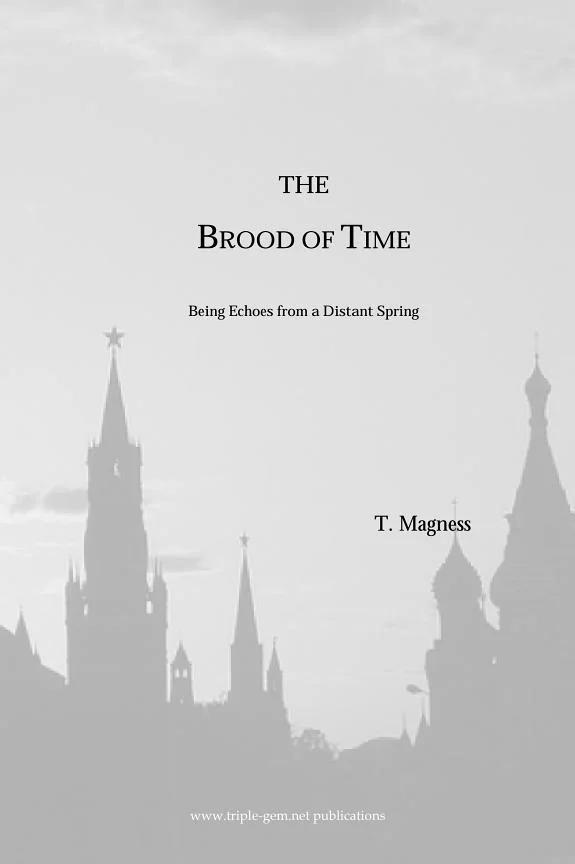
The Brood of Time
 81
81

The Brood of Time
Magness's "The Brood of Time" is an ambitious undertaking, pairing Shakespeare and Tolstoy in a detailed comparative study that spans 470 pages. The strength lies in its deep dive into the psychological landscapes of both authors, particularly in how their "internal turmoil and torment" manifested in their writing. Magness’s analysis of Tolstoy’s moralistic struggles and Shakespeare’s exploration of human frailty is compelling. However, the book’s sheer density can be a hurdle; at times, the intricate parsing of their "respective works" feels overly academic, potentially alienating readers seeking a more accessible narrative. The section on Shakespeare’s Globe Theatre, while informative, doesn't quite bridge the gap to the profound existential questions raised by Tolstoy’s later novels as effectively as one might hope. Ultimately, it's a rigorous scholarly work that offers significant rewards for dedicated literary scholars.
📝 Description
81
Terence Barnett Magness's 2009 book, The Brood of Time, compares Shakespeare and Tolstoy.
Published in 2009, Terence Barnett Magness's The Brood of Time offers a comparative study of William Shakespeare and Leo Tolstoy. Magness examines their lives, internal conflicts, and creative output, finding unexpected parallels between the Elizabethan playwright and the Russian novelist. The book dissects their personalities and the profound struggles that shaped their artistic genius. It positions these two literary giants not as isolated figures, but as individuals deeply influenced by and, in turn, influencing the intellectual and spiritual currents of their respective eras.
This work is for serious students of literature, comparative studies, and intellectual history. Readers interested in the psychological aspects of literary creation and the lasting impact of individual talent will find value. It appeals to those who prefer detailed, scholarly analysis over brief biographical sketches. Scholars studying the development of narrative, character, and themes across different historical periods will also benefit from Magness's approach.
While not explicitly part of a specific esoteric movement, The Brood of Time touches on themes of consciousness and inspiration that align with metaphysical inquiries. Magness's focus on the internal lives of creative figures, particularly their struggles as crucibles for art, resonates with psychological and philosophical explorations of human potential and the nature of genius. The book's examination of how influential figures embody and shape the spiritual currents of their times invites contemplation of forces beyond the purely material.
💡 Why Read This Book?
• Gain a unique perspective on the shared human struggles of two literary titans by examining their "internal turmoil and torment," as explored in Magness's analysis of their lives and works. • Understand how "social backgrounds and societies" profoundly shape even the most exceptional creative minds, offering concrete examples from Shakespeare's Elizabethan England and Tolstoy's 19th-century Russia. • Discover how Magness connects the "respective works" of Shakespeare and Tolstoy, revealing thematic parallels and psychological insights that transcend their different eras and contexts, offering a fresh lens on literary genius.
⭐ Reader Reviews
Honest opinions from readers who have explored this book.
❓ Frequently Asked Questions
What is the primary focus of "The Brood of Time"?
The book focuses on a comparative analysis of William Shakespeare and Leo Tolstoy, exploring their personalities, internal struggles, and how these influenced their literary creations across different eras.
How does "The Brood of Time" compare Shakespeare and Tolstoy?
It compares them by analyzing their "social backgrounds and societies," their "internal turmoil and torment," and their "respective works," highlighting both their differences and surprising commonalities.
Who is the author of "The Brood of Time"?
The author is Terence Barnett Magness, with the book first published in 2009. He is known for his in-depth literary scholarship.
What is the length of "The Brood of Time"?
The book is quite extensive, running to a total of 470 pages, divided into two main parts focusing on Tolstoy and Shakespeare respectively.
What kind of insights does "The Brood of Time" offer?
It offers insights into the psychological depths of literary geniuses, examining how their personal lives and societal contexts informed their profound contributions to literature.
When was "The Brood of Time" first published?
"The Brood of Time" was first published in 2009, providing a modern scholarly perspective on these classic authors.
🔮 Key Themes & Symbolism
The Creative Crucible
Magness posits that the "internal turmoil and torment" experienced by literary giants like Shakespeare and Tolstoy acts as a "brood of time," shaping their genius. This theme explores how personal suffering, moral conflict, and existential angst are not hindrances but essential catalysts for profound artistic expression. The book argues that understanding these internal battles is key to appreciating the depth and enduring power of their "respective works."
Echoes Across Eras
This theme investigates the surprising convergences between individuals separated by vast historical and cultural distances, such as Shakespeare and Tolstoy. It examines how fundamental aspects of the human condition, like love, loss, morality, and the search for meaning, are explored through vastly different literary styles and societal contexts. Magness demonstrates that despite differing "social backgrounds and societies," core human experiences remain remarkably consistent and find parallel expression.
The Author as Microcosm
"The Brood of Time" treats the author's life as intrinsically linked to their literary output. Magness analyzes the "personalities" of Shakespeare and Tolstoy, arguing that their individual psyches, beliefs, and societal positions are inseparable from the characters they created and the narratives they wove. This perspective suggests that their "respective works" serve as extended dialogues with their own inner worlds and the prevailing "social backgrounds and societies" they inhabited.
Societal Imprints
The book emphasizes how the "social backgrounds and societies" of authors significantly influence their worldview and creative output. Magness contrasts the Elizabethan London of Shakespeare with the Russian aristocracy and peasantry of Tolstoy's time, illustrating how these distinct environments forged different narrative concerns and stylistic approaches. Yet, he also shows how universal themes emerge, transcending these specific historical and cultural settings.
💬 Memorable Quotes
Direct passages from the work, attributed to the author.
“What would two literary geniuses have in common especially when they come from entirely different social backgrounds and societies and a different point in time?”
— This opening question sets the stage for the book's central thesis: that despite vast differences in their eras and origins, profound commonalities exist between figures like Shakespeare and Tolstoy, particularly in their psychological depth and exploration of human nature.
“The first is on Leo Tolstoy and the second, on William Shakespeare.”
— This straightforward statement outlines the book's structural approach, dedicating distinct sections to each author before drawing comparative conclusions, allowing for a deep, individual examination of each literary giant.
“The author analyses these literary figures through their personalities and their respective works.”
— This highlights Magness's methodology, focusing on the interplay between the inner lives of the authors—their "personalities" and "internal turmoil"—and the external manifestation of their genius in their "respective works."
“through their internal turmoil and torment, as moral exemplars or flawed individuals.”
— This interpretation underscores the book's focus on the psychological struggles of Shakespeare and Tolstoy, viewing their "internal turmoil and torment" not just as personal burdens but as crucial elements that shaped their literary characters and thematic concerns.
“Many, as this unique analysis of Shakespeare and Tolstoy shows.”
— This asserts the book's core argument: that the perceived differences between Shakespeare and Tolstoy are less significant than their shared fundamental humanity and artistic concerns, a point the analysis aims to prove through detailed examination.
🌙 Esoteric Significance
Tradition
While "The Brood of Time" is primarily a work of literary criticism, its focus on the "internal turmoil and torment" of creative geniuses touches upon themes resonant within psychological esotericism, particularly Jungian archetypes and the concept of the collective unconscious. The idea that profound creative output stems from deep internal conflict and a connection to deeper psychic currents aligns with certain Hermetic principles regarding the microcosm reflecting the macrocosm.
Symbolism
The book implicitly explores symbolism through the authors' works. For instance, Shakespeare's recurring motifs of madness and disguise, or Tolstoy's use of nature as a reflection of spiritual states, can be seen as symbolic representations of their "internal turmoil." These literary symbols function as conduits, allowing authors to express complex psychological and philosophical ideas that resonate beyond their immediate narrative context.
Modern Relevance
Contemporary scholars and writers interested in psychobiography and the intersection of psychology and literature continue to find value in Magness's comparative method. Thinkers exploring the nature of genius, the role of suffering in creativity, and the enduring power of literary archetypes often reference works that analyze authors through their deepest personal struggles, a practice exemplified in "The Brood of Time."
👥 Who Should Read This Book
• Literary scholars and students of comparative literature interested in the psychological underpinnings of creative genius, particularly those examining the works of Shakespeare and Tolstoy. • Readers fascinated by the concept of "brood of time" and how historical figures are shaped by and shape their eras, offering a deeper understanding of literary evolution. • Individuals interested in exploring the connection between "internal turmoil and torment" and artistic output, seeking to understand the personal sacrifices and struggles behind great works of literature.
📜 Historical Context
Published in 2009, "The Brood of Time" emerged during a period of sustained interest in biographical criticism and comparative literature. The early 21st century saw a continued academic discourse on how authors' lives and societal contexts shape their work. Magness's comparative approach, juxtaposing figures from distinct historical periods—Shakespeare's late Elizabethan/early Jacobean era and Tolstoy's 19th-century Russia—engages with established scholarship on both writers. This era was also marked by digital humanities initiatives, though Magness's work appears rooted in traditional textual analysis. While not directly tied to a specific esoteric movement, its focus on the inner lives of creative geniuses touches upon themes of consciousness explored by figures like Carl Jung and his followers, who were influential in intellectual circles during the time of the book's writing.
📔 Journal Prompts
The author's analysis of "internal turmoil and torment" in Shakespeare and Tolstoy.
The concept of "brood of time" as applied to literary figures.
The comparison of "social backgrounds and societies" influencing creative output.
The "respective works" of Shakespeare and Tolstoy as reflections of their personalities.
The surprising commonalities found between disparate literary geniuses.
🗂️ Glossary
Brood of Time
A concept suggesting that influential figures are products of, and actively contribute to, the prevailing intellectual and spiritual climate of their era, embodying and shaping its essence.
Internal Turmoil and Torment
Refers to the deep psychological and emotional struggles, conflicts, and anxieties experienced by individuals, often seen as a catalyst for profound creative expression.
Respective Works
The body of literary creations, including plays, poems, novels, and essays, produced by an individual author, analyzed here in the context of their personal lives and historical periods.
Social Backgrounds and Societies
Encompasses the author's upbringing, class, culture, and the specific historical and societal structures within which they lived and created their art.
Personalities
The distinct set of psychological traits, characteristics, and behavioral patterns that define an individual, examined here as a key factor influencing literary creation.
Literary Geniuses
Individuals possessing exceptional intellectual and creative power, particularly in the field of literature, whose works exhibit originality, depth, and lasting impact.
Comparative Analysis
A method of study that involves examining two or more subjects side-by-side to identify similarities, differences, and relationships between them.
This book appears in 1 collection
🔮 Readers Also Liked
Browse all →





From the “Karma” Collection
View all →









More Free Esoteric History & Biography Books
View all →