The Divine Hierarchy
 72
72

The Divine Hierarchy
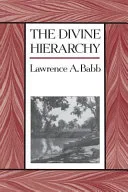
Lawrence A. Babb’s The Divine Hierarchy presents a methodical dissection of how humanity has historically envisioned the architecture of the sacred. Rather than offering a mystical revelation, Babb provides a cartography of celestial and infernal arrangements, a valuable endeavor for understanding theological scaffolding. His rigorous analysis of the concept of divine intermediaries, particularly in the context of early Christian and Gnostic thought, is a notable strength. However, the text can at times feel overly academic, its prose dense with specialized terminology that may deter readers not already steeped in theological discourse. The section detailing the Neoplatonic influence on later hierarchical models, while informative, requires considerable prior knowledge to fully appreciate. Ultimately, The Divine Hierarchy serves as an indispensable reference for the architecture of celestial governance, albeit one demanding dedicated study.
📝 Description
72
Lawrence Babb's 1975 book examines the structural and theological underpinnings of divine order across traditions.
Published in 1975, The Divine Hierarchy offers a scholarly examination of how various religious and philosophical traditions have conceived of divine order. Lawrence A. Babb meticulously analyzes the conceptual relationships between the human, the celestial, and the ultimate divine source as understood across different cultures and belief systems.
This work is of particular interest to students of comparative religion, theology, and esoteric philosophy. Academics seeking detailed analyses of religious cosmologies and practitioners interested in the historical and philosophical architecture of spiritual hierarchies will find considerable value. The book's rigorous textual study of religious structures appeals to those engaged in deep scholarly inquiry.
The Divine Hierarchy emerged during a period of increased academic engagement with comparative religion, influenced by scholars like Mircea Eliade. Babb's work contributes to this intellectual climate by structuring an analysis of divine order that moves beyond single religious frameworks. It engages with established theological discourse by examining how different traditions conceptualize spiritual hierarchies and the flow of divine essence.
💡 Why Read This Book?
• Understand the concept of divine emanation as presented in early theological works, offering a framework for how spiritual realities are believed to manifest from a singular source. • Grasp the specific ordering of angelic and spiritual beings within Christian and Gnostic cosmologies, providing concrete examples of hierarchical structures discussed by Babb. • Analyze the principle of correspondence between the macrocosm and microcosm, learning how this idea informed ancient and medieval understandings of universal order as detailed in the book.
⭐ Reader Reviews
Honest opinions from readers who have explored this book.
❓ Frequently Asked Questions
What is the primary focus of Lawrence A. Babb's The Divine Hierarchy?
The book primarily focuses on the structural and theological concepts of divine order as conceptualized across various religious and philosophical traditions, particularly examining hierarchies of spiritual beings and their mediating roles.
When was The Divine Hierarchy first published?
The Divine Hierarchy was first published in 1975, a period marked by growing academic interest in comparative religious studies.
What academic disciplines would find this book most relevant?
Scholars and students of comparative religion, theology, philosophy of religion, and esoteric studies would find this book particularly relevant due to its in-depth analysis of religious cosmologies.
Does the book discuss specific religious traditions?
Yes, the work explores concepts within traditions such as early Christianity, Gnosticism, and Neoplatonism, examining their unique approaches to divine hierarchy.
What is a key concept explored in The Divine Hierarchy regarding spiritual beings?
A key concept is the structured ordering of spiritual entities, such as angels and other celestial beings, and their function as intermediaries between the divine and the human realms.
Is The Divine Hierarchy an accessible read for beginners in esoteric philosophy?
While informative, the book's academic rigor and dense terminology may present a challenge for absolute beginners. It is best suited for those with some foundational knowledge in theological or philosophical concepts.
🔮 Key Themes & Symbolism
Cosmic Architecture
The Divine Hierarchy meticulously maps the conceptual frameworks used to construct the universe's spiritual architecture. Babb scrutinizes how different belief systems arrange divine powers, celestial hosts, and intermediary beings into ordered strata. This exploration reveals a recurring human impulse to perceive order and intelligibility in the cosmos, often mirroring earthly political or social structures onto a divine plane. The work illustrates how these architectures serve to explain creation, divine will, and humanity's place within the grand scheme, providing a blueprint for understanding the perceived flow of power and influence from the ultimate divine source downwards.
Emanation and Hierarchy
A central theme is the doctrine of emanation, the process by which reality is understood to flow or radiate from a singular, unmanifest source. Babb examines how this concept necessitates a hierarchical structure, as each successive level of existence is considered less perfect or potent than the one preceding it. This leads to detailed analyses of various spiritual hierarchies, from the angelic orders in Abrahamic traditions to the intricate systems found in Gnostic cosmology. The book clarifies how these tiered systems function not just as descriptive models but as operative frameworks for spiritual ascent and divine interaction.
Mediators and Correspondences
The work significantly studies the role of intermediaries within divine hierarchies. These figures, ranging from angels and archangels to various spiritual guides, are presented as crucial links connecting the transcendent divine to the immanent human experience. Babb also explores the principle of correspondence, the idea that patterns and structures found at one level of reality are mirrored at others (e.g., the macrocosm and microcosm). Understanding these mediators and correspondences is key to comprehending how spiritual knowledge was believed to be transmitted and how individuals could potentially interact with higher powers.
Theological Evolution
The Divine Hierarchy offers a perspective on the evolution of theological thought concerning divine order. By comparing and contrasting conceptualizations across different historical periods and cultures, Babb illustrates how ideas about God, creation, and spiritual governance have been debated, refined, and transformed. The book highlights the intellectual currents, such as Neoplatonism, that significantly shaped later theological doctrines on hierarchy. This evolutionary view provides context for understanding the diversity and complexity of religious thought concerning ultimate reality and its manifestation.
💬 Memorable Quotes
Direct passages from the work, attributed to the author.
“The concept of divine order often reflects the social and political structures of the societies that conceived it.”
— This observation suggests that our understanding of celestial governance is not purely abstract but is influenced by our earthly experiences and societal norms, projecting familiar power dynamics onto the divine realm.
“Hierarchies of being served as maps for spiritual journeys.”
— This highlights the practical function of these complex structures; they were not merely descriptive but provided a conceptual pathway or guide for individuals seeking to ascend spiritually or understand their place in the cosmos.
“Emanation implies a necessary gradation of existence.”
— This points to the core logic of emanationist cosmologies: if reality stems from a single divine source, each subsequent level of creation must be inherently less perfect, thus necessitating a tiered or hierarchical arrangement.
“Angelic hosts mediated divine will to humanity.”
— This interpretation emphasizes the role of spiritual beings as conduits, translating divine intentions into terms or actions understandable and actionable by humans, bridging the gap between the sacred and the mundane.
“The principle of correspondence linked the microcosm to the macrocosm.”
— This refers to the ancient and medieval belief that the human being (microcosm) and the universe (macrocosm) share fundamental structures and principles, allowing for understanding of one through the study of the other.
🌙 Esoteric Significance
Tradition
The Divine Hierarchy primarily engages with the intellectual traditions underpinning Western esotericism, particularly Neoplatonism, Gnosticism, and early Christian angelology. It dissects the conceptual frameworks developed within these lineages to explain the structure of reality and the divine. While Babb's approach is scholarly and analytical, the subject matter directly addresses the cosmological underpinnings that inform many esoteric practices and beliefs concerning spiritual realms and their governance.
Symbolism
The book implicitly deals with the symbolism of ascent and descent, central to many esoteric paths. The layered structure of the divine hierarchy itself symbolizes a path of spiritual progression, where movement towards the divine involves traversing various levels of consciousness or spiritual beings. Angelic figures, often depicted with specific attributes, function as potent symbols of divine attributes or functions, serving as focal points for contemplation and invocation within esoteric practices.
Modern Relevance
Contemporary esoteric practitioners and scholars of Western esotericism continue to draw upon the foundational cosmological models analyzed in The Divine Hierarchy. Thinkers and groups exploring angelology, ceremonial magic, or comparative theology often reference these historical hierarchical structures. The book’s examination of emanation and correspondence remains relevant for understanding modern esoteric philosophies that posit interconnectedness and multi-layered realities, providing historical context for contemporary spiritual frameworks.
👥 Who Should Read This Book
• Students of comparative religion and theology seeking to understand the historical development of divine hierarchies and cosmologies across different cultures. • Practitioners of Western esoteric traditions interested in the foundational philosophical and theological concepts that inform their spiritual practices, such as angelology or Neoplatonic thought. • Academic researchers specializing in the history of religious ideas, particularly those focused on early Christianity, Gnosticism, and the influence of Neoplatonism on subsequent theological and mystical thought.
📜 Historical Context
Published in 1975, Lawrence A. Babb's The Divine Hierarchy emerged within an academic landscape increasingly focused on comparative religious studies, influenced by scholars like Mircea Eliade and the burgeoning field of religious iconography. The intellectual climate of the 1970s saw a continued engagement with structuralism and phenomenology in analyzing religious phenomena. Babb's work offered a systematic approach to understanding theological cosmologies, particularly within early Christian, Gnostic, and Neoplatonic traditions. While not directly engaging in polemics with specific contemporary movements, it contributed to a scholarly discourse that sought to demythologize and analyze religious structures. Its reception was primarily within academic circles, where its detailed analysis of hierarchical systems was appreciated for its scholarly rigor. The work provided a structured counterpoint to more existential or phenomenological approaches to religion that were also prevalent at the time.
📔 Journal Prompts
The concept of emanation as a framework for divine order.
The role of intermediaries in bridging the divine and human realms.
Reflect on the principle of correspondence between macrocosm and microcosm.
Analyze the social or political reflections within conceived divine hierarchies.
Consider the implications of a structured spiritual universe for personal spiritual development.
🗂️ Glossary
Emanation
The philosophical or theological concept that reality flows or radiates from a single, ultimate divine source, with each successive level of existence being less perfect than the one preceding it.
Hierarchy
A system or organization in which people or groups are ranked one above the other according to status or authority, specifically applied here to the ordering of divine and spiritual beings.
Intermediary
A being or entity that acts as a link or mediator between two different parties, in this context, between the divine and the human.
Correspondence
The principle suggesting that there are parallel relationships or similarities between different levels of reality, such as the human being (microcosm) and the universe (macrocosm).
Cosmology
The branch of philosophy dealing with the origin and structure of the universe; a particular view of the universe.
Gnosticism
A complex set of religious ideas and systems, primarily from the 2nd and 3rd centuries CE, which emphasized spiritual knowledge (gnosis) for salvation and often posited a dualistic worldview.
Neoplatonism
A school of philosophy founded by Plotinus in the 3rd century CE, which developed Plato's ideas into a complex system involving emanation from a supreme, transcendent 'One'.