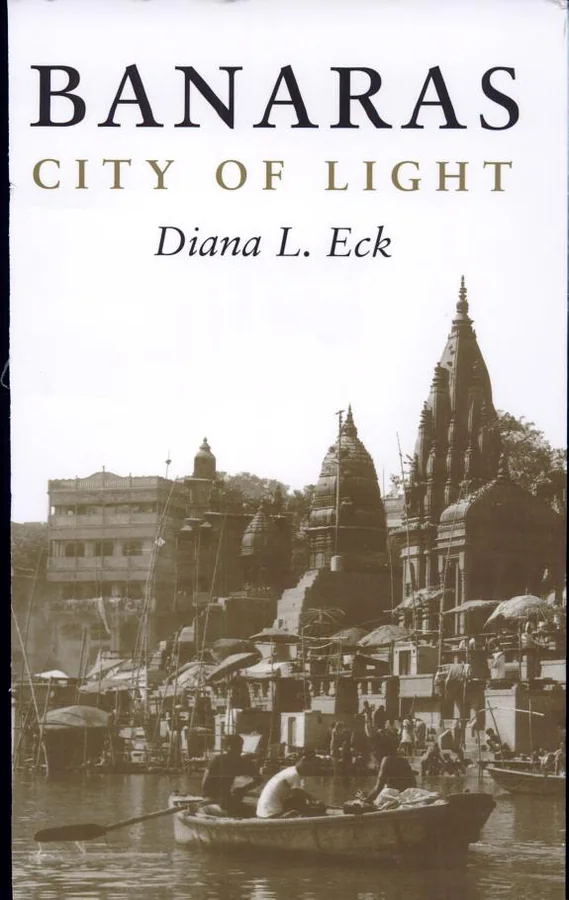
Banaras, City of Light
 80
80

Banaras, City of Light
Diana L. Eck's Banaras, City of Light is indeed the definitive work it was hailed to be upon its initial publication. The book excels in presenting the overwhelming spiritual and social density of Varanasi with remarkable clarity. Eck's deep familiarity with the city is evident on every page, particularly in her detailed descriptions of the daily lives of its inhabitants and the ritual cycles that govern them. A particular strength lies in her ability to articulate the theological underpinnings of pilgrimage without resorting to overly academic jargon. However, the sheer volume of information, while comprehensive, can occasionally feel dense, making it a text requiring focused attention rather than casual perusal. The section detailing the complex social hierarchies among religious practitioners, while crucial, might benefit from further synthesis. Despite this, Eck's portrayal of Banaras as a living, breathing embodiment of Hindu cosmology remains unparalleled, offering a profound connection to the city's sacred pulse.
📝 Description
80
Diana L. Eck's 1999 book examines Banaras as India's most sacred city.
Banaras, City of Light looks at Varanasi, India's holiest city. Diana L. Eck's work goes beyond a simple travel guide, offering a scholarly yet accessible study of a living religious center. The book covers the city's geography, its history, and the complex social and religious systems that make it a primary destination for Hindu pilgrims. It presents Banaras not just as a location, but as a powerful spiritual force.
Eck's research places Banaras within centuries of Indian religious and political history, from its ancient beginnings through Mughal and British rule. The book recognizes the city's constant role as a hub of spiritual activity, contrasting its lasting sacredness with the changes brought by political power. It touches on the difficulties of maintaining an ancient sacred site in a modernizing country, a tension evident in the late 20th century when the book was researched and written. This volume is valuable for students of religious studies, anthropology, and South Asian history, and for anyone interested in pilgrimage traditions or the dynamics of sacred geography.
This study situates Varanasi within the broader Hindu tradition, focusing on its significance as a site for *moksha*, or liberation. It details the city's spiritual infrastructure, including the Ganges River, its ghats, temples, and ashrams. The book also discusses the various communities, such as ascetics and priests, who contribute to its sacred atmosphere. It examines how these elements combine to create a potent spiritual environment, a concept central to many contemplative traditions that see specific locations as conduits for spiritual realization.
💡 Why Read This Book?
• Gain a concrete understanding of the concept of *moksha* as it is geographically embodied in Varanasi, learning how the city itself is seen as a facilitator of liberation from the cycle of rebirth. • Appreciate the intricate social and ritualistic landscape of Hindu pilgrimage by examining the specific roles of diverse groups like sadhus and pandits, as detailed in Eck's fieldwork. • Grasp the profound spiritual significance of the Ganges River, understanding its purification rituals and cosmological importance as described through the lens of Banaras's ghats and daily life.
⭐ Reader Reviews
Honest opinions from readers who have explored this book.
❓ Frequently Asked Questions
When was Banaras, City of Light first published and by whom?
Banaras, City of Light was first published in 1999. The author is Diana L. Eck, a distinguished scholar of comparative religion and South Asian studies.
What is the primary focus of Diana L. Eck's Banaras, City of Light?
The book's primary focus is a comprehensive, scholarly exploration of Varanasi (Banaras), India's most sacred city, detailing its religious significance, history, geography, and the lives of its inhabitants.
What specific aspects of Banaras does the book cover?
It covers the city's historical evolution, its role as a major Hindu pilgrimage site, the significance of the Ganges River, the city's sacred geography (ghats, temples), and the diverse communities of religious practitioners.
Is Banaras, City of Light suitable for academic study?
Yes, it is considered a seminal academic work, essential for students and scholars of religious studies, anthropology, and South Asian history due to its depth and rigorous research.
Does the book discuss the concept of liberation in Hinduism?
Absolutely. A central theme is Banaras's association with *moksha*, or liberation from the cycle of rebirth, and how the city is perceived and experienced as a conduit for achieving this spiritual goal.
What role does the Ganges River play in the book?
The Ganges River is presented as a central element of Banaras's sacredness. The book details its cosmological importance, the rituals performed on its banks (ghats), and its role in the spiritual lives of pilgrims and residents.
🔮 Key Themes & Symbolism
Sacred Geography and Urban Morphology
Eck meticulously maps Banaras not just geographically, but spiritually. The book details how the city's layout, from the winding alleys to the sacred ghats lining the Ganges, is imbued with religious meaning. It explores how the physical space of Banaras functions as a microcosm of the Hindu cosmos, with specific locations holding immense power and significance for pilgrims seeking spiritual merit and divine connection. The interplay between the mundane urban environment and its sacred function is central to understanding the city's enduring appeal.
Pilgrimage and the Pursuit of Moksha
Fundamentally, Banaras is presented as the ultimate pilgrimage destination for Hindus, a place where the attainment of *moksha* (liberation from the cycle of birth and death) is believed to be most accessible. Eck examines the motivations of pilgrims, the rituals they undertake, and the profound spiritual transformations sought. The book illustrates how the entire city becomes a stage for this ultimate spiritual quest, with every element, from the river to the temples, contributing to the possibility of divine release.
The Lives of Ascetics and Priests
A significant portion of the work is dedicated to understanding the diverse inhabitants who give Banaras its living character, particularly the ascetics (*sadhus*) and priests (*pandits*). Eck looks at their philosophical underpinnings, their daily practices, and their essential roles in maintaining the city's sacred traditions. Their presence and devotion are shown to be integral to the city's spiritual economy, embodying the ideals of renunciation and religious service that define Banaras.
The Ganges: River of Life and Liberation
The Ganges River is depicted as the lifeblood and spiritual heart of Banaras. Eck explores the deep-seated beliefs surrounding its purifying powers, the sacredness attributed to bathing in its waters, and its symbolic representation of divine flow. The ghats, the steps leading down to the river, are presented as liminal spaces where the earthly and the divine meet, facilitating ritual, contemplation, and the ultimate aspiration for spiritual cleansing and liberation.
💬 Memorable Quotes
Direct passages from the work, attributed to the author.
“Banaras is not merely a city; it is a cosmos.”
— This interpretation highlights the book's central argument that Varanasi transcends its physical boundaries to become a living embodiment of the Hindu universe, where every element possesses cosmic significance.
“The ghats are thresholds between the mundane and the divine.”
— This interpretation focuses on the liminal nature of the riverfront steps, illustrating how they serve as points of transition for pilgrims engaging in rituals that connect them to the sacred.
“The Ganges is perceived as a goddess, a purifier, and a path to salvation.”
— This statement expresses the complex reverence for the Ganges in Banaras, detailing its divine personification, its capacity for spiritual cleansing, and its role as a facilitator of ultimate salvation.
“Varanasi functions as a concentrated center of Hindu dharma.”
— This interpretation suggests that the city acts as a focal point where the principles and practices of Hindu religious duty and cosmic order are most intensely manifested and preserved.
💡 Key Ideas
Editorial paraphrase of the work's core concepts — not direct quotes.
The pursuit of moksha is the city's primary vocation.
This paraphrased concept emphasizes that the ultimate spiritual goal for Hindus—liberation from the cycle of rebirth—is inextricably linked to residing in or visiting Banaras, making this pursuit the city's defining purpose.
🌙 Esoteric Significance
Tradition
While not strictly adhering to a single Western esoteric lineage like Hermeticism or Kabbalah, Eck's work engages deeply with the esoteric dimensions of Hinduism, particularly its Tantric and yogic underpinnings. It explores concepts such as sacred geography, the subtle body, and the transformative power of ritual and mantra, which resonate with broader esoteric philosophies concerning the interconnectedness of the material and spiritual realms. The book provides a window into how these concepts are lived and practiced within a living tradition.
Symbolism
The Ganges River serves as a potent symbol of divine flow, purification, and liberation, representing the cosmic life force and the path to *moksha*. The *ghats*, or riverfront steps, symbolize thresholds—liminal spaces where the mundane world interfaces with the sacred, facilitating ritual and spiritual transition. The city itself, as a mandala-like sacred space, embodies cosmic order and spiritual potency, serving as a microcosm of the universe for pilgrims.
Modern Relevance
Contemporary thinkers and practitioners interested in sacred geography, embodied spirituality, and the phenomenology of religious experience draw heavily on Eck's foundational research. Yoga practitioners seeking to understand the cultural and spiritual roots of their discipline, as well as scholars of comparative religion and urban studies, find her detailed analysis of Banaras invaluable. The work continues to inform discussions on the preservation of sacred sites and the enduring relevance of pilgrimage in a globalized world.
👥 Who Should Read This Book
• Students of comparative religion and South Asian studies seeking a foundational text on Hindu pilgrimage and sacred geography. • Spiritual seekers interested in understanding the deep cultural and religious significance of Varanasi and its role in Hindu cosmology. • Anthropologists and historians looking for detailed ethnographic and historical accounts of a major world religious center.
📜 Historical Context
Published in 1999, Diana L. Eck's *Banaras, City of Light* emerged during a period of renewed global interest in Hinduism and South Asian culture, following the rise of comparative religion studies and post-colonial scholarship. The book's detailed ethnographic and historical approach offered a counterpoint to earlier, often romanticized or essentialist, depictions of Indian spirituality. It arrived at a time when scholars like Wendy Doniger were also publishing influential works on Hindu mythology and practice, contributing to a richer, more nuanced understanding of Indian religious traditions. While not subject to censorship, the book's comprehensive nature and detailed exploration of sensitive religious practices positioned it as a key text for academic discourse, influencing subsequent generations of scholars and providing a robust counter-narrative to simplistic views of Indian religious life.
📔 Journal Prompts
The concept of Banaras as a cosmos: how does this framing influence understanding of the city's sacredness?
Reflections on the pursuit of *moksha*: how is this ultimate goal embodied in the physical and social fabric of Banaras?
The role of the Ganges: consider the symbolic and practical importance of the river for pilgrims and residents.
Ascetics and priests in Banaras: what do their lives reveal about devotion and renunciation within Hinduism?
Sacred geography: explore how specific locations in Banaras are imbued with spiritual power and meaning.
🗂️ Glossary
Moksha
The ultimate spiritual goal in Hinduism, signifying liberation from the cycle of birth, death, and rebirth (samsara).
Ghats
Steps leading down to a body of water, particularly the Ganges River in Varanasi, used for bathing, ritual, and cremation.
Sadhus
Ascetics or holy men in Hinduism who have renounced worldly life in pursuit of spiritual realization.
Pandits
Learned scholars or priests in Hinduism, often specializing in religious texts, rituals, and law.
Dharma
The principle of cosmic order, righteousness, and duty in Hinduism; one's religious and moral obligations.
Varanasi
The traditional Sanskrit name for Banaras, India's most sacred city, situated on the banks of the Ganges River.
Samsara
The cycle of birth, death, and rebirth, which Hindus seek to escape through spiritual liberation (*moksha*).
This book appears in 1 collection
🔮 Readers Also Liked
Browse all →







From the “Hinduism” Collection
View all →






More Free Esoteric History & Biography Books
View all →