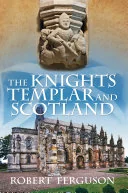
The Knights Templar and Scotland
 79
79

The Knights Templar and Scotland
Ferguson's "The Knights Templar and Scotland" offers a grounded perspective on a subject often shrouded in myth. He effectively sidesteps the more outlandish theories, focusing instead on the tangible evidence of the Templars' presence and influence in Scotland. The detailed exploration of their landholdings and advisory roles to Scottish kings provides a solid historical counterpoint to popular fiction. A notable strength is Ferguson's meticulous attention to the period's socio-political climate, which frames the Templars' activities within a believable context. However, the book's dense historical detail might prove challenging for casual readers seeking quick answers to sensationalist questions. The examination of their potential flight from France in 1307, while fact-based, leaves room for further interpretation. Ultimately, Ferguson provides a valuable, if unembellished, account for those invested in the historical realities of the Templars in Scotland.
📝 Description
79
Robert Ferguson's 2001 book examines the historical presence of the Knights Templar in Scotland.
Robert Ferguson's "The Knights Templar and Scotland" investigates the documented presence and influence of the Knights Templar within medieval Scotland. The book moves past popular myths to analyze their roles as advisors to Scottish kings, their significant landholdings, and the impact of their order during a turbulent era. Ferguson argues for a more complex reality of the Templars' story in Scotland than commonly understood.
This work is suitable for students of medieval history, esoteric traditions, and Scottish heritage. Readers who wish to question prevalent narratives about the Templars, especially those amplified by popular culture, will find considerable evidence presented. It offers a rigorous look at historical records instead of relying on speculation.
The book places the Templars within the context of 12th and 13th-century Scotland, a time of political shifts and the growth of royal authority. It contrasts the Templars' organized military and religious structure with other contemporary knightly and monastic groups. The narrative covers the period leading up to the mass arrests of Templars in 1307, detailing the specific situation in Scotland.
This book engages with the esoteric traditions surrounding the Knights Templar, a subject often intertwined with Freemasonry and secret societies. Ferguson's work addresses claims of Templar survival and their alleged influence on subsequent organizations, a common thread in esoteric literature. By focusing on historical evidence, it provides a counterpoint to more speculative theories, yet still acknowledges the enduring fascination with the Templars as keepers of hidden knowledge or participants in clandestine movements.
💡 Why Read This Book?
• Gain a historically grounded understanding of the Knights Templar's actual role in medieval Scotland, moving beyond popular myths and focusing on their documented land ownership and advisory capacities to kings like Alexander III. • Uncover the specific circumstances surrounding the Templars' presence in Scotland around 1307, contrasting the historical record with speculative theories about their alleged flight from France. • Understand the Templars as respected landlords and significant property holders within the Scottish feudal system, appreciating their integration into the era's economic and social structures.
⭐ Reader Reviews
Honest opinions from readers who have explored this book.
❓ Frequently Asked Questions
Did the Knights Templar actually flee to Scotland?
Robert Ferguson's work examines historical records concerning the Knights Templar's potential flight to Scotland just prior to the widespread arrests initiated in 1307. While the book explores this possibility, it focuses on the documented evidence of their significant presence and landholdings within Scotland during that era.
What was the Templars' relationship with Scottish royalty?
The book details the Knights Templar's close advisory roles to Scotland's early kings. They were significant figures within the Scottish court and feudal system, acting as trusted advisors and major landowners during a critical period of Scottish history.
How did the Templars function as landlords in Scotland?
Ferguson highlights the Templars' status as respected landlords and major property owners in a harsh historical period. This aspect underscores their deep integration into the Scottish economy and social fabric, beyond their military and religious functions.
Is this book about the mysteries of Rosslyn Chapel?
While Rosslyn Chapel is often associated with Templar lore, Ferguson's "The Knights Templar and Scotland" primarily focuses on documented historical evidence of the Templars' activities and influence across Scotland, rather than solely on specific sites or later speculative connections.
When was Robert Ferguson's book on the Templars first published?
Robert Ferguson's "The Knights Templar and Scotland" was first published on August 26, 2011. This edition provides a detailed historical examination of the Templars' presence and activities within Scotland.
Does the book discuss the Templars' arrogance?
Yes, the original blurb mentions that the Templars were described as secretive and arrogant. Ferguson's work likely explores this aspect within the context of their societal position and interactions during their historical tenure in Scotland.
🔮 Key Themes & Symbolism
Templar Presence in Scotland
This theme looks at the verifiable historical footprint of the Knights Templar within Scotland. Ferguson meticulously details their documented roles, moving beyond conjecture to establish their presence as advisors to early Scottish kings and significant landowners. The focus is on their integration into the Scottish feudal system and their tangible influence during the 12th and 13th centuries, providing a counter-narrative to more fantastical claims often associated with the order.
Historical Accuracy vs. Myth
Ferguson confronts popular legends surrounding the Templars, particularly those linking them to Scotland and later esoteric traditions. The book prioritizes historical evidence, questioning sensational narratives like their alleged mass flight from France to Scotland in 1307. It aims to separate documented fact from the speculation amplified by modern cultural phenomena, offering a grounded perspective for serious historical inquiry.
Social and Economic Integration
A crucial aspect explored is the Templars' function not just as a military or religious order, but as respected landlords and major property owners in medieval Scotland. This theme highlights their economic power and their role within the established social hierarchy of the time. Ferguson examines how their landholdings and management practices contributed to the Scottish landscape and economy, demonstrating a complex societal integration.
Relationship with Scottish Monarchy
The book investigates the intricate political connections between the Knights Templar and Scotland's early monarchs. It details their function as close advisors, suggesting a level of trust and influence within the royal court. This theme explores how their counsel and presence shaped significant political events and royal policies during their historical tenure.
💬 Memorable Quotes
Direct passages from the work, attributed to the author.
“They were close advisors to Scotland's early kings; they were major property owners and respected landlords.”
— This statement underscores the Templars' dual role in Scotland: politically influential through royal counsel and economically grounded via substantial land ownership, highlighting their deep integration into the kingdom's fabric.
“Did they really flee from France to Scotland just prior to their arrest in 1307?”
— This question frames a central historical puzzle addressed by the book, challenging the popular narrative of a Templar exodus to Scotland and prompting an examination of the available evidence surrounding their fate.
“Places and books like Rosslyn Chapel and The Da Vinci Code have focused attention on Scotland's Knights Templar.”
— This highlights the contemporary cultural fascination with the Templars in Scotland, acknowledging the popular touchstones that have fueled interest while setting the stage for a more historically rigorous investigation.
“Who they were and what they did has been touched upon, but never properly explored until now.”
— This assertion positions the book as a definitive exploration, promising a deeper, more comprehensive analysis of the Knights Templar in Scotland than previously available, moving beyond superficial treatments.
“They were secretive and arrogant.”
— This characterization points to the perceived nature of the Templars, suggesting aspects of their behavior and societal interactions that contributed to both their influence and potential controversy during their historical period.
🌙 Esoteric Significance
Tradition
This work operates within the historical inquiry tradition rather than a specific esoteric lineage. However, it directly engages with the esoteric interpretations of the Knights Templar, particularly those that link them to Scottish origins and hidden knowledge. By presenting a historically grounded counterpoint, Ferguson indirectly clarifies the boundaries between historical fact and later esoteric constructions, offering a valuable corrective for those immersed in Templar mythology.
Symbolism
While Ferguson's focus is primarily historical, the Templars themselves are imbued with symbolic weight in esoteric thought. Symbols like the double-headed eagle, the Templar cross, and their association with places like Rosslyn Chapel are often interpreted as holding hidden meanings related to Gnosticism, Hermeticism, or ancient mysteries. Ferguson's work implicitly challenges the direct, unbroken transmission of these esoteric interpretations from the historical Templars.
Modern Relevance
Ferguson's research remains relevant for contemporary esoteric practitioners and historians who seek to understand the factual basis underpinning Templar lore. Thinkers and groups interested in the historical reality of medieval military orders, the development of Scottish history, and the critical examination of esoteric narratives find value in his meticulous approach, providing a foundation for distinguishing historical evidence from later myth-making.
👥 Who Should Read This Book
• Students of medieval Scottish history seeking to understand the Templars' documented influence beyond popular fiction. • Researchers of esoteric traditions interested in the historical roots of Templar mythology and distinguishing fact from legend. • Enthusiasts of military-religious orders looking for a rigorous examination of the Knights Templar's socio-economic and political roles in a specific European context.
📜 Historical Context
Published in 2011, Robert Ferguson's "The Knights Templar and Scotland" emerged during a resurgence of popular interest in the Templars, partly fueled by Dan Brown's "The Da Vinci Code" (2003). Ferguson's work positioned itself against the speculative wave, seeking to anchor the Templar narrative in verifiable Scottish history. The book engages with the socio-political field of 12th and 13th-century Scotland, a period of consolidation under monarchs like Alexander III and Robert the Bruce, contrasting with the more mystical interpretations favored by some contemporary esoteric writers. Unlike works that might focus solely on the religious aspects, Ferguson emphasizes the Templars' tangible economic and political roles. The reception of such works often involves debates between historical scholarship and popular esoteric theories; Ferguson's contribution lies in providing a detailed, evidence-based account that directly addresses questions about the Templars' presence and activities in Scotland preceding the 1307 arrests.
📔 Journal Prompts
The Templars' role as respected landlords in 13th-century Scotland.
The historical evidence for the Templars' flight to Scotland in 1307.
Examining the Templars' advisory relationship with early Scottish kings.
Comparing Ferguson's historical account with popular narratives like The Da Vinci Code.
The societal impact of the Templars' property ownership in medieval Scotland.
🗂️ Glossary
Knights Templar
A Catholic military order founded around 1119, active during the Crusades. Known for their military prowess, financial innovation, and eventual suppression.
Feudal System
The dominant social, economic, and political system in medieval Europe, characterized by lords, vassals, and land tenure in exchange for military service or loyalty.
Rosslyn Chapel
A late medieval chapel in Scotland, often linked in popular culture and esoteric theories to the Knights Templar, despite limited historical evidence.
Robert the Bruce
King of Scotland from 1306 to 1329, a key figure in the Scottish Wars of Independence. His reign overlapped with the period of Templar suppression.
1307 Arrests
The coordinated arrests of Knights Templar members across Europe, initiated by King Philip IV of France, leading to the order's widespread persecution and eventual dissolution.
Landlords
In the medieval context, individuals or groups who owned significant land and derived income and status from its tenants or agricultural production.
Esoteric
Relating to or accessible only by a select group of people with a specialized knowledge or interest; often concerning mystical or hidden doctrines.
This book appears in 1 collection
🔮 Readers Also Liked
Browse all →








From the “Templar Knights” Collection
View all →





More Free Esoteric History & Biography Books
View all →