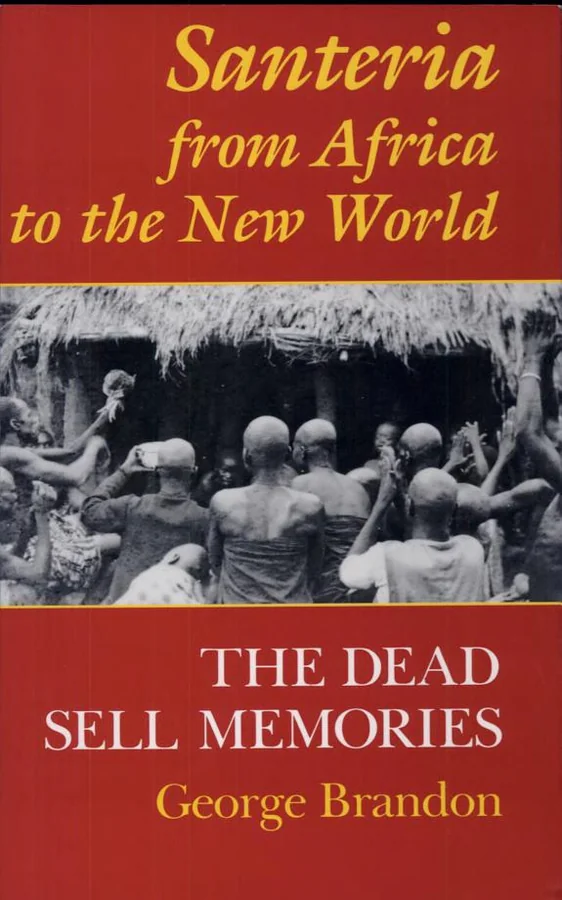
Santeria from Africa to the New World
 72
72

Santeria from Africa to the New World
George Brandon's "Santeria from Africa to the New World" is a rigorously researched account that anchors the spiritual practices of the orishas firmly within their historical and diasporic context. Brandon’s meticulous tracing of the religion’s journey from West Africa to Cuba, and its adaptation under the crucible of slavery, is particularly strong. He effectively demonstrates how the Yoruba cosmology endured and transformed, offering a vital corrective to simplistic understandings of religious syncretism. A notable strength is his detailed exploration of the social structures that supported Santeria's persistence. However, while the historical breadth is commendable, the book could benefit from a more direct engagement with the lived experiences of contemporary practitioners, moving beyond the historical reconstruction to explore the religion's ongoing evolution. The section on the complexities of power relations within Caribbean slavery, while crucial, sometimes feels more like an academic aside than fully integrated into the religious narrative. Ultimately, Brandon provides an indispensable scholarly foundation for understanding Santeria's deep roots and enduring influence.
📝 Description
72
George Brandon's 1997 book examines Santeria's journey from West Africa to the New World.
George Brandon's Santeria from Africa to the New World is a historical and anthropological study of the Santeria religion. It begins by tracing the faith's origins to West African Yoruba spiritual traditions. The book then follows its path through the transatlantic slave trade and its subsequent adaptation in the Caribbean, particularly Cuba. Brandon details the syncretism that occurred, where African deities known as orishas were blended with Catholic saints. This blending was a survival strategy developed during periods of forced conversion.
The work is a significant resource for scholars of religious studies, African diaspora history, and anthropology. Practitioners of Santeria may find it useful for understanding their faith's historical development. Students of Caribbean history and culture will also benefit from its examination of religious and cultural formation under colonial rule. The book speaks to anyone interested in how spiritual traditions persist despite oppression.
This book situates Santeria within the broader context of African diasporic religions, a field that gained academic traction in the late 20th century. It moves beyond earlier, often sensationalized, portrayals to offer a more grounded understanding of how enslaved Africans preserved and transformed their spiritual practices under duress. By detailing the syncretism with Catholicism and the persistence of Yoruba concepts, Brandon's work highlights a significant strand of esoteric belief and practice that developed as a response to colonialism and oppression in the Americas.
💡 Why Read This Book?
• Gain insight into the specific Yoruba spiritual traditions that formed the bedrock of Santeria, understanding concepts like the orishas and their African origins before their syncretism. • Grasp the profound impact of the transatlantic slave trade on religious transmission, learning how enslaved Africans preserved and adapted their beliefs in the New World, a process detailed through specific historical examples. • Understand the intricate syncretism between African deities and Catholic saints, a key adaptive strategy discussed in the book's exploration of religious accommodation to cultural change in the diaspora.
⭐ Reader Reviews
Honest opinions from readers who have explored this book.
❓ Frequently Asked Questions
What are the primary African origins of Santeria explored in Brandon's book?
Brandon's work highlights the Yoruba spiritual traditions of West Africa as the primary source for Santeria. He details the worship of the orishas, the concept of ashé (spiritual force), and the importance of divination systems that predate the religion's transatlantic journey.
How did the transatlantic slave trade influence Santeria's development?
The book explains how enslaved Africans were forced to conceal their traditional religious practices under the guise of Catholicism. This led to the syncretism of orishas with Catholic saints, a crucial survival mechanism detailed extensively in the work.
What role did Cuba play in the formation of Santeria?
Santeria from Africa to the New World emphasizes Cuba as a central location where African spiritual traditions were consolidated and adapted into the distinct religion known today. Brandon discusses the specific social and historical conditions in Cuba that facilitated this process.
Does the book discuss specific orishas or their characteristics?
Yes, the work explores the pantheon of orishas, discussing their characteristics, domains, and how they were identified with Catholic saints. It provides a foundational understanding of these key deities within the Santeria framework.
What is 'syncretism' as it relates to Santeria in this book?
Brandon defines syncretism in Santeria as the blending of Yoruba religious beliefs and practices with those of Roman Catholicism. This fusion, particularly the association of orishas with saints, was a strategy for preserving African spirituality during periods of forced conversion.
When was George Brandon's 'Santeria from Africa to the New World' first published?
George Brandon's "Santeria from Africa to the New World" was first published on March 22, 1997, marking its entry into scholarly discourse on African diaspora religions.
🔮 Key Themes & Symbolism
Orisha Worship and Syncretism
The core of Brandon's analysis lies in tracing the persistence of orisha worship from its West African Yoruba origins through the diaspora. He meticulously documents the process of syncretism, where African deities were identified with Catholic saints to mask traditional practices under colonial oppression. This section elucidates how the spiritual essence and attributes of figures like Shango or Yemaya were preserved, often through symbolic association with figures like Saint Barbara or the Virgin Mary, demonstrating a profound act of cultural and religious resilience.
Transatlantic Slave Trade's Impact
Brandon positions the transatlantic slave trade not merely as a historical event but as a crucible that forged new religious expressions. The forced displacement and brutal conditions of slavery are presented as the primary catalyst for the adaptation and transformation of African spiritual systems. The work explores how enslaved populations actively negotiated their spiritual lives, using the constraints of their environment to foster community, preserve ancestral knowledge, and develop syncretic religious forms like Santeria as a means of cultural survival.
African Memory in the Diaspora
This theme addresses the mechanisms through which African spiritual memory, traditions, and cosmological understandings were maintained and reproduced across generations in the New World. Brandon examines the role of oral traditions, ritual practices, and the guidance of spiritual elders in ensuring the continuity of these beliefs. The book argues that despite immense cultural disruption, a distinct form of African spiritual consciousness persisted and evolved, shaping the unique religious range of the Caribbean and the Americas.
Religious Accommodation and Change
Brandon critically assesses how Santeria's development reflects broader patterns of religious accommodation and change within the context of cultural contact and power imbalance. He analyzes the negotiation between maintaining core spiritual tenets and adapting to external pressures, such as Christianization and societal prejudice. The work offers insights into how marginalized communities utilize religious frameworks to assert identity, foster social cohesion, and resist cultural assimilation, illustrating a dynamic interplay between tradition and transformation.
💬 Memorable Quotes
Direct passages from the work, attributed to the author.
“Brandon more than fulfills his promise to take the reader on the transatlantic journey of the orisha and to explore the complexities of African memory in the diaspora.”
— This assessment from the American Historical Review highlights the book's success in its core objective: charting the migration of Yoruba deities and beliefs across the Atlantic and examining how these spiritual concepts were kept alive and reshaped by enslaved Africans.
“The production and reproduction of African beliefs and practices.”
— This phrase signifies the book's focus on the active processes involved in maintaining religious traditions. It suggests an examination of how beliefs were not just passively received but were actively created, transmitted, and evolved within new socio-historical contexts.
“The work explores the complexities of African memory in the diaspora.”
— This interpretation emphasizes the book's commitment to understanding how ancestral spiritual knowledge and cultural identity were preserved and transmitted by people of African descent who were forcibly removed from their homelands.
“Syncretism represents a vital strategy for cultural survival.”
— This concept, central to the book's argument, posits that the blending of religious elements, particularly the association of orishas with Catholic saints, was not merely a passive adoption but an active, strategic maneuver to safeguard African spiritual heritage.
💡 Key Ideas
Editorial paraphrase of the work's core concepts — not direct quotes.
He adeptly addresses broader issues, such as power relations within Caribbean slavery, multiculturalism, and the forms of religious accommodation to cultural change.
This quote points to the work's scholarly depth, noting that it transcends a simple description of religious practices to engage with critical social and historical themes pertinent to the study of the Caribbean and diaspora communities.
🌙 Esoteric Significance
Tradition
While not strictly adhering to a single Western esoteric lineage like Hermeticism or Theosophy, Brandon's work is crucial for understanding traditions that draw heavily on African cosmology. It provides essential context for practitioners and scholars interested in the spiritual lineages that informed later syncretic movements and modern esoteric interpretations of African-based spiritual systems, emphasizing the deep roots and resilience of these traditions.
Symbolism
The book illuminates the symbolism embedded within Santeria's practices. Key symbols include the orishas themselves, each representing natural forces, human characteristics, and ancestral archetypes (e.g., Shango representing thunder and virility, Yemaya the ocean and motherhood). The association of these orishas with Catholic saints is another layer of symbolism, a coded language that preserved African spiritual identity under duress, allowing practitioners to honor their deities through seemingly orthodox Catholic devotion.
Modern Relevance
Contemporary practitioners of Santeria, Lucumí, and related Afro-Caribbean traditions benefit immensely from Brandon's historical grounding. Thinkers and artists exploring themes of cultural identity, diaspora, and spiritual resilience often reference the historical trajectory detailed in this book. It provides an academic counterpoint and foundational knowledge for modern spiritual movements seeking to reclaim and understand their ancestral roots, particularly within the context of globalized esoteric and indigenous spiritual studies.
👥 Who Should Read This Book
• Scholars of African diaspora religions and history seeking a definitive account of Santeria's origins and development. • Practitioners of Santeria or Lukumí looking to deepen their understanding of the historical and cultural forces that shaped their faith. • Students of comparative religion and cultural anthropology interested in the processes of religious syncretism and cultural adaptation under duress.
📜 Historical Context
Published in 1997, George Brandon's "Santeria from Africa to the New World" emerged during a period of burgeoning scholarship on the African diaspora and its religious expressions. The late 20th century saw a critical re-evaluation of colonial histories, moving away from Eurocentric perspectives to center the agency and cultural innovations of enslaved peoples. Brandon's work contributed to this shift by providing a detailed, historically grounded account of Santeria, tracing its lineage directly from West African Yoruba traditions through the brutal realities of the transatlantic slave trade to its consolidation in Cuba. This era also saw increased academic engagement with comparative religion and the anthropology of belief systems. Brandon’s study implicitly engaged with scholars like Melville J. Herskovits, whose earlier work had laid groundwork on Africanisms in the New World, while also pushing the analysis further by focusing specifically on the complex syncretic processes within Santeria. The reception of such works often involved overcoming lingering prejudices and misunderstandings surrounding African-derived religions, positioning Brandon's meticulous research as a vital corrective.
📔 Journal Prompts
The transatlantic journey of the orisha: how did this migration shape their attributes?
African memory in the diaspora: consider the role of oral tradition in preserving spiritual knowledge.
Religious accommodation: analyze the strategic blending of African deities with Catholic saints.
Power relations within Caribbean slavery: how did these dynamics influence religious expression?
The reproduction of African beliefs: identify specific mechanisms discussed for maintaining spiritual continuity.
🗂️ Glossary
Orisha
Deities or spirits in the Yoruba religion and its diaspora. Each Orisha has specific attributes, domains, and characteristics, often associated with natural forces and human experiences.
Syncretism
The blending of different religious or cultural beliefs and practices. In Santeria, this primarily refers to the fusion of Yoruba deities with Catholic saints during the period of slavery.
Ashé
A fundamental concept in Yoruba and Santeria traditions, representing spiritual force, power, or life energy that animates all things. It is often invoked in rituals and blessings.
Babalawo
A priest in the Yoruba religion and Santeria, specifically a diviner and healer who interprets the Ifá system. They hold significant spiritual authority and knowledge.
Ifá
A complex divination system central to Yoruba and Santeria traditions, involving intricate patterns of verses (odù) interpreted by a babalawo to provide guidance and insight.
Diaspora
The dispersion of any people from their original homeland. In this context, it refers to the scattering of Africans and their descendants across the Americas due to the slave trade.
Yoruba
An ethnic group indigenous to West Africa, primarily Nigeria and Benin, whose religious and cultural traditions form the basis of Santeria and other related diaspora religions.
This book appears in 1 collection
🔮 Readers Also Liked
Browse all →






From the “Santeria” Collection
View all →









More Free Esoteric History & Biography Books
View all →