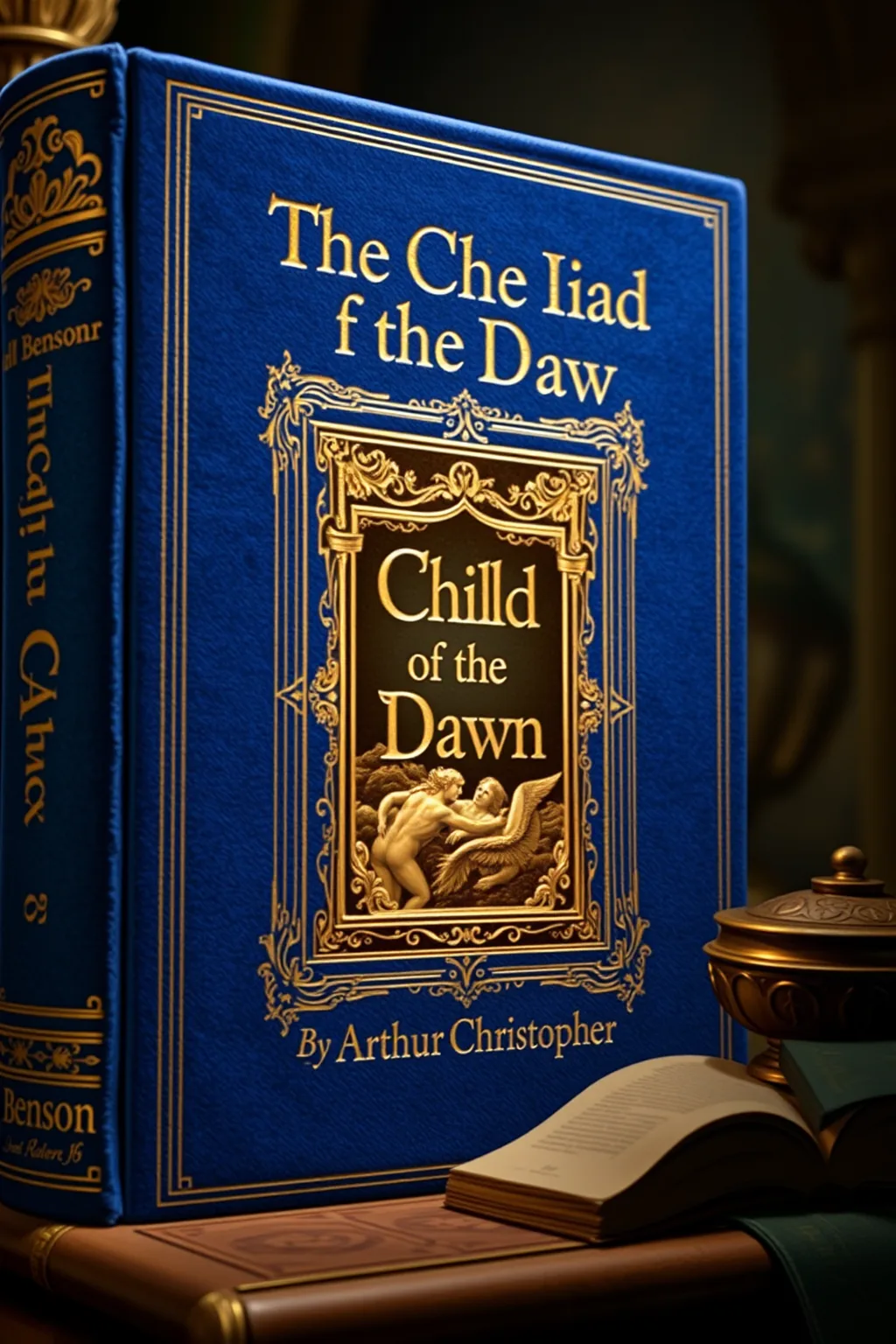
The Child of the Dawn
 68
68

The Child of the Dawn


Balthazar Finch (Senior Critic, Occult Philosophy) — Arthur Christopher Benson's "The Child of the Dawn" is a subtle yet potent exploration of post-mortem consciousness and spiritual ascent. Benson, with his characteristic grace, navigates the liminal space between life and what lies beyond, offering a vision of the afterlife that is both comforting and intellectually stimulating. The narrative's strength lies in its gentle presentation of complex metaphysical concepts, making it accessible to a broad spectrum of readers. This work is particularly valuable for those engaged with the study of spiritualism, consciousness, and the nature of the soul, offering a contemplative counterpoint to more dogmatic theological frameworks. It is a beacon for earnest spiritual seekers and students of esoteric philosophy.
📝 Description
68
Arthur Christopher Benson published 'The Child of the Dawn' in 1912, focusing on spiritual transformation.
Arthur Christopher Benson's 1912 book, 'The Child of the Dawn,' recounts a narrative centered on a near-death experience and subsequent spiritual rebirth. The story follows a protagonist who encounters a figure guiding him through a vision of divine illumination and the afterlife. Benson uses allegory and symbolism to explore the nature of consciousness and the soul's progression. The work addresses fundamental questions about existence, the possibility of eternal life, and the awakening process. It is written for those interested in philosophical discussions of spiritual evolution and the deeper meaning of human experience.
This book is not a simple narrative but a philosophical inquiry into the transformative potential of spiritual realization. Benson's prose aims to evoke a sense of wonder while conveying specific ideas about the spiritual path. The text invites contemplation on the connection between the material and mystical worlds, suggesting a reality beyond ordinary perception. Readers will find it a thoughtful examination of humanity's search for meaning and ultimate spiritual understanding.
Published in 1912, 'The Child of the Dawn' emerged during a period of intense interest in spiritualism and esoteric thought in Britain. Benson's work resonates with the broader currents of the time, which included explorations of theosophy, spiritual psychology, and Christian mysticism. It reflects a desire to reconcile religious faith with personal spiritual experience, often drawing on concepts of the soul's journey and the possibility of direct divine encounter. The book engages with themes common in esoteric literature concerning hidden knowledge and the transformation of the self.
✍️ Author
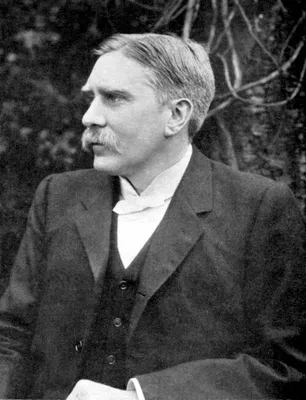
Benson, Arthur Christopher
Arthur Christopher Benson, (24 April 1862 – 17 June 1925) was an English essayist, poet and academic, who served as the 28th Master of Magdalene College, Cambridge. He wrote the lyrics of Edward Elgar's Coronation Ode, including the words of the patriotic …
💡 Why Read This Book?
Delve into a visionary exploration of the soul's journey beyond the physical realm. "The Child of the Dawn" offers profound insights into spiritual evolution, the nature of consciousness, and the promise of eternal light. Ideal for seekers of metaphysical truth, students of near-death experiences, and anyone drawn to literature that illuminates the path of spiritual awakening.
⭐ Reader Reviews
Honest opinions from readers who have explored this book.
❓ Frequently Asked Questions
What is the central theme of 'The Child of the Dawn'?
The central theme revolves around the soul's journey after death, its evolution, and the eventual attainment of spiritual enlightenment and union with the divine. It explores concepts of purgation and spiritual rebirth.
Is this book a factual account of near-death experiences?
While inspired by the concept of near-death experiences and spiritual journeys, 'The Child of the Dawn' is a fictional and allegorical work, offering a metaphorical depiction of spiritual truths rather than a literal report.
Who is Arthur Christopher Benson?
Arthur Christopher Benson was an English essayist, poet, and academic. He was Master of Magdalene College, Cambridge, and a significant figure in the English literary and intellectual scene of the early 20th century, known for his thoughtful prose on spiritual and philosophical matters.
What kind of spiritual or religious perspective does the book offer?
The book presents a universalist and mystical spiritual perspective, focusing on the soul's innate divinity and its inherent drive towards light and higher consciousness, transcending specific religious doctrines.
Is the language of the book accessible to modern readers?
Benson's prose is elegant and reflective of his era, yet remains deeply resonant and comprehensible. While it may require a contemplative reading, the profound themes ensure its accessibility to those seeking spiritual depth.
🔮 Key Themes & Symbolism
The Soul's Post-Mortem Journey
The narrative intricately details the soul's passage through various spiritual realms following physical death. It explores the process of purification, reflection, and gradual ascent towards higher consciousness. Benson emphasizes that this journey is not one of judgment but of profound self-discovery and karmic balancing, leading to spiritual growth and reintegration with the Universal Soul. The book presents a hopeful and evolutionary view of the afterlife.
Spiritual Illumination and Rebirth
At the heart of 'The Child of the Dawn' lies the concept of spiritual illumination – a transformative awakening that reorients the soul towards its true divine nature. This rebirth is depicted as a shedding of earthly attachments and illusions, leading to a profound understanding of existence and purpose. The 'Child of the Dawn' symbolizes the soul reborn in light, embodying purity, wisdom, and unconditional love, a state achievable through conscious spiritual endeavor.
Symbolism of Light and Consciousness
Light serves as a pervasive and potent symbol throughout the text, representing divine presence, truth, knowledge, and the ultimate destination of the soul. Benson uses light not just as a visual element but as a metaphor for consciousness itself – its expansion, its purity, and its connection to the cosmic source. The journey towards the 'Dawn' is a journey towards greater light, signifying the increasing clarity and spiritual awareness of the evolving soul.
💬 Memorable Quotes
Direct passages from the work, attributed to the author.
“We are all children of the light, though often lost in shadow.”
— This speaks to the inherent divine spark within every individual, suggesting that spiritual darkness is a temporary condition from which one can emerge through self-awareness and spiritual seeking.
“The veil between worlds is thin for those who seek.”
— This highlights the importance of earnest spiritual inquiry and intention in perceiving the subtler realities and accessing higher planes of consciousness.
“Love is the ultimate law and the final truth.”
— This emphasizes the supreme power of divine love as the guiding principle and ultimate realization of the spiritual path, transcending all other forces.
“Each life is but a chapter in the grand epic of the soul.”
— This metaphor frames individual lifetimes as integral parts of a much larger, ongoing spiritual narrative, promoting a perspective of continuity and purpose.
💡 Key Ideas
Editorial paraphrase of the work's core concepts — not direct quotes.
The soul is immortal, and its journey is eternal.
This quote captures the core tenet of the book: the enduring nature of the soul and its continuous evolution through myriad experiences, both in life and beyond.
🌙 Esoteric Significance
Tradition
This work resonates deeply with the Hermetic and Neoplatonic traditions, which emphasize the soul's journey from the material world back to the Divine Source. It echoes Gnostic ideas of spiritual awakening and liberation from ignorance, as well as concepts found in spiritualist literature regarding the nature of the spirit world and the evolution of consciousness after death.
Symbolism
Key symbols include 'the Dawn' representing spiritual enlightenment and divine realization; 'light' signifying truth, consciousness, and the divine presence; and the 'veil' symbolizing the separation between the material and spiritual realms, which can be pierced by spiritual insight and practice.
Modern Relevance
In an era increasingly grappling with existential questions and the nature of consciousness, 'The Child of the Dawn' offers a timeless perspective on spiritual growth, the afterlife, and the innate potential for divinity within humanity. Its themes of transformation and enduring spirit provide solace and guidance for contemporary seekers.
👥 Who Should Read This Book
This book is a treasure for the earnest spiritual seeker looking for contemplation on the soul's journey and the nature of the afterlife. Scholars of comparative religion and esoteric philosophy will find it a valuable study in early 20th-century spiritual thought. Practitioners of meditation and mindfulness may discover resonant themes regarding consciousness expansion and inner transformation. Beginners to metaphysical concepts will appreciate Benson's gentle, allegorical approach, which explains profound ideas about existence and spirituality.
📜 Historical Context
Written in the early 20th century, "The Child of the Dawn" emerged from a period of intense spiritual and philosophical ferment. The late Victorian and Edwardian eras witnessed a resurgence of interest in spiritualism, theosophy, and esoteric philosophies, often as a reaction against the perceived materialism of the age. Authors like Benson were exploring the nature of consciousness, the afterlife, and the potential for human spiritual development outside traditional religious dogma. This era also saw a rise in literature that blended spiritual inquiry with imaginative narrative, seeking to make profound metaphysical ideas accessible and engaging to a wider audience. Benson's work is a significant contribution to this tradition, reflecting a desire to reconcile faith with reason and to illuminate the hidden spiritual dimensions of existence.
📔 Journal Prompts
Reflect on your personal understanding of the soul's journey after death. How does Benson's depiction resonate with or challenge your beliefs?
Consider the concept of 'spiritual illumination.' What does this mean to you, and what steps can you take to cultivate it in your life?
Identify personal 'shadows' or illusions that you feel may be obscuring your own inner light. How can you begin to step into greater clarity?
What does the symbol of 'light' represent in your own spiritual or personal journey? How have you experienced its presence or absence?
If you could communicate with a soul in the process of spiritual evolution, what wisdom or encouragement would you offer based on the themes in this book?
🗂️ Glossary
The Dawn
A symbolic representation of spiritual enlightenment, divine realization, and the soul's ultimate return to its true, luminous nature after a period of evolution and purification.
Spiritual Illumination
The process of profound awakening and heightened consciousness where the soul perceives truth, recognizes its divine origin, and understands its purpose, leading to a state of inner clarity and peace.
The Veil
A metaphorical barrier or separation between the physical, material world and the subtler, spiritual realms. It is often understood to be permeable to those with developed spiritual perception or during altered states of consciousness.
Soul's Evolution
The concept that the soul undergoes a continuous process of growth, learning, and refinement through various experiences and lifetimes, moving towards greater wisdom, compassion, and spiritual maturity.
Divine Source
The ultimate origin and sustainer of all existence, often referred to as God, the Absolute, or the Universal Consciousness, from which all souls emanate and to which they ultimately return.
This book appears in 1 collection
🔮 Readers Also Liked
Browse all →
From the “Spiritual Awakening” Collection
View all →






More Free Spiritual Development Books
View all →