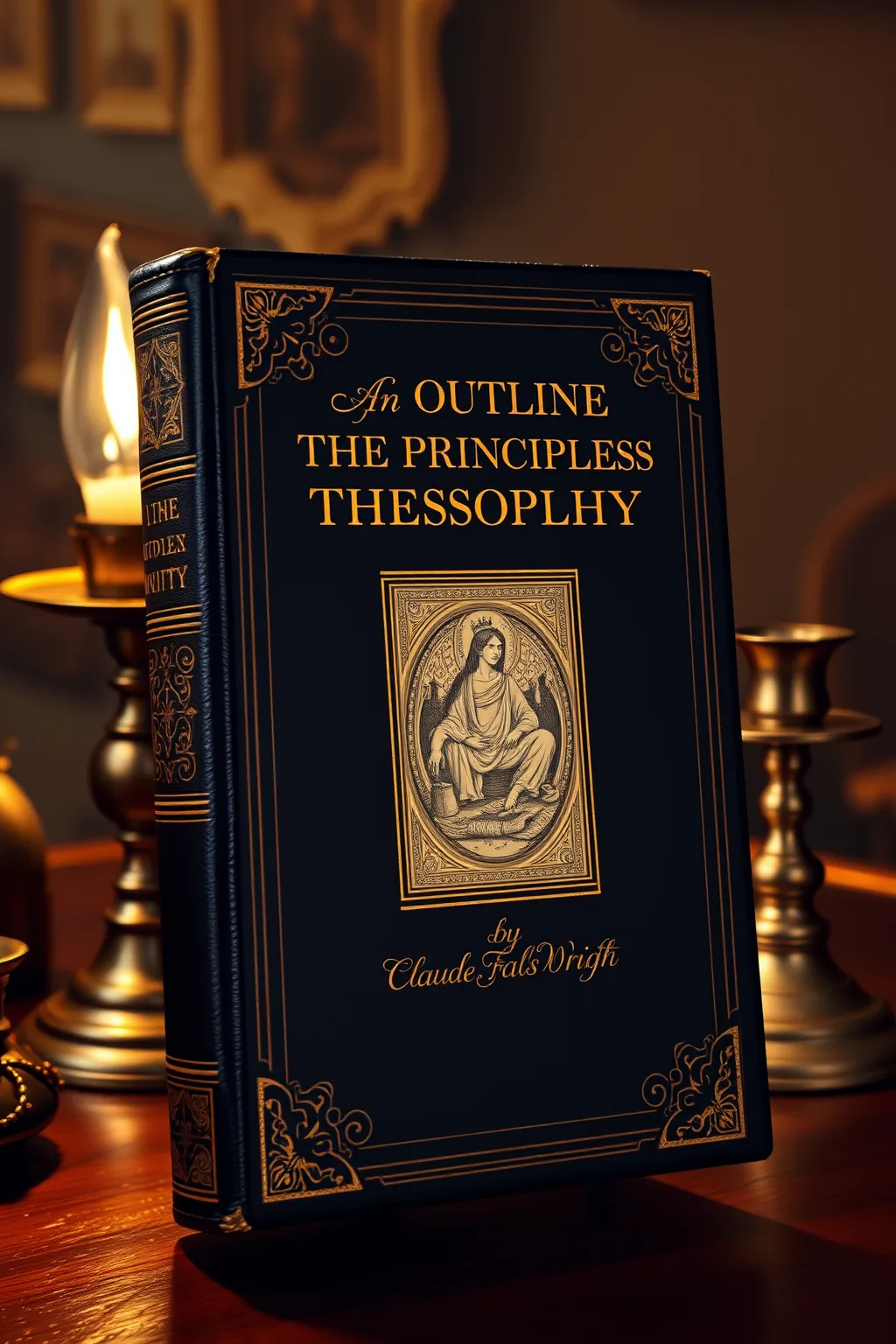
An Outline of the Principles of Modern Theosophy
 77
77

An Outline of the Principles of Modern Theosophy



An Outline of the Principles of Modern Theosophy by Claude Falls Wright is a timeless treasure for anyone interested in the esoteric and occult traditions. Published in 1894, this book provides a clear and accessible introduction to the core principles of Theosophy, making it an essential read for both scholars and spiritual seekers. Wright's prose is both engaging and informative, weaving together complex ideas with a clarity that makes them accessible to a wide audience. The book's historical context is particularly noteworthy, as it reflects the spiritual fervor of the late 19th century. For modern readers, this text offers a valuable perspective on the evolution of spiritual thought and its enduring relevance. The book's exploration of spiritual evolution, cosmic principles, and the human experience makes it a must-read for anyone looking to deepen their understanding of esoteric traditions. 5/5 stars.
📝 Description
77
Claude Falls Wright's 1927 book outlines the core tenets of modern Theosophy.
Published in 1927, 'An Outline of the Principles of Modern Theosophy' by Claude Falls Wright presents a systematic examination of Theosophical concepts. Wright addresses subjects such as planetary influences, the nature of consciousness, and the esoteric understanding of monads. The book is structured to guide the reader through these complex ideas with a focus on clarity and logical progression. It aims to illuminate the symbolic language and philosophical underpinnings of Theosophy for those interested in spiritual or esoteric studies.
The work is designed for individuals seeking a structured introduction to Theosophical thought, whether they are new to the subject or have some prior familiarity. Wright's approach seeks to demystify concepts that can often appear obscure, encouraging a more direct engagement with the material. It invites readers to consider alternative perspectives on reality and consciousness, fostering a thoughtful response to the principles discussed.
This book is situated within the broader tradition of Theosophy, a movement that gained prominence in the late 19th and early 20th centuries. Theosophy, as developed by figures like Helena Blavatsky, sought to synthesize Eastern and Western esoteric philosophies, presenting a cosmology and ethics intended to promote universal brotherhood and spiritual understanding. Wright's work, appearing in the interwar period, contributes to the ongoing exposition and interpretation of these foundational Theosophical ideas, particularly its metaphysical and scientific aspects.
💡 Why Read This Book?
Reading An Outline of the Principles of Modern Theosophy today offers a unique opportunity to connect with the foundational teachings of Theosophy and Anthroposophy. This book provides readers with a deeper understanding of spiritual evolution, the nature of the cosmos, and the human experience. By exploring the esoteric wisdom contained within its pages, readers can gain insights that enrich their spiritual journey and broaden their perspective on the mystical and occult traditions.
⭐ Reader Reviews
Honest opinions from readers who have explored this book.
❓ Frequently Asked Questions
What is the main focus of 'An Outline of the Principles of Modern Theosophy'?
The main focus of this book is to provide an overview of the core principles of modern Theosophy, exploring the intersection of Eastern philosophies and Western occultism.
Who is the intended audience for this book?
This book is intended for both scholars of esoteric traditions and spiritual seekers who wish to deepen their understanding of Theosophy and Anthroposophy.
Why is this book significant in the context of the late 19th century?
This book reflects the spiritual fervor and renewed interest in spiritualism and the occult that characterized the late 19th century, making it a valuable historical and spiritual resource.
🔮 Key Themes & Symbolism
Planetary Influences
The book looks at the mystical influence of celestial bodies on human consciousness and the natural world. Wright explores how these planetary forces shape our understanding of reality and our place in the cosmos. This theme invites readers to contemplate the interconnectedness of all things and the hidden energies that govern our existence.
Physical Consciousness
Wright's examination of physical consciousness reveals the deeper layers of our being and the esoteric nature of our existence. This theme challenges conventional notions of reality and invites readers to explore the spiritual dimensions of the physical body. Through this exploration, readers gain a deeper understanding of the interplay between the material and the spiritual realms.
Nature of Monads
The esoteric nature of monads is a central theme in this work. Wright's insights into the role of monads in the cosmic order provide a profound understanding of the fundamental units of existence. This theme invites readers to contemplate the hidden structures of reality and the spiritual significance of these esoteric entities.
💬 Memorable Quotes
Direct passages from the work, attributed to the author.
“Planetary influences shape our consciousness and guide us on our spiritual journey.”
— Wright's exploration of celestial energies reveals the hidden forces that govern our lives.
“Theosophy reveals the hidden layers of reality, inviting us to explore the mysteries of existence.”
— Wright's work challenges conventional wisdom and invites deeper contemplation.
💡 Key Ideas
Editorial paraphrase of the work's core concepts — not direct quotes.
The monad is the fundamental unit of existence, a spiritual entity that underlies all physical manifestations.
This quote highlights the esoteric significance of monads as the building blocks of reality.
The physical body is a temple of the soul, a vessel for spiritual exploration.
This quote invites readers to contemplate the spiritual dimensions of the physical body.
The journey of spiritual enlightenment begins with the exploration of hidden knowledge.
This quote underscores the importance of esoteric studies in the quest for spiritual enlightenment.
🌙 Esoteric Significance
Tradition
This book belongs to the Hermetic tradition, which emphasizes the unity of all things and the hidden knowledge of the cosmos. Hermetic principles underlie Wright's exploration of theosophical concepts, providing a framework for understanding the interconnectedness of existence.
Symbolism
Key symbols in this work include the monad, representing the fundamental unit of existence, and the planetary influences, symbolizing the hidden energies that govern our lives. These symbols invite readers to contemplate the deeper meanings of reality and the spiritual dimensions of existence.
Modern Relevance
The esoteric insights presented in this book remain relevant today, influencing modern practitioners of theosophy and spiritual seekers. Contemporary scholars and practitioners continue to explore the hidden layers of reality and the mystical principles outlined in Wright's work, seeking spiritual enlightenment and a deeper understanding of the cosmos.
👥 Who Should Read This Book
Beginners in theosophical studies will find a solid foundation in the principles of modern theosophy, making it accessible for those new to the field. Scholars of esoteric studies will appreciate the depth and breadth of Wright's exploration of planetary influences and the nature of monads. Spiritual seekers will be inspired by the clear insights into physical consciousness and the spiritual dimensions of existence. Practitioners of theosophy will find valuable insights and a comprehensive understanding of theosophical concepts, enriching their spiritual journey.
📜 Historical Context
Written during a time of great spiritual and intellectual ferment, 'An Outline of the Principles of Modern Theosophy' reflects the era's fascination with the occult and the mystical. Published in the early 20th century, this work emerged amidst a resurgence of interest in esoteric studies and theosophical principles. Wright's exploration of planetary influences, physical consciousness, and the nature of monads resonated with the spiritual seekers of his time, offering a comprehensive understanding of theosophical concepts. The book's influence can be seen in the continued interest in esoteric studies and the ongoing exploration of the hidden layers of reality.
📔 Journal Prompts
Reflect on the influence of planetary energies in your own life and how they shape your consciousness.
Explore the spiritual dimensions of your physical body and the role it plays in your spiritual journey.
Contemplate the nature of monads and their significance in the cosmic order.
Consider the hidden layers of reality and the mystical principles that govern our existence.
Journal about your personal journey of spiritual enlightenment and the insights gained from this book.
🗂️ Glossary
Monad
The fundamental unit of existence, a spiritual entity that underlies all physical manifestations.
Planetary Influences
The hidden energies of celestial bodies that shape our consciousness and guide us on our spiritual journey.
Physical Consciousness
The deeper layers of our being and the esoteric nature of our existence, revealing the spiritual dimensions of the physical body.
Theosophy
The study of the hidden layers of reality and the mystical principles that govern our existence.
Esoteric
Relating to knowledge that is hidden or secret, often involving mystical or spiritual insights.
This book appears in 2 collections
🔮 Readers Also Liked
Browse all →





From the “Theosophy” Collection
View all →






More Free Theosophy & Anthroposophy Books
View all →




![A Guide to Theosophy: Containing Select Articles for the Instructions [!] of Aspirants to the ...](/img/thumb/a-guide-to-theosophy-containing-select-articles-for-the-instructions-of-aspirants-to-the-tukaram-tatya-bombay-theosophical-fund.webp)