The hermetical triumph

 62
62

The hermetical triumph

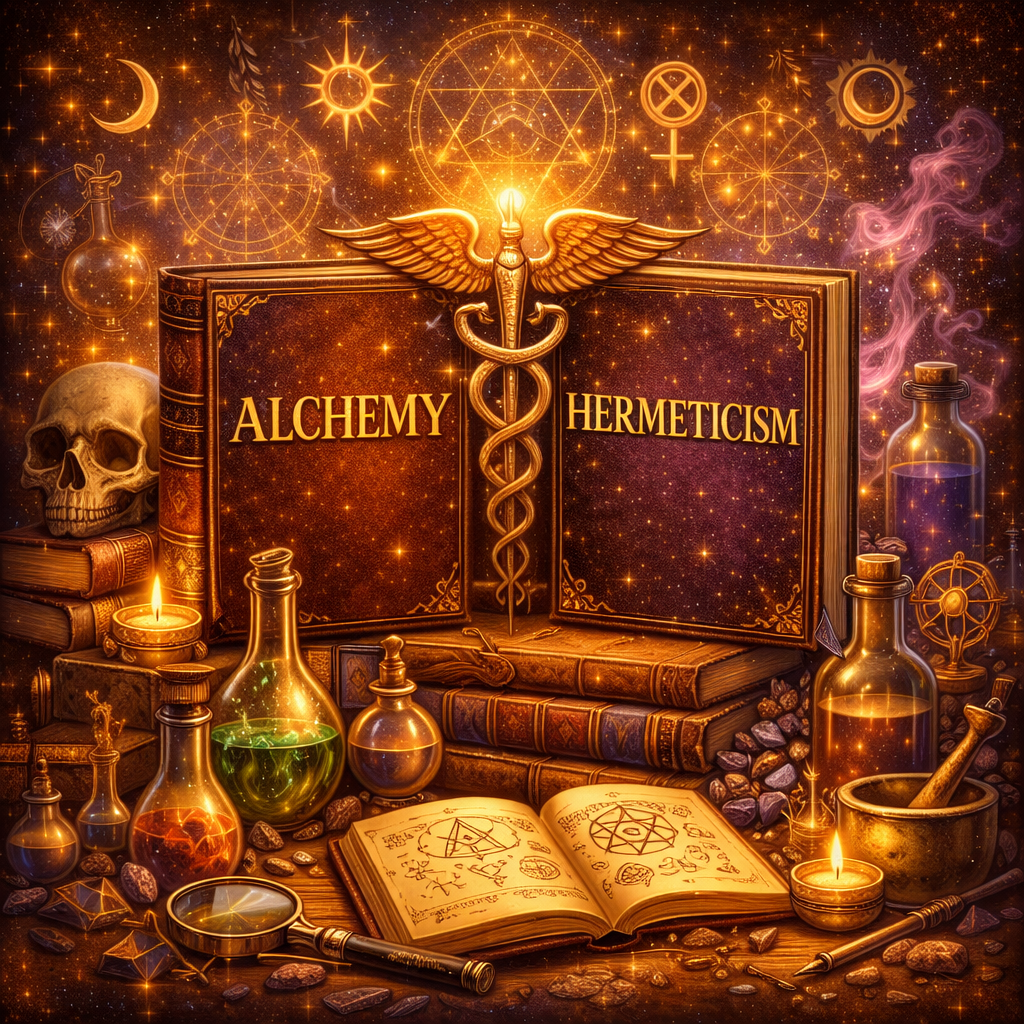

Isolde Whitaker, Sacred Texts Editor: 'The Hermetical Triumph' is a masterclass in Hermetic alchemy, offering readers a deep dive into the symbolism and hidden knowledge that have captivated mystics for centuries. Alexandre-Toussaint Limojon de Saint-Didier's work is a testament to the enduring allure of alchemy, blending philosophical depth with esoteric insights. The book's strength lies in its ability to weave together complex ideas into a coherent narrative, making it accessible to both scholars and seekers. De Saint-Didier's prose is evocative and rich, creating an atmosphere of mystery and reverence for ancient wisdom. For those interested in the occult, this book is an invaluable resource, providing a window into the mind of a true Hermetic adept. It is particularly suited for readers who appreciate the interplay between spirituality and philosophy, offering a unique perspective on the transformative power of alchemy.'
📝 Description
62
Alexandre-Toussaint Limojon de Saint-Didier published 'The Hermetical Triumph' in 1702.
This 1702 text by Alexandre-Toussaint Limojon de Saint-Didier presents a detailed account of alchemical philosophy and practice. It focuses on the spiritual dimensions of the Great Work, moving beyond purely material interpretations. The author discusses the philosophical underpinnings of alchemy, connecting the physical processes to metaphysical states and the pursuit of inner transformation.
De Saint-Didier's prose is rich with symbolism characteristic of the Hermetic tradition. He guides the reader through concepts related to the principles of transformation and the quest for spiritual enlightenment through alchemical means. The book is written with a deep respect for older teachings, aiming to convey a spiritual understanding of alchemical pursuits. It addresses both the hidden knowledge and the symbolic language used within this esoteric field.
Published in 1702, 'The Hermetical Triumph' emerges from the late Baroque period of Hermeticism. This era saw continued interest in alchemical texts, often reinterpreted through a lens of spiritual and philosophical development rather than solely material transmutation. The book reflects a tradition that sought correspondences between the terrestrial and celestial, the microcosm and the macrocosm, and viewed alchemical processes as allegories for spiritual purification and union with the divine.
💡 Why Read This Book?
Read 'The Hermetical Triumph' to explore the depths of Hermetic alchemy and its mystical teachings. This book is ideal for seekers of hidden knowledge, scholars of esoteric traditions, and practitioners of spiritual alchemy. It offers profound insights into the transformative power of the Hermetic path, making it a must-read for anyone interested in the occult and metaphysical arts.
⭐ Reader Reviews
Honest opinions from readers who have explored this book.
❓ Frequently Asked Questions
What is the primary focus of 'The Hermetical Triumph'?
The primary focus is the exploration of Hermetic alchemy, delving into the symbolism and hidden knowledge of the Hermetic tradition.
Who would benefit most from reading this book?
Scholars of esoteric traditions, spiritual seekers, and practitioners of alchemy will find this book particularly beneficial.
What makes this book unique among alchemical texts?
Its rich symbolism and philosophical depth make it a standout text, offering a unique perspective on the transformative power of alchemy.
Is this book suitable for beginners?
While it is accessible, a basic understanding of Hermetic principles will enhance the reading experience.
How does this book contribute to modern Hermetic studies?
It provides timeless insights into the Hermetic path, making it a valuable resource for contemporary practitioners and scholars.
🔮 Key Themes & Symbolism
Transformation and Alchemy
The central theme of 'The Hermetical Triumph' is the process of transformation through alchemy. De Saint-Didier examines the mystical aspects of alchemy, exploring how the transmutation of base metals into gold symbolizes the spiritual transformation of the self. This theme is woven throughout the text, inviting readers to contemplate the deeper meanings behind alchemical practices.
Symbolism and Hidden Knowledge
The book is rich in symbolism, using arcane language and metaphors to convey hidden knowledge. De Saint-Didier's use of symbols is not merely decorative but serves to reveal the deeper, esoteric truths of the Hermetic tradition. Readers are encouraged to decipher these symbols, uncovering layers of meaning that speak to the mystical journey of the soul.
Philosophical Depth
De Saint-Didier's work is imbued with philosophical significance, exploring the interplay between the physical and metaphysical realms. The text examines the nature of reality, the quest for knowledge, and the transformative power of spiritual practices. This philosophical depth makes 'The Hermetical Triumph' a valuable resource for those seeking to understand the esoteric foundations of Hermeticism.
💬 Memorable Quotes
Direct passages from the work, attributed to the author.
“Symbols are the language of the divine, speaking to those who listen.”
— De Saint-Didier highlights the importance of symbolism in revealing hidden truths.
“The Hermetic path is one of mystery and revelation, where the seeker finds both light and shadow.”
— It emphasizes the dual nature of the spiritual journey, filled with both enlightenment and challenge.
💡 Key Ideas
Editorial paraphrase of the work's core concepts — not direct quotes.
The true alchemist seeks not gold, but the transformation of the soul.
This quote underscores the spiritual focus of alchemy, emphasizing the inner journey.
In the crucible of the mind, the base metal of ignorance is transmuted into the gold of wisdom.
This passage illustrates the transformative power of knowledge and spiritual practice.
The quest for the philosopher's stone is a journey into the depths of the self.
This quote suggests that the true goal of alchemy is self-discovery and spiritual growth.
🌙 Esoteric Significance
Tradition
This book belongs to the Hermetic tradition, which emphasizes the pursuit of hidden knowledge and spiritual transformation. Hermeticism draws on the teachings of Hermes Trismegistus, blending alchemy, astrology, and mysticism into a cohesive philosophy.
Symbolism
Key symbols in the text include the philosopher's stone, the crucible, and the alchemical process itself. These symbols represent the journey of spiritual transformation, the quest for enlightenment, and the alchemist's role in facilitating this process.
Modern Relevance
This book remains relevant today for modern practitioners of Hermeticism and alchemy, offering timeless insights into the transformative power of spiritual practices. Contemporary scholars and seekers continue to draw on its wisdom, finding in it a rich source of esoteric knowledge.
👥 Who Should Read This Book
Beginners interested in the Hermetic tradition will find this book a valuable introduction, providing a foundation for further study. Scholars of esoteric traditions will appreciate its depth and historical significance. Spiritual seekers looking to deepen their understanding of alchemy and its mystical teachings will find it enlightening. Practitioners of Hermetic arts will benefit from its practical insights and philosophical depth.
📜 Historical Context
Written in the early 18th century, 'The Hermetical Triumph' reflects the rich Hermetic tradition that flourished during the Renaissance and beyond. This era saw a renewed interest in ancient wisdom, with scholars and mystics alike exploring the mysteries of alchemy, astrology, and the occult. De Saint-Didier's work is a product of this intellectual and spiritual ferment, drawing on the Hermetic texts of the past to offer insights into the transformative power of alchemy. The book's influence can be seen in the continued study and practice of Hermeticism, as well as in the enduring fascination with the mysteries of the occult.
📔 Journal Prompts
Reflect on the symbolism in 'The Hermetical Triumph' and how it relates to your own spiritual journey.
Consider the transformative power of alchemy and how it might apply to your personal growth.
Explore the interplay between the physical and metaphysical realms as described in the book.
Write about the significance of the philosopher's stone in your own life.
How does the quest for hidden knowledge resonate with your spiritual practices?
🗂️ Glossary
Hermeticism
A philosophical and spiritual tradition based on the teachings of Hermes Trismegistus, blending alchemy, astrology, and mysticism.
Alchemy
An ancient practice combining elements of chemistry, physics, and spirituality, aimed at transforming base metals into gold and achieving spiritual enlightenment.
Philosopher's Stone
A legendary substance in alchemy believed to turn base metals into gold and grant immortality.
Crucible
A container used in alchemy to melt and transform substances, symbolizing the process of spiritual transformation.
Transformative Power
The ability of alchemical practices to effect spiritual and personal growth.
This book appears in 3 collections
🔮 Readers Also Liked
Browse all →









More by Alexandre-Toussaint Limojon de Saint-Didier
All books →

From the “Hermeticism” Collection
View all →








More Free Alchemy & Hermeticism Books
View all →