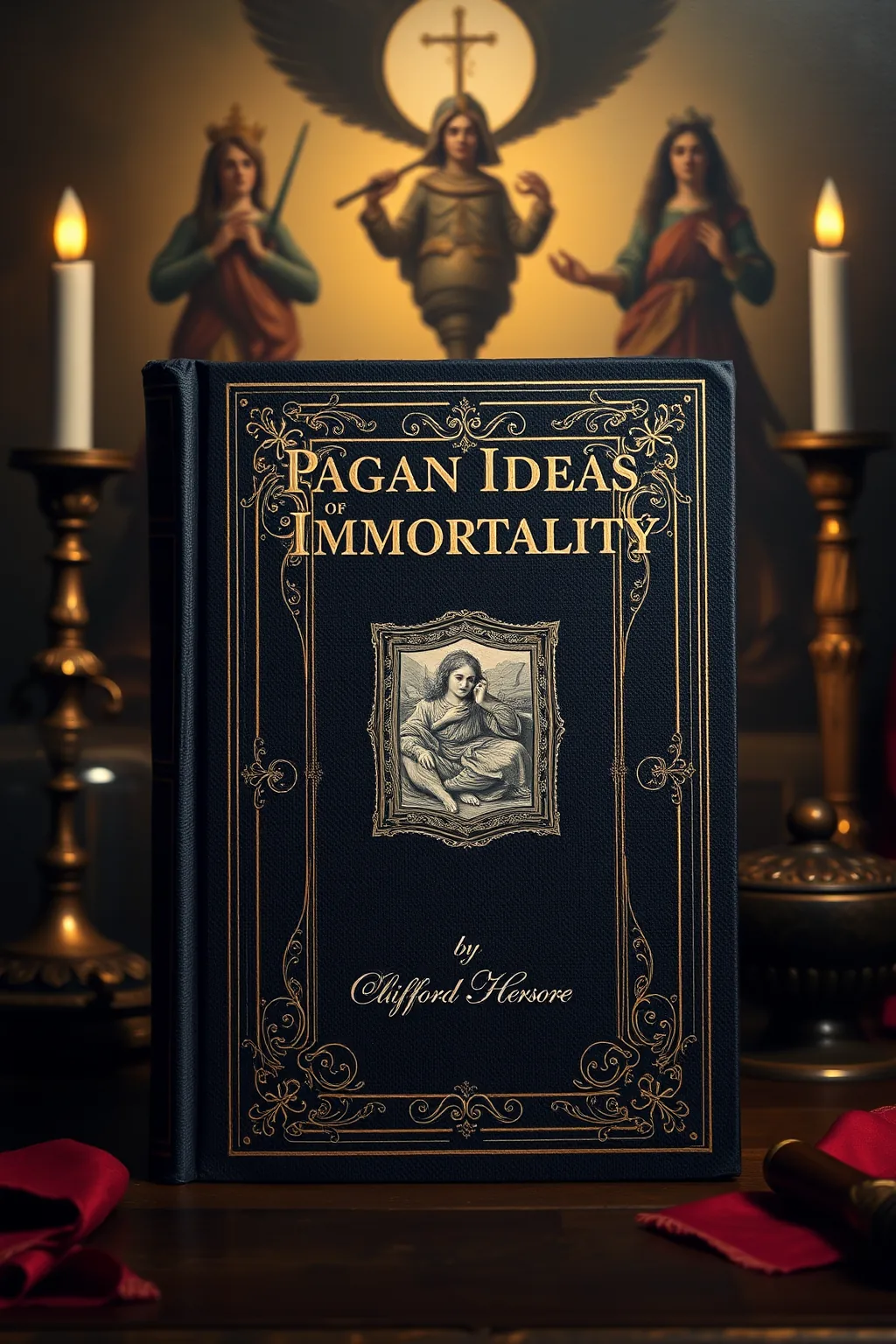
Pagan Ideas of Immortality During the Early Roman Empire
 69
69

Pagan Ideas of Immortality During the Early Roman Empire



Clifford Herschel Moore's Pagan Ideas of Immortality During the Early Roman Empire is a treasure trove for modern esoteric seekers. Published in 1866, this book provides a detailed examination of the pagan beliefs surrounding immortality during the early Roman Empire, offering a unique perspective on ancient religious practices. Moore's meticulous research and insightful analysis make this text a valuable resource for anyone interested in the occult and pagan studies. The book's exploration of immortality beliefs is particularly relevant today, as it sheds light on the enduring human fascination with life after death. For those seeking to deepen their understanding of paganism and its esoteric dimensions, this book is an indispensable guide. The historical context provided by Moore enriches the reader's experience, making it easier to appreciate the complexity and depth of ancient pagan thought. Overall, this book is a must-read for anyone interested in the mystical and spiritual traditions of the past. Rating: 4.5/5.
📝 Description
69
Clifford Herschel Moore's 1913 study examines pagan ideas of immortality in the early Roman Empire.
Clifford Herschel Moore's 1913 work investigates how pagan cultures within the early Roman Empire conceived of immortality. It looks beyond common religious doctrines to uncover the philosophical and symbolic frameworks that informed ancient beliefs about life after death. The book details specific ideas circulating during that period, tracing their roots and manifestations in Roman thought and practice.
Moore's research brings to light the less commonly discussed aspects of Roman spirituality concerning eternity and the soul's fate. The text is grounded in a scholarly approach, drawing on classical sources to reconstruct these ancient perspectives. It serves as a detailed account of a specific intellectual current, offering insights into a worldview shaped by myth, philosophy, and early religious syncretism.
This book situates itself within the study of ancient religious thought, focusing on beliefs that diverged from mainstream Stoicism or early Christianity regarding the soul's continuation. It examines the philosophical underpinnings and symbolic language used by various pagan traditions to articulate ideas of immortality. The work engages with concepts that influenced mystery cults and philosophical schools, showing how a desire for eternal existence was expressed through diverse, often esoteric, frameworks.
✍️ Author
Moore, Clifford Herschel
Moore is a common surname in many English-speaking countries and is of Gaelic/English origin..
💡 Why Read This Book?
Reading Pagan Ideas of Immortality During the Early Roman Empire today offers readers a unique opportunity to explore the ancient pagan beliefs surrounding immortality. This book provides deep insights into the esoteric practices and spiritual quests of the early Roman Empire, enriching the reader's understanding of paganism and its enduring influence. By delving into this text, readers can gain a broader perspective on the human quest for immortality and the spiritual practices that have shaped our world. Whether you are a scholar, a practitioner of witchcraft, or simply curious about the occult, this book offers valuable knowledge and inspiration.
⭐ Reader Reviews
Honest opinions from readers who have explored this book.
❓ Frequently Asked Questions
What is the main focus of Pagan Ideas of Immortality During the Early Roman Empire?
The main focus of this book is the exploration of pagan beliefs about immortality during the early Roman Empire. It delves into the esoteric and mystical practices that shaped these beliefs, providing a rich historical context.
Who should read this book?
This book is ideal for scholars of ancient Roman religion, practitioners of witchcraft, and anyone interested in the occult and pagan studies. It offers deep insights into the spiritual quests of the past.
How does this book contribute to the study of esoteric practices?
This book contributes significantly to the study of esoteric practices by providing a detailed examination of ancient pagan beliefs about immortality. It offers a unique perspective on the mystical and spiritual traditions that have shaped human thought.
🔮 Key Themes & Symbolism
Immortality and the Afterlife
This book examines the pagan concepts of immortality and the afterlife, revealing the esoteric beliefs that shaped Roman spirituality. Moore explores the mystical ideas of eternal life and the symbolic meanings that underpinned these beliefs, providing a deep understanding of the philosophical significance of immortality in ancient Roman culture.
Symbolism and Hidden Knowledge
One of the key themes is the symbolism and hidden knowledge that were integral to pagan beliefs about immortality. Moore uncovers the esoteric symbols and their meanings, offering readers a unique perspective on the mystical traditions that influenced Roman thought.
Philosophical Significance
The philosophical significance of pagan ideas about immortality is a central theme. Moore's exploration of these ideas reveals the deeper, often overlooked aspects of Roman spirituality, making this book an invaluable resource for scholars and practitioners of the occult.
💬 Memorable Quotes
Direct passages from the work, attributed to the author.
“Symbolism played a central role in shaping pagan ideas about the afterlife.”
— Moore emphasizes the importance of esoteric symbols in understanding Roman spirituality.
“Hidden knowledge was the key to unlocking the mysteries of the afterlife.”
— Moore's exploration of hidden knowledge offers insights into the esoteric traditions of the early Roman Empire.
💡 Key Ideas
Editorial paraphrase of the work's core concepts — not direct quotes.
The ancient Romans believed in a form of immortality that transcended physical existence.
This quote highlights the mystical belief in eternal life beyond the mortal body.
The philosophical underpinnings of immortality reveal the depth of Roman thought.
This quote underscores the profound philosophical significance of pagan beliefs about immortality.
The mystical traditions of the Romans continue to influence Western thought.
This quote highlights the enduring relevance of pagan ideas about immortality in modern occult studies.
🌙 Esoteric Significance
Tradition
This book belongs to the Hermetic tradition, which emphasizes the pursuit of hidden knowledge and the mystical understanding of the universe. Moore's exploration of pagan beliefs about immortality reveals the esoteric symbols and philosophical underpinnings that are central to Hermetic thought.
Symbolism
Key symbols in this book include the use of mythological figures and rituals that were believed to hold the key to eternal life. Moore's analysis of these symbols provides a deep understanding of the mystical traditions that shaped Roman spirituality.
Modern Relevance
This work is relevant today for modern practitioners of the occult who seek to understand the esoteric traditions that have influenced Western thought. The book's insights into pagan beliefs about immortality offer a unique perspective on the afterlife and the symbolic meanings that continue to resonate in contemporary spiritual practices.
👥 Who Should Read This Book
Beginners in the field of occult studies may find this book challenging but rewarding, as it provides a deep dive into ancient Roman spirituality. Scholars of ancient religions and esoteric traditions will appreciate the meticulous research and philosophical insights. Spiritual seekers and practitioners of the occult will find valuable insights into the mystical beliefs that have shaped Western thought. Those interested in the philosophical significance of immortality will also benefit from Moore's exploration of these themes.
📜 Historical Context
During the early Roman Empire, pagan beliefs about immortality were central to the spiritual and cultural landscape. This period saw a wide range of mystical and esoteric traditions that shaped the way Romans understood the afterlife. Clifford Herschel Moore's work provides a comprehensive look at these beliefs, revealing the hidden knowledge and symbolism that underpinned Roman spirituality. The book's influence lies in its ability to uncover the deeper, often overlooked aspects of ancient Roman religion, making it an essential resource for scholars and practitioners of the occult.
📔 Journal Prompts
How do the pagan ideas of immortality in the early Roman Empire compare to modern beliefs about the afterlife?
What esoteric symbols and rituals were central to Roman spirituality, and how do they influence contemporary occult practices?
In what ways does Clifford Herschel Moore's exploration of immortality reveal the hidden knowledge and philosophical significance of pagan beliefs?
How does the symbolism in this book provide insights into the mystical traditions of the early Roman Empire?
What can modern practitioners of the occult learn from the pagan ideas of immortality presented in this book?
🗂️ Glossary
Hermetic Tradition
An esoteric tradition that emphasizes the pursuit of hidden knowledge and mystical understanding of the universe.
Esoteric Symbols
Symbols with hidden meanings that are central to mystical and occult traditions.
Pagan Beliefs
Spiritual and religious beliefs that are not part of major world religions, often involving nature worship and ancient myths.
Immortal Soul
The concept of an eternal, non-physical essence that survives death.
Roman Spirituality
The spiritual practices and beliefs of the ancient Romans, often involving esoteric rituals and symbolism.
This book appears in 2 collections
🔮 Readers Also Liked
Browse all →

From the “Witchcraft” Collection
View all →






More Free Witchcraft & Paganism Books
View all →