What is Thelema?
Thelema is a spiritual philosophy and religion founded by Aleister Crowley in the early 20th century. Its central tenet is 'Do what thou wilt shall be the whole of the Law.' This is interpreted not as hedonism, but as the pursuit of one's true destiny and highest purpose. Thelema draws heavily on occult traditions, Gnosticism, and Eastern philosophies, emphasizing individual sovereignty, self-knowledge, and the development of personal will within a framework of cosmic order. It advocates for a balanced approach to life, integrating spiritual, intellectual, and physical aspects.
Best Books for Complete Beginners
For those new to Thelema, start with texts that provide a clear overview. 'The Kybalion: A Study of The Hermetic Philosophy of Ancient Egypt and Greece' by Three Initiates offers a foundational look at Hermetic principles that influenced Thelema. William Blake's 'The Marriage of Heaven and Hell' is crucial for understanding the symbolic language and contrarian worldview that resonates within Thelemic thought. Kahlil Gibran's 'The Prophet' provides accessible allegorical wisdom that aligns with the philosophical underpinnings of self-discovery central to Thelema.
Intermediate Reading
Moving beyond the basics, look at texts that explore Thelemic practice and symbolism more deeply. 'The symbolism of Freemasonry' by Albert Gallatin Mackey, while not directly Thelemic, illuminates the esoteric traditions and symbolic language that informed Crowley's work. Annie Besant's 'Thought-Forms' provides insight into the visualization and psychic phenomena relevant to occult studies. John Uri Lloyd's 'Etidorhpa; or, The End of Earth.' offers a narrative journey through esoteric concepts and spiritual transformation.
Classical / Advanced Texts
Serious students will engage with primary source material and historical context. 'The book of Enoch' is an ancient apocalyptic text that deeply influenced early mystical traditions and provides a framework for understanding cosmic hierarchies and divine revelations. Cotton Mather's 'The Wonders of the Invisible World' offers historical context on early notions of witchcraft and the supernatural, relevant to the historical milieu of Western esotericism. 'The Story of Alchemy and the Beginnings of Chemistry' by M. M. Pattison Muir explores the alchemical roots that are intertwined with Thelemic philosophy.
Reading Order — Step by Step
Begin with 'The Prophet' by Kahlil Gibran for accessible philosophical concepts. Follow with 'The Kybalion' by Three Initiates to grasp core Hermetic principles. Next, engage with William Blake's 'The Marriage of Heaven and Hell' for its challenging symbolism. For historical context, explore 'The symbolism of Freemasonry' by Albert Gallatin Mackey. Then, consider Annie Besant's 'Thought-Forms' for understanding esoteric concepts. Advanced study should include 'The book of Enoch' and works by Aleister Crowley (not listed but essential for deeper study).
Frequently Asked Questions
Which Thelema book should I read first?
Begin with Kahlil Gibran's 'The Prophet' for its accessible philosophical insights into life purpose. This is followed by 'The Kybalion' by Three Initiates to understand the foundational Hermetic principles that underpin much of Thelemic thought.
What is the core principle of Thelema?
The core principle is 'Do what thou wilt shall be the whole of the Law.' This is interpreted as finding and enacting one's true purpose or destiny, not as unrestrained indulgence.
Is Thelema a religion or a philosophy?
Thelema is considered both a religion and a philosophy. It has a distinct cosmology, deities, and ritual practices, alongside a philosophical framework emphasizing individual sovereignty and self-realization.
What is the role of 'Magick' in Thelema?
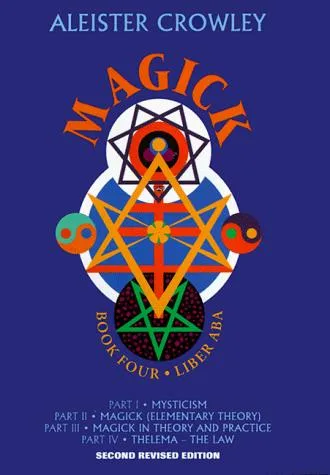
Magick (spelled with a 'k') is central to Thelemic practice. It is defined as the science and art of causing change to occur in conformity with Will, encompassing both ritual and the practical application of one's True Will in the world.
Are there specific deities in Thelema?
Yes, Thelema incorporates deities from various pantheons, notably Nuit, Hadit, and Ra-Hoor-Khuit, who represent fundamental cosmic principles within its cosmology.
Where does Thelema originate from?
Thelema was founded by Aleister Crowley in the early 20th century, based on his reception of the sacred text 'Liber AL vel Legis' (The Book of the Law) in 1904.
How does Thelema differ from other occult systems?
Thelema's unique emphasis on the Law of Thelema ('Do what thou wilt') and its specific cosmology derived from 'The Book of the Law' distinguish it. It integrates elements from Hermeticism, Gnosticism, and Eastern traditions with a focus on individual liberation.
Is Thelema compatible with other spiritual paths?
While Thelema has its own distinct path, its emphasis on individual Will and self-discovery can be seen as compatible with many spiritual systems that value personal growth and understanding one's place in the universe.