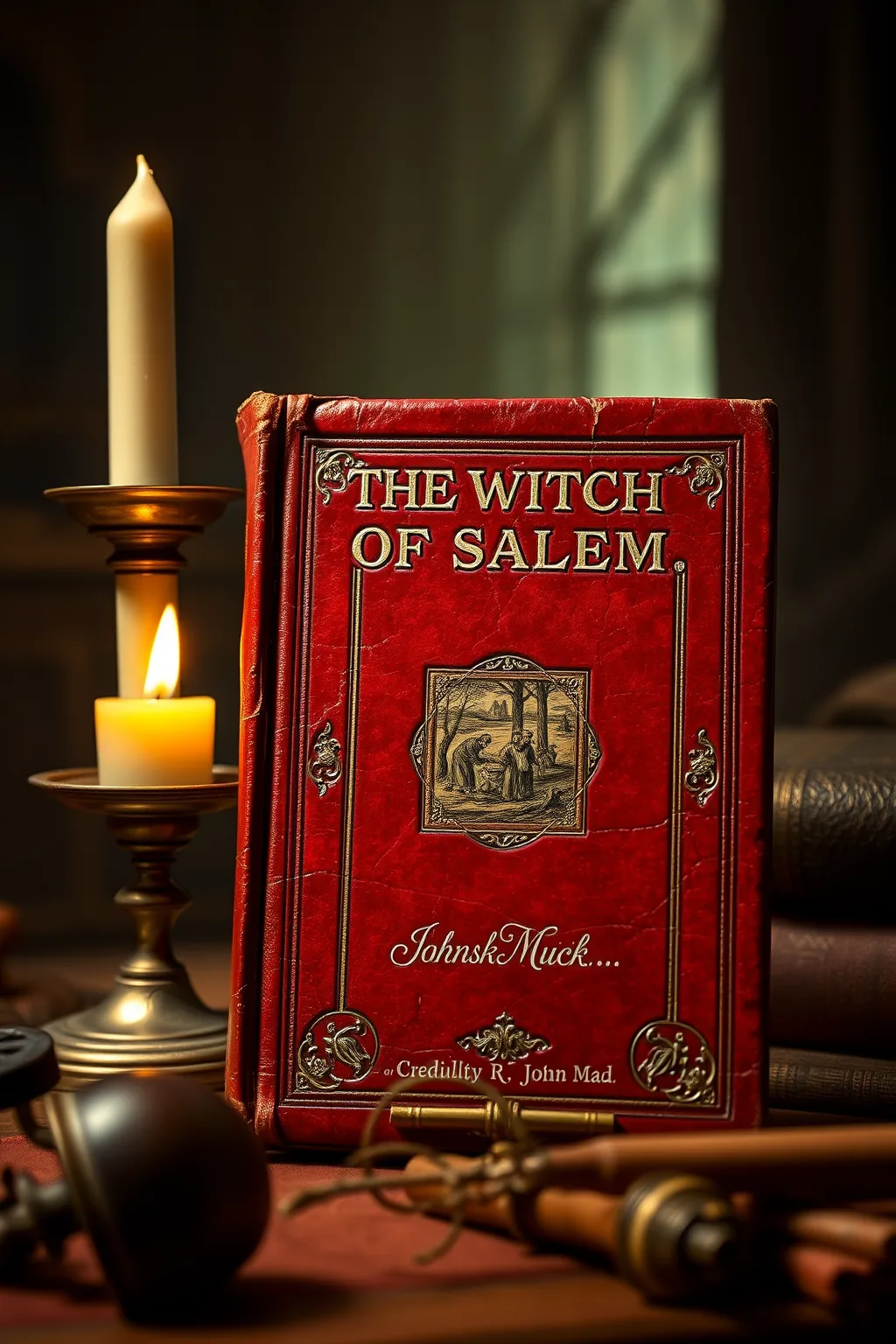
The Witch of Salem; or, Credulity Run Mad
 69
69

The Witch of Salem; or, Credulity Run Mad


The Witch of Salem; or, Credulity Run Mad by John R. Musick is a seminal work in the genre of historical fiction with a strong esoteric undercurrent. Published in 1849, it remains relevant today for its deep dive into the Salem witch trials, a period marked by irrational fear and superstition. Musick's narrative is both gripping and educational, providing modern readers with a vivid portrait of colonial America's darkest chapter. The book's exploration of witchcraft and paganism is particularly enlightening, offering insights into the beliefs and practices that shaped the lives of early settlers. For contemporary esoteric seekers, this text serves as a historical mirror, reflecting the timeless struggle between reason and irrationality. It is a valuable resource for understanding the roots of modern occult practices and the enduring fascination with the supernatural. The literary style is engaging, with rich descriptions and well-developed characters that bring the era to life. The book's historical accuracy and its exploration of the human psyche make it a standout in the genre.
📝 Description
69
John R. Musick's 1893 novel, 'The Witch of Salem; or, Credulity Run Mad,' examines the Salem witch trials through an occult lens.
Published in 1893, John R. Musick's 'The Witch of Salem; or, Credulity Run Mad' revisits the infamous 1692 events with a focus on mystical and hidden elements. The novel weaves together the historical context of the Salem witch trials with themes of superstition, hidden knowledge, and symbolic meaning. It presents a narrative that questions the foundations of belief and reason, portraying the colonial period as a time rife with both fear and unexplained phenomena.
The story is structured to highlight the psychological and perhaps spiritual forces at play during the trials. Musick's work suggests that beyond the documented accusations and executions, there were undercurrents of occult practices and beliefs influencing the community's descent into hysteria. It is a fictional account, but one that seeks to uncover a deeper, more esoteric interpretation of the events, moving beyond simple historical retelling.
This work fits within a late 19th-century tradition of exploring occultism and spiritualism, often applied to historical events to uncover hidden spiritual or magical dimensions. Musick's novel engages with the idea that events like the Salem witch trials were not merely products of social or religious fervor, but potentially influenced by forces beyond conventional understanding. It aligns with a broader interest in the supernatural and the mystical that characterized much esoteric literature of the period, seeking to find deeper meaning in human history through a spiritual or occult framework.
✍️ Author
Musick, John R. (John Roy)
John Roy Musick (February 28, 1849 – April 14, 1901) was an American historical author and poet best known for his Columbian Historical Novels.
💡 Why Read This Book?
Reading 'The Witch of Salem' today offers readers a unique opportunity to delve into the historical context of the Salem witch trials, gaining a deeper understanding of the esoteric beliefs and practices that influenced colonial America. The book provides valuable insights into the dangers of mass hysteria and the importance of critical thinking, making it a relevant and thought-provoking read for modern audiences. Whether you are a history enthusiast, an occult scholar, or simply fascinated by the darker aspects of human nature, this book offers a rich and engaging exploration of these themes.
⭐ Reader Reviews
Honest opinions from readers who have explored this book.
❓ Frequently Asked Questions
What is the main theme of 'The Witch of Salem'?
The main themes of 'The Witch of Salem' include the dangers of mass hysteria, the power of community beliefs, and the tragic consequences of unchecked credulity. The book explores how superstition and fear can lead to the persecution of innocent individuals.
Is this book based on real events?
Yes, 'The Witch of Salem' is based on the real events of the Salem witch trials, which took place in colonial America during the late 17th century. The book provides a historical fiction account of these events, blending factual information with esoteric and supernatural elements.
Who should read this book?
This book is ideal for readers interested in historical fiction, witchcraft, paganism, and the esoteric. It is also a valuable resource for history enthusiasts and anyone fascinated by the darker aspects of human nature.
🔮 Key Themes & Symbolism
Fear and Superstition
The book examines the deep-seated fears and superstitions that fueled the Salem witch trials, exploring how these emotions can lead to irrational beliefs and actions. Musick's narrative highlights the timeless struggle between fear and reason, making it a profound exploration of the human condition.
Hidden Knowledge
One of the central themes of the book is the reverence and fear of hidden knowledge. Musick's characters grapple with the power of secret rituals and ancient wisdom, clear the mystical and occult underpinnings of the Salem witch trials.
Symbolism and Ritual
The narrative is rich with symbolism and ritual, adding layers of meaning to the story. Musick's use of esoteric symbols and rituals enhances the atmosphere of the book, making it a must-read for those interested in the mystical and the arcane.
💡 Key Ideas
Editorial paraphrase of the work's core concepts — not direct quotes.
Fear is the dark path that leads to the burning of innocence.
This line underscores the book's exploration of fear and superstition, highlighting how these emotions can lead to irrational beliefs and actions.
The ancient rituals whispered in the winds of Salem.
This quote emphasizes the book's mystical and occult themes, showcasing the reverence and fear of hidden knowledge.
The symbols etched in the hearts of the accused.
This line highlights the strong symbolism and ritual in the narrative, adding layers of meaning to the story.
The struggle between belief and reason.
This quote underscores the timeless struggle between fear and reason, making it a profound exploration of the human condition.
The shadows of the past illuminate the present.
This line emphasizes the book's relevance to modern practitioners of witchcraft, providing a deeper understanding of their practices and beliefs.
🌙 Esoteric Significance
Tradition
The book belongs to the Hermetic tradition, which emphasizes the study of hidden knowledge and the mystical aspects of the natural world. Musick's exploration of symbolism and ritual aligns with the Hermetic principles of seeking deeper understanding and enlightenment.
Symbolism
Key symbols in the book include ancient rituals, esoteric symbols, and the burning of innocence. These symbols represent the fear and superstition that fueled the Salem witch trials, as well as the reverence and fear of hidden knowledge.
Modern Relevance
The book's exploration of the mystical and occult underpinnings of the Salem witch trials is relevant to modern practitioners of witchcraft and paganism. It provides a deeper understanding of their practices and beliefs, making it a valuable resource for those seeking hidden knowledge and enlightenment.
👥 Who Should Read This Book
Beginners in the study of witchcraft and paganism will find this book accessible and enriching, as it provides a deep dive into the mystical and occult themes of the Salem witch trials. Scholars of the occult will appreciate Musick's exploration of hidden knowledge and symbolism. Spiritual seekers will be drawn to the book's atmospheric narrative and profound themes. Practitioners of witchcraft and paganism will find valuable insights into their practices and beliefs.
📜 Historical Context
The Witch of Salem is set during the colonial period of Salem, Massachusetts, circa 1600-1775. This era was marked by deep-seated fears and superstitions, which fueled the infamous witch trials. The book provides a unique perspective on this dark chapter of history, exploring the mystical and occult underpinnings of the trials. When written, Musick's work shed light on the hidden knowledge and symbolism that were both revered and feared during this time, making it an important resource for scholars and practitioners of the occult.
📔 Journal Prompts
How does fear and superstition shape the actions of the characters in the book?
What role does hidden knowledge play in the narrative, and how is it revered and feared?
How does Musick's use of symbolism and ritual enhance the story's atmosphere?
What timeless themes does the book explore, and how do they resonate with modern readers?
How does the book's exploration of the Salem witch trials provide insights into modern practices of witchcraft and paganism?
🗂️ Glossary
Hermetic Tradition
A mystical and esoteric tradition that emphasizes the study of hidden knowledge and the mystical aspects of the natural world.
Esoteric Symbolism
Symbols that have hidden meanings and are used in mystical and occult practices.
Ancient Rituals
Ceremonies and practices that have been passed down through generations and are often associated with hidden knowledge and mystical beliefs.
Superstition
Beliefs or practices that are based on fear or irrational beliefs, often associated with the occult and mystical traditions.
Hidden Knowledge
Information or wisdom that is not widely known or understood, often associated with mystical and esoteric practices.
This book appears in 2 collections
🔮 Readers Also Liked
Browse all →
From the “Witchcraft” Collection
View all →







More Free Witchcraft & Paganism Books
View all →



![ERIC ED085284: World History. Volumes I and II. [Sahuarita High School Career Curriculum Project].](/img/thumb/eric-ed085284-world-history-volumes-i-and-ii-sahuarita-high-school-career-curriculum-project-eric.webp)