What is Paganism?
Paganism is a broad term encompassing diverse pre-Christian religious traditions, often characterized by polytheism, nature veneration, and cyclical views of life and death. It is not a single, unified religion but a category that includes historical practices from various cultures, such as ancient Greek, Roman, Celtic, and Norse beliefs, as well as modern revivals. These traditions frequently emphasize a connection to the land, ancestral spirits, and the divine in natural phenomena, contrasting with the monotheistic structure of Abrahamic faiths.
Best Books for Complete Beginners
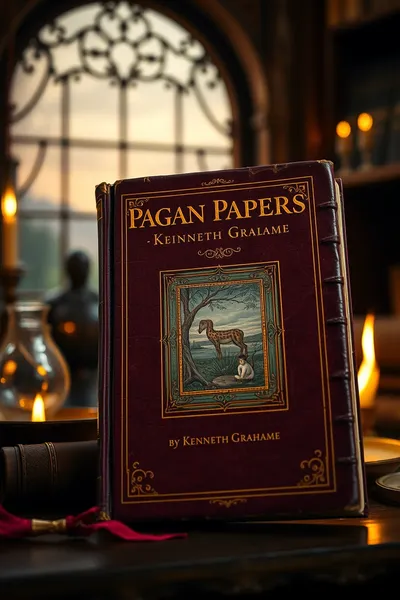
For those new to the subject, Bulfinch's Mythology: The Age of Fable provides accessible retellings of classical myths that form a basis for understanding many pagan narratives. 'Beacon Lights of History, Volume 01: The Old Pagan Civilizations' by John Lord offers an overview of ancient belief systems. Kenneth Grahame's 'Pagan Papers' offers a more literary and impressionistic take on pagan themes. Herbert Allen Giles' 'Religions of Ancient China' introduces non-Western pagan traditions. Thomas Bulfinch's work is particularly valuable for its clear presentation of ancient stories.
Intermediate Reading
Moving beyond introductory material, Edward Carpenter's 'Pagan and Christian Creeds' offers a nuanced comparison of ancient beliefs and their influence. J. Allanson Picton's 'Pantheism, Its Story and Significance' explores a philosophical current often associated with pagan thought. David Hume's 'Dialogues Concerning Natural Religion' presents philosophical arguments relevant to understanding religious belief systems. 'Ancient Pagan and Modern Christian Symbolism' by Thomas Inman provides a detailed study of shared symbolic language.
Classical / Advanced Texts
For advanced study, James George Frazer's multi-volume 'The Golden Bough: A Study of Magic and Religion' is a monumental work of comparative mythology and anthropology. Andrew Lang's 'Myth, Ritual and Religion, Vol. 1' is another foundational text in the study of comparative religion. The primary mythological texts, such as 'The Edda, Volume 1' and 'The Edda, Volume 2' translated by Lucy Winifred Faraday, offer direct access to Norse pagan beliefs. 'The Religion of Babylonia and Assyria' by Theophilus G. Pinches provides scholarly insight into Mesopotamian paganism.
Reading Order — Step by Step
Begin with accessible myth collections like Bulfinch's Mythology (Age of Fable) to grasp foundational stories. Follow with an overview of historical contexts, such as John Lord's 'Beacon Lights of History, Volume 01'. Next, explore comparative studies like Edward Carpenter's 'Pagan and Christian Creeds' and Herbert Allen Giles' 'Religions of Ancient China' for broader perspectives. Dedicate Month 2 to foundational anthropological works such as Andrew Lang's 'Myth, Ritual and Religion' and James George Frazer's 'The Golden Bough'. In Month 3 and beyond, engage with primary sources like 'The Edda' volumes and specialized studies like Pinches' 'The Religion of Babylonia and Assyria'.
Frequently Asked Questions
Which Paganism book should I read first?
For a gentle introduction, start with Bulfinch's Mythology: The Age of Fable to familiarize yourself with classical myths. Alternatively, John Lord's 'Beacon Lights of History, Volume 01' offers a broader historical context.
What is the difference between Paganism and Mythology?
Paganism refers to a set of religious beliefs and practices, often polytheistic and nature-focused, prevalent before Christianity. Mythology is the body of stories and myths that often explain the cosmology and theology of these pagan traditions.
Are modern Pagan religions the same as ancient ones?
Modern Pagan revivals draw inspiration from ancient traditions but are distinct. They adapt historical practices and beliefs to contemporary contexts, often emphasizing personal spirituality and ecological awareness.
Where can I find primary sources on Paganism?
Primary sources include ancient texts like 'The Edda' volumes for Norse mythology, religious inscriptions, and archaeological findings. Scholarly works like Pinches' 'The Religion of Babylonia and Assyria' analyze these sources.
Is 'The Golden Bough' a good starting point?
'The Golden Bough' is a monumental work but can be dense for absolute beginners. It's best approached after gaining some foundational knowledge from introductory texts or overviews.
What is the relationship between Paganism and Pantheism?
Pantheism, the idea that the universe is divine, shares common ground with many pagan worldviews that see divinity in nature. J. Allanson Picton's work explores this connection.