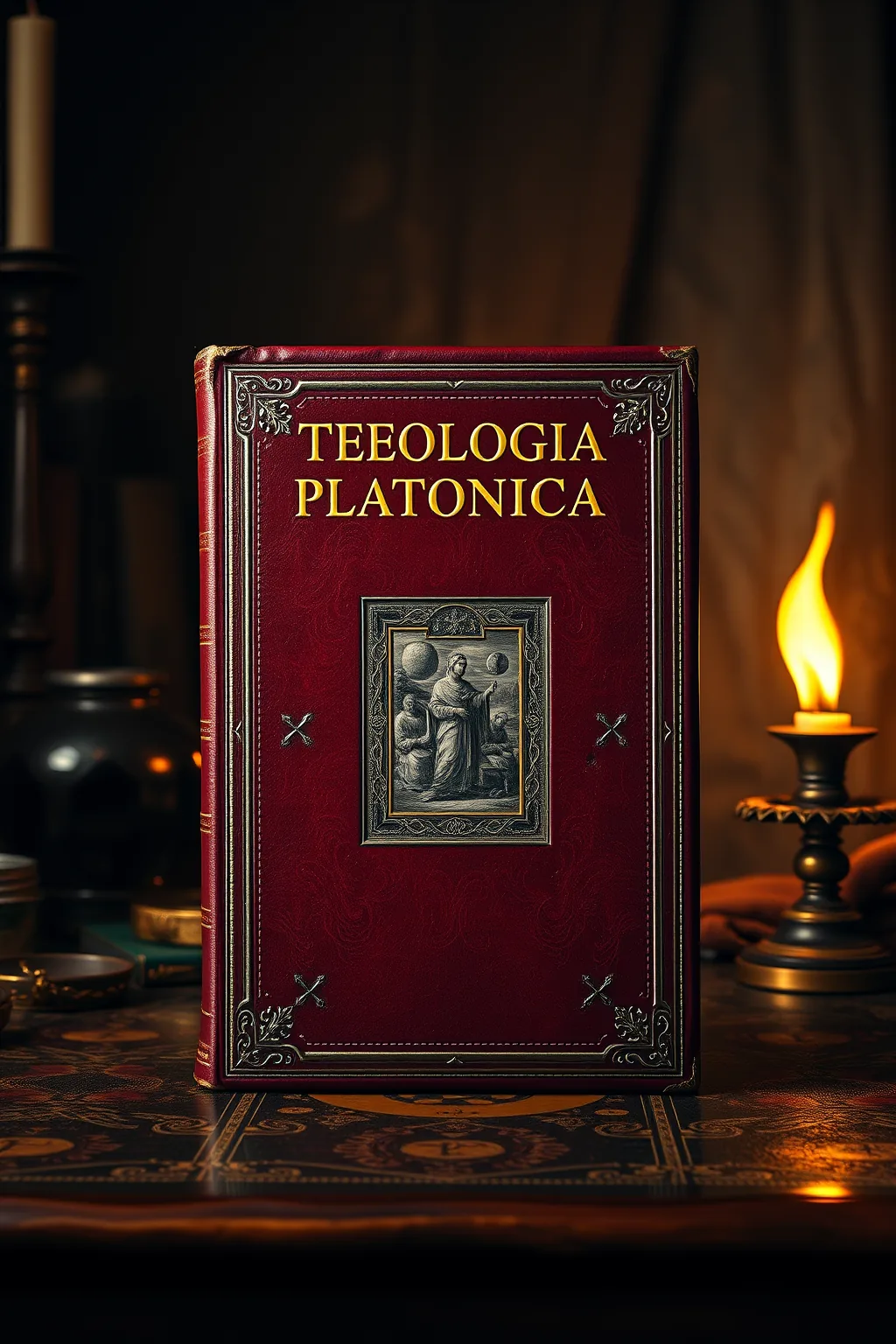
Teologia platonica
 61
61

Teologia platonica


Review by Cassian Rothmann (Senior Critic, Ancient Wisdom) — Marsilio Ficino's 'Teologia platonica' stands as a beacon of esoteric wisdom, seamlessly blending the mystical teachings of Plato with the hermetic traditions of the Renaissance. Ficino's insights into the nature of the soul and its journey towards immortality are both profound and illuminating. The book is a must-read for anyone interested in the intersection of philosophy and mysticism. Its strengths lie in its ability to present complex ideas in a way that is both accessible and thought-provoking. Ficino's work is not just a historical artifact but a living text that continues to inspire and challenge modern seekers and scholars alike.
📝 Description
61
Marsilio Ficino's 'Teologia platonica,' published in 1482, attempts to synthesize Platonic philosophy with Christian theology.
Published in 1482, Marsilio Ficino's 'Teologia platonica' is a significant attempt to reconcile Neoplatonic thought with Christian doctrine. Ficino, a key figure of the Florentine Academy, sought to revive Platonic philosophy and demonstrate its compatibility with Christian faith. The work addresses fundamental questions regarding the soul's immortality, the nature of God, and the structure of the cosmos. Ficino draws heavily on Plato and Plotinus, reinterpreting their ideas within a Christian framework. He discusses the soul's ascent to God, the angelic orders, and the divine ideas. The text is dense with philosophical arguments and theological interpretations, aiming to establish a philosophical basis for Christian beliefs. It reflects the Renaissance humanist project of recovering and reinterpreting classical texts for contemporary understanding.
Ficino's ambition was to create a comprehensive philosophical system that would illuminate Christian mysteries. He argued that Platonic philosophy was a preparation for Christianity, a 'philosophy of Christ.' The book examines the relationship between the human soul and the divine, the concept of love, and the soul's journey toward spiritual perfection. Ficino’s intricate arguments and systematic approach made 'Teologia platonica' a foundational text for later Renaissance thinkers and mystics. It remains a crucial document for understanding the intellectual currents of the Italian Renaissance and the complex interplay between classical philosophy and Christian theology.
Marsilio Ficino's 'Teologia platonica' is a cornerstone of Renaissance Neoplatonism, a movement that sought to revive and reinterpret Plato's philosophy, often through the lens of mystical and esoteric traditions. Ficino, deeply influenced by Hermes Trismegistus and the Kabbalah alongside Plato and Plotinus, aimed to demonstrate the harmony between ancient pagan philosophy and Christian revelation. This work fits within a broader European esoteric tradition that viewed classical philosophy not merely as historical inquiry but as a source of spiritual wisdom and a path to divine knowledge. It contributed to the idea of a 'prisca theologia,' an ancient, unified divine wisdom present across various cultures and epochs.
💡 Why Read This Book?
Read 'Teologia platonica' to immerse yourself in the rich tapestry of Renaissance mysticism and explore the esoteric teachings of Marsilio Ficino. This book is perfect for seekers of hidden knowledge, scholars of esoteric traditions, and practitioners of spiritual alchemy. Whether you are new to the world of mysticism or a seasoned scholar, Ficino's work offers profound insights into the nature of the soul and its journey towards immortality.
⭐ Reader Reviews
Honest opinions from readers who have explored this book.
❓ Frequently Asked Questions
What is the main focus of 'Teologia platonica'?
The main focus is the exploration of Platonism and its mystical implications, particularly the nature of the soul and its journey towards immortality.
Who is Marsilio Ficino and why is this book important?
Marsilio Ficino was a key figure in the Renaissance, known for his translations and commentaries on Plato. This book is important because it bridges classical philosophy with Renaissance mysticism.
What are the key themes in this work?
Key themes include the immortality of the soul, the nature of divine revelation, and the hermetic traditions that influenced the Renaissance.
Is this book suitable for beginners in esoteric studies?
While it is accessible to beginners, those with some background in Platonism and Renaissance mysticism will find it particularly enriching.
What makes 'Teologia platonica' a significant work in esoteric literature?
Its significance lies in its synthesis of Platonism and hermeticism, offering deep insights into the mystical traditions that have shaped Western esotericism.
🔮 Key Themes & Symbolism
The Immortality of the Soul
Ficino explores the Platonic concept of the soul's immortality, exploring its journey through reincarnation and its ultimate union with the divine. This theme is central to his mystical vision and offers useful insights into the nature of human existence.
Divine Revelation
The book explores the idea of divine revelation and how it is received by the soul. Ficino draws on hermetic traditions to illustrate the mystical experiences that reveal the hidden truths of the universe.
Symbolism and Esoteric Teachings
Ficino's work is rich in symbolism, drawing on a variety of esoteric traditions to illustrate his mystical teachings. This theme is essential for understanding the deeper layers of his philosophy and its relevance to modern seekers.
💬 Memorable Quotes
Direct passages from the work, attributed to the author.
“True wisdom is the knowledge of the eternal.”
— Ficino emphasizes the importance of seeking eternal truths, which are revealed through mystical experiences and esoteric knowledge.
“The journey of the soul is a journey of self-discovery.”
— Ficino's exploration of the soul's journey emphasizes the importance of self-awareness and spiritual growth in achieving immortality.
💡 Key Ideas
Editorial paraphrase of the work's core concepts — not direct quotes.
The soul, by its very nature, yearns for the divine.
This quote underscores Ficino's belief in the soul's innate desire for spiritual enlightenment and union with the divine.
The hermetic path leads to the heart of reality.
This quote highlights the significance of hermetic traditions in Ficino's philosophy and their role in revealing the hidden truths of the universe.
Divine revelation is the key to unlocking the mysteries of existence.
This quote underscores the central role of divine revelation in Ficino's mystical teachings and its importance in understanding the deeper layers of reality.
🌙 Esoteric Significance
Tradition
'Teologia platonica' belongs to the Hermetic tradition, which emphasizes the mystical and esoteric dimensions of human experience. Ficino's work is a synthesis of Platonism and hermeticism, offering useful insights into the nature of the soul and its journey towards immortality.
Symbolism
Key symbols in the book include the soul's journey through reincarnation, the concept of divine revelation, and the hermetic path to spiritual enlightenment. These symbols are rich in esoteric meaning and provide a framework for understanding the deeper layers of Ficino's philosophy.
Modern Relevance
Ficino's work continues to be relevant today, as modern practitioners and scholars seek to understand the esoteric traditions that have shaped Western mysticism. His insights into the nature of the soul and its journey towards immortality offer valuable guidance for those on a spiritual path.
👥 Who Should Read This Book
Beginners in esoteric studies will find 'Teologia platonica' an enriching introduction to the mystical traditions of the Renaissance. Scholars of Platonism and hermeticism will appreciate its useful insights and synthesis of classical and mystical teachings. Spiritual seekers will find inspiration in Ficino's exploration of the soul's journey towards immortality. Practitioners of spiritual alchemy will benefit from the book's strong symbolism and esoteric knowledge.
📜 Historical Context
Written during the Renaissance, 'Teologia platonica' reflects the era's fascination with the revival of classical learning and the exploration of mystical traditions. Marsilio Ficino, a key figure in this movement, sought to bridge the gap between Platonic philosophy and the hermetic teachings that were gaining popularity. The book's influence can be seen in the works of subsequent mystics and philosophers, who continued to explore the esoteric dimensions of human experience. Ficino's synthesis of Platonism and hermeticism laid the foundation for much of Western esotericism.
📔 Journal Prompts
Reflect on the concept of the soul's immortality as described by Ficino. How does this idea resonate with your own beliefs?
Consider the role of divine revelation in Ficino's philosophy. How might this concept be applied to your own spiritual journey?
Explore the symbolism in 'Teologia platonica.' Which symbols resonate with you the most and why?
Reflect on the idea of the hermetic path to spiritual enlightenment. How might this path be relevant to your own quest for wisdom?
Consider the historical context of 'Teologia platonica.' How does Ficino's synthesis of Platonism and hermeticism reflect the Renaissance fascination with mystical traditions?
🗂️ Glossary
Platonism
A philosophical tradition based on the teachings of Plato, emphasizing the immortality of the soul and the pursuit of divine wisdom.
Hermeticism
An esoteric tradition that emphasizes the mystical and spiritual dimensions of human experience, often involving the pursuit of hidden knowledge and spiritual alchemy.
Reincarnation
The belief that the soul undergoes multiple lives, each offering an opportunity for spiritual growth and enlightenment.
Divine Revelation
The process by which hidden truths of the universe are revealed to the soul through mystical experiences and esoteric knowledge.
Spiritual Alchemy
The practice of transforming the soul through mystical and esoteric teachings, aiming to achieve spiritual enlightenment and union with the divine.
This book appears in 9 collections
🔮 Readers Also Liked
Browse all →








More by Marsilio Ficino
All books →


From the “Neoplatonism” Collection
View all →








More Free Alchemy & Hermeticism Books
View all →