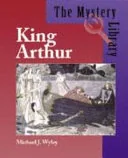
King Arthur
 73
73

King Arthur
Wyly's "King Arthur" provides a grounded approach to a legend often swamped by fantasy. Its strength lies in systematically dismantling layers of myth to expose the potential historical strata beneath. The author meticulously charts the legend's journey from vague historical references in Gildas and Nennius to the fully-formed chivalric romances of Chrétien de Troyes. A particularly insightful section examines the influence of Welsh bardic traditions on shaping early Arthurian narratives. However, the book occasionally suffers from an overly dry academic tone, which may deter readers seeking a more engaging narrative. The focus on scholarly debate, while rigorous, sometimes overshadows the inherent wonder of the legend itself. Despite this, Wyly's work offers a valuable corrective to sensationalist accounts, anchoring the Arthurian figure in a more plausible historical and cultural context. It is a serious study for those who wish to understand how a legend is made.
📝 Description
73
Michael J. Wyly's 2001 book examines the Arthurian legend's growth from a possible 5th-century figure to a medieval king.
Published in 2001, Michael J. Wyly's study scrutinizes the Arthurian legend's extensive development. The book moves past romanticized views to investigate the potential historical roots of Arthur in 5th-century Britain. It traces how a possible historical personage became the legendary ruler of Camelot. This work is for students of folklore, mythology, and early British history. Readers interested in how narratives change and national myths are built will find considerable information. It suits those who prefer careful analysis to simple retellings of the Arthurian story. Wyly's research interacts with the historical and literary discussions of the late 20th and early 21st centuries, a time when scholars showed renewed interest in Arthurian studies and questioned historical sources. It aligns with current discussions on the historicity of figures like Arthur, differing from the more romantic interpretations common in the 19th century. The book breaks down the shift from a possible historical core to a mythical structure. It considers how elements of Roman Britain, Celtic customs, and later chivalric codes combined to create the lasting legend. Key ideas include the 'historical Arthur,' the 'literary Arthur,' and how legends spread over time.
While presented as a scholarly examination, Wyly's work touches upon the esoteric by investigating the deep roots and symbolic transformations of a potent archetype. The book dissects how a historical or semi-historical figure, potentially from the 5th century, became imbued with layers of meaning, ritualistic significance, and nationalistic projection across centuries. This process of archetype formation and transmission, moving from a kernel of historical possibility to a complex mythical superstructure shaped by cultural and spiritual currents, aligns with esoteric traditions that study the power of symbols and collective consciousness.
💡 Why Read This Book?
• Gain insight into the 5th-century historical context of post-Roman Britain, understanding the political and social conditions that may have given rise to the Arthurian figure, a concept explored in detail regarding Gildas's writings. • Understand the process of legend formation by tracing specific literary and cultural influences across centuries, such as the transition from early Welsh poetry to later continental romances. • Learn to critically assess historical narratives by examining Wyly's methodology for separating historical probability from later embellishment, particularly concerning figures like Arthur Pendragon.
⭐ Reader Reviews
Honest opinions from readers who have explored this book.
❓ Frequently Asked Questions
What historical period does Michael J. Wyly's book focus on for the real King Arthur?
The book primarily investigates the potential identity of Arthur within the 5th century, the period following the Roman withdrawal from Britain, examining early historical sources that mention a British leader.
Does 'King Arthur' by Michael J. Wyly present Arthur as a magical figure?
No, the book's focus is on historical and folkloric evolution rather than magic. It seeks to uncover the probable identity of a real 5th-century individual and how the fable developed around him.
What are the main sources Wyly uses to trace the Arthurian legend's evolution?
Wyly examines early British and Welsh historical texts, such as those attributed to Gildas and Nennius, alongside later medieval romances and chronicles, to chart the legend's development over centuries.
Is this book suitable for someone new to Arthurian legends?
While comprehensive, the book adopts a scholarly tone. It's best suited for readers with some existing interest in mythology or history who appreciate a rigorous, analytical approach to the legend's origins.
What is the primary goal of Wyly's analysis of the Arthurian legend?
The main objective is to investigate the likely historical Arthur of the 5th century and to meticulously map the process by which the legend grew and transformed through successive historical periods and literary interpretations.
When was Michael J. Wyly's 'King Arthur' first published?
The book was first published in 2001, placing its analysis within contemporary scholarship on Arthurian studies and folklore.
🔮 Key Themes & Symbolism
The Historical Kernel
Wyly scrutinizes the scant evidence for a 5th-century British leader named Arthur, often mentioned in conjunction with battles against Saxon invaders. The work explores potential identities, considering figures who might have embodied resistance and leadership in post-Roman Britain. It focuses on interpreting early sources like Gildas and Nennius, attempting to discern historical fact from later embellishment and myth-making.
Evolution of the Legend
This theme details how the figure of Arthur transformed over centuries. Wyly charts the shift from a semi-historical war-leader to the king of Camelot, exploring the influences of Welsh folklore, continental chivalric romance, and the Christianization of Britain. The book examines the narrative accretion, showing how different eras added their own ideals and concerns to the evolving story.
Myth vs. History
A central focus is the complex interplay between historical possibility and the creation of myth. Wyly investigates the mechanisms by which a historical event or person can become mythologized, detached from its original context. The work grapples with the inherent challenges of reconstructing history from legendary accounts and the cultural needs that drive the formation of such enduring narratives.
Cultural Significance
The book touches upon why the Arthurian legend has persisted and adapted across diverse cultures and eras. Wyly considers how the legend has been used and reinterpreted to serve different political, social, and ideological purposes, from national identity formation to explorations of chivalric virtue. It highlights the enduring power of the archetype.
💬 Memorable Quotes
Direct passages from the work, attributed to the author.
“The transformation of Arthur from a historical figure to a legend is a process rooted in the cultural needs of successive eras.”
— This highlights Wyly's central thesis: the Arthurian legend didn't simply exist but was actively constructed and rebuilt over time to reflect the values and anxieties of different societies.
“Early Welsh poetry offers a crucial, though often cryptic, glimpse into pre-Lancelot Arthurian traditions.”
— This points to the importance of examining the earliest layers of the legend, particularly the native British and Welsh sources, before the influence of continental romance significantly altered the narrative.
“Gildas's account provides a potential, albeit controversial, historical backdrop for the period in which Arthur may have lived.”
— This interpretation emphasizes Wyly's engagement with primary historical texts, acknowledging the scholarly debate surrounding figures like Gildas and their reliability in reconstructing the 5th century.
“The literary Arthur of the twelfth century bears little resemblance to the potential military leader of the fifth.”
— This concise statement captures the dramatic evolution Wyly traces, underscoring the vast gulf between the historical context and the later romanticized portrayals of King Arthur.
💡 Key Ideas
Editorial paraphrase of the work's core concepts — not direct quotes.
Understanding the fable's development requires analyzing both the historical context and the literary imagination.
This quote reflects Wyly's dual approach, recognizing that the legend's growth is a product of both the socio-historical circumstances and the creative contributions of storytellers across centuries.
🌙 Esoteric Significance
Tradition
While not explicitly aligned with a single esoteric tradition, Wyly's work touches upon themes resonant within Western esotericism, particularly the search for hidden historical truths and the power of archetypes. The investigation into a foundational, possibly suppressed, historical figure aligns with certain occultist interests in uncovering lost wisdom or authentic origins, reminiscent of Theosophical inquiries into ancient heroes.
Symbolism
The figure of Arthur himself serves as a potent symbol of idealized leadership, justice, and a lost golden age, themes often explored in esoteric thought. Camelot represents a utopian ideal, a spiritual or perfected community sought after in various mystical traditions. The sword Excalibur can symbolize divine right, power, or the cutting edge of spiritual discernment.
Modern Relevance
Contemporary practitioners of Neo-Paganism and various strands of Western Esotericism continue to draw on Arthurian archetypes for spiritual and symbolic meaning. The legend's themes of sovereignty, the quest for the Grail (often interpreted as a spiritual object), and the cyclical nature of history remain relevant in modern spiritual discourse and fantasy literature.
👥 Who Should Read This Book
• Academic researchers specializing in medieval literature, folklore, and early British history seeking a critical analysis of the Arthurian legend's developmental stages. • Enthusiasts of mythology and legend who desire a scholarly perspective on the historical possibilities behind famous myths, moving beyond popular retellings. • Students of historical methodologies who are interested in how evidence is interpreted and debated when reconstructing events from limited ancient sources.
📜 Historical Context
Published in 2001, Michael J. Wyly's "King Arthur" emerged during a period of sustained academic interest in Arthurian studies, building upon decades of scholarship that sought to historicize the legend. The late 20th century saw numerous re-examinations of early British history, Welsh mythology, and the evolution of medieval romance. Wyly's work engages with ongoing debates concerning the historicity of Arthur, placing it in dialogue with scholars like Geoffrey Ashe and John Morris, who had previously proposed various historical identifications. The book also implicitly responds to earlier, more romanticized Victorian interpretations and the foundational scholarship of figures like Sir Thomas Malory. While not a period of major censorship for such works, the academic reception often involved rigorous peer review and debate within specialized journals, with Wyly contributing to the ongoing scholarly conversation about the legend's origins and transmission.
📔 Journal Prompts
The 5th-century context of post-Roman Britain and Arthur's potential role.
The transformation of the Arthurian fable across different historical periods.
Analyzing the distinction between historical evidence and legendary accretion in early texts.
The symbolic weight of Camelot as an idealized realm.
Investigating the influences of Welsh folklore on the early Arthurian narrative.
🗂️ Glossary
Gildas
A 6th-century British monk and historian whose work 'De Excidio et Conquestu Britanniae' (On the Ruin and Conquest of Britain) is one of the earliest sources mentioning the period of Arthur's potential activity.
Nennius
A purported 9th-century Welsh historian credited with compiling the 'Historia Brittonum', which contains one of the earliest narrative accounts listing Arthur's battles.
Chivalric Romance
A genre of medieval literature, popular from the 12th century onwards, that focused on knights, courtly love, adventure, and idealized heroic conduct, significantly shaping the later Arthurian legends.
Arthurian Legend
The body of myths, stories, and literary works concerning the legendary British leader King Arthur, his knights of the Round Table, and their quests, originating from various historical and folkloric sources.
Post-Roman Britain
The period in British history following the withdrawal of Roman administration around 410 AD, characterized by political fragmentation, migration, and conflict, which forms the historical backdrop for the earliest Arthurian accounts.
Welsh Bardic Traditions
The oral and poetic heritage of Wales, which preserved early stories and genealogies, including some of the earliest references to Arthurian figures and themes distinct from later continental developments.
Fable
In this context, referring to the legendary narrative or story, particularly one that has evolved over time and may contain elements of myth and embellishment, as distinct from strict historical fact.
This book appears in 1 collection
🔮 Readers Also Liked
Browse all →







From the “Templar Knights” Collection
View all →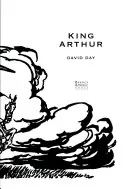

![EBOOK COLLECTION ( PART 8) [ CSI][h 33t]](/img/thumb/ebook-collection-part-8-csi-h-33t.webp)




More Free Esoteric History & Biography Books
View all →