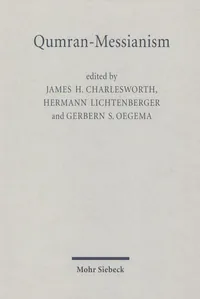
Rationale Schiiten
 75
75

Rationale Schiiten
Markus Wachowski's Rationale Schiiten offers a much-needed corrective to the often ahistorical tendencies within contemporary religious studies. The work's strength lies in its unwavering commitment to methodological self-awareness, particularly in its discussion of "disciplinary positioning." Wachowski meticulously dissects how academic frameworks shape our understanding of religious phenomena, a point he illustrates effectively when discussing the historiography of ancient Near Eastern cults. However, the text occasionally suffers from a density that can obscure its central arguments, particularly in the sections detailing theoretical models. A more direct engagement with specific anthropological theories, rather than a broad overview, might have provided clearer examples. Despite this, the book’s insistence on grounding all analysis in "contextualized data" is a significant contribution, forcing readers to reconsider their assumptions about religious history. It is a vital, if demanding, text for serious scholars.
📝 Description
75
Markus Wachowski's Rationale Schiiten, published in 2013, argues for historical rigor in religious studies.
Rationale Schiiten examines religious phenomena through the lens of empirical data, theoretical frameworks, and academic positioning. Wachowski adopts a critical historical perspective, analyzing specific events and broad patterns across different eras. The book is structured to support various academic approaches, including individual research papers, collected essays, and comparative analyses.
This volume is intended for academics and advanced students of religion, especially those focused on historical methods and critical theory. It will appeal to scholars who wish to situate their work within larger disciplinary discussions and historical accounts. Those interested in the history of religious studies and the philosophy of history will find its analytical approach particularly useful.
The work addresses a scholarly need for greater historical precision in defining and analyzing religious traditions. It moves beyond solely phenomenological or sociological interpretations, implicitly engaging with scholarship that followed figures like Mircea Eliade. Wachowski aims for a perspective on religious practice and belief that is more historically grounded.
While the provided description does not explicitly place Rationale Schiiten within a specific esoteric tradition, its focus on rigorous historical examination of religious phenomena and critique of existing methodologies suggests a scholarly engagement with the foundations of religious studies. This approach would resonate with scholars in fields that grapple with the historical development and interpretation of beliefs and practices often considered 'esoteric,' such as comparative mythology or the history of occult traditions. The book's emphasis on contextualizing data and scholarly positioning aligns with critical approaches to understanding the historical emergence and academic reception of diverse belief systems.
💡 Why Read This Book?
• Gain a framework for analyzing religious texts and practices by understanding the necessity of "contextualized data," moving beyond superficial interpretations of historical sources. • Learn to critically evaluate academic scholarship on religion by examining the concept of "disciplinary positioning," recognizing how theoretical biases influence research outcomes. • Appreciate the evolution of religious studies as a discipline through an exploration of its historical context and the scholarly debates that shaped its methods since the early 21st century.
⭐ Reader Reviews
Honest opinions from readers who have explored this book.
❓ Frequently Asked Questions
What is the primary focus of Rationale Schiiten?
Rationale Schiiten focuses on the critical historical study of religion, emphasizing the interplay between contextualized data, theoretical approaches, and the scholar's own disciplinary positioning within academia.
Who is the intended audience for this book?
The book is primarily for academics and advanced students in religious studies, comparative religion, and history who are interested in rigorous historical methodology and critical theory.
What does 'contextualized data' mean in the context of this book?
Contextualized data refers to the principle that religious phenomena must be understood within their specific historical, social, and cultural environments, rather than in isolation.
How does Rationale Schiiten engage with existing scholarship?
It engages critically by examining how disciplinary positioning and theoretical frameworks influence the interpretation of religious phenomena, advocating for greater historical rigor.
What historical periods does the book cover?
The book covers a broad range of historical periods, from the ancient world to the modern era, through its focus on comparative work and specific case studies.
Is Rationale Schiiten suitable for beginners in the study of religion?
While valuable, the book's academic rigor and critical theoretical approach make it more suitable for advanced students and scholars rather than absolute beginners.
🔮 Key Themes & Symbolism
Contextualized Data in Religious Studies
Rationale Schiiten insists that religious phenomena cannot be understood in a vacuum. The work elaborates on the necessity of embedding all analysis within specific historical, social, and cultural contexts. This principle challenges approaches that treat religious beliefs or practices as timeless or universally applicable, arguing instead for a granular examination of evidence as it existed for the people who produced it. The book explores how this method applies across diverse traditions, from ancient Near Eastern cults to modern religious movements.
Disciplinary Positioning and Bias
A core theme is the critical examination of "disciplinary positioning." Wachowski argues that scholars must acknowledge and account for their own theoretical presuppositions, methodological choices, and institutional affiliations when studying religion. This involves recognizing how frameworks derived from sociology, anthropology, or history can shape perceptions and interpretations of religious data. The book provides tools for identifying and mitigating potential biases inherent in academic study, promoting a more objective and historically grounded scholarship.
The Historiography of Religion
The work engages deeply with the history of how religion itself has been studied. It critiques earlier models that may have oversimplified complex traditions or imposed anachronistic categories onto past societies. By advocating for a return to rigorous historical analysis, Rationale Schiiten seeks to refine the very methods used in the academic study of religion, distinguishing between preliminary, often speculative, accounts and more robust, evidence-based historical research.
Theory and Practice in Religious Analysis
Rationale Schiiten explores the dynamic relationship between theoretical models and empirical data in understanding religious life. It posits that while theory provides essential frameworks for interpretation, it must always be tested against and informed by specific, historically verifiable "contextualized data." The book cautions against purely theoretical constructs that detach from historical reality, advocating for a synthesis that respects both analytical rigor and empirical grounding.
💬 Memorable Quotes
Direct passages from the work, attributed to the author.
“The scholar's positionality is not a variable to be eliminated, but a factor to be critically accounted for.”
— This highlights the book's emphasis on self-reflexivity in academic research. It suggests that acknowledging one's own background and theoretical leanings is crucial for objective analysis, rather than an impediment.
“Religious phenomena demand excavation, not mere classification.”
— This pithy statement underscores the book's call for deep, historical investigation rather than superficial categorization of religious practices or beliefs. It prioritizes understanding over labeling.
“Contextualized data forms the bedrock upon which valid religious history is built.”
— This emphasizes the fundamental importance of understanding specific historical circumstances when studying religion. It argues that without this grounding, any historical account is inherently flawed.
“Preliminary studies often reveal more about the preliminary studier than the subject.”
— This observation critiques hasty or uncritical scholarship, suggesting that early or superficial analyses of religious topics may reflect the researcher's own biases or limitations more than the subject matter.
“Theory must serve history, not dictate it.”
— This principle advocates for theoretical frameworks to be tools for historical understanding, rather than pre-existing molds into which historical evidence is forced. It prioritizes empirical reality.
🌙 Esoteric Significance
Tradition
While not explicitly aligned with a single esoteric tradition, Rationale Schiiten's emphasis on critical historical analysis and the examination of source materials appeals to the meticulous textual scholarship found in Hermetic and Kabbalistic studies. It provides a framework for approaching esoteric texts with the same rigor applied to any historical document, demanding an understanding of their original context and authorial intent before interpretive layers are added.
Symbolism
The book doesn't focus on traditional esoteric symbols but rather on the "symbols" of academic discourse itself – concepts like "contextualized data" and "disciplinary positioning." These function as analytical tools, akin to symbolic keys, that unlock a deeper, more critical understanding of how religious knowledge is constructed and transmitted across historical epochs.
Modern Relevance
Contemporary scholars of Western Esotericism, particularly those engaging with the history of magic, alchemy, and early modern occultism, benefit from Wachowski's call for historical rigor. His framework helps to deconstruct anachronistic readings of historical esoteric texts and practices, encouraging a more nuanced appreciation of their original cultural and intellectual milieus.
👥 Who Should Read This Book
• Advanced students and researchers in religious studies seeking to refine their methodological approaches to historical sources. • Scholars of comparative religion interested in understanding the critical frameworks that underpin the analysis of diverse belief systems. • Academics in history and philosophy of religion looking to engage with contemporary debates on epistemology and the construction of religious knowledge.
📜 Historical Context
Published in 2012, Rationale Schiiten emerged during a period of intense methodological debate within the academic study of religion. The discipline was grappling with the legacy of figures like Mircea Eliade and the subsequent critiques from scholars such as Talal Asad, who emphasized the importance of historical and political context over universalizing theories. Wachowski's work can be seen as contributing to a broader turn towards historical epistemology within religious studies, pushing back against purely phenomenological or sociological approaches that had previously dominated. The book implicitly engages with the challenges posed by postmodernism, seeking to retain a belief in historical truth while acknowledging the interpretive nature of scholarship. Its reception was within specialized academic circles, appreciated for its rigorous approach rather than broad public appeal, aligning it with contemporaries focused on detailed historical and theoretical critiques of the field.
📔 Journal Prompts
The scholar's positionality as a factor to be critically accounted for.
The meaning of "contextualized data" when applied to a specific religious text.
How disciplinary positioning might influence interpretations of ancient Near Eastern cults.
Identifying "preliminary studies" in one's own field of research.
The relationship between theory and the historical evidence of religious practice.
🗂️ Glossary
Contextualized Data
Information pertaining to religious phenomena that is understood within its specific historical, social, and cultural setting, emphasizing the need for detailed background knowledge.
Disciplinary Positioning
The academic and theoretical framework, including methodological assumptions and institutional affiliations, that shapes a scholar's perspective and interpretation.
Historiography
The study of the writing of history, including the methods, theories, and biases that influence historical accounts and their development over time.
Preliminary Studies
Initial or introductory investigations into a subject, often characterized by a lack of exhaustive research or critical depth, which the book cautions against relying upon solely.
Monograph
A detailed and scholarly written work, typically on a single subject, forming a book or lengthy article.
Thematic Volumes
Edited collections of essays focusing on a specific subject or theme within a broader academic field.
Comparative Work
Scholarly research that examines and contrasts different subjects, in this case, religious traditions or historical periods, to identify similarities and differences.
This book appears in 1 collection
🔮 Readers Also Liked
Browse all →








From the “Western Esotericism” Collection
View all →







More Free Esoteric History & Biography Books
View all →