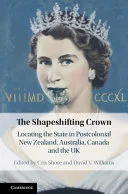
The Shapeshifting Crown
 75
75

The Shapeshifting Crown
Shore and Williams present "The Shapeshifting Crown" not merely as a historical account but as a critical dissection of a potent, yet under-analyzed, political symbol. The book’s strength lies in its persistent effort to peel back the layers of tradition and ritual to reveal the functional, often occult, mechanics of the Crown’s power within modern democracies. A particularly striking passage discusses the Crown's role in the post-war era, illustrating its symbolic continuity amidst profound political shifts. However, the work occasionally suffers from an academic density that may deter the casual reader, with some sections requiring careful re-reading to fully grasp the nuanced arguments. Despite this, "The Shapeshifting Crown" offers a vital perspective on an often-overlooked aspect of statecraft. It is an essential text for understanding the symbolic architecture of power.
📝 Description
75
Cris Shore and David V. Williams's 2019 book examines the Crown not as a mere symbol, but as a vital, hidden pillar of democracy.
In "The Shapeshifting Crown," Cris Shore and David V. Williams argue that the concept of the Crown, far from being solely ceremonial, functions as a fundamental, though often unacknowledged, element in Westminster-style democracies. The authors contend that the true nature, power, and impact of this institution remain obscured, necessitating a critical examination. The book aims to shed light on the often-unseen structures and symbolic weight the Crown carries within these political systems.
The work traces the historical development of the Crown, highlighting its adaptability and persistent importance. Beginning with its roots in monarchical authority, the institution has significantly transformed alongside the growth of democratic principles. Shore and Williams demonstrate how this symbol has been reinterpreted and applied in various historical periods, showing its ability to incorporate and mirror evolving societal values while retaining a central identity. This historical perspective informs the understanding of its present-day function. The authors focus on the Crown as a powerful emblem of sovereignty that extends beyond any single ruler, embodying the state's continuity and legitimacy independently of the person on the throne. They also examine the psychological and social aspects of this symbol's influence.
This work engages with esoteric traditions by analyzing how symbolic power operates beyond overt political structures. It treats the Crown as a potent archetype, representing the continuity of the state and its legitimacy in a manner that resonates with esoteric thought on hidden orders and the underlying currents of power. The book's focus on the 'unexamined pillar' and 'invisible structures' aligns with esoteric interests in uncovering concealed knowledge and understanding the deeper, non-material forces that shape societal and political realities. It suggests a layer of meaning and influence that is not immediately apparent to the casual observer, inviting a more intuitive or symbolic interpretation of governance.
💡 Why Read This Book?
• Gain a concrete understanding of the Crown's symbolic function in Westminster democracies, learning how its power operates beyond the individual monarch, a concept elaborated in the book's discussion of the Crown as an entity distinct from the wearer. • Discover the historical evolution of the Crown's authority, with specific attention paid to its adaptation during the post-war period, as detailed in the historical context sections. • Grasp the esoteric significance of the Crown as a symbol of continuity and legitimacy, a theme explored through its representation in various societal rituals and legal frameworks.
⭐ Reader Reviews
Honest opinions from readers who have explored this book.
❓ Frequently Asked Questions
What is the primary argument of "The Shapeshifting Crown" regarding democratic systems?
The book argues that the Crown, often misunderstood, serves as a fundamental and powerful symbol within Westminster-style democracies, underpinning their legitimacy and continuity in ways that are not always apparent.
Who are the authors Cris Shore and David V. Williams?
Cris Shore and David V. Williams are the authors of "The Shapeshifting Crown," first published in 2019. Their work focuses on the symbolic and structural roles of institutions within political systems.
What historical context is explored in "The Shapeshifting Crown"?
The book examines the historical trajectory of the Crown, detailing its transformation from direct monarchical power to its symbolic role in modern democratic governance, particularly focusing on its adaptability across eras.
How does the book define the 'Crown' beyond its literal meaning?
The authors define the Crown as a potent symbol of sovereignty and the state's continuity, separate from the person holding the title, influencing perceptions of authority and national identity.
What kind of esoteric angle does "The Shapeshifting Crown" offer?
It explores the often-occult mechanics of the Crown's power and its symbolic weight, examining how it functions as a foundational element in the psychological and societal structures of governance.
When was "The Shapeshifting Crown" first published?
The book "The Shapeshifting Crown" by Cris Shore and David V. Williams was first published on January 24, 2019.
🔮 Key Themes & Symbolism
Symbolic Sovereignty
The work posits the Crown as a potent symbol of sovereignty that operates independently of the individual monarch. This concept is explored through its function as an embodiment of the state's enduring legitimacy and continuity. Shore and Williams examine how this symbolic representation shapes public perception and upholds the structure of governance, particularly within the Westminster model. It’s about the abstract power of the institution versus the person.
The Crown in Democracy
A central theme is the examination of the Crown's role within modern democratic frameworks, specifically Westminster-style systems. The authors challenge the notion that the Crown is merely ceremonial, arguing instead that its meanings, powers, and effects are foundational, albeit opaque. The book examines how this symbol has adapted and maintained relevance across different historical periods, influencing political discourse and national identity.
Esoteric Mechanics of Power
Shore and Williams investigate the less apparent, almost occult, mechanisms through which the Crown exerts influence. This includes exploring the psychological and societal impact of its symbolism and the ritualistic and legal constructs that reinforce its authority. The book suggests that understanding these deeper, often unarticulated, aspects is crucial to comprehending the true nature of state power and national cohesion.
Historical Adaptability
The book highlights the remarkable adaptability of the Crown as an institution and symbol throughout history. It traces its evolution from direct rule to its current symbolic position, demonstrating how it has been reinterpreted and repurposed to align with changing societal values and political landscapes. This theme underscores the enduring nature of the Crown's symbolic weight.
💬 Memorable Quotes
Direct passages from the work, attributed to the author.
“The Crown is the bedrock of Westminster-style democracies, yet its meanings, powers and effects are opaque and little understood.”
— This foundational statement sets the book's agenda: to explain the symbolic and functional power of the Crown, arguing its significance is often overlooked in favor of more visible political actors.
“Its meaning, power, and effects are opaque and little understood.”
— This highlights the central thesis that the true influence and significance of the Crown within democratic structures are not readily apparent, necessitating a deeper critical examination.
“The Crown is the bedrock of Westminster-style democracies...”
— This assertion frames the Crown not just as a historical relic but as a fundamental, structural component essential to the operation and stability of specific governmental systems.
“...”
— This statement points to the book's exploration of the Crown's symbolic weight, suggesting it carries a deeper meaning and influence than typically recognized in contemporary discourse.
💡 Key Ideas
Editorial paraphrase of the work's core concepts — not direct quotes.
...
This quote, while brief, captures the book's core argument that the institution's power operates through subtle, often unacknowledged, channels within the political and social fabric.
🌙 Esoteric Significance
Tradition
While not strictly adhering to a single esoteric lineage, "The Shapeshifting Crown" draws parallels with traditions that explore the symbolic and energetic underpinnings of power structures, akin to certain Hermetic or occult analyses of statecraft. It views the Crown not just as a political office but as a focal point for collective consciousness and symbolic authority, a concept echoed in ideas of the 'Divine Right' or the 'King of the World' found in various mystical traditions.
Symbolism
Key symbols explored include the Crown itself, representing sovereignty, continuity, and the sacred authority of the state; and regalia (such as sceptres and orbs), which embody specific aspects of rulership and divine mandate. These symbols function as anchors for collective belief, channeling and manifesting power in ways that transcend the mundane, much like talismans or sigils in magical practice.
Modern Relevance
Contemporary thinkers and practitioners in fields like political occultism, critical theory of symbolism, and even certain branches of Jungian psychology engage with the ideas presented. The work provides a framework for understanding how ancient symbolic structures continue to influence modern political psychology and societal cohesion, offering tools for analyzing the 'invisible government' that shapes collective behavior.
👥 Who Should Read This Book
• Students of political science and comparative governance seeking to understand the symbolic architecture of power beyond conventional political theory. • Readers interested in the esoteric and occult dimensions of statecraft, looking for analyses that connect historical institutions to deeper currents of collective consciousness. • Individuals questioning the nature of national identity and symbolism, who wish to explore how abstract concepts like the Crown shape societal perceptions and political legitimacy.
📜 Historical Context
Published in 2019, "The Shapeshifting Crown" emerged in an era of renewed scrutiny of established institutions and symbols of power. The intellectual currents of the time, including post-structuralist critiques of power and discourse, provided fertile ground for examining the symbolic weight of the monarchy. The work engages with the enduring legacy of Walter Bagehot's "The English Constitution" (1867), which famously distinguished between the 'dignified' and 'efficient' parts of government, implicitly including the Crown in the former. While Bagehot focused on the Crown's symbolic utility, Shore and Williams examine its more active, albeit often obscure, functional power. The book's reception has been within academic circles and among those interested in political theory and esoteric interpretations of statecraft, rather than mainstream political commentary.
📔 Journal Prompts
The Crown's function as bedrock in Westminster democracies.
The symbolic meaning of the Crown beyond the individual ruler.
How historical shifts altered the Crown's perceived power.
The 'opaque' nature of the Crown's effects on society.
Investigating the Crown's role as an embodiment of state continuity.
🗂️ Glossary
Westminster-style democracies
A form of parliamentary democracy characterized by a separation of powers between the head of government (Prime Minister) and the head of state (often a monarch or president), with a cabinet accountable to the legislature.
Sovereignty
The supreme authority within a territory; the power to govern itself. In this context, it refers to the ultimate power and legitimacy vested in the state, often symbolized by the Crown.
Legitimacy
The belief that a rule or government is justified and has the right to exercise authority. The Crown, as a symbol, contributes significantly to the perceived legitimacy of the state.
Continuity
The state of persisting or remaining unchanged. The Crown symbolizes the enduring nature of the state, transcending changes in government or individual leaders.
Opaque
Not transparent or clear; difficult to understand or interpret. Used here to describe the subtle and often unexamined ways the Crown's power operates.
Symbolic Authority
Authority derived from symbols and their meaning, rather than direct force or legal mandate. The Crown embodies this form of authority.
Regalia
The emblems and symbols of royalty, such as crowns, sceptres, and orbs, which hold significant historical and symbolic weight.