Nietzsche and Buddhism
 84
84

Nietzsche and Buddhism
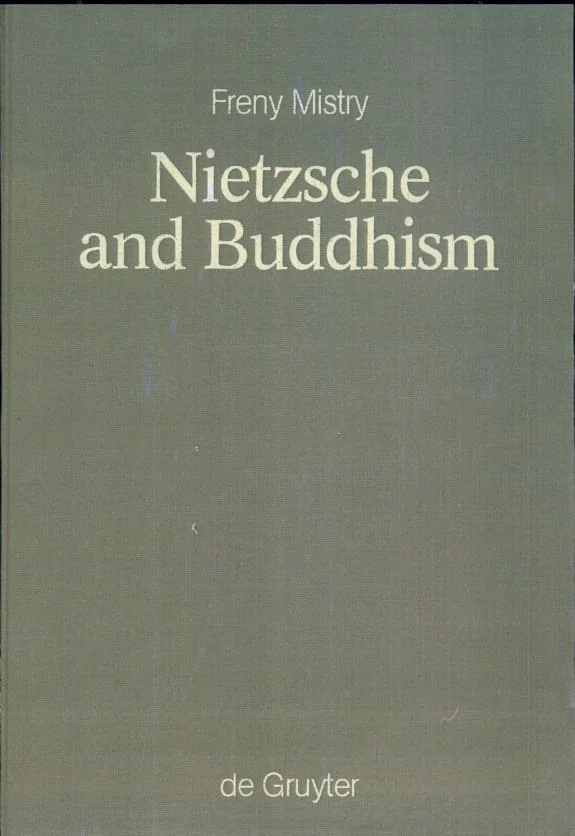
Freny Mistry’s 1981 study, Nietzsche and Buddhism, attempts a bold synthesis, comparing the radical propositions of Zarathustra with the ancient wisdom of the Buddha. The work’s strength lies in its meticulous dissection of philosophical terminology, particularly when juxtaposing Nietzsche’s concept of the will to power against Buddhist notions of dependent origination. However, the prose can occasionally become dense, requiring significant reader engagement to follow the intricate comparisons. A particularly compelling section explores Nietzsche's critique of Christian morality and its surprising echoes in Buddhist refutations of ego-driven actions. While Mistry avoids simplistic equivalences, the sheer conceptual weight might leave some readers wishing for more explicit guidance on the practical implications of these philosophical convergences. It is a valuable scholarly resource for those already immersed in both traditions.
📝 Description
84
Freny Mistry's 1981 book examines Nietzsche and Buddhism's shared critiques of Western thought.
Published in 1981, Freny Mistry's Nietzsche and Buddhism is an academic study that compares the philosophies of Friedrich Nietzsche and the Buddha. Mistry analyzes core concepts from both traditions, including nihilism, the will to power, eternal recurrence, and critiques of morality. The book seeks to find areas of agreement and disagreement in their views on existence and ethics.
Mistry's work arrived during a time of growing Western interest in Nietzsche and Buddhism. Scholars were increasingly looking at cross-cultural philosophy, building on earlier work that introduced Eastern thought to Western audiences. This book positions Nietzsche's questioning of metaphysics alongside Buddhist ideas that also challenge standard concepts of self and reality.
The analysis dissects Nietzsche's Übermensch and life affirmation through eternal recurrence. It contrasts these with Buddhist concepts such as anatta (non-self), the Four Noble Truths, and the path to enlightenment. The book scrutinizes their different approaches to suffering, truth, and human change.
This book situates itself within the comparative philosophy tradition that emerged in the mid-20th century, a period that saw increased Western engagement with Eastern spiritual and philosophical systems. It follows in the vein of scholars who sought to bridge Western existentialism and Buddhist thought, finding resonances in their radical questioning of conventional reality and the self. The work contributes to an ongoing scholarly dialogue about the potential convergences between figures who challenged established metaphysical frameworks.
💡 Why Read This Book?
• You will gain a nuanced understanding of how Nietzsche's critique of Western values, particularly his concept of eternal recurrence, can be compared with Buddhist doctrines on impermanence and the cycle of rebirth, as explored in the book's comparative analysis. • You will learn to distinguish the specific philosophical underpinnings of Nietzsche’s will to power from Buddhist concepts like compassion and non-attachment, appreciating the distinct paths each tradition offers toward overcoming existential limitations. • You will encounter the intricate scholarly debate surrounding the potential for overlap between Nietzsche's existentialism and Eastern philosophies, particularly the insights offered by the book's examination of nihilism in both contexts.
⭐ Reader Reviews
Honest opinions from readers who have explored this book.
❓ Frequently Asked Questions
When was Nietzsche and Buddhism first published, and what is its primary academic focus?
Nietzsche and Buddhism was first published in 1981. Its primary academic focus is a comparative study of the philosophical and spiritual ideas of Friedrich Nietzsche and the teachings of the Buddha.
What key Nietzschean concepts are analyzed in relation to Buddhist thought?
The book analyzes Nietzschean concepts such as the will to power, eternal recurrence, and his critique of morality. These are examined alongside Buddhist doctrines like anatta (non-self) and the Four Noble Truths.
Who is the intended audience for Freny Mistry's Nietzsche and Buddhism?
The book is primarily aimed at scholars and advanced students in philosophy, comparative religion, and Eastern studies, as well as general readers with a deep interest in existentialism and Buddhist philosophy.
Does the book claim Nietzsche and Buddhism are identical in their philosophies?
No, the book does not claim identity. Instead, it explores parallels, divergences, and potential points of dialogue between Nietzsche's existential critiques and Buddhist spiritual frameworks.
What is the significance of Nietzsche's critique of morality as discussed in the book?
The work examines Nietzsche's challenge to Western moral systems and compares it to Buddhist ethical frameworks that also question ego-centric motivations and societal constructs of good and evil.
What era of intellectual discourse does Nietzsche and Buddhism engage with?
Published in 1981, the book engages with the post-war scholarly interest in comparative philosophy and the cross-cultural dialogue between Western existentialism and Eastern thought, building on earlier works on Buddhism.
🔮 Key Themes & Symbolism
Nihilism and Affirmation
The work scrutinizes Nietzsche’s declaration of the ‘death of God’ and the ensuing nihilism that plagues Western civilization. It then contrasts this with the Buddhist understanding of suffering (dukkha) arising from attachment and ignorance. The book explores how both Nietzsche’s affirmation of life through eternal recurrence and Buddhism’s path to liberation offer radical responses to the void, albeit through vastly different conceptual lenses and ultimate aims.
The Will to Power vs. Non-Self
A central theme is the examination of Nietzsche’s concept of the will to power as an inherent drive in all beings, contrasted with the Buddhist doctrine of anatta, or non-self. The analysis investigates whether Nietzsche's affirmation of individual striving and self-overcoming can find any resonance with Buddhist practices aimed at dissolving the illusion of a permanent, independent self and cultivating universal compassion.
Critique of Morality
Mistry’s study looks at Nietzsche’s radical critique of traditional Judeo-Christian morality, which he viewed as a ‘slave morality.’ This is juxtaposed with Buddhist ethics, which similarly deconstructs ego-driven desires and societal norms that perpetuate suffering. The book highlights how both thinkers challenge conventional notions of good and evil, seeking a more authentic basis for human conduct.
Eternal Recurrence and Samsara
The book engages with Nietzsche’s thought experiment of eternal recurrence—the idea of living one's life over and over again—as a test for life affirmation. This concept is compared with the Buddhist cyclical understanding of existence, Samsara, and the ultimate goal of escaping this cycle through enlightenment. The comparison seeks to understand the differing implications of confronting endless repetition.
💬 Memorable Quotes
Direct passages from the work, attributed to the author.
“The critique of Western morality in Nietzsche finds echoes in Buddhist refutations of egoistic actions.”
— This highlights a core comparative insight, suggesting that both thinkers, despite their disparate origins, challenge conventional ethical systems rooted in self-interest and societal conditioning.
“The concept of anatta (non-self) is central to Buddhist soteriology.”
— This defines a fundamental Buddhist principle that the work uses as a counterpoint to Nietzsche's emphasis on individual will and self-creation.
“Both Nietzsche and Buddhism confront the problem of nihilism.”
— This suggests the book explores the shared philosophical ground in addressing existential despair and meaninglessness, even if their proposed solutions differ significantly.
💡 Key Ideas
Editorial paraphrase of the work's core concepts — not direct quotes.
Nietzsche's eternal recurrence as a hypothetical test for life affirmation.
This paraphrased concept points to a key element of Nietzsche's philosophy that the book likely contrasts with Buddhist perspectives on the nature of existence and liberation from cycles.
The will to power as an interpretive lens for human motivation.
This paraphrased concept refers to a central to Nietzschean thought that the book likely examines for its similarities or differences with Buddhist views on drives and aspirations.
🌙 Esoteric Significance
Tradition
While Nietzsche's work is not typically categorized within a specific esoteric lineage, his critiques of Western metaphysics and his emphasis on individual transformation and the overcoming of limitations resonate with certain hermetic and Gnostic themes. The book's value lies in drawing parallels between his radical philosophy and the soteriological goals of Buddhism, a tradition with its own deep roots in contemplative and transformative practices, albeit distinct from Western esoteric schools.
Symbolism
Key symbolic concepts explored include Nietzsche's 'eternal recurrence,' representing a profound existential test and affirmation of life, which can be seen as a Western parallel to the Buddhist concept of Samsara, the cycle of birth, death, and rebirth. The 'will to power' can be interpreted as a drive for self-mastery, which, while distinct from Buddhist concepts like 'emptiness' (sunyata), offers a point of comparison regarding the fundamental forces shaping existence.
Modern Relevance
Contemporary thinkers in fields like transhumanism and existential psychology continue to grapple with Nietzsche's ideas on human potential and overcoming limitations. Similarly, the growing global interest in mindfulness, meditation, and Buddhist philosophy means that the comparative insights offered by Mistry's work remain relevant for those seeking to understand the intersections between Western existential thought and Eastern spiritual paths.
👥 Who Should Read This Book
• Advanced philosophy students researching existentialism and comparative religion, who will find a rigorous analysis of Nietzsche’s concepts juxtaposed with core Buddhist tenets. • Scholars of Eastern thought seeking to understand how Western philosophical critiques, such as Nietzsche's, have been engaged with and compared to Buddhist doctrines. • Independent researchers interested in the potential dialogue between Western nihilism and Buddhist perspectives on suffering and liberation, offering a unique lens on these profound topics.
📜 Historical Context
Freny Mistry’s Nietzsche and Buddhism, published in 1981, emerged during a vibrant period of comparative intellectual inquiry in the West. Following the influential work of scholars like D.T. Suzuki in introducing Zen Buddhism to Western audiences in the mid-20th century, and amidst the ongoing philosophical debates surrounding existentialism and post-structuralism, Mistry’s study sought to bridge distinct intellectual traditions. The era saw a growing academic interest in challenging Western metaphysical assumptions, a project shared by both Nietzsche and Buddhist philosophy. While thinkers like Martin Heidegger had also engaged with Eastern thought, Mistry’s work specifically targets the complex relationship between Nietzsche’s radical critique of morality and religion and Buddhism’s path to enlightenment. The book’s reception likely contributed to the broader academic discourse on non-Western philosophies as valid interlocutors to Western philosophical traditions.
📔 Journal Prompts
Nietzsche's critique of morality and Buddhist ethical frameworks: explore potential convergences.
Reflect on the concept of anatta and its contrast with Nietzsche's will to power.
Consider the implications of eternal recurrence alongside the Buddhist understanding of Samsara.
Analyze the existential challenges posed by nihilism in both Nietzschean and Buddhist contexts.
Examine how both traditions propose paths for human transformation.
🗂️ Glossary
Will to Power
A central concept in Nietzsche's philosophy, interpreted as the fundamental drive of all beings to grow, expand, and assert their strength and dominance. It's a complex idea, not simply about domination but about self-overcoming and creation.
Eternal Recurrence
Nietzsche's hypothetical concept that one's life will repeat itself infinitely, exactly as it is. He proposed embracing this idea as the ultimate affirmation of life.
Anatta (Non-Self)
A core doctrine in Buddhism asserting that there is no permanent, unchanging, independent self or soul. It is the understanding that phenomena are impermanent and interdependent.
Nihilism
The philosophical belief that life is without objective meaning, purpose, or intrinsic value. Nietzsche famously diagnosed nihilism as a consequence of the decline of traditional values in Western society.
Four Noble Truths
The foundational teaching of Buddhism, outlining the nature of suffering (dukkha), its origin (attachment and craving), its cessation, and the path to cessation (the Eightfold Path).
Übermensch
Often translated as 'Overman' or 'Superman,' this is Nietzsche's concept of a future human who has transcended conventional morality and created their own values, embodying self-mastery and life affirmation.
Samsara
In Buddhism, the continuous cycle of birth, death, and rebirth, driven by karma and ignorance. The ultimate goal is to escape Samsara and achieve liberation (Nirvana).
This book appears in 1 collection
🔮 Readers Also Liked
Browse all →






From the “Nirvana” Collection
View all →









More Free Occult Philosophy Books
View all →