I Ching
 62
62

I Ching



Sophia Crane (Associate Editor) — David Hinton's rendition of the I Ching is nothing short of revelatory. By eschewing conventional scholarly apparatus, he liberates the text’s inherent poetic force, revealing it as a foundational text of philosophical inquiry and aesthetic inspiration. This translation is a treasure for anyone seeking to understand the deep roots of Chinese thought and its nuanced understanding of cosmic harmony and flux. Hinton’s insightful interpretations offer a potent bridge for modern readers to grasp the I Ching’s esoteric wisdom. It is particularly resonant for those drawn to the intersection of philosophy, spirituality, and the arts, inviting a profound contemplation of existence.
📝 Description
62
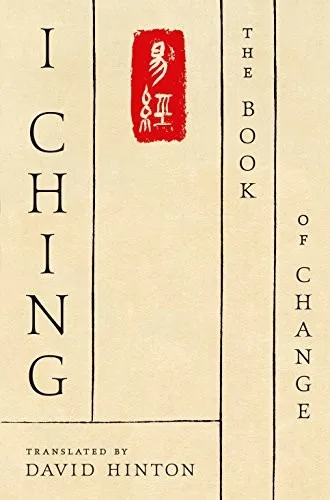
David Hinton's 2023 translation of the I Ching reveals its philosophical depth beyond divination.
Hinton's translation of the I Ching aims to present the classic Chinese text with clarity, moving past its ritualistic associations. He emphasizes the work's poetic and philosophical content, describing the cosmos as a constantly changing system of connections. This approach highlights the I Ching's influence on Chinese philosophy, poetry, and art over many centuries.
The translation seeks to make the text accessible to those interested in its core ideas. It presents the I Ching not just as a tool for foresight, but as a way to understand the principles of existence and the interconnectedness of all things. Hinton's work focuses on perceiving the natural flow of change and finding order within the human experience.
The I Ching, or Book of Changes, is a foundational text in Chinese tradition, dating back over two millennia. It is a manual for understanding the patterns of the cosmos and human events, using hexagrams to represent states of flux. For centuries, it has been consulted for guidance, but also studied for its deep philosophical insights into transformation and balance. Hinton's work engages with this long history, seeking to recover the text's original philosophical voice.
💡 Why Read This Book?
Dive into the I Ching with David Hinton to experience this ancient oracle as a vibrant source of poetic philosophy and cosmic insight. This translation liberates the text from arcane dogma, revealing its profound connection to the harmonious, ever-changing nature of existence. Ideal for seekers of wisdom, scholars of Eastern thought, and artists inspired by universal principles, it offers a unique path to understanding the subtle energies that shape reality.
⭐ Reader Reviews
Honest opinions from readers who have explored this book.
❓ Frequently Asked Questions
What makes David Hinton's translation of the I Ching unique?
Hinton's translation is revolutionary for its radical stripping away of traditional scholarly and divinatory apparatus, revealing the I Ching's core as a deeply poetic and philosophical text that speaks directly to the human spirit and cosmic order.
Is the I Ching only for divination?
While widely used for divination, the I Ching is also a profound book of poetic philosophy, deeply valued by artists, intellectuals, and anyone seeking to understand the fundamental principles of change and harmony in the universe.
Who is the intended audience for this translation?
This translation is ideal for those interested in Eastern philosophy, mystical traditions, poetry, art, and anyone seeking a deeper, more intuitive understanding of the cosmos and their place within it.
What kind of philosophical insights does this I Ching offer?
It offers insights into the elegant vision of the cosmos as ever-changing yet harmonious, revealing the generative principles of existence and the interconnectedness of all phenomena, serving as a seed for much of Chinese thought.
Can this translation be used for practical guidance?
Yes, beyond its philosophical depth, the I Ching, even in this poetic interpretation, can offer profound guidance by highlighting patterns of change and offering perspectives on how to navigate life's inevitable transformations with wisdom and balance.
🔮 Key Themes & Symbolism
The Cosmic Dance of Change and Harmony
This translation unveils the I Ching's profound understanding of the universe as a ceaseless, dynamic interplay of forces. It presents change not as chaos, but as an inherent, harmonious process that governs all existence. Hinton emphasizes how seemingly opposing elements are in fact complementary, engaged in a perpetual dance that generates and sustains reality. This perspective offers a deeply integrated worldview, encouraging readers to see the underlying order within flux and to find balance by attuning themselves to these universal rhythms.
The Poetic Essence of Philosophical Truth
Hinton masterfully extracts the I Ching's inherent poetic beauty, demonstrating how profound philosophical truths are often best conveyed through evocative imagery and resonant language. This approach liberates the text from dry intellectualism, revealing it as a source of inspiration for artists and thinkers alike. The translation highlights the elegant vision of the cosmos as perceived through the lens of ancient Chinese sensibility, suggesting that true understanding arises not just from logic, but from an intuitive, aesthetic apprehension of reality's deepest patterns.
The Seed of Chinese Thought and Art
This rendition positions the I Ching as the foundational wellspring from which much of Chinese philosophy, poetry, and painting emerged. By understanding the I Ching's core principles—its cyclical nature, its emphasis on balance, and its perception of interconnectedness—readers gain insight into the aesthetic and intellectual frameworks that have shaped Chinese culture for millennia. It reveals how this ancient text provides a blueprint for comprehending the generative forces of creativity and the underlying unity of the natural world, making it essential for appreciating the richness of Eastern traditions.
💬 Memorable Quotes
Direct passages from the work, attributed to the author.
“The cosmos unfolds through an elegant vision of ceaseless change.”
— This highlights the core tenet of the I Ching: that reality is in perpetual motion, yet this movement is not random but follows an inherent, beautiful order.
“Harmony arises from the interplay of all things.”
— This emphasizes the interconnectedness of existence, suggesting that balance and peace are found not in isolation, but in the dynamic relationships between diverse elements.
“The text speaks in whispers of universal truth.”
— This points to the I Ching's subtle, poetic nature, implying that its wisdom is not overtly stated but must be intuitively grasped, much like a whispered secret.
“Within change lies the seed of all becoming.”
— This expresses the generative power of transformation, suggesting that every ending is a new beginning and that evolution is the fundamental process of life.
“Perceive the subtle currents, and find your way.”
— This offers a practical implication of the I Ching's wisdom: by understanding the underlying patterns of change, one can navigate life's challenges with greater foresight and attunement.
🌙 Esoteric Significance
Tradition
The I Ching is a central to Taoist and Confucian thought, deeply embedded within the broader range of Chinese esoteric traditions. It serves as a cosmological map and a guide to living in accordance with the Tao, the fundamental principle of the universe. Its numerological and symbolic structures are explored in disciplines like Feng Shui and traditional Chinese medicine, revealing an intricate system of correspondences that link the human realm with the cosmic order. It is considered a repository of ancient wisdom, offering insights into the patterns of change and the art of navigating them.
Symbolism
Key symbols include the hexagrams, composed of six lines (solid for Yang, broken for Yin), representing fundamental states of being and transformation. Yin and Yang themselves are paramount symbols of duality and complementarity, the creative tension that drives all processes. The trigrams (three-line combinations) within the hexagrams further symbolize elemental forces (heaven, earth, fire, water, etc.). The meanings attached to each hexagram and its changing lines offer a rich symbolic language for interpreting situations and understanding the flow of events, acting as a complex lexicon of existence.
Modern Relevance
In the modern era, the I Ching's relevance transcends its divinatory origins. Its emphasis on adaptability, understanding patterns of change, and seeking harmony resonates deeply in a world characterized by rapid technological advancement and societal flux. For individuals seeking self-understanding and guidance, it offers a profound contemplative tool. Philosophically, it provides an alternative to Western linear thinking, offering a cyclical and holistic worldview. Artists and writers find inspiration in its poetic depth and symbolic richness, while practitioners of mindfulness and contemplative arts use its principles to foster balance and resilience.
👥 Who Should Read This Book
This translation of the I Ching is a transformative read for a diverse audience. **Beginners** seeking an accessible yet profound introduction to Eastern philosophy will find Hinton's poetic approach informative. **Scholars** of Chinese culture and comparative religion will appreciate the fresh, unadorned perspective on this foundational text. **Spiritual seekers** and practitioners of esoteric arts will find it a potent source of contemplation and guidance, revealing deeper layers of cosmic order and personal transformation. **Artists and writers** will discover a wellspring of inspiration in its elegant vision and symbolic language. Ultimately, anyone yearning for a deeper understanding of change, harmony, and the interconnectedness of existence will find immense value within its pages.
📜 Historical Context
The I Ching, or Book of Changes, boasts a history stretching back over three millennia, originating in ancient China. Its earliest layers likely emerged from divination practices, evolving into a profound philosophical and cosmological text by the Warring States period (475-221 BCE) and further developed by Confucian scholars during the Han Dynasty (206 BCE – 220 CE). It became one of the Five Classics of Confucianism, profoundly influencing Chinese governance, ethics, and personal cultivation. Its hexagrams and accompanying text provided a framework for understanding the cyclical nature of the universe, the interplay of Yin and Yang, and the principles of opportune action. Its influence extended beyond China, impacting East Asian cultures like Korea, Japan, and Vietnam, and later resonating with Western philosophers, artists, and mystics seeking a holistic understanding of existence and the forces that shape it.
📔 Journal Prompts
Reflect on a recent period of significant change in your life. How did the principles of Yin and Yang manifest within it?
Consider a situation where you felt out of balance. What subtle currents might you have been missing, according to the I Ching's philosophy?
How does the idea of the cosmos as an 'elegant vision of ceaseless change' alter your perception of stability and impermanence?
Choose a hexagram that speaks to you and explore its symbolic meaning in relation to your current life circumstances.
In what ways can embracing the 'interplay of all things' lead to greater personal harmony and understanding?
🗂️ Glossary
Hexagram
A symbol composed of six stacked lines, each being either solid (Yang) or broken (Yin). Hexagrams represent fundamental states of being and the dynamic processes of change within the I Ching.
Yin
The feminine, passive, dark, receptive, and yielding principle in Taoist philosophy, often represented by broken lines in a hexagram. It is complementary to Yang.
Yang
The masculine, active, light, creative, and assertive principle in Taoist philosophy, often represented by solid lines in a hexagram. It is complementary to Yin.
Trigram
A symbol composed of three lines, either solid or broken. The eight trigrams represent fundamental elemental forces and concepts such as Heaven, Earth, Water, and Fire.
Tao
The fundamental, ineffable principle of the universe in Taoism, often translated as 'the Way.' It represents the natural order and the underlying essence of all things.
This book appears in 3 collections
🔮 Readers Also Liked
Browse all →








More by David Hinton
All books →
From the “Tarot” Collection
View all →





More Free Divination & Tarot Books
View all →