The I ching
 61
61

The I ching



Ophelia Vance, Mystical Literature Reviewer: Dajun Liu's 'The I Ching' is a masterful unveiling of one of the world's most profound esoteric texts. Liu masterfully deciphers the complex symbolism, rendering the ancient hexagrams accessible without sacrificing their inherent depth. This edition offers a clarity that illuminates the philosophical underpinnings, making it an invaluable resource for both neophytes and seasoned practitioners of divination. The author's profound understanding of the text's mystical resonance shines through, providing not just answers, but pathways to self-awareness and cosmic alignment. A truly essential read for anyone seeking to engage with the foundational wisdom of Chinese metaphysics.
📝 Description
61
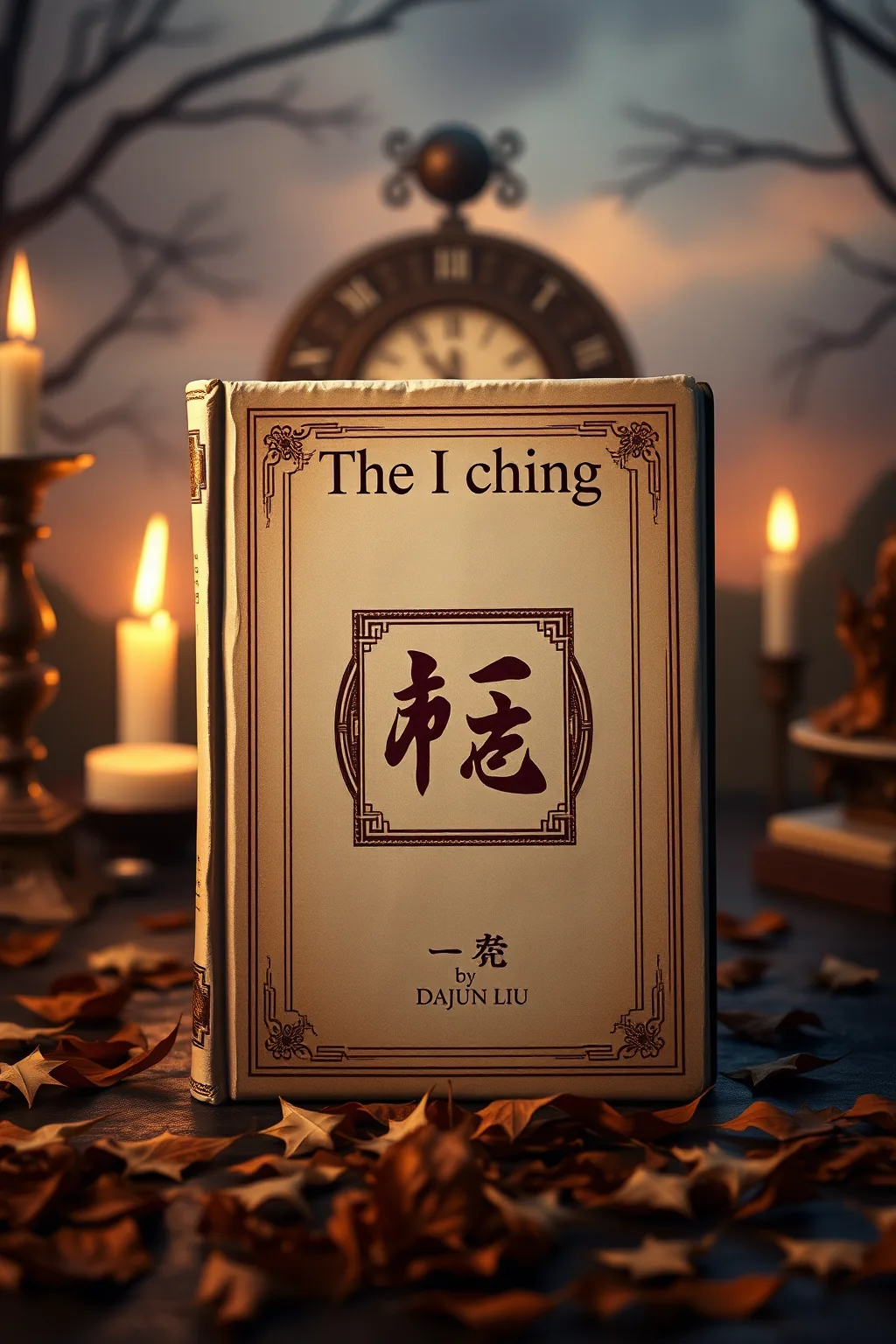
Dajun Liu's 1992 translation of The I Ching offers a philosophical lens on this ancient Chinese text.
Liu's 1992 translation of The I Ching presents the classic Chinese text as more than a tool for divination. It functions as a philosophical study, examining the 64 hexagrams and their symbolic representations of life's changes. The book details universal principles that have influenced Eastern thought for centuries.
This work reveals a symbolic language intended to help readers understand the flow of destiny and the balance of yin and yang. Liu's rendition encourages quiet reflection and understanding of the oracle's pronouncements. It aims to guide readers through personal challenges and foster alignment with natural patterns. The I Ching, in this interpretation, serves as a reflection of the cosmos, illustrating impermanence and interconnectedness.
The I Ching, or Book of Changes, is a foundational text in Chinese metaphysics, dating back over three millennia. Its divination system, based on hexagrams formed by combinations of broken and unbroken lines, is used to understand patterns of change in the natural world and human affairs. While often associated with fortune telling, its deeper layers explore cosmology, ethics, and the philosophical understanding of universal forces. This tradition emphasizes cyclical time and the dynamic interplay of opposing yet complementary energies.
💡 Why Read This Book?
Embark on a journey of self-discovery with 'The I Ching'. This book offers a unique lens through which to understand life's cycles and challenges, providing profound wisdom for navigating change. It is ideal for seekers of ancient knowledge, scholars of Eastern philosophy, and practitioners of divination seeking to deepen their connection to universal patterns.
⭐ Reader Reviews
Honest opinions from readers who have explored this book.
❓ Frequently Asked Questions
What is the primary purpose of The I Ching?
The I Ching serves as an oracle for divination, offering guidance on decision-making and understanding the dynamics of change. More profoundly, it's a philosophical text exploring the principles of the universe.
Who is Dajun Liu and why is his interpretation significant?
Dajun Liu is a respected scholar and practitioner of esoteric traditions. His interpretation is valued for its clarity, depth, and ability to bridge ancient wisdom with modern understanding, emphasizing the mystical and philosophical aspects.
Is prior knowledge of Chinese philosophy required to read this book?
While beneficial, prior knowledge is not strictly necessary. Liu's approach is designed to guide readers, making the concepts accessible through clear explanations and insightful commentary.
How does one use The I Ching for divination?
Typically, one formulates a question, consults the text by casting coins or yarrow stalks to generate a hexagram, and then interprets the hexagram's associated text and changing lines for guidance.
What is the significance of the hexagrams?
The 64 hexagrams are symbolic representations of fundamental patterns and situations in life. Each hexagram, composed of six lines, offers a unique perspective on change and its implications.
🔮 Key Themes & Symbolism
The Nature of Change
Fundamentally, The I Ching is a profound exploration of impermanence. It teaches that the only constant in the universe is change, and understanding its ebb and flow is crucial for harmony. This theme examines the cyclical nature of existence, the interplay of forces that drive transformation, and the wisdom found in adapting to shifting circumstances. It encourages readers to embrace flux rather than resist it, finding opportunities for growth and evolution within every transition.
Cosmic Harmony and Balance
This theme centers on the Taoist principle of aligning oneself with the natural order of the universe. The I Ching provides a framework for understanding the delicate balance between opposing forces, such as yin and yang, and how their interaction shapes reality. By studying the hexagrams, readers learn to discern the opportune moments for action and inaction, fostering a state of equilibrium in their lives and decisions. It's about moving in accordance with the Tao, achieving grace and effectiveness.
Symbolism and Archetypal Wisdom
The I Ching is a collection of symbols, each hexagram and its constituent lines acting as archetypal images representing universal human experiences and natural phenomena. This theme explores the profound symbolic language, deciphering the meaning behind the trigrams, the dragon, the serpent, and other potent imagery. It reveals how these ancient symbols offer timeless insights into the human psyche, societal dynamics, and the spiritual landscape, serving as keys to unlock deeper understanding.
💬 Memorable Quotes
Direct passages from the work, attributed to the author.
“When you are on the point of making a mistake, you will recognize it.”
— This highlights the subtle inner guidance available when facing a critical juncture. It implies that through introspection and awareness, one can often sense impending error, allowing for a course correction before consequences manifest.
“The gentle and persistent wind wears away the hardest stone.”
— This proverb illustrates the power of sustained, gentle effort. It teaches that consistent dedication, even in small measures, can overcome seemingly insurmountable obstacles over time.
“The wise man knows that it is better to wait than to act rashly.”
— This emphasizes patience and strategic thinking. It suggests that understanding when to pause and observe, rather than impulsively acting, is a hallmark of wisdom, leading to more effective and beneficial decisions.
“In times of great change, the wise man seeks counsel.”
— This underscores the value of seeking external wisdom and perspective during periods of uncertainty. It highlights that even the most astute individuals benefit from the insights and guidance of others.
💡 Key Ideas
Editorial paraphrase of the work's core concepts — not direct quotes.
The superior man acts before he speaks, and in acting, he is in harmony with the proper time.
This quote emphasizes the importance of mindful action and timing. It suggests that true wisdom lies in understanding the right moment to manifest one's intentions, aligning actions with the natural flow of events for optimal outcomes.
🌙 Esoteric Significance
Tradition
The I Ching is a central to Taoist and Confucian esoteric traditions, deeply intertwined with ancient Chinese metaphysics. It is considered a key text in understanding the Tao, the fundamental principle of the universe, and the interplay of yin and yang. Its principles are central to practices like Feng Shui, Traditional Chinese Medicine, and various forms of Daoist alchemy and meditation, offering a framework for harmonizing with natural forces.
Symbolism
The hexagrams are the primary symbols, each representing archetypal situations and forces. The eight trigrams (heaven, earth, thunder, wind, water, fire, mountain, lake) form the building blocks, embodying fundamental energies. The lines themselves (solid for yang, broken for yin) represent the constant flux and interaction of these forces. The imagery is rich, drawing from nature and human experience to convey complex philosophical and spiritual concepts about change, destiny, and transformation.
Modern Relevance
In the modern era, The I Ching remains remarkably relevant, offering timeless wisdom for reading through the complexities of contemporary life. Its principles of adaptability, balance, and understanding cyclical change provide valuable tools for personal growth, decision-making, and stress management. Esoteric practitioners and seekers of spiritual insight find it an indispensable guide for self-reflection, philosophical inquiry, and connecting with universal patterns in an increasingly chaotic world.
👥 Who Should Read This Book
This profound text is essential for seekers of ancient wisdom, offering a unique perspective on life's challenges and transformations. Scholars of Eastern philosophy and comparative religion will find it an invaluable primary source. Practitioners of divination, from tarot readers to astrologers, will discover a foundational system that enriches their understanding of symbolic language and cosmic cycles. Beginners curious about self-discovery and philosophical inquiry will find Dajun Liu's accessible interpretation a perfect entry point into this rich tradition.
📜 Historical Context
The I Ching, or Book of Changes, is one of the oldest Chinese classic texts, with its origins tracing back to the Western Zhou dynasty (c. 1046–771 BCE). Initially a divinatory manual, it evolved over centuries, incorporating philosophical commentaries from Confucian scholars like Confucius himself and his followers. This evolution transformed it into a profound exploration of cosmology, ethics, and the principles governing the universe and human existence. Its influence permeated East Asian culture, shaping political thought, military strategy, medicine, and personal philosophy. The text's enduring legacy lies in its ability to adapt and offer relevant guidance across vastly different historical epochs, reflecting a deep understanding of human nature and cosmic order.
📔 Journal Prompts
Reflect on a recent significant change in your life. Which hexagrams or principles from the I Ching resonate with this experience?
Consider a current dilemma. If you were to consult the I Ching, what question would you ask, and what wisdom might you hope to receive?
Explore the concept of 'yin' and 'yang' in your own life. Where do you see these forces in balance, and where do they seem out of equilibrium?
How does the idea of 'impermanence' affect your perspective on your goals and challenges? Does embracing change feel empowering or unsettling?
Identify an area where you tend to resist change. How might adopting a more adaptable approach, inspired by the I Ching, benefit you?
🗂️ Glossary
Hexagram
A symbol composed of six stacked lines, either solid (yang) or broken (yin). There are 64 unique hexagrams in the I Ching, each representing a distinct situation or principle of change.
Trigram
A symbol composed of three stacked lines. There are eight basic trigrams (Pa Kua), each representing fundamental elements and forces of nature (e.g., Heaven, Earth, Water).
Yin
The passive, receptive, dark, and feminine principle in Chinese philosophy. Often associated with the moon, earth, and introspection.
Yang
The active, creative, light, and masculine principle in Chinese philosophy. Often associated with the sun, heaven, and outward action.
Tao (Dao)
The fundamental, ineffable principle of the universe in Taoism. It represents the natural order, the way of things, and the underlying force that governs existence.
This book appears in 3 collections
🔮 Readers Also Liked
Browse all →







From the “Tarot” Collection
View all →









More Free Divination & Tarot Books
View all →