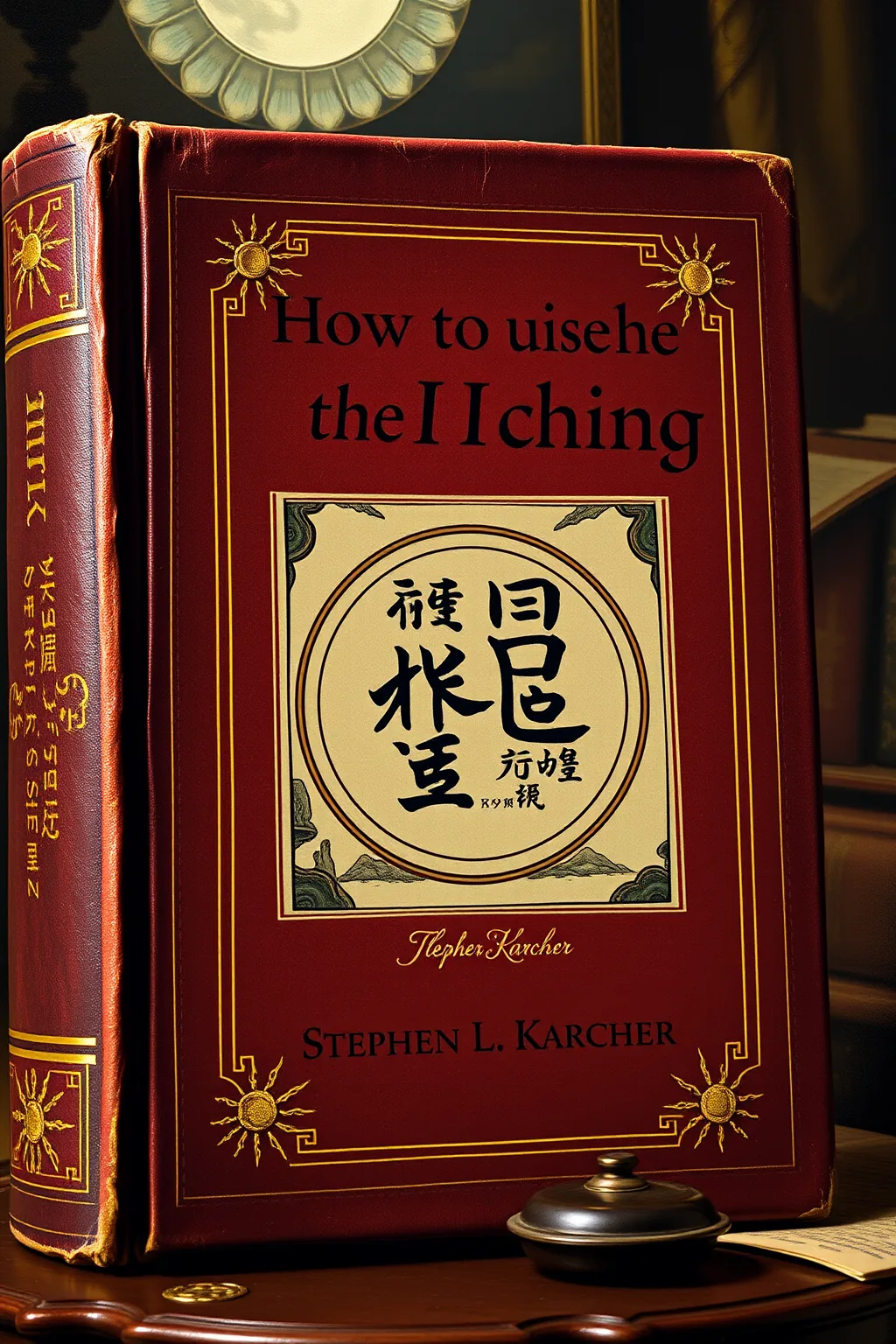
How to use the I ching
 63
63

How to use the I ching



Stephen L. Karcher's 'How to Use the I Ching' stands as a beacon for those seeking to navigate the profound currents of this ancient divination system. Eschewing superficial interpretations, Karcher guides the reader into the heart of the Yi Jing's philosophical depth, revealing its elegant logic and spiritual resonance. His approach emphasizes not just prediction, but the cultivation of wisdom and self-awareness through understanding the inherent patterns of change. This text is a vital resource for practitioners and scholars alike, offering a clear, yet deeply insightful, path to unlocking the oracle's transformative potential. A truly essential addition to any esoteric library.
📝 Description
63
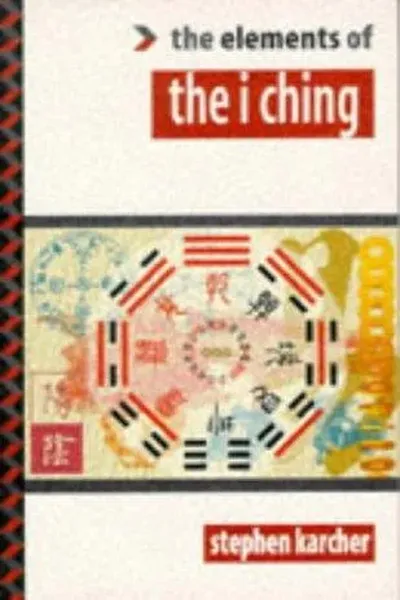
Stephen L. Karcher's 1995 guide explains the I Ching beyond simple divination.
This book addresses the I Ching not just as a method for predicting the future, but as a philosophical system. Karcher examines the 64 hexagrams and their changing lines, showing how they represent dynamic processes. He connects the symbolism of the trigrams and individual lines to a broader philosophical tradition. The text aims to help readers understand the forces that influence events and foster a more aware approach to life. It covers the practical application of casting methods alongside the deeper meanings of the oracle's responses.
Karcher details the structure of the I Ching, beginning with the eight basic trigrams and building up to the complex hexagrams. He explains how to interpret the judgments and line statements, drawing on classical Chinese commentaries. The book encourages a mindful engagement with the text, treating each consultation as an opportunity for self-reflection and insight into the natural cycles of change. It guides the reader through understanding the relationship between human action and the broader cosmic order.
The I Ching, or Book of Changes, is a foundational text in Chinese thought, originating in the Western Zhou Dynasty. It is a system of divination and a philosophical work that describes the world as a dynamic process of change. Its influence extends across East Asian culture, impacting philosophy, religion, and art. Karcher's approach situates the I Ching within this lineage, treating it as a source of wisdom for understanding personal and cosmic patterns, rather than solely as a predictive tool. It connects to traditions that seek harmony between humanity and the natural order.
💡 Why Read This Book?
Embark on a transformative journey with the I Ching. This book offers more than mere divination; it provides a profound framework for understanding life's ever-changing nature. Ideal for seekers of ancient wisdom, practitioners of esoteric arts, and scholars of Eastern philosophy, it empowers you to access hidden knowledge, make conscious choices, and align with universal currents. Discover a path to deeper self-awareness and spiritual growth.
⭐ Reader Reviews
Honest opinions from readers who have explored this book.
❓ Frequently Asked Questions
What is the I Ching?
The I Ching, or 'Book of Changes,' is an ancient Chinese divination text and philosophical classic. It uses a system of hexagrams, formed by six stacked lines, to interpret situations and offer guidance based on the principles of change and balance.
How does one cast the I Ching?
Traditionally, the I Ching is consulted using either three coins or yarrow stalks. The results of these casts determine which hexagrams are formed, providing the basis for the oracle's interpretation.
Is the I Ching only for fortune-telling?
While it can be used for prediction, the I Ching's true power lies in its philosophical depth. It offers insights into the dynamics of change, human behavior, and the interconnectedness of all things, fostering wisdom and self-reflection.
Who is Stephen L. Karcher?
Stephen L. Karcher is a renowned scholar and translator of ancient Chinese texts, particularly the I Ching. He is known for his accessible yet profound interpretations that bridge ancient wisdom with modern understanding.
Can beginners use this book?
Yes, Karcher's 'How to Use the I Ching' is designed to be accessible to both beginners and experienced practitioners. It provides clear instructions and insightful explanations to guide new users effectively.
🔮 Key Themes & Symbolism
The Dynamics of Change (Bian)
At the core of the I Ching lies the concept of 'Bian,' the ceaseless flow of transformation that governs the universe. This book meticulously unpacks how the hexagrams embody these shifts, illustrating the cyclical nature of existence. Understanding 'Bian' allows the reader to navigate life's inevitable changes with wisdom, recognizing that every situation is temporary and holds the seeds of its opposite. Karcher reveals how to perceive these subtle transitions, fostering adaptability and resilience in the face of life's unpredictable currents.
Cosmic Harmony and Human Destiny
The I Ching posits a deep interconnectedness between the celestial realm and human affairs. Karcher illuminates how the hexagrams serve as a bridge, reflecting universal patterns that influence our personal journeys. This theme explores the idea that by understanding the cosmic order, we can better align ourselves with our destiny. It explores the philosophical notion that our actions and circumstances are not random but part of a grander, harmonized design, encouraging a mindful approach to life and decision-making.
The Art of Intuitive Interpretation
Beyond rote memorization, Karcher emphasizes the development of intuitive understanding when working with the I Ching. This theme focuses on cultivating a receptive mind that can glean deeper meaning from the oracle's guidance. It explores how the symbolism, imagery, and philosophical underpinnings of each hexagram combine to offer nuanced insights. The reader is encouraged to engage with the text on a visceral level, allowing the wisdom of the ancients to resonate and inform their present-day challenges and aspirations.
💬 Memorable Quotes
Direct passages from the work, attributed to the author.
“Each hexagram is a snapshot of a dynamic process.”
— This emphasizes that the I Ching's wisdom lies in understanding the flow of change, not in static predictions. It frames the hexagrams as moments within a continuous transformation.
“The wisdom of the ancients whispers through the lines of the hexagrams.”
— This evokes the mystical and enduring nature of the I Ching's teachings, suggesting that the text acts as a conduit for timeless insights from past generations.
“Seek not to predict, but to comprehend the forces at play.”
— This advises a shift in focus from merely foretelling events to understanding the underlying principles and energies that govern them, promoting a more profound level of insight.
💡 Key Ideas
Editorial paraphrase of the work's core concepts — not direct quotes.
The I Ching is not a passive oracle, but an active dialogue with the cosmos.
This quote highlights the interactive nature of the I Ching, suggesting it's a participatory process of seeking understanding rather than simply receiving pronouncements. It emphasizes the reader's role in the interpretation and application of its wisdom.
To know the past is to understand the present; to understand the present is to shape the future.
This quote underscores the I Ching's utility in learning from historical patterns to inform present actions and thereby influence future outcomes, advocating for conscious agency.
🌙 Esoteric Significance
Tradition
The I Ching is a core part of East Asian esoteric traditions, deeply interwoven with Taoism, Confucianism, and traditional Chinese cosmology. It represents a sophisticated system of divination that is also a profound philosophical and psychological framework. Within esoteric circles, it is revered as a living oracle, a direct channel to understanding the subtle energies and archetypal patterns that govern the universe and human consciousness. Its hexagrams are seen as symbolic representations of universal forces and archetypal situations, offering guidance for spiritual development and alignment with the Tao.
Symbolism
The foundational symbolism of the I Ching lies in its eight trigrams (Bagua) and sixty-four hexagrams. The trigrams—Heaven, Earth, Thunder, Wind, Water, Fire, Mountain, Lake—represent fundamental elements and forces of nature and human experience. The hexagrams, formed by the combination of two trigrams, depict complex situations, relationships, and transitions. The solid (yang) and broken (yin) lines themselves are potent symbols of active and receptive energies. These visual and conceptual symbols are not merely decorative but are designed to evoke intuitive understanding of the dynamic interplay of forces, guiding the practitioner towards balance and harmony.
Modern Relevance
In the modern era, the I Ching continues to be a vital tool for self-discovery and reading through the complexities of contemporary life. Its emphasis on adaptability, understanding cycles of change, and making conscious choices resonates deeply with individuals seeking grounding in a rapidly evolving world. Esoteric practitioners utilize it for spiritual guidance, ethical decision-making, and deepening their connection to universal principles. Beyond its divinatory function, the I Ching offers a profound psychological map, providing insights into archetypal patterns of behavior and motivation that remain remarkably relevant to the human condition today.
👥 Who Should Read This Book
This comprehensive guide to the I Ching is an essential resource for a diverse range of readers. **Beginners** will find Karcher's clear explanations and step-by-step instructions useful for their first encounters with the oracle. **Scholars of Eastern philosophy and comparative religion** will appreciate the depth of historical context and philosophical nuance. **Seekers of ancient wisdom and spiritual guidance** will discover a profound tool for self-reflection and personal growth. **Practitioners of divination and esoteric arts** will find it an authoritative text that enhances their understanding and application of this powerful system. Anyone interested in gaining deeper insight into the nature of change and the forces shaping their lives will benefit immensely.
📜 Historical Context
The I Ching, or 'Book of Changes,' emerged from ancient Chinese shamanistic traditions and philosophical schools, with its earliest layers dating back to the Western Zhou Dynasty (c. 1046–771 BCE). Initially, it served as a divinatory tool for rulers and priests to understand cosmic patterns and guide state decisions. Over centuries, it evolved into a profound philosophical text, deeply influencing Confucianism and Taoism. Its commentary, particularly the 'Ten Wings' attributed to Confucius and his disciples, transformed it from a purely utilitarian oracle into a sophisticated manual for ethical living and understanding the natural order. The period of its greatest philosophical elaboration, the Spring and Autumn and Warring States periods (771–256 BCE), was a time of immense intellectual ferment and societal upheaval, where thinkers sought order and meaning in a chaotic world. The I Ching's enduring appeal lies in its ability to provide timeless wisdom applicable to ever-changing human circumstances.
📔 Journal Prompts
Reflect on a recent situation where the I Ching's advice, as interpreted through Karcher's text, proved particularly insightful. What specific hexagram or line resonated most strongly, and why?
Consider the concept of 'change' as presented in the I Ching. How does this philosophy contrast with or complement your personal views on stability and transformation?
When you cast the I Ching, what is your primary intention? Are you seeking prediction, guidance, or a deeper understanding of yourself and the situation?
Explore the symbolic language of a particular trigram or hexagram that you find yourself drawn to. What personal associations or feelings does it evoke?
How can the principles of Yin and Yang, as understood through the I Ching, be applied to achieve greater balance in your daily life and relationships?
🗂️ Glossary
Hexagram
A figure composed of six stacked horizontal lines, each being either solid (yang) or broken (yin). There are 64 unique hexagrams in the I Ching, each representing a distinct situation or stage of change.
Trigram (Bagua)
A basic symbolic figure composed of three lines, either solid or broken. There are eight trigrams, representing fundamental elements and natural forces, which combine to form hexagrams.
Yang
The active, masculine, light, and assertive principle in the I Ching, represented by a solid line (—).
Yin
The receptive, feminine, dark, and passive principle in the I Ching, represented by a broken line (--).
Oracle
In the context of the I Ching, the oracle refers to the system of consulting the text for guidance and interpretation of specific questions or situations.
This book appears in 1 collection
🔮 Readers Also Liked
Browse all →








More by Stephen L. Karcher
All books →




From the “Divination” Collection
View all →




![CIA Reading Room cia-rdp84-00022r000200150084-5: ORIENTATION COURSE LECTURE ON 'SERVICES OF [ ] [ ]'](/img/thumb/cia-reading-room-cia-rdp84-00022r000200150084-5-orientation-course-lecture-on-services-of-cia-reading-room.webp)



More Free Divination & Tarot Books
View all →