Fires of consciousness

 61
61

Fires of consciousness



Celeste Moreau (Divination & Symbolism Reviewer) — Martin Treon's 'Fires of Consciousness' is a transcendent exploration, transcending the common perception of divination as mere fortune-telling. He masterfully bridges the profound wisdom of the Yi Jing with the philosophical underpinnings of Zen and Taoism, revealing their inherent unity. The book's strength lies in its ability to illuminate the interconnectedness of consciousness, cosmic patterns, and personal destiny through the lens of the I Ching's archetypal imagery. Treon's prose is both accessible and deeply evocative, making this essential reading for serious students of esoteric wisdom, those seeking a more profound understanding of self and universe, and practitioners of divination who wish to elevate their practice beyond superficial prognostication.
📝 Description
61
Martin Treon's 'Fires of Consciousness' (2020) examines the Yi Jing through Zen and Taoist lenses.
Published in 2020, Martin Treon's 'Fires of Consciousness' examines the Yi Jing, the ancient Chinese book of changes. Treon moves beyond simple divination, instead connecting the hexagrams to the clarity found in Zen Buddhism and the interconnectedness central to Taoist philosophy. The book treats the Yi Jing's symbols not as tools for prediction, but as keys to understanding subtle awareness and the present moment. Treon argues that the hexagrams reveal the universal pulse within our own lives.
This work invites readers to perceive the eternal present and the universe's rhythm in their own being. It is intended for those seeking a deeper understanding of consciousness, rather than a predictive guide. The book aims to facilitate a transformative encounter with the inner self and the potential of an awakened mind, using gnosis as a means of illumination.
This book situates itself within traditions that explore consciousness through symbolic systems. The Yi Jing, a cornerstone of Chinese thought, is here interpreted not just as a divinatory tool but as a framework for understanding cosmic patterns and personal awareness. By drawing parallels with Zen Buddhism, known for its emphasis on direct experience and mindfulness, and Taoism, which focuses on natural order and flow, Treon bridges East Asian philosophical concepts. The work engages with the idea of gnosis, or direct knowing, as a path to understanding the underlying structure of reality and the self.
💡 Why Read This Book?
Embark on a journey of profound self-discovery. 'Fires of Consciousness' offers a unique synthesis of ancient divination, Zen clarity, and Taoist flow, revealing the interconnectedness of all things. Ideal for seekers of hidden knowledge, practitioners seeking deeper insights, and scholars of comparative mysticism, this book ignites a transformative understanding of consciousness itself.
⭐ Reader Reviews
Honest opinions from readers who have explored this book.
❓ Frequently Asked Questions
What is the primary focus of 'Fires of Consciousness'?
The book primarily focuses on using the Yi Jing (I Ching) as a tool for understanding consciousness, not just for predicting the future, but for profound self-awareness and alignment with cosmic principles.
How does the book relate Zen Buddhism and Taoism to the Yi Jing?
It intricately weaves the philosophical insights of Zen and Taoism with the symbolic language of the Yi Jing, demonstrating their shared emphasis on impermanence, flow, and the nature of reality.
Is this book suitable for beginners in divination?
While it delves into advanced concepts, the author's clear prose and insightful interpretations make it accessible and beneficial for earnest beginners eager to explore deeper meanings.
What kind of transformation can a reader expect?
Readers can expect a shift in perspective, fostering a more profound connection to their inner world and the universal currents, leading to greater self-understanding and intuitive wisdom.
Are there practical applications for the knowledge presented?
Yes, the book offers practical guidance on how to engage with the Yi Jing for personal growth, decision-making, and cultivating a more harmonious relationship with life's unfolding.
🔮 Key Themes & Symbolism
The Yi Jing as a Mirror of Consciousness
This section examines the I Ching not merely as a divinatory tool, but as a profound symbolic language that reflects the dynamic field of human consciousness. Treon explores how each hexagram and its changing lines serve as archetypal representations of psychological states, universal patterns, and the ebb and flow of life's energies. The emphasis is on understanding the I Ching as a guide to inner knowing, clear the subtle connections between our personal journeys and the grand cosmic dance. Readers are encouraged to see the hexagrams as keys to unlocking deeper self-awareness and perceiving the intricate web of cause and effect that shapes our experiences.
Zen and Taoist Resonance in Divination
Here, the book bridges the apparent divide between the structured symbolism of the Yi Jing and the more experiential philosophies of Zen Buddhism and Taoism. Treon demonstrates how the principles of mindfulness, non-attachment, and living in harmony with the Tao are intrinsically present within the wisdom of the I Ching. The focus is on how these Eastern traditions offer a complementary framework for interpreting the hexagrams, fostering a detached yet engaged approach to divination. This section encourages readers to cultivate a contemplative attitude, finding profound stillness and clarity amidst the changing patterns of life, aligning their inner state with the natural order.
The Art of Intuitive Perception
Beyond rote memorization of hexagram meanings, 'Fires of Consciousness' champions the development of intuitive perception. Treon guides readers to move beyond a purely intellectual understanding of the Yi Jing, encouraging a deeper, heart-centered connection with its wisdom. This theme emphasizes how the book cultivates a refined sensitivity to subtle energies, symbolic resonance, and the inner voice of intuition. By engaging with the text and the I Ching, practitioners are empowered to trust their inner knowing, discern deeper layers of meaning, and integrate the insights gained into their daily lives for greater wisdom and authentic living.
💬 Memorable Quotes
Direct passages from the work, attributed to the author.
“In the stillness of the present moment, the future whispers its secrets.”
— Highlights the Zen influence, suggesting that true insight arises from mindful awareness of the now, not frantic seeking.
“To flow with the Tao is to dance with the ever-changing patterns of existence.”
— Captures the Taoist essence of acceptance and embracing life's impermanence through harmonious participation.
“Each change of line is a doorway to a new perspective.”
— Illustrates the dynamic nature of the I Ching, where transformations offer opportunities for evolving understanding.
“The fire of consciousness burns brightest when fueled by inner knowing.”
— Connects the book's title to the central theme of awakening awareness through cultivated intuition and self-awareness.
💡 Key Ideas
Editorial paraphrase of the work's core concepts — not direct quotes.
The hexagrams are not oracles of doom, but maps of the soul's unfolding.
This quote reframes divination, emphasizing the I Ching's role in self-understanding and personal growth rather than passive prediction.
🌙 Esoteric Significance
Tradition
The book draws heavily from the ancient Chinese art of divination, the Yi Jing (I Ching), revered as a profound source of wisdom for understanding cosmic principles and human experience. It also deeply integrates the contemplative practices and philosophical insights of Zen Buddhism, emphasizing mindfulness and direct experience, alongside the naturalistic and harmonious principles of Taoism, focusing on flow and alignment with the universal Way.
Symbolism
Central to the book's esoteric significance is its exploration of the 64 hexagrams of the Yi Jing. These complex symbols, formed by combinations of solid (yang) and broken (yin) lines, are presented not as static images but as dynamic representations of universal archetypes, psychological states, and the ever-shifting currents of life. Treon deciphers their intricate meanings, revealing how they serve as a symbolic language for understanding the subtle energies that govern existence and influence our inner world.
Modern Relevance
In a world often characterized by fragmentation and external focus, 'Fires of Consciousness' offers a vital pathway back to inner coherence and intuitive wisdom. Its teachings on the interconnectedness of consciousness, the symbolic language of the cosmos, and the practice of mindful engagement provide tools for navigating complexity with greater clarity and equanimity. The book's relevance lies in its ability to empower individuals to access their own inner oracle, fostering a deeper understanding of self and a more harmonious relationship with the unfolding of life.
👥 Who Should Read This Book
This clear work is a treasure for a diverse range of seekers. **Beginners** drawn to the mystique of the I Ching will find a clear, yet profound, introduction that steers them towards deeper meaning beyond superficial prediction. **Scholars** of comparative religion and esoteric philosophy will appreciate the nuanced synthesis of Chinese wisdom traditions with Zen and Taoist thought. **Spiritual seekers** yearning for a more profound understanding of consciousness and their place in the universe will discover a potent guide for introspection and awakening. **Practitioners** of divination, meditation, or mindfulness will find their existing practices enriched with new layers of insight and application.
📜 Historical Context
Published in an era increasingly drawn to Eastern philosophies and esoteric studies, 'Fires of Consciousness' emerged as a significant contribution to the burgeoning interest in ancient wisdom traditions. The late 20th and early 21st centuries saw a resurgence of inquiry into the I Ching, Zen Buddhism, and Taoism, fueled by a desire for alternative perspectives on life, consciousness, and spirituality. Martin Treon's work tapped into this zeitgeist, offering a synthesis that resonated with those seeking depth beyond materialist paradigms. Its approach, integrating these traditions with a focus on personal transformation, positioned it as a key text for practitioners and scholars alike, influencing subsequent explorations of consciousness and divination.
📔 Journal Prompts
When I consult the Yi Jing, what underlying emotion or question am I truly seeking to address?
How does the principle of 'flow' (Tao) manifest in a recent challenge I faced, and how could I have aligned with it more consciously?
Reflect on a moment of 'stillness' (Zen) in your day; what insights did it offer about your current situation?
Which hexagram from the Yi Jing resonates most strongly with my current life circumstances, and what does this resonance suggest?
How can I cultivate a more intuitive 'fire of consciousness' in my daily interactions and decisions?
🗂️ Glossary
Yi Jing (I Ching)
An ancient Chinese text and system of divination, often translated as the 'Book of Changes,' which uses a set of 64 hexagrams to offer wisdom and insight into the dynamics of life and the universe.
Hexagram
A figure composed of six stacked horizontal lines, where each line is either solid (yang) or broken (yin). There are 64 unique hexagrams in the Yi Jing, each representing a distinct archetypal situation or principle.
Tao
A fundamental concept in Taoism, referring to the natural order of the universe, the 'Way,' or the underlying principle that governs all existence. Living in accordance with the Tao means aligning oneself with this natural flow.
Zen Buddhism
A school of Mahayana Buddhism that emphasizes meditation, mindfulness, and direct intuitive insight into the nature of reality, often characterized by simplicity and a focus on the present moment.
Yang
In Chinese philosophy, Yang represents the active, bright, masculine, and assertive principle. It is symbolized by solid lines in the Yi Jing hexagrams.
This book appears in 8 collections
🔮 Readers Also Liked
Browse all →








More by Martin Treon
All books →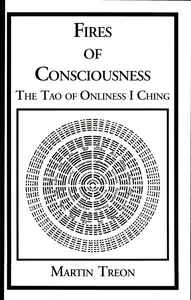
From the “Consciousness Expansion” Collection
View all →





More Free Divination & Tarot Books
View all →