What is Cartomancy?
Cartomancy is a form of divination that uses a deck of cards, most commonly playing cards or tarot cards, to gain insight into the past, present, or future. Practitioners interpret the symbols, positions, and combinations of cards to answer questions or provide guidance. While often associated with Tarot, cartomancy encompasses various card systems, including standard playing cards, oracle cards, and even custom-made decks, each with its own interpretive framework and spread techniques.
Best Books for Complete Beginners
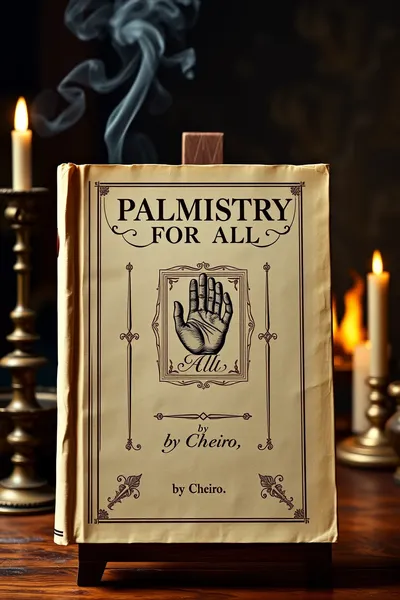
For those new to card divination, starting with accessible guides is essential. 'The Illustrated Key to the Tarot' by L. W. De Laurence provides a straightforward introduction to Tarot symbolism and interpretation, making complex imagery understandable. 'Palmistry for All' by Cheiro, while focused on palmistry, introduces fundamental concepts of symbolic reading applicable to cards. 'Tea-Cup Reading and Fortune-Telling by Tea Leaves' by a Highland Seer offers a glimpse into simpler, non-card divination methods that build confidence in interpreting signs. 'How to tell fortunes' by Aaron A. Warford includes basic card fortune-telling alongside other methods, providing a broad initial overview.
Intermediate Reading
Moving beyond the basics, intermediate readers can study more nuanced techniques. Mrs. John King Van Rensselaer's 'Prophetical, Educational and Playing Cards' explores the historical and symbolic layers of playing cards used for divination. 'The Square of Sevens' by Edward Prime-Stevenson offers a structured, authoritative method for cartomancy, suitable for developing a consistent practice. 'Gypsy Sorcery and Fortune Telling' by Charles Godfrey Leland provides a collection of Romany traditions and practical methods, expanding the scope of divination techniques. 'Cupology: How to Be Entertaining' by Clara, though focused on tea leaves, introduces the concept of interpreting everyday objects for divination.
Classical / Advanced Texts
Advanced students and researchers will find value in primary historical sources and comprehensive systems. 'The Complete Magicians Tables' by Stephen Skinner (2007) serves as a modern compilation of historical magical and divinatory texts, offering deep dives into esoteric systems. While not strictly cartomancy, H.S. Isbell's various papers from the 1930s-1960s on 'Mutarotation' and sugar chemistry, such as 'Mechanisms for the mutarotation and hydrolysis of the glycosylamines and the mutarotation of the sugars' (1951), exemplify rigorous scientific methodology that can inform a disciplined approach to understanding complex symbolic systems. 'Telling fortunes by cards' by Mohammed Ali presents ancient Arab and Romany methods, offering a direct connection to historical practices.
Reading Order — Step by Step
Begin your journey with foundational texts. Month 1: Start with 'The Illustrated Key to the Tarot' by De Laurence for basic Tarot understanding, supplemented by 'How to tell fortunes' by Warford for broader divination context. Month 2: Explore playing card divination using Mrs. Van Rensselaer's 'Prophetical, Educational and Playing Cards' and the structured methods in 'The Square of Sevens' by Prime-Stevenson. Month 3: Deepen your practice with the historical and cultural insights from Leland's 'Gypsy Sorcery and Fortune Telling' and explore advanced compilations like Skinner's 'The Complete Magicians Tables'.
Frequently Asked Questions
Which cartomancy book should I read first?
For a solid foundation, begin with 'The Illustrated Key to the Tarot' by L. W. De Laurence. It offers clear explanations of Tarot symbolism, which is fundamental to many forms of card divination.
Can I use regular playing cards for divination?
Yes, standard 52-card playing decks are frequently used for cartomancy. Books like 'Prophetical, Educational and Playing Cards' by Mrs. Van Rensselaer detail specific methods for interpreting them.
What's the difference between Tarot and playing card cartomancy?
Tarot decks have unique Major and Minor Arcana with strong symbolism. Playing cards use a standard 52-card deck, with interpretations often derived from historical systems or adapted from Tarot meanings.
How do I learn to interpret card combinations?
Interpretation develops through practice and studying various systems. Focus on understanding individual card meanings first, then explore how they interact within spreads, as detailed in guides like 'The Square of Sevens'.
Are there specific spreads for different questions?
Yes, various spreads exist, from simple three-card draws for past-present-future to more complex layouts for specific inquiries. Learning different spreads helps tailor readings to the question asked.
What is the significance of 'Gypsy Sorcery' in cartomancy?
Charles Godfrey Leland's work documents traditional Romany fortune-telling methods, including card divination. It offers historical context and practical techniques rooted in a specific cultural tradition.
Is cartomancy the same as fortune-telling?
Cartomancy is a specific type of fortune-telling that exclusively uses cards. Fortune-telling is a broader term encompassing various methods like palmistry, astrology, tea leaf reading, and more.