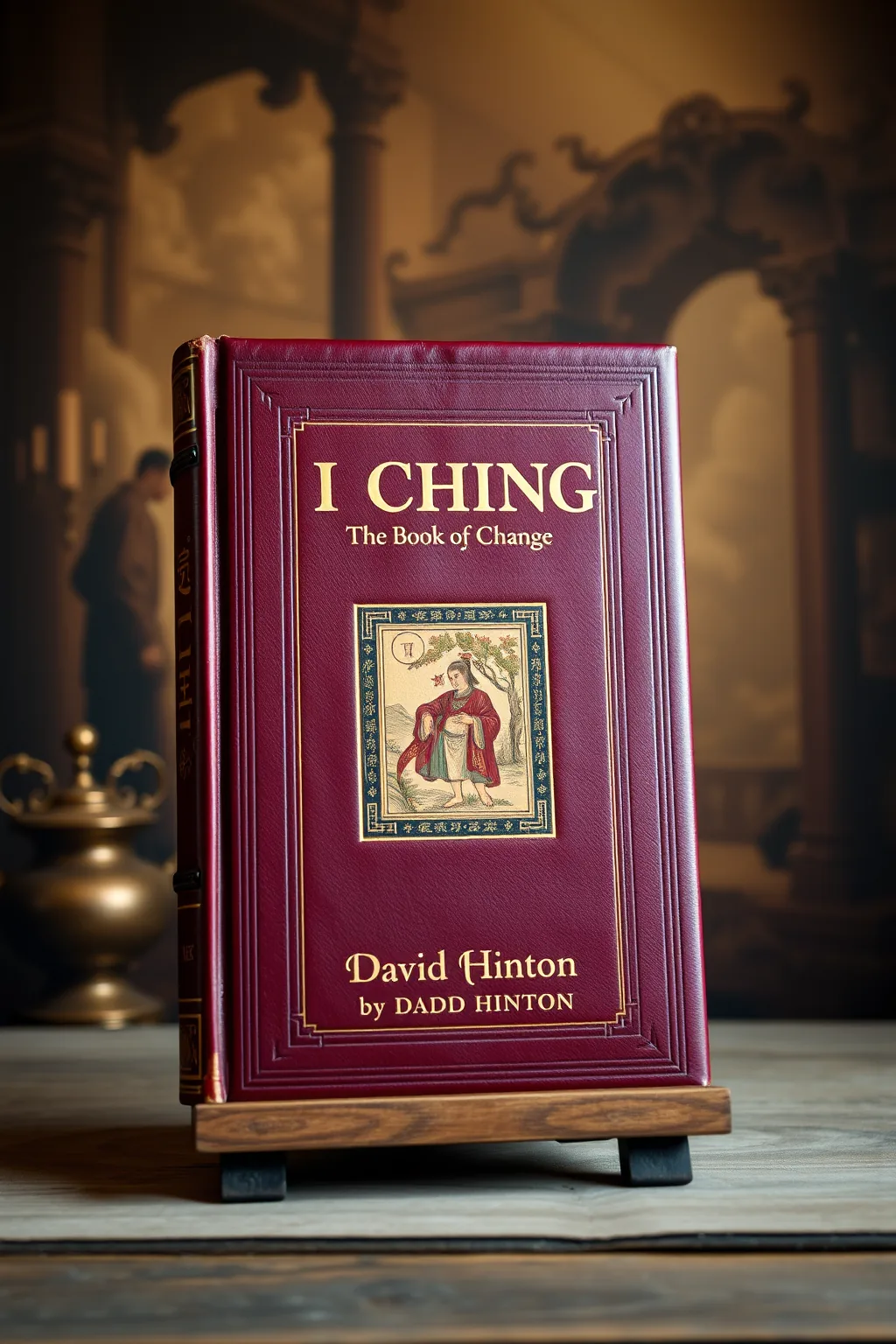
I Ching : The Book of Change
 61
61

I Ching : The Book of Change



Lorelei Sage (Contemplative Literature Editor) — David Hinton's rendition of the I Ching is a luminous beacon for those who seek the profound depths of esoteric wisdom. His translation transcends mere linguistic accuracy, breathing life into the ancient hexagrams with an unparalleled clarity and philosophical resonance. Hinton masterfully deciphers the layers of symbolism, offering insights that speak directly to the soul's quest for meaning and balance. This edition is an indispensable companion for serious practitioners and scholars alike, illuminating the I Ching not just as a divinatory text, but as a living, breathing repository of cosmic truth. It is a profound invitation to engage with the timeless dialogue between humanity and the universe.
📝 Description
61
David Hinton's 2003 translation of the I Ching reveals the ancient text as a system of cosmic correlation.
David Hinton translated and interpreted the I Ching, also known as The Book of Change, in 2003. His work goes beyond simple fortune-telling, presenting the hexagrams as archetypes reflecting life's cyclical patterns. Hinton explains the interplay of yin and yang, the fundamental forces he sees as shaping our world and influencing our future.
This edition is for those interested in self-reflection and understanding enduring wisdom traditions. It provides a structure for introspection and a guide to the universe's complexities. The book aims to foster a deeper comprehension of change as reality's constant element.
The I Ching originates in ancient China, serving as a foundational text for Taoism and Chinese philosophy. Its system of divination and philosophical inquiry uses sixty-four hexagrams, each composed of six lines representing combinations of yin and yang. These symbols are understood to reflect universal principles and the dynamics of change inherent in the cosmos. For centuries, it has been consulted for guidance on personal decisions and understanding the flow of events, placing it within a long tradition of oracular and philosophical texts.
💡 Why Read This Book?
This edition of the I Ching offers a rare portal into the profound, cyclical wisdom of ancient China. It's essential for seekers of esoteric knowledge, scholars of Eastern philosophy, and practitioners of divination who desire a deeper, more intuitive understanding of change. Hinton's translation illuminates the philosophical underpinnings, making the hexagrams accessible guides for navigating life's complexities and fostering inner harmony.
⭐ Reader Reviews
Honest opinions from readers who have explored this book.
❓ Frequently Asked Questions
What is the I Ching?
The I Ching, or Book of Changes, is an ancient Chinese divination text and philosophical classic. It comprises 64 hexagrams, each formed by six lines, representing fundamental archetypes and states of being.
Who was David Hinton?
David Hinton is a renowned translator and interpreter of classical Chinese philosophy and literature, celebrated for his ability to convey the profound spiritual and philosophical insights of these texts into accessible English.
How is the I Ching used?
Traditionally, the I Ching is consulted using methods like coin-tossing or yarrow stalks to generate hexagrams, which are then interpreted to offer guidance on specific questions or life situations.
What does 'esoteric' mean in this context?
'Esoteric' refers to knowledge or teachings that are meant for or understood by a select group of people with specialized knowledge or insight, often pertaining to mystical or spiritual matters.
Is this book suitable for beginners?
Yes, David Hinton's translation is highly regarded for its clarity and philosophical depth, making it accessible and rewarding for both beginners and experienced practitioners of the I Ching.
🔮 Key Themes & Symbolism
The Cosmic Dance of Yin and Yang
This translation looks at the fundamental Taoist principle of yin and yang, portraying them not as opposing forces but as complementary energies in perpetual motion. The hexagrams are revealed as intricate diagrams illustrating the dynamic interplay of these forces, shaping all phenomena in the universe. Understanding this dance is key to grasping the I Ching's philosophy of balance, harmony, and the interconnectedness of all things. Hinton’s interpretation encourages readers to see these forces not as external powers, but as inherent aspects of existence that can be consciously navigated.
Cycles of Transformation and Rebirth
Fundamentally, the I Ching is a evidence of the immutable nature of change and the profound beauty found within its cycles. Hinton masterfully articulates how each hexagram represents a stage within a larger cosmic unfolding, symbolizing birth, growth, decay, and renewal. The text offers a framework for understanding personal transformations, societal shifts, and the inevitable ebb and flow of life. It empowers readers to embrace change not as a threat, but as an opportunity for evolution and the emergence of new possibilities, mirroring the natural rhythms of the universe.
The Oracle of Inner Knowing
Beyond its role as a divinatory tool, the I Ching, as presented by Hinton, serves as a profound oracle of inner knowing. The hexagrams act as mirrors reflecting the querent's inner landscape, offering insights into subconscious patterns and potential future trajectories. This edition emphasizes the contemplative aspect, encouraging deep introspection and the cultivation of intuition. It guides readers to access their own inner wisdom, using the ancient symbols as a catalyst for self-discovery and the alignment of one's actions with the greater cosmic order, fostering a profound connection to the universal flow.
💬 Memorable Quotes
Direct passages from the work, attributed to the author.
“Within stillness, clarity arises.”
— Highlights the Taoist principle that quiet contemplation and inner peace are essential for discerning truth and navigating complex situations.
“The past informs, the future unfolds.”
— Emphasizes the wisdom of learning from experience while remaining open and adaptable to what lies ahead, without undue attachment.
“Harmony is found in balance.”
— Speaks to the central theme of yin and yang, suggesting that equilibrium between opposing forces is the key to well-being and stability.
“The journey is the destination.”
— Encourages presence and appreciation for the process of life, rather than solely focusing on outcomes, finding meaning in every step.
💡 Key Ideas
Editorial paraphrase of the work's core concepts — not direct quotes.
Change is the only constant; embrace its flow.
This quote expresses the core message of the I Ching, urging acceptance and active participation in the natural process of transformation, rather than resistance.
🌙 Esoteric Significance
Tradition
The I Ching is a central to Taoist esoteric philosophy, deeply intertwined with concepts of the Tao, yin and yang, and the Five Elements. It serves as a profound cosmological map, illustrating the fundamental principles that govern the universe's constant state of flux and transformation. Its esoteric nature lies in its symbolic language, which, when properly understood, unlocks insights into the subtle energies and patterns that underpin reality, guiding practitioners towards spiritual enlightenment and alignment with the natural order.
Symbolism
The primary symbolism of the I Ching resides in its 64 hexagrams, each composed of six lines representing yin (broken) or yang (solid). These lines and their combinations form archetypal patterns that correspond to universal situations, natural phenomena, and human experiences. The trigrams (three-line combinations) are foundational, symbolizing Heaven, Earth, Water, Fire, Lake, Mountain, Wind, and Thunder. The interrelationships and transformations between these trigrams and hexagrams offer a rich vocabulary for understanding the dynamic forces at play in the cosmos and within the individual.
Modern Relevance
In the modern era, the I Ching's esoteric significance remains potent. It offers a counterpoint to the often chaotic and materialistic nature of contemporary life, providing a framework for mindfulness, introspection, and the cultivation of inner resilience. Its principles of balance, adaptability, and understanding cyclical change are profoundly relevant for navigating personal challenges, professional decisions, and the complexities of global interconnectedness. The I Ching continues to serve as a profound philosophical guide and a source of wisdom for those seeking deeper meaning and a more harmonious existence.
👥 Who Should Read This Book
This edition of the I Ching is a treasure for a diverse audience. For the **spiritual seeker**, it offers a profound path to understanding the universe's intricate workings and one's place within them, fostering a deeper connection to the flow of life. **Scholars of Eastern philosophy and comparative religion** will find Hinton's translation an invaluable resource, providing nuanced insights into Taoist thought and ancient Chinese cosmology. **Practitioners of divination and esoteric arts** will appreciate its depth and accessibility, offering a sophisticated tool for intuitive guidance and self-reflection. Even **curious newcomers** to ancient wisdom traditions will find themselves drawn into its profound, yet accessible, exploration of change and existence.
📜 Historical Context
The I Ching, originating in ancient China (traditionally attributed to King Wen and the Duke of Zhou around 11th century BCE, with later philosophical commentary by Confucius and his disciples), emerged from a deep engagement with the natural world and the perceived cosmic order. Its longevity and continuous influence stem from its adaptability across various philosophical schools, including Taoism and Confucianism. During its formative centuries, China was a range of warring states and philosophical inquiry, where texts like the I Ching provided frameworks for understanding governance, personal conduct, and the fundamental forces shaping existence. Its principles were woven into statecraft, medicine, and everyday life, offering a sophisticated system for interpreting omens, guiding decisions, and fostering societal harmony. Its enduring appeal lies in its universal truths about change, balance, and the human condition, resonating across millennia and cultures.
📔 Journal Prompts
Reflect on a recent significant change in your life. How did the principles of yin and yang manifest within this experience?
Consider a current dilemma. If you were to consult the I Ching, what core archetypal energy or situation might it represent?
Explore the concept of 'balance' in your personal life. Where do you feel most balanced, and where is there an opportunity for greater equilibrium?
How can you cultivate a greater sense of acceptance towards the inevitable cycles of change in your daily life?
What hidden patterns or subconscious influences might be at play in a situation you are currently facing? How can you bring them into awareness?
🗂️ Glossary
Hexagram
A symbol composed of six stacked horizontal lines, either solid (yang) or broken (yin). Each of the 64 hexagrams represents a fundamental archetype or situation in the I Ching.
Trigram
A fundamental symbol composed of three stacked horizontal lines (yin or yang). There are eight basic trigrams, each representing a specific element or natural force.
Tao (Dao)
The fundamental principle of the universe in Taoism, often translated as 'the Way.' It represents the ineffable, underlying order and natural flow of existence.
Yin and Yang
The two complementary and interdependent forces that permeate the universe. Yin is typically associated with passive, feminine, dark, and receptive qualities, while Yang is associated with active, masculine, light, and creative qualities.
Divination
The practice of seeking knowledge of the future or the unknown by supernatural means. In the context of the I Ching, it involves interpreting hexagrams for guidance.
This book appears in 3 collections
🔮 Readers Also Liked
Browse all →









More by David Hinton
All books →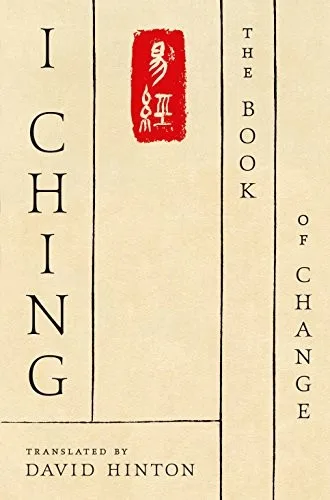
From the “I Ching” Collection
View all →









More Free Divination & Tarot Books
View all →