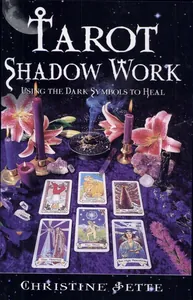
Tarot Shadow Work

 65
65

Tarot Shadow Work



Christine Jette’s 'Tarot Shadow Work' is a vital contribution to contemporary esoteric literature. Alaric Kestrel notes its unique synthesis of Jungian shadow work and Tarot symbolism, offering practical guidance for confronting suppressed aspects of the self. The author's approach is both compassionate and incisive, demystifying complex psychological concepts and rendering them accessible through the archetypal imagery of the Tarot. This book is not merely an intellectual exercise; it is a soul-stirring journey into the depths of one's own psyche. Ideal for seasoned practitioners seeking to deepen their understanding and for earnest beginners ready to embark on a transformative path, 'Tarot Shadow Work' is an indispensable resource for authentic self-discovery and integration.
📝 Description
65
Christine Jette's 'Tarot Shadow Work' connects psychoanalytic concepts to Tarot archetypes for personal transformation.
Christine Jette's 'Tarot Shadow Work' examines the hidden aspects of the self through the lens of Tarot symbolism. The book suggests that the Tarot is more than a tool for divination; it is a method for accessing repressed emotions, ancestral patterns, and subconscious narratives. Jette uses specific cards, such as the Devil and the Hermit, as examples of how each card can illuminate different parts of the inner world. The work aims to help readers confront and integrate their darker aspects, leading to psychological healing and self-understanding.
This book is written for individuals engaged in introspection and Tarot practice. It guides readers through confronting personal darkness and encourages the integration of these parts of the self. The goal is to achieve a greater sense of wholeness and self-mastery. Jette also references the concept of the 'Peter Pan shadow' as an example of a specific shadow aspect that can be explored and reclaimed within the context of the book's methods.
This book fits within esoteric traditions that use symbolic systems for psychological exploration. It draws on the Western esoteric use of the Tarot, particularly its application in depth psychology, which emerged in the early to mid-20th century. This approach views Tarot imagery not just as predictive but as a mirror to the unconscious mind, aligning with archetypal psychology and psychodynamic theories. The work also touches on themes of personal alchemy, transforming difficult inner material into self-awareness and growth.
💡 Why Read This Book?
This book is a potent catalyst for profound inner transformation. It offers a sacred space to explore your deepest fears and hidden potentials, utilizing the Tarot as a compassionate guide. Ideal for seekers yearning for authentic self-knowledge, practitioners aiming to enrich their readings with psychological depth, and anyone ready to integrate their shadow self for greater wholeness and freedom.
⭐ Reader Reviews
Honest opinions from readers who have explored this book.
❓ Frequently Asked Questions
What is 'shadow work' in the context of Tarot?
Shadow work with Tarot involves using the cards to identify, understand, and integrate the repressed or unacknowledged aspects of your personality, often referred to as the 'shadow self'.
Do I need to be a Tarot expert to read this book?
No, while some familiarity with Tarot archetypes is beneficial, Christine Jette provides clear explanations, making it accessible for beginners interested in psychological exploration through the cards.
How can the Tarot help with my shadow self?
The Tarot's rich symbolism acts as a mirror, reflecting hidden patterns, fears, and desires. By interpreting the cards, you can gain insight into your shadow aspects and develop strategies for integration.
What are the benefits of practicing Tarot shadow work?
The benefits include increased self-awareness, emotional healing, the release of limiting beliefs, and the integration of suppressed aspects of yourself, leading to greater authenticity and wholeness.
Is this book suitable for psychological healing?
Absolutely. The book is designed to facilitate psychological healing by providing a structured yet intuitive approach to confronting and integrating the shadow, fostering personal growth and well-being.
🔮 Key Themes & Symbolism
Archetypal Confrontation
This theme looks at the profound encounter between the individual psyche and the archetypal energies represented by the Tarot cards. It explores how these universal symbols act as potent mirrors, reflecting the hidden dimensions of our being. The book guides readers to recognize and engage with the 'shadow' – those parts of ourselves we disown or repress – through the symbolic language of the Tarot. This process is not about banishment but about integration, transforming potential liabilities into sources of power and wisdom, revealing the deep psychological and spiritual significance embedded within each card.
Psychological Alchemy and Integration
Fundamentally, , 'Tarot Shadow Work' is an alchemical text, positing that the Tarot provides the essential tools for transforming the leaden aspects of the psyche into the golden light of integrated selfhood. It outlines a sacred process where confronting disowned parts of the self – the shadow – is not an act of destruction but of profound creation. By skillfully working through the symbolic landscapes of the Tarot, readers are guided to transmute fear, shame, and denial into understanding, compassion, and potent self-awareness, leading to a more whole and authentic existence.
The Tarot as a Mirror of the Unconscious
This theme positions the Tarot not merely as a predictive tool, but as a profound and dynamic interface with the unconscious mind. The cards, with their body of imagery and symbolism, serve as a language of the soul, speaking directly to the less-obvious layers of our being. Jette elucidates how the archetypes within the Tarot deck resonate with the universal patterns of human experience, offering useful insights into our deepest motivations, fears, and desires. This perspective transforms Tarot reading into an act of deep psychological introspection and self-discovery.
💬 Memorable Quotes
Direct passages from the work, attributed to the author.
“Each Tarot card is a doorway to a hidden room within the self.”
— This highlights the Tarot's role as a symbolic guide, suggesting that exploring the cards can unlock useful insights into the unacknowledged parts of our inner landscape.
“To know your shadow is to begin to know your light.”
— This underscores the interconnectedness of our perceived negative and positive traits, suggesting that true self-understanding arises from acknowledging and integrating all facets of our being.
“The Tarot invites us to dance with our deepest fears, not to flee from them.”
— This conveys the book's core message of courageous engagement with difficult emotions and subconscious material, promoting healing through direct, mindful interaction.
💡 Key Ideas
Editorial paraphrase of the work's core concepts — not direct quotes.
The shadow is not a monster to be feared, but a hidden treasure to be reclaimed.
This quote emphasizes the transformative potential of confronting one's shadow aspects, reframing them from sources of fear to valuable sources of personal power and growth.
Integration is not about perfection, but about wholeness.
This quote redefines personal growth, shifting the focus from unattainable ideals to the valuable process of bringing all parts of oneself into harmonious existence.
🌙 Esoteric Significance
Tradition
This work draws heavily from Hermeticism and Jungian psychology, synthesizing their principles. Hermeticism, with its emphasis on 'as above, so below' and the interconnectedness of the macrocosm and microcosm, provides a framework for understanding the Tarot's universal archetypes. Jungian psychology offers the concept of the shadow and the process of individuation, which are central to the book's methodology. Together, these traditions illuminate the Tarot's potential as a sacred map for working through the inner realms and achieving psychological and spiritual integration.
Symbolism
The Tarot deck itself is a body of esoteric symbolism, with each card representing archetypal forces and psychological states. 'Tarot Shadow Work' specifically focuses on how symbols like the Devil, the Moon, and the Tower can illuminate repressed desires, fears, and karmic patterns. The book guides readers to interpret these symbols not just as external warnings or predictions, but as internal gateways to understanding the hidden dynamics of their own psyche. The process of shadow work, through Tarot, becomes an act of deciphering these potent symbols to reclaim lost aspects of the self.
Modern Relevance
In an age often characterized by external distractions and societal pressures, 'Tarot Shadow Work' offers a profound and accessible pathway to inner exploration and authentic self-discovery. Its relevance lies in providing practical tools for working through the complexities of the modern psyche, fostering emotional resilience, and promoting a deeper sense of self-awareness. By integrating ancient wisdom with contemporary psychological understanding, the book empowers individuals to confront and integrate their shadow aspects, leading to greater personal freedom, creativity, and a more profound connection to their true selves.
👥 Who Should Read This Book
This book is a profound resource for a diverse audience. **Beginners** seeking a meaningful entry into Tarot beyond simple divination will find a compassionate guide to self-exploration. **Tarot practitioners** will discover new depths of interpretation, enriching their readings with psychological insight. **Seekers of personal growth** will find a powerful framework for confronting and integrating their shadow selves, leading to greater authenticity and wholeness. **Those interested in Jungian psychology** will appreciate the practical application of shadow work principles through a universally accessible symbolic system. Ultimately, anyone yearning for deeper self-understanding and transformation will find immense value within these pages.
📜 Historical Context
Published in an era where psychological exploration and spiritual seeking were increasingly intertwined, 'Tarot Shadow Work' emerges as a significant text bridging the gap between Jungian psychoanalysis and esoteric divination. The late 20th and early 21st centuries witnessed a resurgence of interest in ancient wisdom traditions, particularly the Tarot, as tools for personal development and spiritual insight. This period saw a growing recognition of the importance of the 'shadow' – a concept popularized by Carl Jung – in achieving psychological balance and wholeness. Christine Jette's work taps into this cultural zeitgeist, offering a practical and profound method for applying Tarot symbolism to the challenging yet rewarding work of shadow integration. It reflects a broader movement towards holistic healing and self-awareness, positioning the Tarot as a vital ally in the modern quest for authenticity and inner peace.
📔 Journal Prompts
Which Tarot card most vividly represents a part of yourself you tend to hide? Explore its imagery and your emotional response.
Reflect on a recurring dream or recurring theme in your life. How might the archetypes in the Tarot illuminate its meaning?
Consider a past experience where you acted out of a 'shadow' impulse. What was the underlying need or fear that drove this behavior?
If your shadow self could speak to you through a Tarot card, which card would it choose and what message would it convey?
How can embracing a 'shadow' aspect of yourself lead to greater creativity or a unique strength?
🗂️ Glossary
Shadow Self
In Jungian psychology, the shadow represents the unconscious aspects of the personality that the conscious ego does not identify in itself but are often repressed due to social or personal disapproval.
Archetype
Universal, archaic patterns and images that derive from the collective unconscious and are the psychic counterpart of a biological instinct.
Individuation
The psychological process of integrating the conscious and unconscious aspects of the self to achieve wholeness and self-realization, a central concept in Jungian psychology.
Psyche
The totality of the human mind, including consciousness, the unconscious, and the interaction between them.
Integration
The process of bringing together disparate or conflicting parts of the self, particularly the conscious and unconscious, to foster a more complete and harmonious personality.
This book appears in 3 collections
🔮 Readers Also Liked
Browse all →








More by Christine Jette
All books →

From the “Tarot” Collection
View all →





More Free Divination & Tarot Books
View all →