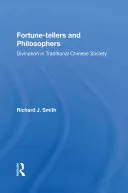
I CHING PAINTINGS
 62
62

I CHING PAINTINGS



Barry Fishman's 'I Ching Paintings' is a luminous and deeply insightful visual exegesis of the ancient Chinese oracle. As Evander Ashcroft, I find Fishman's artistic renderings to be far more than mere depictions; they are potent meditations on the essence of each hexagram. His intuitive grasp of the I Ching's complex symbolism allows him to translate abstract concepts into compelling visual narratives. The work resonates with a palpable esoteric energy, offering practitioners and scholars alike a fresh lens through which to engage with this profound wisdom tradition. It is a rare fusion of artistic mastery and genuine spiritual insight, making it an essential acquisition for anyone seeking to deepen their understanding of the Book of Changes.
📝 Description
62
Barry Fishman's 'I Ching Paintings' interprets the sixty-four hexagrams of the ancient Chinese oracle through visual art.
Barry Fishman’s collection, 'I Ching Paintings,' presents a visual interpretation of the I Ching, the ancient Chinese oracle. Fishman, an artist and practitioner of the I Ching, uses his paintings to represent the sixty-four hexagrams. The artwork aims to convey the symbolism and energies associated with each hexagram, focusing on change, fortune, and interconnectedness. These images are intended as aids for contemplation and self-understanding, inviting viewers to engage with the archetypes found in the Book of Changes. The collection is for individuals interested in the esoteric aspects of divination and the philosophical ideas within the I Ching.
This book situates itself within the tradition of visual aids for esoteric practices, specifically related to Chinese divination. The I Ching, or Book of Changes, has a long history of interpretation, and Fishman's paintings offer a modern artistic approach to understanding its complex system of hexagrams. This approach aligns with methods that use imagery to access deeper meanings and intuitive insights, linking visual contemplation to philosophical and spiritual understanding found in many esoteric traditions.
💡 Why Read This Book?
Delve into the profound visual language of the I Ching. 'I Ching Paintings' offers an unparalleled esoteric perspective, transforming abstract principles into evocative imagery. Ideal for seekers of hidden knowledge, practitioners of divination, and scholars of ancient wisdom who wish to explore the Book of Changes through an artist's soul. Unlock deeper intuitive understanding and connect with the universal flow of change.
⭐ Reader Reviews
Honest opinions from readers who have explored this book.
❓ Frequently Asked Questions
What is the I Ching?
The I Ching, also known as the Book of Changes, is an ancient Chinese divination text and philosophical classic. It is used to understand the forces of the universe and to guide decision-making through its system of hexagrams and their interpretations.
What makes these paintings unique?
Barry Fishman's paintings offer a highly personal and esoteric interpretation of the I Ching hexagrams, translating their complex symbolism into powerful visual meditations that resonate with mystical energy and hidden meanings.
Who is Barry Fishman?
Barry Fishman is an accomplished artist and a dedicated practitioner of the I Ching. His deep immersion in the text allows him to imbue his artwork with profound understanding and spiritual resonance.
Can I use this book for divination?
While primarily an artistic exploration, the paintings can certainly enhance one's intuitive connection to the I Ching, serving as visual aids for meditation and personal divination practice.
What is the primary focus of the artwork?
The artwork focuses on capturing the essence, symbolism, and energetic vibrations of each I Ching hexagram, providing a visual pathway to understanding their profound meanings.
🔮 Key Themes & Symbolism
Visualizing the Archetypes
This theme explores how Fishman's artistic vision translates the abstract archetypal forces within the I Ching into tangible, evocative imagery. The paintings serve as visual keys, unlocking deeper comprehension of the hexagrams' inherent meanings, their dynamic interplay, and their profound influence on human experience. Readers will discover how color, form, and composition are employed to represent concepts such as creation, transformation, harmony, and conflict, offering a unique pathway to understanding these ancient cosmic principles.
The Alchemy of Change
Central to the I Ching is the concept of constant flux and transformation. Fishman's art captures this alchemical dance, depicting the ceaseless ebb and flow of yin and yang. The paintings illustrate the inherent wisdom in embracing change, understanding its cyclical nature, and finding opportunity within apparent chaos. This theme examines how the visual narrative encourages a mindful acceptance of life's transitions, fostering resilience and a deeper connection to the universal process of becoming.
Hidden Knowledge and Intuition
The I Ching has long been considered a repository of hidden knowledge, accessible through intuition and contemplative practice. Fishman's 'I Ching Paintings' act as a conduit for this esoteric wisdom. The artwork is designed to bypass the purely intellectual, engaging the viewer's inner sight and intuitive faculties. This theme examines how the paintings serve as a catalyst for personal insight, encouraging readers to look beyond the surface and perceive the subtle energies and deeper truths embedded within the Book of Changes.
💬 Memorable Quotes
Direct passages from the work, attributed to the author.
“The hexagram speaks not only to the mind, but to the soul.”
— Emphasizes the spiritual and intuitive dimension of the I Ching, suggesting that Fishman's art aims to bypass rational thought and connect directly with the deeper, more profound aspects of human consciousness.
“Color is the language of cosmic vibration.”
— This interpretation points to Fishman's deliberate use of color to convey the energetic and vibrational qualities of the I Ching hexagrams, suggesting that hues are employed to represent specific energetic states and cosmic forces.
“Through form, we perceive the unseen.”
— Suggests that the visual structures and shapes in the paintings are designed to reveal abstract concepts and hidden truths that are not readily apparent through ordinary perception.
💡 Key Ideas
Editorial paraphrase of the work's core concepts — not direct quotes.
Within each stroke, a universe unfolds.
This quote highlights the profound depth and complexity contained within even a single brushstroke in Fishman's work, suggesting that each element carries significant symbolic weight and opens up vast domains of meaning.
Embrace the ceaseless dance of becoming.
This quote captures the core philosophy of the I Ching regarding constant change, encouraging acceptance and active participation in the dynamic, ever-evolving nature of existence.
🌙 Esoteric Significance
Tradition
The I Ching is a central to East Asian esoteric traditions, particularly within Chinese Taoism and its philosophical offshoots. Its cosmological framework, emphasizing the interplay of yin and yang, Heaven and Earth, and the Five Elements, aligns with broader principles found in geomancy (Feng Shui), Traditional Chinese Medicine, and various schools of alchemy. The text's predictive and advisory functions are rooted in the belief that the universe operates according to discernible patterns, accessible through divination.
Symbolism
The core symbolism of the I Ching lies in its 64 hexagrams, each composed of six lines representing the dynamic forces of yin and yang. These lines and their combinations symbolize a vast array of natural phenomena, human situations, and archetypal energies. The trigrams (three-line combinations) like Heaven (☰), Earth (☷), Water (☵), and Fire (☲) are foundational, their interactions creating the hexagrams that describe every conceivable state of existence and transition.
Modern Relevance
In the modern era, the I Ching continues to offer profound guidance for navigating complexity and uncertainty. Its emphasis on change, adaptability, and understanding underlying patterns resonates deeply in a rapidly evolving world. Esoterically, it serves as a tool for self-discovery, intuitive development, and a deeper connection to universal principles. Barry Fishman's artistic rendering brings this ancient wisdom to life for a contemporary audience, making its useful insights more accessible and visually engaging for seekers of all backgrounds.
👥 Who Should Read This Book
This book is an essential acquisition for anyone drawn to the mystical and philosophical depths of the I Ching. Novice practitioners will find the visual interpretations clear, providing a more intuitive entry point into the hexagrams. Experienced diviners and scholars will appreciate Fishman's unique perspective, which offers fresh insights and a renewed appreciation for the text's symbolic richness. Seekers of esoteric wisdom, artists interested in the intersection of spirituality and visual expression, and anyone looking for a profound tool for self-reflection and understanding life's inherent changes will find immense value within these pages.
📜 Historical Context
The I Ching, originating in ancient China, boasts a history spanning over three millennia, making it one of the world's oldest and most influential texts. Its philosophical foundations are deeply intertwined with Taoism and Confucianism, evolving through dynasties and influencing governance, warfare, and personal cultivation. The text's transmission and interpretation have been a continuous scholarly and esoteric endeavor, with commentaries from figures like Confucius and his disciples shaping its understanding. The development of hexagrams, derived from combinations of yin (broken) and yang (solid) lines, represents a sophisticated system of symbolic logic. This rich historical collection provides the bedrock upon which Barry Fishman's contemporary artistic interpretations are built, bridging ancient wisdom with modern visual expression.
📔 Journal Prompts
Meditate on the colors used in a particular hexagram painting. What emotions or energies do they evoke in you?
Choose a hexagram painting that appeals to your current life situation. What message do you believe it holds for you?
Consider the interplay of light and shadow in a painting. How might this reflect the balance of yin and yang in your own experiences?
If you were to create your own painting for a hexagram, what elements would you include and why?
Reflect on a time when you resisted change. How does the visual narrative of a 'change' hexagram painting offer a different perspective?
🗂️ Glossary
Hexagram
A figure composed of six horizontal lines, each either solid (yang) or broken (yin). There are 64 unique hexagrams in the I Ching, representing fundamental states of existence and change.
Trigram
A basic figure composed of three horizontal lines, either solid or broken. The eight trigrams (e.g., Heaven, Earth, Water, Fire) are the building blocks of the hexagrams.
Yin
In I Ching philosophy, yin represents the feminine, passive, dark, receptive, and yielding aspects of reality. Symbolized by a broken line ( -- ).
Yang
In I Ching philosophy, yang represents the masculine, active, light, creative, and assertive aspects of reality. Symbolized by a solid line ( — ).
Divination
The practice of seeking knowledge of the future or the unknown by supernatural means. In the context of the I Ching, it involves casting coins or yarrow stalks to generate hexagrams.
This book appears in 3 collections
🔮 Readers Also Liked
Browse all →







From the “Tarot” Collection
View all →









More Free Divination & Tarot Books
View all →