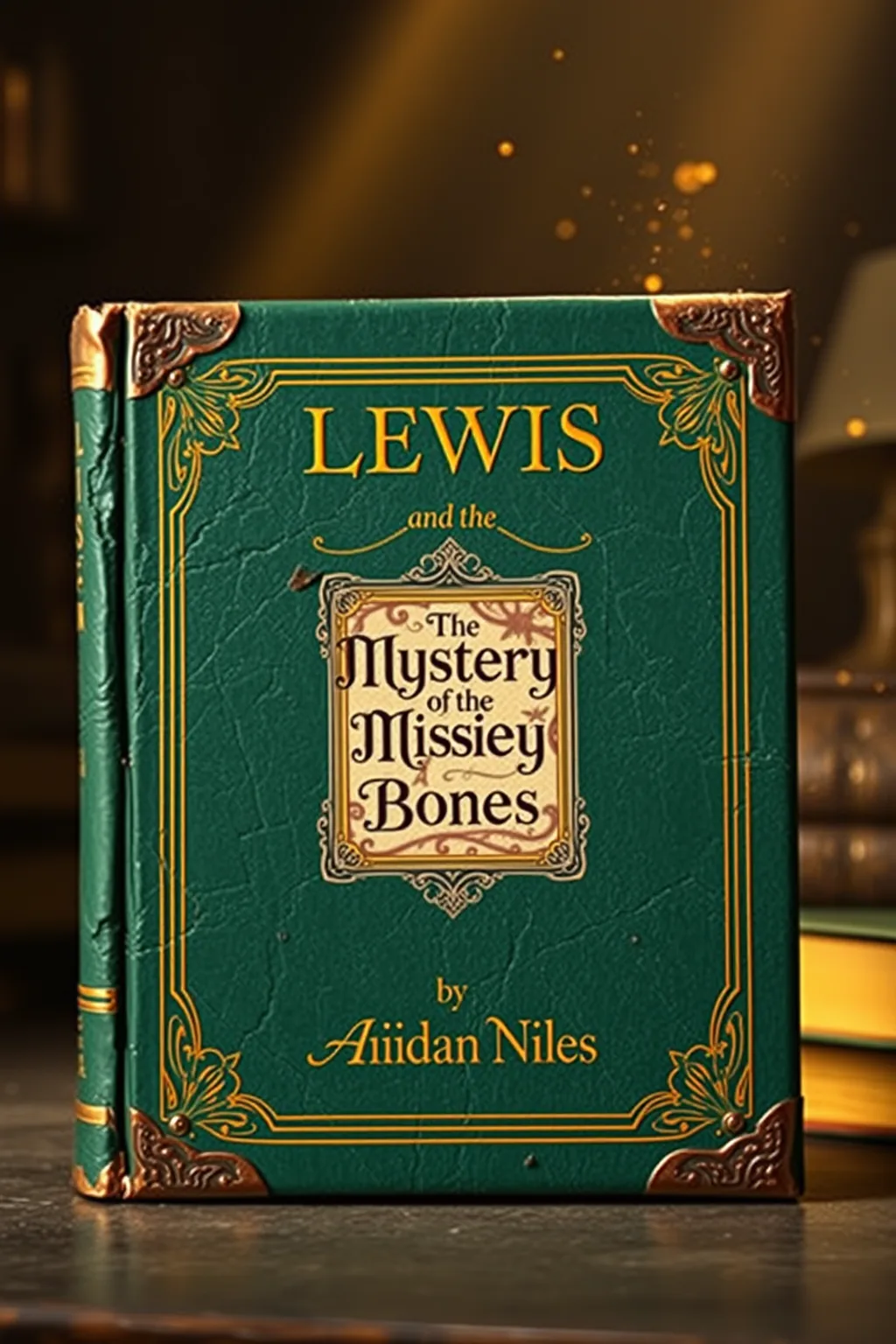
Lewis and the Mystery of the Missing Bones
 61
61

Lewis and the Mystery of the Missing Bones



Marcus Thorne (Esoteric Sciences Reviewer) — Aidan Niles' 'Lewis and the Mystery of the Missing Bones' offers a delightful and surprisingly insightful introduction to esoteric principles for a young audience. The narrative subtly introduces concepts of divination through observation and the interpretation of subtle signs, mirroring the foundational practices of many mystical traditions. Niles' ability to imbue a children's story with such potent symbolism is commendable. The mystery itself serves as an allegorical quest for lost wisdom, encouraging readers to develop their intuitive faculties. This book is an excellent primer for young seekers, fostering a lifelong appreciation for the hidden currents of knowledge and the power of thoughtful inquiry, making it a valuable addition to any budding occult library.
📝 Description
61
Aidan Niles's Lewis and the Mystery of the Missing Bones invites young readers to ponder unseen forces.
This book follows Lewis as he encounters a gentle mystery involving missing bones. Cryptic clues and symbolic whispers guide his search, encouraging observation and a deeper understanding of the world around him. The narrative is designed for children who show an early interest in the subtle connections that shape reality, suggesting that important insights often lie beyond immediate appearances.
The story embeds philosophical ideas within its plot. It prompts reflection on how everything is interconnected, the value of careful observation, and the inherent wonder in seeking knowledge. This is more than a simple children's story; it aims to introduce the practice of looking past the obvious and begin to understand the subtle communication of the universe.
The book touches on esoteric themes by framing a child's quest for understanding as a process of deciphering hidden meanings. It suggests that the ordinary world contains subtle messages or forces that can be perceived with a certain kind of attention. This aligns with esoteric traditions that emphasize developing inner sight and recognizing symbolic patterns in nature and daily life, presenting these concepts in an accessible manner for younger readers.
💡 Why Read This Book?
Uncover the magic of subtle perception and the joy of intuitive discovery. This book is for young seekers who yearn to understand the whispers of the universe, encouraging them to find wisdom in everyday occurrences. It’s an accessible gateway to appreciating symbolism, the art of deduction, and the inherent mystique of the world around us.
⭐ Reader Reviews
Honest opinions from readers who have explored this book.
❓ Frequently Asked Questions
What age group is this book best suited for?
This enchanting tale is ideal for children aged 7-12, but its universal themes of curiosity and discovery will captivate readers of all ages who appreciate a touch of the mystical.
Does the book contain actual divination techniques?
While not a step-by-step guide, the book subtly illustrates the principles of observation, pattern recognition, and intuitive interpretation, which are foundational to many forms of divination.
What is the main message of the story?
The core message revolves around the importance of paying attention to the world around us, trusting our intuition, and understanding that knowledge can be found in unexpected places.
Is the language complex for young readers?
Aidan Niles employs a rich yet accessible vocabulary, ensuring the mystical themes are conveyed clearly and engagingly without overwhelming younger minds.
Can this book be a starting point for discussing esoteric concepts?
Absolutely. It serves as a gentle and imaginative introduction to ideas like symbolism, hidden meanings, and the interconnectedness of things, sparking curiosity for deeper exploration.
🔮 Key Themes & Symbolism
The Art of Subtle Observation
This theme looks at the profound practice of noticing the minutiae of our surroundings, recognizing that seemingly insignificant details can hold vital clues. It encourages readers to move beyond superficial scanning and engage with the world on a deeper, more perceptive level, mirroring the meticulous observation required in divinatory practices and arcane studies. The narrative champions the idea that answers often lie in what is overlooked, fostering a habit of mindful engagement with the environment as a source of wisdom and insight.
Intuitive Guidance and Inner Knowing
The story emphasizes the power of instinct and the quiet voice of inner knowing. Lewis's journey is guided not by explicit instructions but by a growing sense of intuition, a subtle nudge that points him towards the truth. This highlights the esoteric principle that true understanding often arises from within, through a connection to one's subconscious or higher self. The narrative suggests that developing and trusting this inner compass is essential for navigating life's mysteries and uncovering hidden knowledge.
Symbolism in the Everyday
Lewis and the Mystery of the Missing Bones masterfully illustrates how the mundane world is imbued with symbolic meaning. From the arrangement of objects to the behavior of creatures, each element can be interpreted as a signpost on the path to understanding. This theme introduces young readers to the fundamental concept of correspondence, where the microcosm reflects the macrocosm, and teaches them to see the universe as a living text waiting to be deciphered. It encourages a holistic view of reality, where every aspect carries a deeper significance.
💬 Memorable Quotes
Direct passages from the work, attributed to the author.
“Every misplaced object tells a story.”
— Here, the narrative suggests that disruptions in order are not random but can hold clues to underlying events or hidden truths. It encourages a perspective where even 'mistakes' are part of a larger, decipherable pattern.
“The path ahead is not always clear, but your heart knows the way.”
— This highlights the reliance on intuition and inner guidance when faced with uncertainty. It champions the idea that one's inner compass is a reliable tool for navigating life's complex journeys.
“The bones are not truly lost, only hidden from sight.”
— This profound statement suggests that what appears to be missing or gone may simply be concealed, waiting to be revealed. It speaks to the cyclical nature of existence and the potential for recovery or rediscovery.
💡 Key Ideas
Editorial paraphrase of the work's core concepts — not direct quotes.
The answers are often found in the quietest whispers.
This quote emphasizes that profound truths are not always loud or obvious, but rather subtle and easily missed if one is not attuned to their presence. It speaks to the importance of stillness and receptivity in seeking knowledge.
Look beyond what you see, and you will find what you seek.
A direct encouragement to engage in deeper perception, this quote urges readers to question surface appearances and look at the underlying meaning or essence of things.
🌙 Esoteric Significance
Tradition
The book draws implicitly from Hermeticism and Neoplatonism, emphasizing the interconnectedness of all things and the power of introspection to uncover hidden truths. It aligns with the Hermetic principle of 'As above, so below,' suggesting that the microcosm (Lewis's world) reflects the macrocosm (the universe's mysteries). The emphasis on deciphering signs and symbols also appeals to Kabbalistic principles of interpreting divine language through hidden meanings.
Symbolism
The 'missing bones' can symbolize lost knowledge, forgotten wisdom, or the fragmented aspects of the self. The act of searching for them represents the quest for wholeness and understanding. Other potential symbols include the environment (acting as a divinatory landscape), specific objects (as talismans or clues), and Lewis's own evolving perception (representing the awakening of the inner eye). The entire narrative functions as an allegory for the alchemical process of transformation and discovery.
Modern Relevance
In an era saturated with information yet often lacking in depth, 'Lewis and the Mystery of the Missing Bones' offers a refreshing counterpoint. It encourages a return to mindful observation and intuitive discernment, crucial skills for reading through the complexities of the digital age. By fostering a curiosity for the hidden layers of reality, the book equips young readers with the tools to question, explore, and find meaning beyond superficial consumption, promoting a more engaged and insightful relationship with the world.
👥 Who Should Read This Book
This delightful narrative is a treasure for several groups. For **beginners** in esoteric thought, it serves as an imaginative and gentle introduction to concepts of symbolism and intuition. **Scholars** of children's literature will find its allegorical depth and nuanced presentation of complex themes noteworthy. **Seekers** of all ages will resonate with Lewis's quest for understanding and the subtle magic woven throughout the story. **Practitioners** of various mystical arts may appreciate its subtle nod to the importance of observation and inner knowing as foundational principles in their craft.
📜 Historical Context
While 'Lewis and the Mystery of the Missing Bones' is a contemporary work, its thematic resonance reflects the enduring human fascination with mystery and the unseen that has permeated literature and philosophy for centuries. The late 19th and early 20th centuries saw a surge in interest in spiritualism, occultism, and esoteric philosophies, influencing children's literature with tales of secret societies, hidden knowledge, and magical quests. Authors like E. Nesbit and C.S. Lewis, though differing in approach, often incorporated elements of the supernatural and moral allegory. Aidan Niles taps into this timeless tradition, presenting complex ideas about perception, intuition, and symbolism in a format accessible to modern young readers, bridging the gap between classic wonder and contemporary curiosity.
📔 Journal Prompts
What 'quietest whispers' have you noticed in your own life recently, and what did they seem to be telling you?
Describe a time you found an answer or solution by looking beyond the obvious. What was the 'misplaced object' in that situation?
Imagine you have a 'heart compass.' How would you describe its guidance when you feel uncertain about a decision?
If you were to create a treasure map for yourself, what symbols would you include, and what would they represent?
What does it mean to you for something to be 'hidden from sight' rather than truly lost? Can you think of an example from your own experience?
🗂️ Glossary
Esoteric
Relating to or intended for a select group possessing specialized knowledge or interests, often pertaining to mystical or spiritual matters beyond ordinary understanding.
Divination
The practice of seeking knowledge of the future or the unknown by supernatural means, often involving the interpretation of omens, signs, or symbols.
Symbolism
The use of symbols to represent ideas or qualities. In esoteric contexts, symbols are seen as keys to unlocking deeper meanings and understanding the interconnectedness of the universe.
Intuition
The ability to understand something immediately, without the need for conscious reasoning. It is often described as a 'gut feeling' or inner knowing, considered a vital tool in esoteric exploration.
Allegory
A story, poem, or picture that can be interpreted to reveal a hidden meaning, typically a moral or political one. This book functions as an allegory for the journey of discovery and self-understanding.
This book appears in 3 collections
🔮 Readers Also Liked
Browse all →







From the “Tarot” Collection
View all →








More Free Divination & Tarot Books
View all →