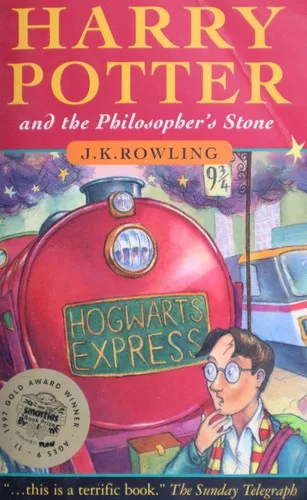
Harry Potter and the Philosopher's Stone
 80
80

Harry Potter and the Philosopher's Stone


Harry Potter and the Philosopher's Stone is a masterclass in blending esoteric themes with compelling storytelling. Rowling's meticulous world-building and rich symbolism make it a standout in the realm of occult literature. The novel's exploration of alchemy and hermeticism is both accessible and profound, offering readers a gateway into deeper mystical studies. The characters' journeys of self-discovery and the overcoming of supernatural challenges resonate deeply with seekers of hidden knowledge. This book is a must-read for anyone interested in the intersection of magic and philosophy.
📝 Description
80
Published in 1997, Harry Potter and the Philosopher's Stone introduced a generation to magic.
The first Harry Potter novel follows its titular character, Harry, as he learns of his magical heritage and begins his education at Hogwarts School of Witchcraft and Wizardry. He discovers a plot involving the titular Philosopher's Stone, an alchemical artifact said to grant eternal life and create gold. Alongside his new friends Ron Weasley and Hermione Granger, Harry confronts the dark wizard Lord Voldemort, who seeks the Stone for his own resurrection.
The narrative uses the magical world as a setting to examine themes of friendship, courage, and the choices individuals make. Hogwarts itself is depicted as a place of learning and ancient secrets, populated by various magical creatures and spirits. The book establishes the core conflict between good and evil that will shape the subsequent series.
While primarily a fantasy story for young adults, the novel draws upon alchemical symbolism, particularly the creation of the Philosopher's Stone as a metaphor for spiritual transformation and perfection. The idea of hidden knowledge, parallel worlds, and the inherent magical potential within individuals echoes themes found in hermetic traditions and Western esotericism. The concept of a magical school also mirrors historical ideas of hidden orders and academies dedicated to arcane studies, presenting these concepts within a widely accessible narrative framework.
💡 Why Read This Book?
Read Harry Potter and the Philosopher's Stone to delve into the enchanting world of alchemy and hermeticism. Ideal for seekers of hidden knowledge, scholars of the occult, and practitioners of mystical arts, this book offers a rich tapestry of symbolism and philosophical insights. Discover the power of self-discovery and the magic that lies within us all.
⭐ Reader Reviews
Honest opinions from readers who have explored this book.
❓ Frequently Asked Questions
What makes Harry Potter and the Philosopher's Stone a significant occult text?
The novel's exploration of alchemy and hermeticism, along with its rich symbolism and themes of self-discovery, make it a significant work in the realm of occult literature.
Is this book suitable for beginners in the mystical arts?
Absolutely, the book's accessible narrative and deep symbolism make it an excellent introduction to the world of esoteric studies.
What are the key esoteric themes in this book?
The book delves into alchemy, hermeticism, and the quest for hidden knowledge, all wrapped in a narrative of overcoming obstacles and self-discovery.
How does the book explore the concept of the Philosopher's Stone?
The Philosopher's Stone serves as a symbol of immortality and transformation, representing the ultimate quest for hidden knowledge and mystical power.
What kind of readers will benefit from this book?
This book is ideal for seekers of hidden knowledge, scholars of the occult, and practitioners of mystical arts, as well as anyone interested in the intersection of magic and philosophy.
🔮 Key Themes & Symbolism
Alchemy and Transformation
The novel's central quest for the Philosopher's Stone embodies the alchemical journey of transformation, where base elements are turned into gold, symbolizing the pursuit of hidden knowledge and personal growth.
Hermeticism and Hidden Knowledge
Rowling's world is steeped in hermetic principles, where ancient secrets and hidden wisdom are revealed through magical rituals and esoteric practices, inviting readers to explore the mysteries of the occult.
Overcoming Obstacles
The characters' journeys are marked by challenges and trials that test their resolve and resilience, reflecting the esoteric path of self-discovery and the overcoming of inner and outer obstacles.
💡 Key Ideas
Editorial paraphrase of the work's core concepts — not direct quotes.
Happiness can be found even in the darkest of times if one only remembers to turn on the light.
This quote underscores the hermetic principle of light overcoming darkness, symbolizing the power of knowledge and inner strength.
It does not do to dwell on dreams and forget to live.
This line emphasizes the importance of balancing mystical aspirations with practical living, a key theme in esoteric traditions.
The truth. It is a beautiful and terrible thing, and should therefore be treated with great caution.
This quote highlights the dual nature of hidden knowledge, which can be both enlightening and dangerous, reflecting the complexities of the occult.
Do not pity the dead... Harry. Pity the living, and above all, those who live without love.
This passage studies the esoteric concept of the power of love and its transformative potential, a central theme in many mystical traditions.
It is our choices, Harry, that show what we truly are, far more than our abilities.
This quote emphasizes the hermetic principle of free will and the power of personal choices in shaping one's destiny, a fundamental aspect of esoteric philosophy.
🌙 Esoteric Significance
Tradition
The book belongs to the hermetic tradition, focusing on the quest for hidden knowledge and the transformation of the self through mystical practices and esoteric rituals.
Symbolism
Key symbols include the Philosopher's Stone, representing the ultimate quest for immortality and transformation, and the magical artifacts that embody ancient secrets and hidden wisdom.
Modern Relevance
Today, the book continues to inspire seekers of hidden knowledge and practitioners of the occult, offering a body of symbolism and philosophical insights that resonate with modern readers.
👥 Who Should Read This Book
Beginners in the mystical arts will find this book an accessible and engaging introduction to esoteric themes. Scholars of the occult will appreciate its deep symbolism and philosophical insights. Spiritual seekers will be drawn to its exploration of self-discovery and the quest for hidden knowledge. Practitioners of the mystical arts will find it a valuable resource for understanding the hermetic principles that underpin many magical practices.
📜 Historical Context
Published in 1997, Harry Potter and the Philosopher's Stone emerged during a time of renewed interest in mystical and occult themes. The novel's success marked a significant cultural shift, bringing esoteric ideas into mainstream literature and inspiring a generation of readers to explore hidden knowledge. Its influence can be seen in the proliferation of occult and metaphysical literature, as well as in the growing interest in magical and mystical practices.
📔 Journal Prompts
Reflect on a time when you sought hidden knowledge and how it transformed your understanding of the world.
Consider the role of obstacles in your spiritual journey and how overcoming them has shaped your path.
Explore the concept of alchemy in your own life and how you might transform base elements into gold.
Think about the power of love and how it can be a source of strength and transformation in your life.
Write about a magical artifact that symbolizes hidden wisdom and its significance in your spiritual journey.
🗂️ Glossary
Alchemy
The ancient practice of transforming base metals into gold, symbolizing the quest for hidden knowledge and personal transformation.
Hermeticism
A philosophical and spiritual tradition based on the writings of Hermes Trismegistus, focusing on the pursuit of hidden wisdom and mystical practices.
Philosopher's Stone
A legendary artifact in alchemy that grants immortality and the power to transform base metals into gold, symbolizing the ultimate quest for hidden knowledge.
Magical Artifacts
Objects imbued with magical properties, often embodying ancient secrets and hidden wisdom in esoteric traditions.
Esoteric Practices
Mystical rituals and practices aimed at revealing hidden knowledge and achieving spiritual transformation.
This book appears in 3 collections
🔮 Readers Also Liked
Browse all →







More by J. K. Rowling
All books →


From the “Hermeticism” Collection
View all →






More Free Alchemy & Hermeticism Books
View all →