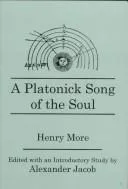
A platonick song of the soul
 61
61

A platonick song of the soul


In A Platonick Song of the Soul, Henry More masterfully weaves the doctrines of Neoplatonism into a poetic tapestry that is both intellectually stimulating and spiritually uplifting. This first complete modern edition provides readers with an unparalleled opportunity to explore the immaterial and immortal nature of the soul through the lens of More's baroque poetry. While the style may occasionally feel strenuous, the depth of esoteric insights and philosophical significance make it a must-read for those delving into the mysteries of the soul. Alaric Kestrel
📝 Description
61
Henry More published A Platonick Song of the Soul in 1647, detailing the soul's immaterial nature through Spenserian stanzas.
Henry More's A Platonick Song of the Soul, first published in 1647, uses Spenserian stanzas to articulate a Neoplatonic understanding of the soul. More, a prominent Cambridge Platonist, describes the soul as immaterial and immortal. The poem employs rich baroque imagery, presenting the soul as a microcosm containing extraordinary powers. This work invites contemplation of hidden knowledge and symbolism within Neoplatonism.
It is structured as a spiritual journey, encouraging readers to consider the deeper meanings embedded in its verse. More's poetry connects philosophical concepts with mystical inquiry, aiming to illuminate the soul's eternal quest for understanding. This edition makes the text accessible for those interested in the intersection of philosophy and esoteric literature.
A Platonick Song of the Soul belongs to the English Renaissance's engagement with Neoplatonism and Hermeticism. Henry More was a key figure in the Cambridge Platonists, a group that sought to reconcile Platonic philosophy with Christian theology and explore mystical ideas. The book reflects a broader interest in the soul's nature, its connection to the divine, and the hidden order of the cosmos prevalent in esoteric traditions of the 17th century. It stands as an example of how philosophical inquiry could be expressed through poetic and allegorical forms.
💡 Why Read This Book?
Read A Platonick Song of the Soul to immerse yourself in the rich traditions of Neoplatonism and its profound influence on mystical thought. Ideal for seekers of hidden knowledge, scholars of esoteric literature, and practitioners of spiritual alchemy, this poetic journey offers a unique blend of philosophy and poetry that resonates with the soul's eternal quest for enlightenment.
⭐ Reader Reviews
Honest opinions from readers who have explored this book.
❓ Frequently Asked Questions
What is the main theme of A Platonick Song of the Soul?
The main theme is the immateriality and immortality of the soul, explored through Neoplatonic doctrines and baroque poetry.
Who is the intended audience for this book?
The intended audience includes seekers of esoteric wisdom, scholars of mystical literature, and practitioners of spiritual alchemy.
What makes this edition unique?
This is the first complete modern edition of Henry More's long philosophical poem, offering readers a fresh and comprehensive look at his work.
How does the book's poetic style contribute to its themes?
The Spenserian stanzas and baroque imagery create a rich and evocative atmosphere that enhances the exploration of the soul's extraordinary powers.
What is the historical significance of this work?
Published in 1647, this work is an early example of Cambridge Platonism and has influenced the development of mystical and philosophical thought.
🔮 Key Themes & Symbolism
The Immortality of the Soul
More's work studies the Neoplatonic belief in the soul's immortality, presenting it as an eternal entity that transcends the physical realm. Through vivid poetry, he explores the soul's journey beyond the material world, inviting readers to contemplate their own spiritual existence.
Neoplatonic Philosophy
A Platonick Song of the Soul is deeply rooted in Neoplatonic philosophy, which emphasizes the oneness of the divine and the soul's ascent towards enlightenment. More's poetic exploration of these ideas offers a unique perspective on the soul's relationship with the divine.
Symbolism and Hidden Knowledge
The poem is rich in symbolism and hidden knowledge, reflecting the esoteric traditions of Neoplatonism. Readers are invited to decipher the layers of meaning embedded in the text, uncovering the profound wisdom that lies within.
💬 Memorable Quotes
Direct passages from the work, attributed to the author.
“In the depths of silence, truth is found,”
— More suggests that true knowledge is discovered in quiet contemplation, away from the distractions of the physical realm.
“In the garden of the mind, wisdom blooms,”
— More uses the metaphor of a garden to represent the mind's potential for growth and enlightenment through the cultivation of wisdom.
💡 Key Ideas
Editorial paraphrase of the work's core concepts — not direct quotes.
The soul, a spark divine, in darkness lies,
This line emphasizes the soul's divine origin and its hidden potential, waiting to be ignited in the darkness of the material world.
The spirit soars on wings of light,
This passage highlights the soul's ability to transcend the limitations of the body and soar towards spiritual enlightenment.
The heart, a temple of the divine,
This line underscores the sacred nature of the heart, which serves as a dwelling place for the divine spirit within each individual.
🌙 Esoteric Significance
Tradition
A Platonick Song of the Soul belongs to the Hermetic tradition, which emphasizes the unity of all things and the soul's divine origin. More's work draws on Neoplatonic principles, integrating them with Christian mysticism to create a unique spiritual path.
Symbolism
Key symbols in the poem include the soul's journey through darkness towards light, the garden of the mind, and the heart as a temple of the divine. These symbols represent the soul's quest for enlightenment and its connection to the divine.
Modern Relevance
Today, More's work continues to inspire seekers of esoteric wisdom and practitioners of spiritual alchemy. His exploration of the soul's immateriality and immortality appeals to modern readers, offering a timeless perspective on the human condition and the quest for spiritual enlightenment.
👥 Who Should Read This Book
Beginners interested in esoteric traditions will find A Platonick Song of the Soul an accessible entry point into Neoplatonic philosophy and mystical literature. Scholars of mystical and philosophical thought will appreciate the depth of More's insights and the historical significance of his work. Spiritual seekers and practitioners of spiritual alchemy will be drawn to the poem's strong symbolism and exploration of the soul's divine nature. For those interested in the intersection of poetry and philosophy, this work offers a unique and enriching experience.
📜 Historical Context
Published in 1647, A Platonick Song of the Soul emerged during a time of significant intellectual and spiritual ferment in England. The Cambridge Platonists, of which Henry More was a prominent member, sought to reconcile the mystical traditions of Neoplatonism with the rationalism of the Enlightenment. This work, written in Spenserian stanzas, reflects the baroque sensibilities of the era, blending elaborate poetic imagery with profound philosophical insights. More's exploration of the soul's immateriality and immortality had a lasting influence on both mystical and philosophical thought, inspiring generations of seekers and scholars.
📔 Journal Prompts
Reflect on the concept of the soul's immortality. How does this idea influence your understanding of life and death?
Explore the symbolism of the garden of the mind. What does this metaphor mean to you, and how can you cultivate wisdom in your own mind?
Consider the idea of the heart as a temple of the divine. How can you honor and nurture the divine spirit within yourself?
Explore the Neoplatonic belief in the oneness of the divine. How does this concept resonate with your own spiritual beliefs?
Reflect on the journey of the soul through darkness towards light. What challenges and obstacles have you faced on your own spiritual path?
🗂️ Glossary
Neoplatonism
A philosophical and spiritual tradition that builds upon the ideas of Plato, emphasizing the oneness of the divine and the soul's ascent towards enlightenment.
Spenserian stanzas
A poetic form named after Edmund Spenser, characterized by nine lines with a specific rhyme scheme and meter.
Baroque imagery
Elaborate and ornate imagery, often used to convey complex emotions and ideas in a dramatic and evocative manner.
Hermetic tradition
A mystical and esoteric tradition that emphasizes the unity of all things and the soul's divine origin, drawing on the teachings of Hermes Trismegistus.
Cambridge Platonists
A group of 17th-century philosophers and theologians associated with the University of Cambridge, known for their integration of Neoplatonic and Christian mystical traditions.
This book appears in 13 collections
🔮 Readers Also Liked
Browse all →








More by More, Henry
All books →
From the “Remote Viewing” Collection
View all →







More Free Alchemy & Hermeticism Books
View all →