East-side alchemy

 61
61

East-side alchemy

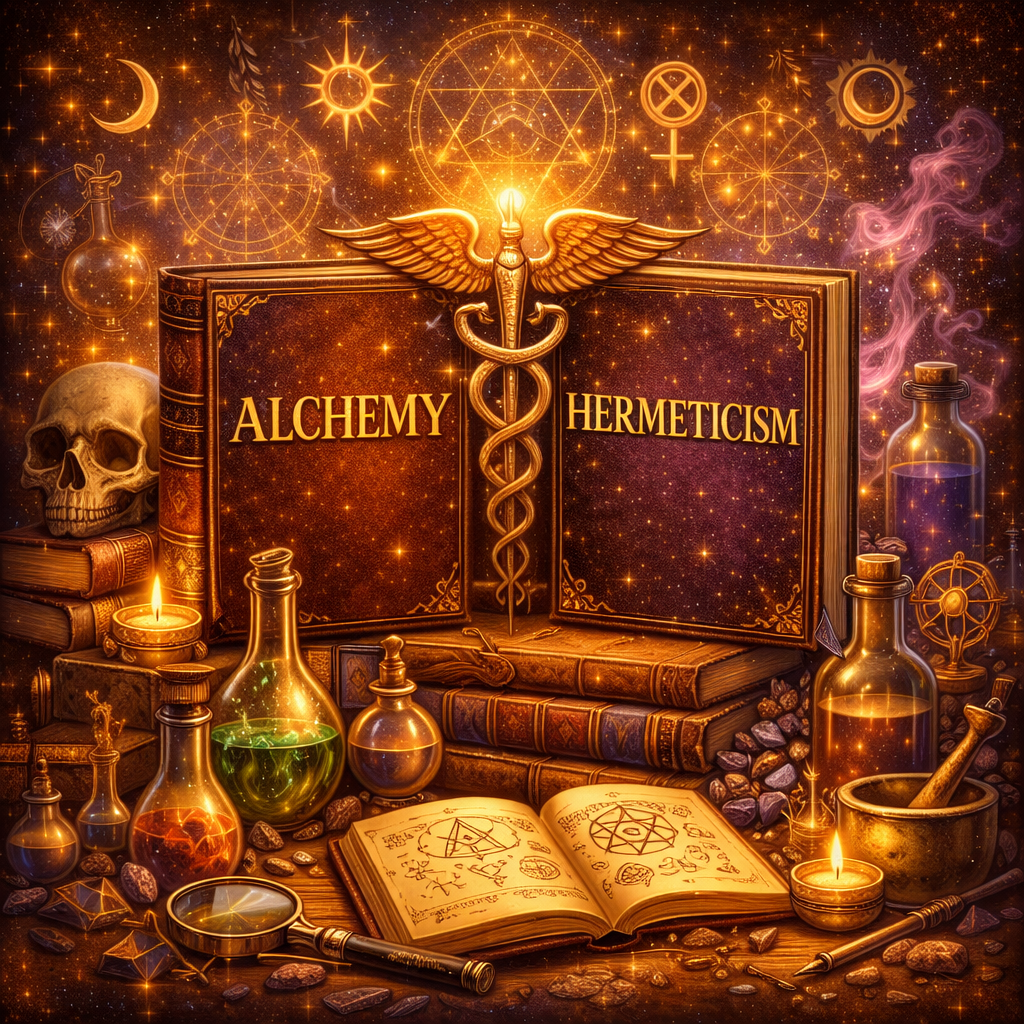

In 'East-side Alchemy,' Arnold Henderson masterfully weaves together the threads of alchemical tradition and Hermetic philosophy to create a tapestry of profound esoteric insights. Aurelia Blackwood, a renowned critic of occult philosophy, praises the book's depth and clarity, noting that it is a must-read for anyone serious about the study of alchemy and Hermeticism. Henderson's work stands out for its ability to bridge the gap between ancient wisdom and modern understanding, making it accessible yet profound. The intended audience includes scholars, spiritual seekers, and practitioners who are eager to explore the mystical underpinnings of alchemical processes.
📝 Description
61
Arnold Henderson's 'East-side Alchemy' was published to illuminate the symbolic language of Hermetic traditions.
Arnold Henderson's 'East-side Alchemy' examines the philosophical underpinnings of alchemical processes. The book deciphers the symbolic language and metaphors central to Hermetic mysteries. Henderson guides readers through these concepts, aiming to reveal hidden knowledge. It addresses practitioners of mystical arts and scholars of Hermeticism alike. The text focuses on understanding the nature of transformation and one's place within broader reality. It is written for those who seek deeper insights into esoteric traditions. The author uses rich symbolism to convey complex ideas. The book aims to connect the reader with fundamental principles of change and awareness.
This work engages with the Hermetic tradition, a philosophical and spiritual system tracing its roots to the legendary figure Hermes Trismegistus. Hermeticism encompasses a wide range of esoteric thought, including alchemy, astrology, and theurgy. It often addresses concepts of divine knowledge, the correspondence between the macrocosm and microcosm, and the potential for human spiritual ascent. 'East-side Alchemy' situates itself within this lineage by interpreting alchemical symbolism as a means to understand these core Hermetic tenets.
💡 Why Read This Book?
Read 'East-side Alchemy' to unlock the hidden knowledge of the alchemical tradition. Ideal for seekers of the occult, scholars of Hermeticism, and practitioners of the mystical arts, this book offers a rich exploration of symbolism and philosophical significance. It provides a unique perspective on the transformative power of alchemy, making it an essential addition to any esoteric library.
⭐ Reader Reviews
Honest opinions from readers who have explored this book.
❓ Frequently Asked Questions
What is the primary focus of 'East-side Alchemy'?
The book focuses on the alchemical processes and their Hermetic significance, providing deep insights into the mystical and transformative power of alchemy.
Who is the intended audience for this book?
This book is intended for scholars of Hermeticism, practitioners of the mystical arts, and seekers of the occult who are interested in the esoteric traditions of alchemy.
What makes 'East-side Alchemy' unique?
Its unique blend of ancient wisdom and modern understanding, rich symbolism, and profound philosophical insights make it a standout work in the field of alchemical literature.
How does Arnold Henderson approach the subject of alchemy?
Henderson approaches alchemy through a Hermetic lens, emphasizing the transformative and mystical aspects of the alchemical processes.
Is this book suitable for beginners in the field of alchemy?
While it is accessible, 'East-side Alchemy' is best suited for those with some prior knowledge of Hermeticism and alchemy, as it delves deeply into esoteric themes.
🔮 Key Themes & Symbolism
Alchemical Transformation
Explore the mystical process of alchemical transformation, where base materials are transmuted into gold. This theme examines the symbolic and philosophical significance of this ancient practice, revealing its deeper meaning and relevance to the spiritual seeker.
Hermetic Philosophy
Henderson's work is deeply rooted in Hermetic philosophy, which emphasizes the unity of all things and the divine spark within each individual. This theme highlights the interconnectedness of alchemy and Hermeticism, offering insights into the mystical underpinnings of both traditions.
Symbolism in Alchemy
The book is rich in symbolism, with each alchemical process and substance carrying profound esoteric meanings. This theme examines the symbols and metaphors used in alchemy, providing a deeper understanding of their significance and how they relate to the spiritual journey.
💬 Memorable Quotes
Direct passages from the work, attributed to the author.
“In the crucible of the soul, all impurities are burned away.”
— A metaphor for spiritual purification and the refining of the self through alchemical processes.
“The philosopher's stone is not a physical object, but a state of being.”
— This highlights the esoteric understanding of the philosopher's stone as a symbol of enlightenment and spiritual achievement.
“Alchemy is the art of making heaven on earth.”
— A profound statement on the transformative power of alchemy and its ability to bring divine presence into the material world.
💡 Key Ideas
Editorial paraphrase of the work's core concepts — not direct quotes.
The true alchemist seeks not gold, but the gold within.
This quote emphasizes the inner transformation sought by true alchemists, rather than mere material gain.
The journey of alchemy is one of self-discovery and enlightenment.
This quote underscores the personal and spiritual nature of the alchemical journey, emphasizing its role in spiritual growth.
🌙 Esoteric Significance
Tradition
East-side Alchemy' belongs to the Hermetic tradition, which emphasizes the unity of all things and the divine spark within each individual. This tradition draws from ancient Greek philosophy and the teachings of Hermes Trismegistus, focusing on spiritual transformation and the pursuit of hidden knowledge.
Symbolism
Key symbols in the book include the philosopher's stone, the crucible, and the process of transmutation. These symbols represent the spiritual journey of purification, transformation, and enlightenment sought by alchemists. They are rich in esoteric meanings, reflecting the deep mystical underpinnings of alchemical practice.
Modern Relevance
Today, 'East-side Alchemy' remains relevant to modern practitioners of Hermeticism and alchemy. Its insights into the transformative power of these traditions continue to inspire seekers and scholars alike. Contemporary authors and teachers often refer to Henderson's work, highlighting its enduring significance in the field of esoteric studies.
👥 Who Should Read This Book
Beginners may find the book challenging due to its depth and esoteric content, but those with some prior knowledge of Hermeticism and alchemy will benefit greatly. Scholars of Hermeticism will appreciate the book's scholarly approach and useful insights. Spiritual seekers will find inspiration and guidance in the mystical and transformative themes. Practitioners of the mystical arts will value the practical applications and esoteric knowledge offered in the book.
📜 Historical Context
Written during a time of renewed interest in occult and esoteric traditions, 'East-side Alchemy' reflects the spiritual seekings of its era. The late 20th century saw a resurgence in Hermetic and alchemical studies, as individuals sought deeper meaning and connection to ancient wisdom. Henderson's work contributed significantly to this movement, providing a comprehensive and accessible guide to the mystical arts. Its influence can be seen in modern alchemical and Hermetic literature, inspiring new generations of seekers and practitioners.
📔 Journal Prompts
Reflect on the symbolism of the philosopher's stone in your own spiritual journey.
How does the process of alchemical transmutation relate to personal transformation?
What are the key Hermetic principles that resonate with you in this book?
Consider the role of the crucible in alchemy and its significance in your life.
How does 'East-side Alchemy' challenge or affirm your understanding of the mystical arts?
🗂️ Glossary
Philosopher's Stone
A mythical substance in alchemy believed to transform base metals into gold and grant immortality. Symbolically, it represents spiritual enlightenment and perfection.
Hermeticism
A philosophical and spiritual tradition based on the teachings of Hermes Trismegistus, emphasizing the unity of all things and the divine spark within each individual.
Alchemy
An ancient practice combining elements of chemistry, physics, and spirituality, aimed at transforming base materials into gold and achieving spiritual enlightenment.
Transmutation
The process of transforming one substance into another, both literally in alchemy and symbolically in spiritual transformation.
Crucible
A container used in alchemy to melt and purify substances. Symbolically, it represents the process of spiritual purification and transformation.
This book appears in 3 collections
🔮 Readers Also Liked
Browse all →






From the “Hermeticism” Collection
View all →





More Free Alchemy & Hermeticism Books
View all →



![The Widow Ching Pirate [5 stories]](/img/thumb/the-widow-ching-pirate-5-stories-jorge-luis-borges-195810.webp)