55,000+ Esoteric Books Free + Modern Compare Prices
Home Collections Philosopher's Stone
📖

Philosopher's Stone Books: A Comprehensive Reading List

Books on the Philosopher's Stone trace its alchemical and symbolic journey from ancient concepts to contemporary understanding. Works like Benedictus Figulus's 'A Golden and Blessed Casket of Nature's Marvels' (1657) and Fulcanelli's 'The Dwellings of the Philosophers' offer historical perspectives, while Robert Allen Bartlett's 'Real Alchemy' provides practical insights. This guide presents a curated selection to navigate the subject, from introductory texts to advanced studies, helping you understand its multifaceted significance.

Top Philosopher's Stone Books

25 Philosopher's Stone books
Golden Tract
📖
Golden Tract
Anonymous Philosopher
4.0
61
Life as reality
📖
Life as reality
Arthur S. Dewing
4.0
62
HIDDEN GEM
Alchemy
📖
Alchemy
Benedictus Figulus
4.0
61
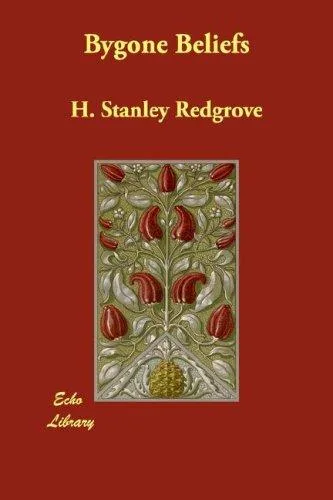
Bygone Beliefs
📖
Bygone Beliefs
H. Stanley Redgrove
4.1
64
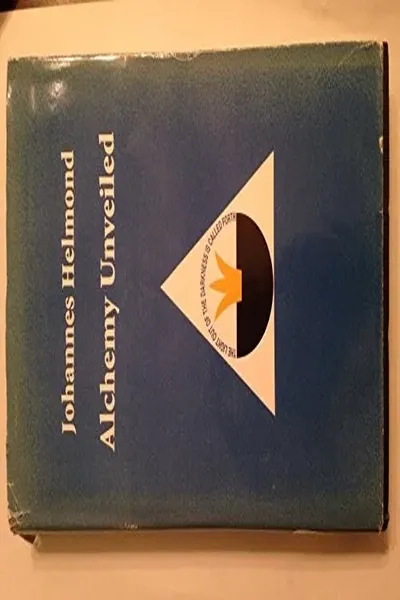
Alchemy unveiled
📖
Alchemy unveiled
Jean Baptiste van Helmont
4.0
62
Willard Stone
📖
Willard Stone
Margaret Wheatley Hamilton
4.0
61
MASTERPIECE
Fox eyes
📖
Fox eyes
Mordicai Gerstein
4.3
71
Comedy of Mind
📖
Comedy of Mind
R. D. V. Glasgow
4.0
61
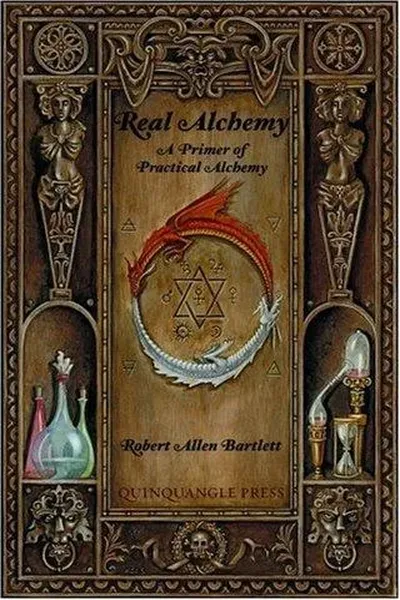
Real Alchemy
📖
Real Alchemy
Robert Allen Bartlett
4.1
64
Etymologiae
📖
Etymologiae
Saint Isidore of Seville
4.1
65
Old stone age
📖
Old stone age
Stévan Célébonovic
4.0
61
MUST READ
Splendor solis
📖
Splendor solis
Trissmosin, Salomon pseud.?.
4.0
61

What is the Philosopher's Stone?

The Philosopher's Stone is a legendary alchemical substance said to be capable of turning base metals into gold or silver. Beyond its literal transmutation, it symbolizes spiritual perfection, enlightenment, and the achievement of ultimate knowledge. Alchemical texts often describe it as a catalyst for profound transformation, both material and immaterial, representing the successful culmination of the Great Work.

Best Books for Complete Beginners

For those new to the subject, starting with accessible overviews is key. 'Harry Potter and the Philosopher's Stone' by J. K. Rowling, while fictional, introduces the concept in a widely recognized narrative. For a more direct introduction to alchemical principles, 'Real Alchemy' by Robert Allen Bartlett offers a practical, modern approach to understanding the processes involved. 'The Philosopher's Stone' by Israel Regardie provides a foundational text that demystifies early alchemical writings. Colin Wilson's 'Philosopher's Stone' explores the topic through a broader lens of consciousness and esoteric traditions, offering a good starting point for contextual understanding.

Intermediate Reading

Moving beyond introductory concepts, intermediate texts delve deeper into the symbolism and practice. 'The Dwellings of the Philosophers' by Fulcanelli is essential for understanding the historical and symbolic interpretations of alchemy, presented through detailed analysis of ancient sites and texts. 'Alchemy, the philosopher's stone' by Allison Coudert offers a scholarly examination of the historical and cultural context of alchemical pursuits. 'The Philosopher's Stone And Mysticism' by J. E. Mercer explores the spiritual dimensions and mystical interpretations associated with the Stone. 'Searching for the Philosophers' Stone' by Ralph Metzner connects alchemical symbolism to psychological and spiritual growth.

Classical / Advanced Texts

For serious students, engaging with primary sources and advanced analyses is crucial. 'A Golden and Blessed Casket of Nature's Marvels' by Benedictus Figulus (1657) is a significant compilation of alchemical texts and recipes from the 16th and 17th centuries. 'The Philosopher's Stones' by M. E. Warlick provides a critical scholarly analysis of the concept across various traditions. 'The alchemists and the philosopher's stone' by C. J. S. Thompson offers historical accounts and insights into the lives and work of prominent alchemists, detailing their pursuit of the Stone.

Reading Order — Step by Step

Begin with introductory overviews to grasp the core concepts. Start with 'Harry Potter and the Philosopher's Stone' for narrative familiarity, followed by Robert Allen Bartlett's 'Real Alchemy' for practical grounding. In Month 2, transition to historical context with Fulcanelli's 'The Dwellings of the Philosophers' and Allison Coudert's 'Alchemy, the philosopher's stone'. For Month 3 and beyond, engage with primary sources and advanced analyses like Benedictus Figulus's 'A Golden and Blessed Casket of Nature's Marvels' and C. J. S. Thompson's 'The alchemists and the philosopher's stone' to deepen your understanding of classical alchemy.

Frequently Asked Questions

Which Philosopher's Stone book should I read first?

For a gentle introduction, start with J. K. Rowling's 'Harry Potter and the Philosopher's Stone' for narrative context. Then, move to Robert Allen Bartlett's 'Real Alchemy' for a practical, modern explanation of alchemical processes.

Is the Philosopher's Stone real?

Historically, the Philosopher's Stone was the central goal of alchemy, pursued for its ability to transmute metals and grant immortality. While literal transmutation remains unproven, its symbolic meaning of transformation and perfection is widely explored in literature and esoteric studies.

What is the difference between alchemy and chemistry?

Chemistry is a modern science focused on the study of matter and its properties. Alchemy was an ancient proto-science that combined practical experimentation with philosophical and spiritual beliefs, aiming for transmutation and the elixir of life, alongside developing early chemical techniques.

Are there different types of Philosopher's Stones?

Alchemical texts describe various forms and preparations of the Stone, often distinguished by color (red or white) or potency. These variations reflect different stages of the Great Work and symbolic interpretations rather than distinct physical substances.

How does the Philosopher's Stone relate to spiritual growth?

Many interpretations view the alchemical process of creating the Stone as a metaphor for inner transformation. The purification and perfection of metals mirror the alchemist's journey toward spiritual enlightenment and self-realization.

Where can I find primary alchemical texts?

Primary sources like Benedictus Figulus's 'A Golden and Blessed Casket of Nature's Marvels' compile historical alchemical writings. Scholarly works such as C. J. S. Thompson's 'The alchemists and the philosopher's stone' also provide context and access to historical perspectives.

Why Each Book Matters

Apparition Poems

Apparition Poems

by Adam Fieled

Adam Fieled's 'Apparition Poems' is a collection of poetry that explores themes of perception, illusion, and the unseen, connecting to the subtle realms of alchemy. Its evocative language and abstract concepts encourage a meditative approach to understanding hidden realities.

In my own way

In my own way

by Alan Watts

Alan Watts' 'In my own way' explores personal philosophy and self-discovery, aligning with the internal journey inherent in seeking profound wisdom. This autobiographical work provides insights into Watts' intellectual and spiritual development, reflecting on the nature of consciousness and existence.

An essay on man

An essay on man

by Alexander Pope

Alexander Pope's 'An essay on man' is a philosophical poem exploring human nature and morality, offering a macrocosmic view relevant to alchemical ethics. It delves into man's place in the universe and his relationship with the divine, themes often mirrored in alchemical philosophy.

Leadership

Leadership

by Ann Brown

Ann Brown's 'Leadership' examines principles of effective guidance and self-mastery, drawing parallels to the internal discipline required for alchemical work. It offers insights into how one might 'lead' their own spiritual transformation, emphasizing vision and integrity in personal development.

Golden Tract

Golden Tract

by Anonymous Philosopher

The 'Golden Tract' by an Anonymous Philosopher is a classic alchemical text, revered for its concise and symbolic descriptions of the alchemical process. It is often studied for its profound insights into the philosophical mercury and the journey towards spiritual gold.

Raven's Gate

Raven's Gate

by Anthony Horowitz

Anthony Horowitz's 'Raven's Gate' is a fantasy novel featuring magical elements and secret societies, reflecting the imaginative appeal of esoteric quests. It introduces readers to a world of hidden powers and ancient mysteries, often drawing on archetypal themes found in occult literature.

Life as reality

Life as reality

by Arthur S. Dewing

Arthur S. Dewing's 'Life as reality' is a philosophical inquiry into existence and truth, resonating with the alchemist's pursuit of ultimate reality. It challenges readers to consider the nature of their own perceptions and the fundamental truths underlying the universe.

Alchemy

Alchemy

by Benedictus Figulus

Authored by Benedictus Figulus, 'Alchemy' is a historical compilation that provides a window into 17th-century alchemical thought, featuring various treatises and experiments from different practitioners. It serves as a vital resource for understanding the diverse approaches to the Great Work during that era.

Bygone Beliefs

Bygone Beliefs

by H. Stanley Redgrove

H. Stanley Redgrove's 'Bygone Beliefs' offers a fascinating look into historical esoteric practices and superstitions, providing crucial context for understanding the cultural milieu in which alchemy flourished. It details various forgotten traditions and their significance in human history.

Men and systems

Men and systems

by James Allen

James Allen's 'Men and systems' examines human behavior within structured environments, providing a framework for understanding esoteric traditions. It delves into the interplay between individuals and the systems they inhabit, a concept applicable to the structured nature of alchemical practice.

The touch-stone

The touch-stone

by James Ralph

James Ralph's 'The touch-stone' likely examines authenticity and value, mirroring the alchemical quest for ultimate truth and purity. Such a work, whether a play or treatise, often explores the criteria by which things are judged, a metaphor for discerning true knowledge.

Alchemy unveiled

Alchemy unveiled

by Jean Baptiste van Helmont

Jean Baptiste van Helmont's 'Alchemy unveiled' offers a deep dive into the alchemical theories of a renowned 17th-century chemist and physician. Known for his contributions to both science and mysticism, his work provides detailed insights into the material and spiritual aspects of alchemy.

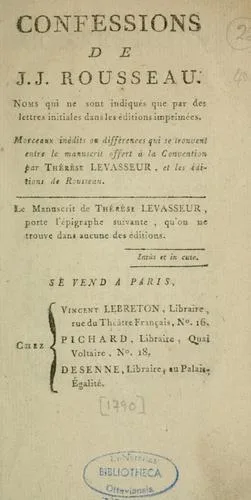
Les confessions

Les confessions

by Jean-Jacques Rousseau

Jean-Jacques Rousseau's 'Les confessions' is a foundational autobiographical work, offering a deeply personal journey of self-reflection and psychological development. This introspection is a key aspect of internal alchemy, where self-knowledge is paramount to transformation.

The Prophet

The Prophet

by Kahlil Gibran

Kahlil Gibran's 'The Prophet' offers poetic wisdom on love, pain, and joy, providing spiritual context often sought by those on the path to profound understanding. Its allegorical nature and profound insights into the human condition resonate deeply with the philosophical underpinnings of alchemy.

I am the market

I am the market

by Luca Rastello

Luca Rastello's 'I am the market' explores economic and societal structures, perhaps offering a metaphorical lens on the 'value' of spiritual transformation. It can provoke thought on how value is created and perceived, drawing parallels to the alchemical creation of spiritual 'gold'.

Willard Stone

Willard Stone

by Margaret Wheatley Hamilton

Margaret Wheatley Hamilton's 'Willard Stone' likely offers a biographical account or a study related to a specific individual. Such works can provide a unique perspective on personal journeys and the pursuit of knowledge, potentially inspiring a reader's own quest for wisdom.

Pseudo-Zeno

Pseudo-Zeno

by Michael E. Stone

Authored by Michael E. Stone, 'Pseudo-Zeno' delves into philosophical paradoxes and ancient thought, challenging conventional understanding crucial for esoteric study. It explores the complexities of ancient philosophical traditions, inviting readers to question established realities.

Fox eyes

Fox eyes

by Mordicai Gerstein

Mordicai Gerstein's 'Fox eyes' explores themes of perception and hidden realities through a unique narrative lens, often employing symbolic imagery. This work aligns with esoteric studies by encouraging readers to look beyond the surface and uncover deeper truths, a common motif in symbolic esoteric literature.

Comedy of Mind

Comedy of Mind

by R. D. V. Glasgow

R. D. V. Glasgow's 'Comedy of Mind' explores the nature of consciousness and perception, elements central to understanding the transformative power of inner work. It delves into the philosophical aspects of mental states and how they shape our reality, a concept relevant to esoteric practice.

Clausewitz

Clausewitz

by Raymond Aron

Raymond Aron's 'Clausewitz' analyzes strategic thought and conflict, offering insights into the 'warfare' of opposing forces within alchemical transformation. While not directly alchemical, its exploration of dialectics and resolution can be metaphorically applied to the balancing of elements in the Magnum Opus.

Stone of Secrets

Stone of Secrets

by Ricco Pierre

Ricco Pierre's 'Stone of Secrets' is a title that directly evokes mystery and hidden knowledge, hinting at a narrative involving ancient, guarded wisdom. This book likely explores themes of discovery and the unearthing of profound, long-lost truths, common in esoteric fiction.

Real Alchemy

Real Alchemy

by Robert Allen Bartlett

Authored by Robert Allen Bartlett, 'Real Alchemy' is known for its practical approach, offering clear instructions and explanations for those interested in laboratory alchemy. It bridges the gap between theoretical knowledge and hands-on experimentation, making complex processes accessible.

Etymologiae

Etymologiae

by Saint Isidore of Seville

Saint Isidore of Seville's 'Etymologiae' is a monumental encyclopedia of ancient knowledge, offering extensive historical and linguistic context vital for comprehensive esoteric research. This encyclopedic work compiles vast information from classical antiquity, providing a foundational understanding of various disciplines.

Old stone age

Old stone age

by Stévan Célébonovic

Stévan Célébonovic's 'Old stone age' provides archaeological and anthropological insights into humanity's ancient past, connecting to the primordial roots of alchemical thought. It explores early human cultures and their connection to the earth, echoing the foundational elements of alchemy.

Splendor solis

Splendor solis

by Trissmosin, Salomon pseud.?.

Attributed to Trissmosin, Salomon pseud.?, 'Splendor solis' is a renowned alchemical manuscript, famous for its intricate symbolic illustrations and detailed descriptions of the alchemical stages. Its vibrant imagery and cryptic text offer a rich visual and intellectual experience for students of alchemy.

Esoteric Library
Browse Esoteric Library
📚 All 55,000+ Books 🜍 Alchemy & Hermeticism 🔮 Magic & Ritual 🌙 Witchcraft & Paganism Astrology & Cosmology 🃏 Divination & Tarot 📜 Occult Philosophy ✡️ Kabbalah & Jewish Mysticism 🕉️ Mysticism & Contemplation 🕊️ Theosophy & Anthroposophy 🏛️ Freemasonry & Secret Societies 👻 Spiritualism & Afterlife 📖 Sacred Texts & Gnosticism 👁️ Supernatural & Occult Fiction 🧘 Spiritual Development 📚 Esoteric History & Biography
Esoteric Library
📑 Collections 📤 Upload Your Book
Account
🔑 Sign In Create Account
Info
About Esoteric Library