What are Ghosts?
Ghosts are commonly understood as the spirits or souls of deceased individuals that are believed to manifest in the physical world. Accounts range from visual apparitions and auditory phenomena to tactile sensations and unexplained environmental changes. Historical and cultural beliefs often attribute these manifestations to unfinished business, traumatic deaths, or a lingering presence. The study of ghosts, or phasmology, intersects with folklore, psychology, and parapsychology, examining both anecdotal evidence and purported scientific investigations.
Best Books for Complete Beginners
For those new to the subject, starting with accessible narratives and historical overviews is recommended. D. R. McAnally's 'Irish Wonders' (1895) provides a rich collection of folklore, offering a broad cultural context for ghost stories. George Cruikshank's 'A Discovery Concerning Ghosts' (1823) offers an early, critical look at spirit-rapping phenomena. F. Marion Crawford's 'The Witch of Prague' (1891) presents a compelling fictional exploration of the uncanny. These works introduce key themes and historical approaches without overwhelming the reader.
Intermediate Reading
Moving beyond foundational texts, intermediate readers can explore more nuanced investigations and literary treatments. Walter Cooper Dendy's 'The Philosophy of Mystery' (1841) examines the psychological aspects of perceived supernatural events. Algernon Blackwood's 'Day and Night Stories' (1917) showcases his masterful ability to blend the mundane with the terrifying. Sax Rohmer's 'The Haunting of Low Fennel' (1920) offers a more modern, suspenseful take on spectral encounters. These selections deepen the understanding of the genre's evolution and thematic complexity.
Classical / Advanced Texts
Serious students will benefit from primary sources and more complex explorations. James Thacher's 'An Essay on Demonology, Ghosts and Apparitions' (1837) provides a detailed historical account, including the Salem witchcraft delusion. Edward Augustus Brackett's 'Materialized apparitions' (1885) critically examines spiritualist phenomena. Abraham Cummings' 'Immortality proved by the testimony of sense' (1827) directly tackles the doctrine of spectres. These texts offer in-depth analysis and primary historical context.
Reading Order — Step by Step
Begin with foundational folklore and historical critiques. Start with McAnally's 'Irish Wonders' (Week 1) for broad context, followed by Cruikshank's 'A Discovery Concerning Ghosts' (Week 2) for an early critical view. In Month 2, transition to Dendy's 'The Philosophy of Mystery' (Weeks 5-6) for psychological insights and Blackwood's 'Day and Night Stories' (Weeks 7-8) for literary depth. By Month 3, engage with advanced texts like Thacher's 'An Essay on Demonology' (Weeks 9-10) and Evans' 'Hours with the Ghosts' (Weeks 11-12) for detailed historical investigations and spiritualist phenomena.
Frequently Asked Questions
Which ghost book should I read first?
For a gentle introduction, start with D. R. McAnally's 'Irish Wonders' to get a feel for folklore, or F. Marion Crawford's 'The Witch of Prague' for a compelling fictional narrative.
Are ghost stories just fiction?
While many ghost stories are fictional, historical accounts and investigations into spiritualism, like those in Henry Ridgely Evans' 'Hours with the Ghosts', explore purported real-world phenomena and beliefs.
What is the difference between a ghost and a demon?
Ghosts are typically believed to be the spirits of deceased humans, while demons are often considered malevolent supernatural entities not originating from human souls, as discussed in texts like James Thacher's 'An Essay on Demonology'.
Where can I find early accounts of ghost beliefs?
Walter Scott's 'Letters on Demonology and Witchcraft' and James Thacher's 'An Essay on Demonology, Ghosts and Apparitions' provide historical overviews and analyses of early beliefs and superstitions surrounding ghosts.
How did 19th-century writers approach ghosts?
Writers like Walter Cooper Dendy in 'The Philosophy of Mystery' explored the psychological aspects, while Henry Ridgely Evans in 'Hours with the Ghosts' investigated spiritualist phenomena, reflecting a mix of skepticism and fascination.
Are there books that critically examine ghost phenomena?
Yes, George Cruikshank's 'A Discovery Concerning Ghosts' offers an early critique of spirit-rapping, and Edward Augustus Brackett's 'Materialized apparitions' questions the nature of spiritualist manifestations.
What are some classic ghost stories in literature?
F. Marion Crawford's 'The Upper Berth' and Algernon Blackwood's 'Day and Night Stories' are notable examples of classic literary ghost fiction that study atmospheric horror and psychological unease.
Can I find philosophical discussions on ghosts?
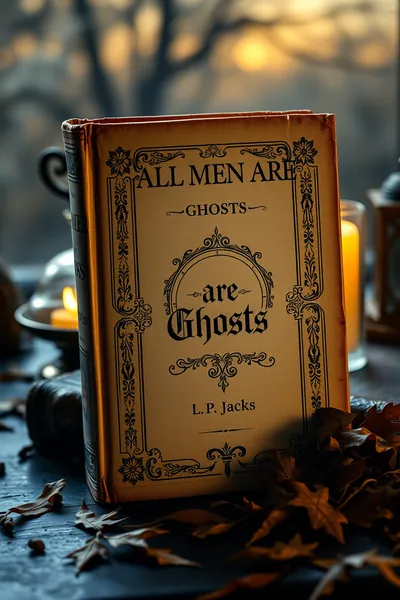
L. P. Jacks' 'All Men are Ghosts' offers a more philosophical perspective, contemplating existence and the nature of the spectral beyond simple hauntings.