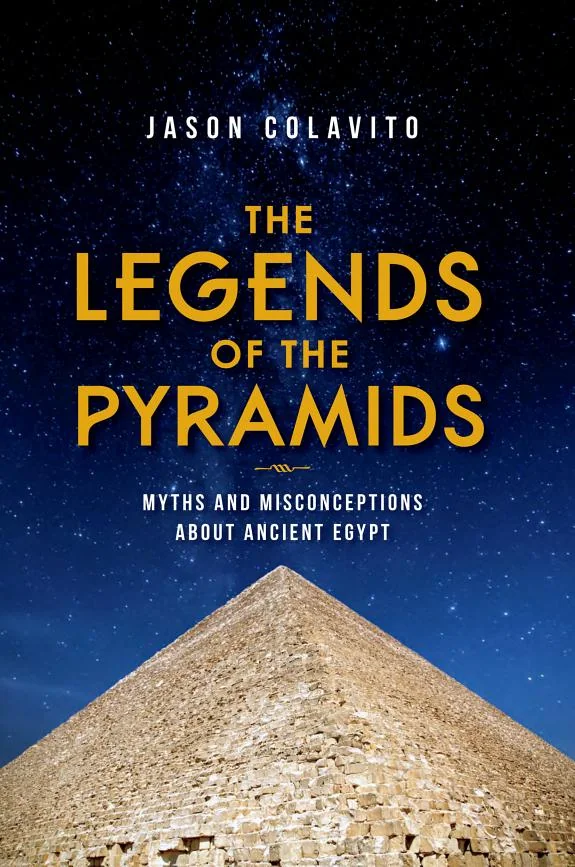
The Legends of the Pyramids
 76
76

The Legends of the Pyramids
Jason Colavito's "The Legends of the Pyramids" offers a refreshing counterpoint to the deluge of pseudo-archaeological claims surrounding Egypt's most iconic structures. Instead of debunking specific theories, Colavito charts the genealogy of pyramid myths, revealing a fascinating lineage from ancient sources to modern pop culture. His strength lies in connecting seemingly disparate narratives, showing how a story told by Herodotus or a medieval Arab historian can echo in a contemporary film. The research is thorough, particularly the examination of medieval Islamic influences, which is often neglected. A minor limitation might be the sheer breadth of the subject, occasionally making the connections feel more like a survey than a deep dive into any single mythic thread. However, the work excels in demonstrating how the pyramids have become a canvas for human imagination, a point vividly illustrated when discussing their portrayal in early 20th-century pulp fiction. This book is an essential read for anyone seeking to understand why we believe what we believe about ancient Egypt.
📝 Description
76
Jason Colavito's 2012 book examines how pyramids became subjects of myth and speculation.
This book traces the history of popular fascination with Egypt's pyramids, focusing on how they have been interpreted and mythologized over time. It moves beyond traditional Egyptology to analyze the evolution of these narratives from Classical Antiquity to contemporary media. The work prioritizes the cultural reception and the construction of myths around the pyramids rather than solely focusing on historical accuracy.
Colavito scrutinizes how ancient structures acquired meaning across centuries, showing how these interpretations often diverged from scholarly understanding. It highlights the influence of non-academic traditions, such as medieval Islamic scholarship, in shaping perceptions of these ancient wonders. The book is for readers interested in the intersection of history, myth, and popular culture, particularly how ancient sites become focal points for speculative theories and esoteric beliefs.
The book situates the enduring myths surrounding Egypt's pyramids within a broader historical and cultural context. It acknowledges how these structures have been adopted by various esoteric traditions, often detached from their original historical settings. By examining the transmission of these stories from Classical Greece and Rome through medieval Islamic scholarship to modern New Age thought, Colavito reveals a continuous thread of interpretation that constructs a 'mythic Egypt' alongside the historical one. This work engages with how ancient monuments become symbols for speculative theories and belief systems.
💡 Why Read This Book?
• Understand the evolution of pyramid myths from Herodotus's accounts to modern interpretations, revealing how ancient narratives are continuously recontextualized. • Discover the often-overlooked influence of medieval Islamic scholars on the legends surrounding the pyramids, providing a deeper historical context than typically presented. • Analyze how popular culture, from ancient texts to contemporary films, contributes to a persistent, evolving mythology around these ancient monuments.
⭐ Reader Reviews
Honest opinions from readers who have explored this book.
❓ Frequently Asked Questions
What is the primary focus of 'The Legends of the Pyramids' regarding historical accuracy?
The book prioritizes the study of popular myths and cultural interpretations of the pyramids over strict academic or historical accuracy, examining how legends evolved across different eras and cultures.
Which historical periods does the book cover in its exploration of pyramid legends?
It spans from Classical Antiquity, including figures like Herodotus, through medieval Islamic scholarship, up to modern popular culture and contemporary movies.
Does the book discuss the influence of ancient aliens theories on pyramid myths?
While not explicitly detailing every fringe theory, the book examines the broader patterns of myth-making that contribute to such speculative interpretations of the pyramids' origins and purpose.
What is a key unique contribution of this book to the study of pyramid lore?
A significant contribution is its detailed exploration of the impact medieval Islamic writers had on shaping enduring myths about the pyramids, a perspective often absent in Western analyses.
How does the book connect ancient stories to modern perceptions of the pyramids?
It traces a continuous thread of narratives, showing how stories originating in antiquity and medieval periods are adapted and reinterpreted through subsequent historical eras, including their representation in modern cinema.
Is 'The Legends of the Pyramids' an academic text or more accessible to a general audience?
The book is written in a style accessible to a general audience interested in mythology and cultural history, while still being well-researched and informative, drawing parallels to works like those by Prothero.
🔮 Key Themes & Symbolism
Mythic Egypt vs. Historical Egypt
The core theme is the divergence between the actual historical context of the pyramids and the layered mythology that has accumulated around them. Colavito demonstrates how cultural narratives, often detached from archaeological fact, have constructed a 'mythic Egypt.' This includes examining how figures like Herodotus in Classical Antiquity initiated a tradition of storytelling that has been continuously reinterpreted, creating a persistent image of Egypt in popular consciousness that often supersedes scholarly understanding.
The Continuity of Legend
This theme explores how stories and beliefs about the pyramids are not isolated incidents but part of a long, unbroken chain of transmission and adaptation. The book connects narratives from medieval Islamic scholars, who offered unique interpretations influenced by their own cultural and religious contexts, down to their echoes in modern cinema. It illustrates how these tales, passed through various cultures and eras, form a cohesive, albeit fictional, body of lore.
Cultural Transmission and Interpretation
Colavito highlights the mechanisms by which myths are created, disseminated, and transformed. The work examines how external cultures, particularly medieval Islam, engaged with and reinterpreted Egyptian monuments, often projecting their own cosmologies and narratives onto them. This process of cultural transmission underscores how the meaning of ancient sites is not inherent but is actively constructed and reconstructed by successive generations and societies.
The Influence of Non-Academic Sources
A crucial aspect is the book's focus on how popular culture and non-academic traditions, rather than solely Egyptological research, have shaped public perception of the pyramids. By investigating the influence of medieval Islamic texts and comparing them to modern media portrayals, Colavito reveals how these popular narratives possess a distinct power and longevity, often overshadowing scholarly discourse and contributing significantly to the enduring mystique of the pyramids.
💬 Memorable Quotes
Direct passages from the work, attributed to the author.
“Stories from Classical Antiquity down to modern movies are part of a continuous whole.”
— This concept highlights the book's central thesis: that our modern fascination and understanding of the pyramids are built upon a long, unbroken chain of narratives, showing a surprising consistency in how these ancient structures capture the human imagination across millennia.
“The work examines Egypt from the point of view of pop culture and myth rather than academic history.”
— This statement underscores the book's unique approach, prioritizing the reception and mythologizing of ancient Egypt in the public sphere over purely factual, archaeological, or historical accounts, thus revealing the constructed nature of our collective understanding.
“It is one of the first books to fully explore the influence of medieval Islam on modern myths of Egypt.”
— This points to a significant scholarly gap addressed by the book, emphasizing its original contribution in detailing how narratives from Islamic traditions significantly shaped Western and global perceptions of Egyptian monuments long before modern Egyptology.
“It traces the origins of popular myths surrounding the pyramids.”
— This concise description captures the book's investigative methodology, indicating a focus on the etymology of beliefs and legends associated with the pyramids, seeking to uncover their earliest roots and subsequent transformations.
“In the vein of the Prothero titles, which have sold well.”
— This positioning suggests the book offers accessible, engaging scholarship on religious and cultural phenomena, similar to the popular appeal and well-researched nature of works by authors like Stephen Prothero, making complex subjects digestible for a broad audience.
🌙 Esoteric Significance
Tradition
While not strictly adhering to a single esoteric lineage, the work engages with the broader tradition of interpreting ancient monuments through mystical, symbolic, and allegorical lenses. It sits within a lineage that views historical artifacts as conduits for deeper, often hidden, meanings, a practice found in Hermeticism, Theosophy, and various forms of comparative mythology. Colavito's departure lies in his focus on the *transmission* of these interpretations rather than the validation of any specific esoteric claim.
Symbolism
The pyramids themselves are the primary symbols, representing not just ancient tombs but also cosmic order, hidden knowledge, and architectural marvels imbued with mystical power. The book explores how these interpretations shift: from symbols of pharaonic power in historical Egypt, to repositories of lost Atlantean wisdom in 19th-century occultism, and even as celestial maps or energy generators in modern esoteric thought. The continuous thread of these symbolic re-imaginings is central.
Modern Relevance
Contemporary esoteric thinkers and popular mythographers continue to draw on the rich vein of interpretation that Colavito explores. The book provides context for modern practices that seek esoteric meaning in ancient sites, whether through New Age spirituality, alternative history communities, or even within certain branches of comparative religion studies that acknowledge the power of myth. It offers a framework for understanding how these interpretations persist and evolve in the digital age.
👥 Who Should Read This Book
• Students of comparative mythology and folklore: Gain a comprehensive understanding of how narratives surrounding ancient monuments evolve across cultures and time periods. • Enthusiasts of ancient Egypt interested in popular perceptions: Discover the layers of myth and legend that have been superimposed onto the historical reality of the pyramids. • Critical thinkers and researchers of pseudoscience: Learn how to trace the origins and transmission of popular myths, distinguishing between historical fact and cultural storytelling.
📜 Historical Context
Published in 2021, Jason Colavito's "The Legends of the Pyramids" emerged during a period of intense popular interest in ancient mysteries, often fueled by online discourse and speculative documentaries. The intellectual climate was marked by a growing awareness of pseudohistory and a desire for more critical examinations of fringe theories, contrasting sharply with the rise of New Age interpretations of ancient sites. Colavito's work positions itself against this backdrop, offering a historically grounded analysis that bypasses sensationalism. While not a direct engagement, it implicitly dialogues with popular works that present alternative histories of Egypt. The book's focus on the long arc of myth-making, particularly its detailed look at medieval Islamic scholarship's contributions to pyramid lore, offers a counter-narrative to more Eurocentric or purely archaeological accounts prevalent before its publication.
📔 Journal Prompts
The continuity of legend regarding the pyramids, from Classical Antiquity to modern films.
Medieval Islamic interpretations of Egyptian monuments and their enduring influence.
The distinction between historical Egypt and the 'mythic Egypt' constructed through popular culture.
How Herodotus's accounts initiated a tradition of storytelling about the pyramids.
The role of cultural transmission in shaping modern perceptions of ancient wonders.
🗂️ Glossary
Classical Antiquity
The historical period encompassing ancient Greece and Rome, roughly from the 8th century BCE to the 6th century CE, known for foundational philosophical, literary, and historical works that influenced later cultures.
Medieval Islam
Refers to the Islamic civilization during the Middle Ages, a period of significant intellectual and cultural flourishing, marked by contributions in science, philosophy, history, and the arts, including unique perspectives on ancient history.
Mythic Egypt
A conceptual Egypt constructed through layers of popular stories, legends, and interpretations accumulated over centuries, often distinct from and superseding the actual historical and archaeological reality of ancient Egypt.
Cultural Transmission
The process by which knowledge, beliefs, customs, and stories are passed down from one generation or culture to another, often undergoing adaptation and reinterpretation along the way.
Herodotus
An ancient Greek historian, often called the 'Father of History,' whose writings 'The Histories' include early accounts and descriptions of Egypt and its monuments, influencing later perceptions.
Popular Culture
The set of practices, beliefs, and objects that are dominant or prevalent in a society at a given point in time, including media, entertainment, and widely shared narratives.
Esoteric
Intended for or likely to be understood by only a small number of people with a specialized knowledge or interest; relating to mystical or secret knowledge.
This book appears in 1 collection
🔮 Readers Also Liked
Browse all →









From the “Pyramids” Collection
View all →




More Free Esoteric History & Biography Books
View all →