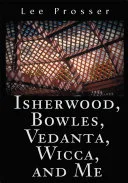
Isherwood, Bowles, Vedanta, Wicca, and Me
 71
71

Isherwood, Bowles, Vedanta, Wicca, and Me
Lee Prosser’s memoir is a candid, if sometimes meandering, account of a life lived adjacent to significant cultural touchstones. His recollections of Christopher Isherwood and Paul Bowles, fellow travelers in a mid-century bohemian landscape, offer glimpses into their public and private personas. A particular strength lies in Prosser's unvarnished descriptions of his own awakening to sexuality and artistic ambition, making the personal narrative compelling. However, the sheer breadth of names dropped – from actors like Lee Marvin to musicians like The Beach Boys – can occasionally feel like a list rather than integrated narrative, diluting the focus. The juxtaposition of Vedanta and Wicca with existentialism and 1960s pop culture, while potentially fascinating, sometimes feels more like a catalog of interests than a deeply explored synthesis. Ultimately, the book succeeds as a personal chronicle, offering a unique perspective on a particular milieu.
📝 Description
71
Lee Prosser's 2001 memoir recounts his youth and early writing career alongside literary figures.
Published in 2001, Lee Prosser's memoir details his formative years and the beginnings of his writing career. The book follows his personal development, including significant life events and the emergence of his distinct authorial voice. These personal recollections are interspersed with his interactions and friendships with notable literary personalities from the mid-20th century. The narrative revisits the post-World War II decades, a time of considerable change in social attitudes, artistic creation, and spiritual inquiry. Prosser’s story places him among individuals who shaped literary modernism and the nascent counterculture, giving readers a direct look into their lives. The work addresses the author's involvement with various philosophical and spiritual paths, such as Vedanta, represented by Ramakrishna, and the practices of contemporary Witchcraft. These spiritual explorations occur within the context of existentialist philosophy and the cultural atmosphere of the 1960s, touching on music and global events like the Vietnam War.
This memoir situates itself within a post-war spiritual seeking, a period where Westerners engaged with Eastern philosophies like Vedanta, exemplified by figures like Ramakrishna. Prosser also recounts his encounters with modern Witchcraft, a tradition that saw a resurgence and redefinition in the mid-20th century. The book reflects a broader cultural interest in alternative spiritualities and personal transformation that ran parallel to existentialist thought and the countercultural movements of the 1960s, creating a personal narrative at the crossroads of literary life and esoteric exploration.
💡 Why Read This Book?
• Gain insight into the personal connections between Lee Prosser and literary giants like Christopher Isherwood and Paul Bowles, understanding their informal intellectual exchanges beyond published works. • Understand the author's early 21st-century perspective on the spiritual and philosophical movements of the mid-20th century, such as Vedanta and the emergence of modern Wicca. • Experience a firsthand account of navigating artistic and personal development during the 1960s, set against the backdrop of the Vietnam War and existentialist thought.
⭐ Reader Reviews
Honest opinions from readers who have explored this book.
❓ Frequently Asked Questions
What is the primary focus of Lee Prosser's memoir?
The memoir centers on Lee Prosser's early life and writing career, detailing his personal growth, sexual awakening, and friendships with notable figures in literature and culture.
Which notable authors are mentioned in 'Isherwood, Bowles, Vedanta, Wicca, and Me'?
The book features interactions and references to writers such as Christopher Isherwood, Paul Bowles, Gerina Dunwich, Robert Bloch, and Poul Anderson.
Besides literature, what other cultural elements does Prosser discuss?
Prosser touches upon actors like Michael Rennie and Lee Marvin, musical groups like The Beach Boys and The Beatles, the Vietnam War, Existentialism, and various spiritual practices including Vedanta and Wicca.
When was 'Isherwood, Bowles, Vedanta, Wicca, and Me' first published?
The book was first published in October 2001.
What spiritual traditions does Lee Prosser engage with in his memoir?
Prosser discusses his engagement with Vedanta, referencing Ramakrishna, and also explores the practices and concepts associated with modern Witchcraft.
Does the book offer insights into the 1960s counterculture?
Yes, the memoir provides reflections on the music of the 1960s, including The Beatles and The Beach Boys, and contextualizes his personal experiences within the era's broader cultural shifts.
🔮 Key Themes & Symbolism
Literary Friendships and Influences
The memoir extensively details Prosser's personal relationships with key literary figures of the mid-20th century, most notably Christopher Isherwood and Paul Bowles. It moves beyond mere biographical sketches to explore the dynamics of these friendships, the intellectual exchanges, and how these interactions shaped Prosser's own development as a writer. The narrative provides a ground-level view of literary circles, offering specific anecdotes that illuminate the personalities and creative processes of these celebrated authors, setting a scene of bohemian intellectualism.
Spiritual and Philosophical Exploration
A significant thread in Prosser's account is his exploration of various spiritual and philosophical systems. He recounts his engagement with Vedanta, drawing connections to figures like Ramakrishna, and also examines the practices and beliefs surrounding modern Witchcraft. These spiritual inquiries are presented not as abstract study, but as lived experiences interwoven with his personal journey, demonstrating a search for meaning beyond conventional religious or secular frameworks during the post-war era.
Personal Identity and Sexuality
The book offers a frank and personal narrative of self-discovery, particularly concerning Prosser's sexual awakening and his journey to understanding his identity. The memoir openly discusses the loss of his virginity and his reflections on his sexuality within the social and cultural context of his time. This candid approach to personal experience forms a core element of the memoir, grounding the broader cultural and intellectual discussions in intimate, lived reality.
The Cultural Milieu of the Mid-20th Century
Prosser's memoir serves as a portal into the cultural range of the mid-20th century, specifically the decades following World War II through the 1960s. He integrates references to popular music, film, and the geopolitical climate, including the Vietnam War, alongside more esoteric interests like Existentialism and occult practices. This contextualization situates his personal narrative within a broader societal transformation, capturing the zeitgeist of an era marked by significant change and countercultural movements.
💬 Memorable Quotes
Direct passages from the work, attributed to the author.
“My friendships with Isherwood and Bowles were central.”
— This statement highlights the wide impact these literary relationships had on Prosser's personal and professional life, suggesting they were more than casual acquaintances but formative influences.
“The teachings of Ramakrishna offered a different path.”
— This suggests Prosser found in Vedanta, particularly through the figure of Ramakrishna, an alternative spiritual or philosophical framework that resonated with his personal search for meaning.
“Existentialism framed my anxieties about freedom.”
— This concept implies that the philosophical tenets of Existentialism, with its emphasis on radical freedom and responsibility, provided a lens through which Prosser understood his own personal struggles and choices.
“The music of the 60s soundtracked my awakening.”
— This phrase suggests that the popular music of the 1960s was not just background noise but an integral part of Prosser's personal and developmental journey during that decade.
💡 Key Ideas
Editorial paraphrase of the work's core concepts — not direct quotes.
Wicca presented a tangible connection to ancient energies.
This paraphrase indicates Prosser's perception of modern Witchcraft as a practice that offered a direct, perhaps visceral, link to older spiritual traditions and natural forces.
🌙 Esoteric Significance
Tradition
Prosser's work sits at the confluence of several esoteric and philosophical streams rather than adhering strictly to one tradition. It touches upon Western Esotericism through its references to Wicca, and Eastern traditions via Vedanta and Ramakrishna. The memoir's strength lies in its autobiographical framing, presenting these traditions not as academic subjects but as lived experiences that informed a personal quest for meaning and self-understanding during a period of significant cultural change.
Symbolism
While specific symbols are not extensively detailed, the memoir implicitly engages with the symbolism inherent in both Vedanta and Wicca. Vedanta, particularly through Ramakrishna, often symbolizes spiritual realization and the unity of existence. Wicca, in its modern form, frequently employs symbols of nature, the divine feminine, and cyclical time. Prosser's personal journey can be seen as navigating these symbolic landscapes, seeking integration and meaning within them.
Modern Relevance
Prosser's memoir remains relevant for contemporary readers interested in the personal narratives behind spiritual and philosophical explorations. It speaks to current interests in comparative religion, the intersection of personal identity and belief, and the lasting influence of mid-20th-century literary figures on subsequent generations. His candid approach to sexuality and spirituality offers a model for exploring these often-taboo subjects within a personal context.
👥 Who Should Read This Book
• Readers interested in the biographies of mid-20th-century literary figures like Christopher Isherwood and Paul Bowles, seeking personal anecdotes beyond their published works. • Individuals exploring the intersection of personal identity, sexuality, and spiritual development in the post-war era, particularly those curious about Vedanta and modern Wicca. • Students of cultural history and the 1960s counterculture who appreciate firsthand accounts that blend personal experience with broader societal and philosophical currents.
📜 Historical Context
Lee Prosser's memoir, published in 2001, revisits a period of intense cultural and intellectual flux, primarily the post-World War II decades through the 1960s. This era saw a significant questioning of established norms, fueled by existentialist philosophy, the burgeoning civil rights movement, and the counterculture. Prosser's narrative places him alongside figures like Christopher Isherwood and Paul Bowles, whose own work often engaged with themes of identity, sexuality, and spiritual seeking in unconventional ways. The memoir's exploration of Vedanta and Wicca reflects a broader societal interest in alternative spiritualities that gained traction as traditional religious institutions faced challenges. This was a time when figures like Alan Watts popularized Eastern philosophies, and Gerald Gardner was instrumental in shaping modern Wicca. Prosser's work engages with this landscape, contrasting with the more academic or purely literary analyses of the period by offering a personal, experiential perspective.
📔 Journal Prompts
Your own experience of finding spiritual resonance in the music of a specific era.
Reflections on the influence of mentors, literary or otherwise, on your personal trajectory.
Contrasting the existential questions posed by mid-century philosophy with your current worldview.
The personal significance of exploring traditions like Vedanta or Wicca in contemporary life.
Mapping the evolution of your understanding of personal identity and sexuality.
🗂️ Glossary
Vedanta
A school of Hindu philosophy and Vedanta literally means 'the end of the Vedas.' It explores concepts of Brahman (ultimate reality) and Atman (self), often emphasizing the unity of the two.
Ramakrishna
A 19th-century Indian mystic and yogi who was a central figure in the Bengal Renaissance. His teachings focused on the underlying unity of all religions and the direct experience of the divine.
Wicca
A modern Pagan, duotheistic religion and witchcraft tradition that was developed in England in the first half of the 20th century, drawing on earlier traditions of magic and nature veneration.
Existentialism
A philosophical movement that emphasizes individual existence, freedom, and choice. It posits that humans define their own meaning in life and try to make rational decisions despite existing in an irrational universe.
Christopher Isherwood
An English novelist and screenwriter, known for his semi-autobiographical novels depicting Berlin in the early 1930s and his later philosophical and spiritual writings, including his devotion to Swami Prabhavananda.
Paul Bowles
An American expatriate novelist, composer, and travel writer who lived in Tangier, Morocco for most of his adult life. His work often explores themes of cultural alienation and the darker aspects of human nature.
Gerina Dunwich
An American author known for her works on witchcraft, paganism, and the occult, often focusing on the history and practice of Wicca and other witchcraft traditions.