Our Great Qing
 84
84

Our Great Qing
Johan Elverskog's *Our Great Qing* offers a vital corrective to scholarship that has long oversimplified the Manchu-Mongol relationship. By foregrounding Mongol perspectives, the book compellingly argues against the simplistic notion that Tibetan Buddhism alone secured Manchu hegemony. The strength lies in its rigorous interrogation of sources, pushing readers to consider the agency and reception of imperial ideology from the Mongol side. A limitation, however, is that the initial chapters, while setting the stage, can feel dense with historiographical debate before fully launching into the core arguments. The exploration of how Mongols interpreted Qing symbols, moving beyond just Buddhist iconography, is particularly illuminating. This is essential reading for anyone serious about Inner Asian history.
📝 Description
84
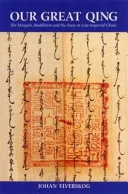
Johan Elverskog's 2021 book, Our Great Qing, re-examines Qing imperial power through a Mongol lens.
This work shifts the focus of Qing imperial studies from Manchu power projection onto Mongolia to Mongol reception and acknowledgment of that power. Elverskog challenges the common view that Manchu dominance over Mongols relied solely on patronage of Tibetan Buddhism. Instead, he argues for a more complex understanding of their relationship, prioritizing the Mongol perspective on the images and ideas they recognized within the Qing imperial framework. This approach contrasts with traditional histories that present a top-down view, emphasizing the metropole's messages over the periphery's interpretations.
The book critiques the static portrayal of Manchu-Mongol relations and questions Buddhism's role as a primary tool of control. By examining this assumption, Elverskog opens avenues for exploring other dynamics, including cultural exchange, political negotiation, and Mongol agency within the Qing state. The text investigates how Mongols perceived and interacted with the Qing imperial project, seeking to understand their acknowledgment of Qing authority and how they integrated or resisted its ambitions, moving beyond a simple conqueror-conquered dichotomy.
While not strictly an esoteric text in the Western sense, this book engages with traditions of scholarship that question dominant historical narratives, particularly concerning the intersection of religion, politics, and cultural identity in imperial contexts. It operates within a scholarly tradition that scrutinizes the construction of imperial power and the subjective experiences of subjugated or incorporated peoples, aligning with broader academic efforts to decenter colonial or hegemonic viewpoints. The focus on how a specific group, the Mongols, interpreted and interacted with imperial structures can be seen as a form of intellectual inquiry into alternative knowledge systems and perspectives on power.
💡 Why Read This Book?
• Gain a fresh perspective on Qing imperial history by understanding the Mongol reception of Manchu rule, moving beyond the traditional focus on Manchu imposition of power. • Explore the complex role of Tibetan Buddhism in the Qing era, questioning its assumed function as a sole instrument of control as presented in the book's critique of static narratives. • Appreciate the agency of Mongol actors within the Qing imperial project, learning how they acknowledged and interacted with imperial imagery and authority, as detailed in the work's focus on Mongol perceptions.
⭐ Reader Reviews
Honest opinions from readers who have explored this book.
❓ Frequently Asked Questions
What is the central argument of Our Great Qing regarding Manchu-Mongol relations?
The book argues that the conventional view of Manchu control over Mongols solely through patronage of Tibetan Buddhism is insufficient. It emphasizes the Mongol reception and acknowledgment of the Qing imperial project, rather than just Manchu projections of power.
How does Our Great Qing differ from other accounts of Manchu rule?
Unlike histories focusing on what the Manchu metropole intended to project, this work prioritizes the Mongol view, investigating what images and concepts Mongols themselves recognized and accepted within the Qing imperial system.
What historical period does Our Great Qing primarily cover?
The book focuses on the Qing Dynasty's imperial project and its relationship with Mongolia, a period spanning from the mid-17th century to the early 20th century.
Who is Johan Elverskog, the author of Our Great Qing?
Johan Elverskog is a scholar of Inner Asian history, specializing in the Mongol Empire and the Qing Dynasty. His work often challenges established narratives in the field.
Does Our Great Qing discuss the role of religion in Manchu-Mongol relations?
Yes, it critically examines the generally accepted role of Tibetan Buddhism, questioning the static assumption that it was the primary tool for Manchu control and exploring Mongol perspectives on its significance.
What does the title 'Our Great Qing' signify in the context of the book?
The title suggests a shared imperial identity or acknowledgment, hinting at the Mongol perspective of the Qing empire as 'ours' rather than solely a foreign imposition, which the book explores.
🔮 Key Themes & Symbolism
Mongol Agency in Empire
This work foregrounds the active role Mongols played in acknowledging and engaging with the Qing imperial project. It moves beyond viewing Mongols solely as passive recipients of Manchu power, instead examining how they interpreted and incorporated Qing symbols and authority into their own frameworks. The book investigates what images the Mongols themselves recognized, challenging the notion that they were merely subjected to external projections of power by the Manchu rulers.
Critique of Buddhist Hegemony
A central tenet is the critical re-evaluation of the widely held belief that Manchu control over Mongols was primarily secured through their patronage of Tibetan Buddhism. Elverskog questions this static portrayal, suggesting that the relationship was far more complex and that Buddhist patronage may not have been the sole or even primary mechanism of dominance. The work probes the limitations of this singular explanatory model.
Imperial Projection vs. Reception
The book meticulously contrasts the images the Manchu metropole wished to project into Mongolia with the images that Mongols actually acknowledged. This analytical distinction is crucial for understanding the nuances of imperial rule, highlighting the gap between intended messaging and lived reception. It underscores the importance of considering the periphery's active interpretation of imperial ideology.
Challenging Static Narratives
Elverskog actively pushes against overly simplified or static interpretations of the Manchu-Mongol relationship. By questioning foundational assumptions, such as the monolithic role of Buddhism, the work encourages a more dynamic and complex understanding of the Qing imperial project. It advocates for a view that recognizes the evolving nature of power and cultural exchange.
💬 Memorable Quotes
Direct passages from the work, attributed to the author.
“Rather than accepting the Manchu's use of Buddhism, Johan Elverskog begins by questioning the static...”
— This highlights the book's foundational critical stance. It signals an intention to dismantle accepted historical paradigms, particularly concerning the role of religion in imperial control, and to explore alternative interpretations of power dynamics.
“focuses not only on what images the metropole wished to project into Mongolia, but also on what images the Mongols acknowledged themselves.”
— This captures the core methodological innovation of the work: a dual focus on both the issuer and receiver of imperial ideology. It emphasizes the agency of the Mongols in their reception and interpretation of Qing power.
“Although it is generally believed that the Manchus controlled the Mongols through their patronage of Tibetan Buddhism, scant attention has been paid to the Mongol view of the Qing imperial project.”
— This statement frames the scholarly problem the book addresses. It identifies a significant gap in existing literature—the neglect of Mongol perspectives—and positions the work as a corrective endeavor.
“In contrast to other accounts of Manchu rule...”
— This phrase signals the book's divergence from established historiography. It suggests that *Our Great Qing* offers a distinct and potentially revisionist interpretation of the Manchu-Mongol relationship.
“what images the Mongols acknowledged themselves.”
— This concise phrase points to the active role Mongols played in shaping their understanding of the Qing empire. It implies that Mongol identity and perception were not solely defined by Manchu dictates.
🌙 Esoteric Significance
Tradition
While not explicitly Hermetic, Gnostic, or Kabbalistic, the work's focus on hidden power structures, subjective reception of ideology, and the manipulation of belief systems aligns with esoteric critiques of dominant narratives. It operates within the broader esoteric tradition of questioning established power and uncovering suppressed truths, particularly concerning the construction of imperial identity and control mechanisms.
Symbolism
The book's primary symbolic focus is the interplay between imperial imagery and religious iconography, particularly Tibetan Buddhism, as tools of governance. It examines how these symbols were projected by the Manchu metropole and, crucially, how they were perceived and acknowledged by the Mongol population, suggesting that the perceived power of these symbols was contingent on reception.
Modern Relevance
Contemporary scholarship on identity politics, post-colonial theory, and the sociology of religion can draw from Elverskog's work. Thinkers exploring how dominant narratives are constructed and deconstructed, and how marginalized groups negotiate their place within larger power structures, find resonance in its meticulous examination of reception and agency.
👥 Who Should Read This Book
• Students of East Asian History: Those seeking a nuanced understanding of the Qing Dynasty beyond standard narratives will benefit from its re-evaluation of Manchu-Mongol relations. • Scholars of Imperialism and Colonialism: Researchers interested in the dynamics of power projection and reception across cultural divides will find its methodological approach valuable. • Comparative Religion Analysts: Individuals studying the role of religion in statecraft and cultural negotiation will gain insights into the complex function of Tibetan Buddhism in the Qing context.
📜 Historical Context
Published in 2006, *Our Great Qing* emerged during a period of active re-evaluation in Inner Asian studies. Scholars were increasingly challenging Sino-centric or state-centric narratives, seeking to incorporate marginalized voices and perspectives. Elverskog's work fits within this trend by prioritizing the Mongol viewpoint on the Qing imperial project, directly contesting the dominant historiographical consensus that often emphasized Manchu dominance through religious patronage. While scholars like Evelyn Rawski had already begun to de-emphasize Manchu distinctiveness in the 1990s, Elverskog specifically targets the Manchu-Mongol religious dynamic. The book implicitly engages with the broader intellectual current of post-colonial and subaltern studies, applying their methodologies to the historical context of the Qing Dynasty (1644-1912). Its reception likely contributed to ongoing debates about agency and power within imperial frameworks.
📔 Journal Prompts
The Mongol acknowledgment of Qing imperial imagery: What criteria determined acceptance?
Analyze the critique of static Buddhist hegemony presented in the text.
Contrast the metropole's projected images with Mongol acknowledged ones.
Reflect on the implications of prioritizing Mongol perspectives in historical analysis.
Consider the power dynamics inherent in symbols like Tibetan Buddhism within empires.
🗂️ Glossary
Manchu
The ruling elite of the Qing Dynasty, originating from Manchuria, who conquered China and established a multi-ethnic empire.
Qing imperial project
The overarching endeavor by the Qing Dynasty to establish and maintain its vast empire, encompassing political, military, cultural, and ideological expansion and consolidation.
Tibetan Buddhism
A form of Buddhism practiced in Tibet and Mongolia, characterized by its distinct philosophical traditions, monastic institutions, and ritual practices, which played a significant role in Qing imperial policy.
Metropole
In this context, the center of imperial power, referring to the Manchu court and its administrative apparatus responsible for governing the empire.
Mongol view
The perspective, perceptions, and acknowledged understanding of the Mongol peoples regarding the Qing empire and its policies.
Agency
The capacity of individuals or groups to act independently and make their own free choices, particularly in the context of responding to or shaping imperial power.
Static portrayal
An interpretation of historical relationships that presents them as unchanging or fixed, failing to account for evolution or complexity.