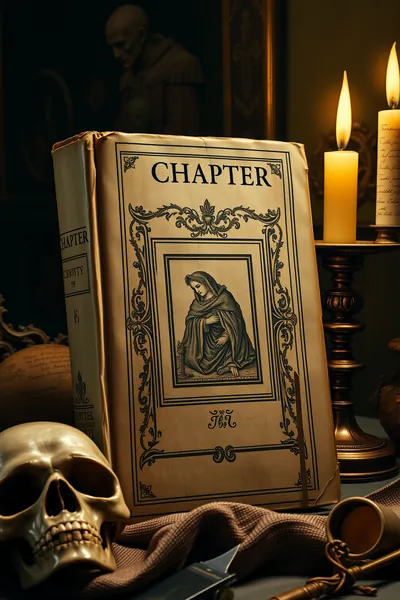
Leben des Antonius

 74
74

Leben des Antonius
Athanasius’s account of Anthony the Great offers a stark, powerful portrait of early Christian asceticism. The depiction of Anthony’s desert solitude and his confrontational encounters with spectral entities remains potent, providing a vivid counterpoint to the more communal monasticism that would later emerge. Athanasius masterfully crafts a narrative that elevates Anthony beyond mere hermit to a spiritual warrior, whose willpower alone repels infernal legions. While the biographical details are sparse, the focus on Anthony's internal and external struggles against temptation is compelling. One limitation, however, is the hagiographic intent, which sometimes blurs historical accuracy for spiritual edification. The recurring motif of Anthony's steadfastness in the face of overwhelming demonic assault, particularly his refusal to be intimidated by visions of monstrous forms, stands as a central pillar of the work. Athanasius’s "Life of Anthony" remains a foundational text for understanding the roots of Western monasticism and the enduring archetype of the spiritual combatant.
📝 Description
74
Athanasius wrote the Life of Anthony around 360 AD, detailing the ascetic desert life of Saint Anthony the Great.
Penned by Bishop Athanasius of Alexandria shortly after Anthony's death in 356 AD, the Life of Anthony recounts the ascetic existence of Saint Anthony the Great in the Egyptian desert. The book functions as both a historical record and a spiritual manual. It describes Anthony's complete rejection of material wealth and his subsequent devotion to prayer and contemplation. The text also covers his famous encounters with demonic entities, events that became a crucial reference point for later Christian theology and art.
This biography is important for those studying early Christian monasticism, hagiography, and ascetic disciplines. It speaks to readers interested in the beginnings of Western religious practices and the evolution of spiritual training. Individuals examining the impact of religious figures on art and literature, particularly medieval and Renaissance portrayals of spiritual conflict, will find this account highly valuable. It also assists those seeking to grasp the historical origins of contemplative practices.
Athanasius's biography of Anthony offers a window into early Christian monasticism, a movement characterized by radical detachment from the material world and intense focus on the spiritual life. Anthony's solitary existence in the desert, away from societal structures, became a model for eremitical traditions. His reported battles with demonic forces illustrate the concept of spiritual warfare, a theme central to many mystical traditions that see the inner life as a constant struggle against temptation and distraction. The book's rapid spread helped solidify these ideas as foundational for subsequent Christian contemplative paths.
💡 Why Read This Book?
• Gain insight into the origins of Christian monasticism by examining Anthony the Great's life as detailed by Athanasius, a key figure from the 4th century. • Understand the concept of spiritual warfare as depicted in early ascetic literature, specifically Anthony's desert battles against demons. • Appreciate the historical context of the 4th-century Church, understanding how figures like Bishop Athanasius shaped foundational religious narratives.
⭐ Reader Reviews
Honest opinions from readers who have explored this book.
❓ Frequently Asked Questions
When did Saint Anthony the Great live?
Saint Anthony the Great lived from approximately 251 to 356 AD, making him one of the earliest and most influential figures in Christian monasticism.
Who wrote the biography 'Leben des Antonius'?
The biography 'Leben des Antonius' was written by Athanasius, the Bishop of Alexandria, shortly after Saint Anthony's death.
What is the significance of Anthony the Great in monastic history?
Anthony the Great is widely considered the founder of eremitic monasticism, inspiring countless ascetics with his life of solitude and spiritual discipline in the Egyptian desert.
What role did demons play in Anthony's life according to Athanasius?
According to Athanasius, demons played a significant role, constantly tempting and attacking Anthony in the desert, testing his faith and resolve, which became a model for spiritual combat.
How did 'Leben des Antonius' influence art?
The vivid descriptions of Anthony's battles with demons in 'Leben des Antonius' heavily influenced medieval and later art, providing a visual vocabulary for spiritual struggle and temptation.
What is eremitic monasticism?
Eremitic monasticism, or the eremitical life, is a form of monastic living characterized by solitary asceticism, typically in a desert or wilderness environment, as exemplified by Saint Anthony.
🔮 Key Themes & Symbolism
Asceticism as Spiritual Combat
The work positions Anthony's rigorous asceticism not just as self-discipline, but as an active, ongoing warfare against demonic forces. The desert is portrayed as a battlefield where spiritual purity is maintained through constant vigilance, prayer, and renunciation. Athanasius illustrates how extreme physical deprivation and solitude forge an impenetrable defense against temptation, making Anthony a paradigm of the solitary warrior for Christ. This theme profoundly shaped the Christian understanding of the monastic life as a path of active spiritual engagement.
The Desert as Crucible
The Egyptian desert in 'Leben des Antonius' is more than a physical location; it is a spiritual crucible designed for purification and testing. Removed from societal distractions, Anthony confronts his own inner demons and the external machinations of Satan. This environment strips away worldly attachments, forcing a direct confrontation with the divine and the demonic. Athanasius uses the desert setting to emphasize that true spiritual growth requires isolation and hardship, transforming the individual through intense trial and tribulation.
Hagiography and the Archetype
Athanasius's biography of Anthony established a powerful archetype for Christian sainthood, particularly for ascetics and hermits. By meticulously detailing Anthony's virtues, his unwavering faith, and his supernatural victories, the work functions as hagiography—a text intended to inspire devotion and emulation. It created a template for future saintly biographies, solidifying the image of the holy man whose life, even in isolation, has wide implications for the wider community and the spiritual landscape.
The Power of the Word and Prayer
Central to Anthony's spiritual arsenal is the power of scripture and persistent prayer. The biography highlights how his unwavering recitation of biblical texts and his continuous prayer life serve as potent weapons against demonic illusions and temptations. Athanasius suggests that disciplined spiritual practice, particularly focusing on divine invocation, fortifies the soul and provides the ultimate defense against evil, making these practices cornerstones of the monastic discipline.
💬 Memorable Quotes
Direct passages from the work, attributed to the author.
“The soul that is earnest in prayer will not be wounded by the devil.”
— This concept emphasizes the protective power of devoted prayer. It suggests that a sincere and focused spiritual practice creates an inner shield, making the individual impervious to demonic influence or spiritual harm.
“The devil fears the desert because it is not filled with the crowds of men.”
— This interpretation highlights the devil's aversion to solitude and asceticism. It implies that the absence of worldly distractions and the presence of intense spiritual focus in the desert render it a hostile environment for demonic activity.
“He who has Christ dwelling in his heart is invincible.”
— This idea posits that an individual whose heart is filled with the presence of Christ becomes spiritually invulnerable, possessing an unshakeable strength derived from divine indwelling.
💡 Key Ideas
Editorial paraphrase of the work's core concepts — not direct quotes.
Anthony, seeing his body grow weak, said, 'Brethren, I am going; I am going where the fathers went before me.'
This paraphrased sentiment reflects Anthony's acceptance of death, framing it not as an end but as a transition to join the lineage of earlier spiritual figures, underscoring the continuity of the ascetic tradition he embodied.
Anthony taught that the true battle is within the heart, against passions.
This paraphrased concept articulates a core tenet of Anthony's teaching: the primary spiritual struggle is not external, but internal, involving the mastery of one's own desires and emotions.
🌙 Esoteric Significance
Tradition
While rooted in early Christianity, "Leben des Antonius" significantly influenced later esoteric traditions by providing a powerful archetype of the solitary spiritual adept. Its emphasis on direct experience of the divine, spiritual warfare, and detachment from the material world aligns with Gnostic and Hermetic ideals of gnosis and inner transformation. The biography's focus on the desert as a space for purification and revelation can be seen as a precursor to later contemplative practices found in Sufism and Western mysticism, positioning Anthony as an early master of inner alchemy.
Symbolism
The desert itself is a potent symbol in the text, representing a space stripped bare of illusion and worldly distraction, ideal for confronting the self and the divine. The demons Anthony battles symbolize not just external evil but also internal psychological and spiritual obstacles—pride, lust, despair—that must be overcome for spiritual progress. Anthony’s physical endurance and resilience in the face of these trials symbolize the strength of the disciplined spirit, capable of transcending material limitations and suffering.
Modern Relevance
Modern practitioners of contemplative prayer, mindfulness, and various forms of asceticism draw inspiration from Anthony's life as depicted by Athanasius. His model of solitary spiritual combat continues to inform contemporary discussions on spiritual resilience and the overcoming of inner obstacles. Thinkers and groups exploring radical detachment from consumer culture and the pursuit of an authentic spiritual path often reference Anthony as a foundational figure, highlighting his relevance for those seeking deep interiority in a noisy world.
👥 Who Should Read This Book
• Aspiring ascetics and monastics seeking to understand the historical roots and foundational principles of solitary spiritual life. • Scholars of early Christianity, hagiography, and religious history interested in primary source material concerning the development of monasticism. • Readers interested in the history of spiritual warfare concepts and the psychological/spiritual battles described in ancient texts.
📜 Historical Context
Composed by Athanasius of Alexandria around 360 AD, "Leben des Antonius" emerged during a central era for Christianity. Athanasius himself was deeply embroiled in the Nicene controversies, particularly the struggle against Arianism, a theological current that challenged Christ's divinity. Anthony the Great (c. 251–356 AD), living a life of extreme asceticism in the Egyptian desert, represented a powerful counter-current to the intellectualism of urban centers like Alexandria and the increasing clericalization of the Church. His eremitic model offered a radical alternative to worldly engagement. The biography’s rapid translation into Latin and widespread dissemination cemented its influence, serving as a blueprint for subsequent hagiography and shaping the popular imagination of monastic ideals. It provided a compelling narrative of spiritual heroism that resonated across the late antique world, offering a stark contrast to the philosophical debates then occupying figures like Julian the Apostate.
📔 Journal Prompts
Anthony's unwavering focus amidst demonic assaults: what internal 'demons' most challenge your spiritual practice?
The desert as a place of purification: Reflect on a period of solitude and its transformative effect on your inner life.
Athanasius's portrayal of Anthony's asceticism: How does radical self-discipline manifest in your pursuit of spiritual goals?
The concept of spiritual combat: Identify one area where you actively engage in 'spiritual warfare' in your daily life.
Anthony's renunciation of worldly goods: What does true detachment mean for your spiritual path?
🗂️ Glossary
Asceticism
A rigorous practice of self-discipline, abstention, and self-denial, often undertaken for religious or spiritual reasons, aimed at achieving spiritual purity or closeness to the divine.
Eremitic Monasticism
A form of monasticism characterized by the solitary life of a hermit, typically living in a remote or deserted place, focused on prayer and contemplation.
Hagiography
The writing of the lives of saints, often emphasizing miraculous events and spiritual virtues, intended to inspire devotion and serve as a model for believers.
Spiritual Warfare
The concept of an ongoing struggle between spiritual forces of good and evil, often involving the individual's internal battles against temptation and the external influence of malevolent spiritual entities.
Demons
In the context of this text, malevolent spiritual beings believed to actively oppose God and tempt humans, seeking to lead them into sin and away from salvation.
Athanasius of Alexandria
A prominent 4th-century Christian bishop and theologian, a key defender of Nicene orthodoxy against Arianism, and the author of the biography of Saint Anthony.
The Desert Fathers
Early Christian monks and ascetics who lived in the deserts of Egypt, Syria, and North Africa from the 3rd century onwards, known for their wisdom, spiritual teachings, and extreme asceticism.
This book appears in 1 collection
🔮 Readers Also Liked
Browse all →








From the “Desert Fathers” Collection
View all →







More Free Sacred Texts & Gnosticism Books
View all →