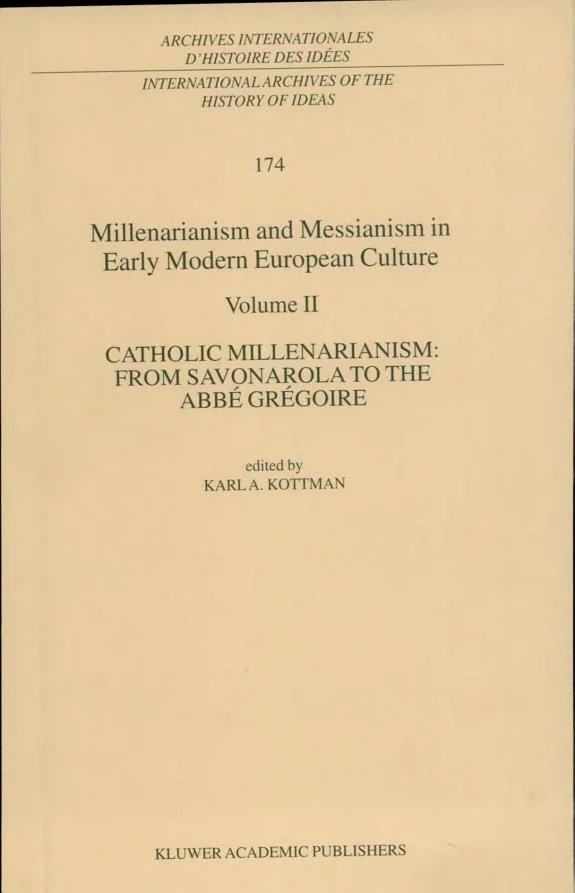
Millenarianism and Messianism in Early Modern European Culture
 82
82

Millenarianism and Messianism in Early Modern European Culture
The initial blurb’s reference to Cornelius a Lapide’s prediction for the year 2000, while attention-grabbing, slightly misdirects from the book’s core focus on early modern Europe. The strength of Millenarianism and Messianism lies in its meticulous dissection of how apocalyptic thought wasn't a monolithic entity but a dynamic force interacting with diverse cultural and intellectual currents. The essays by specialists, such as those focusing on figures like Savonarola or Luis de León, provide granular detail that challenges simplistic notions of historical belief systems. A limitation, however, is the collection's academic density; readers seeking a broad overview might find the specialized analyses demanding. The discussion surrounding the complex calculations and interpretations of biblical prophecy, particularly how these informed political action or societal anxieties, stands out as a particularly illuminating aspect. Ultimately, the book serves as an essential, albeit rigorous, resource for understanding a crucial, often overlooked, dimension of early modern European thought.
📝 Description
82
Published in 2001, this collection examines apocalyptic beliefs in early modern Europe.
This volume collects essays on millenarianism and messianism in early modern European culture, spanning roughly the 15th to the 18th centuries. The contributors focus on how apocalyptic expectations and messianic figures influenced intellectual and social life during this era. The book moves beyond purely theological discussions to show the pervasiveness of these eschatological visions in politics and society.
It addresses how fervent beliefs about the end times were amplified by major events such as the Reformation and the Thirty Years' War. The essays analyze the role of these ideas, which were not marginal but central to the thinking of many influential figures and movements, often in tension with burgeoning rationalism. The collection includes specific figures and interpretations within both Catholic and Protestant traditions.
The book examines beliefs about the end times and the coming of a savior, concepts that have long existed within various religious and philosophical traditions. It situates these early modern expressions within a broader history of eschatological thought that influenced how people understood history and society. The collection highlights how these ideas intersected with political changes, scientific discoveries, and intellectual shifts, forming a significant undercurrent in European culture.
💡 Why Read This Book?
• Gain an understanding of how specific prophetic dates, like the 25th of March, 2000 (mentioned in relation to Cornelius a Lapide's interpretations), influenced early modern Catholic thought, revealing the persistent nature of apocalyptic timelines. • Explore the detailed analyses of nine major Catholic authors, including Savonarola and António Vieira, to grasp the diverse ways millenarian and messianic ideas were articulated and disseminated within the Church. • Understand the historical context of early modern Europe, recognizing how events like the Thirty Years' War and the Reformation were often interpreted through an eschatological lens, shaping societal responses and intellectual discourse.
⭐ Reader Reviews
Honest opinions from readers who have explored this book.
❓ Frequently Asked Questions
What is the primary focus of Millenarianism and Messianism in Early Modern European Culture?
The book focuses on apocalyptic beliefs, specifically millenarianism (belief in a future golden age) and messianism (expectation of a savior), and their significant impact on intellectual, social, and political life in Europe from the late Middle Ages through the Enlightenment.
Which historical figures are discussed in relation to millenarian thought?
The volume features detailed presentations on nine major Catholic authors and figures who engaged with apocalyptic thought, including prominent reformers and theologians such as Savonarola, Luis de León, and António Vieira.
What historical period does the book primarily cover?
It covers the early modern period in Europe, spanning roughly from the 15th century through the 18th century, a time characterized by intense religious upheaval and profound societal changes.
How did the book's original blurb connect to a modern date?
The original blurb mentioned Cornelius a Lapide, a Catholic exegete, suggesting March 25, 2000, as a likely date for the world's end, illustrating the long legacy of apocalyptic calculation and commentary.
What is millenarianism?
Millenarianism is a religious belief system centered on the anticipation of a major, transformative event, often a future golden age or a literal thousand-year reign of peace and righteousness, frequently linked to divine intervention.
What is messianism?
Messianism refers to the belief in the coming or existence of a messiah or savior figure who will bring about a period of salvation, redemption, or a fundamental change in the world order, often associated with divine appointment.
🔮 Key Themes & Symbolism
Apocalyptic Prophecy and Calculation
The work examines the intense focus on predicting future events, particularly the end of the world, prevalent in early modern Europe. This included detailed chronological calculations based on biblical texts and historical cycles, often linked to figures like Cornelius a Lapide. These prophecies were not mere speculation but often informed political actions and societal anxieties, reflecting a worldview where divine intervention was expected to reshape the earthly realm.
Messianic Expectations and Figures
Beyond general end-times beliefs, the book explores the concept of messianism – the anticipation of a savior figure. It analyzes how various individuals and groups, from religious reformers to political leaders, either claimed messianic status or were perceived as such by their followers. This theme explores the psychological and social appeal of charismatic leaders who promised salvation and a new era.
Cultural and Intellectual Impact
Millenarianism and Messianism were not confined to theological circles; they deeply influenced the broader culture of early modern Europe. The essays explore how these ideas permeated political discourse, artistic expression, and everyday beliefs, often interacting with or challenging emerging rationalist and scientific worldviews. The book highlights how eschatological fervor shaped responses to major historical events like wars and religious schisms.
Catholic Millenarian Traditions
A significant portion of the work focuses on the Catholic tradition, examining how figures like Savonarola and António Vieira interpreted scripture and history through an apocalyptic lens. It reveals a complex internal dialogue within Catholicism regarding end-times prophecies and the role of the Church in ushering in a new age, often distinct from Protestant millenarian movements.
💬 Memorable Quotes
Direct passages from the work, attributed to the author.
“Cornelius a Lapide, S.J., wrote that the 25th of March, 2000, was the most likely date for the world to end.”
— This statement, cited in the original blurb, exemplifies the detailed chronological focus of some early modern apocalyptic thought. It highlights how specific dates were derived from biblical exegesis, demonstrating a widespread belief in the imminence of divine judgment and transformation.
“Catholic Millenarianism offers an authoritative overview of Catholic apocalyptic thought.”
— This indicates the book's scholarly ambition to provide a comprehensive survey of how Catholic thinkers approached eschatology. It suggests a focus on the theological underpinnings and historical development of these beliefs within a specific religious tradition.
“Detailed presentations by specialists on nine major Catholic authors, such as Savonarola, Luis de León, and António Vieira.”
— This points to the book's methodology: in-depth case studies of key figures. It signals that the work will explore the nuanced contributions and distinct perspectives of influential individuals on millenarian and messianic themes.
“The paramount modern Catholic exegete, Cornelius a Lapide, S.J.”
— Identifying Lapide as 'paramount' underscores his significant authority and influence within Catholic biblical interpretation during his time, lending weight to his apocalyptic prognostications and the historical importance of such calculations.
“Catholic Millenarianism does not let the day pass without comment.”
— This phrase suggests a critical engagement with the legacy of specific apocalyptic predictions. It implies the book analyzes how historical dates, even those that pass unremarked by the general populace, continued to hold significance for certain theological and intellectual traditions.
🌙 Esoteric Significance
Tradition
While rooted in Christian theology, the exploration of millenarianism and messianism within this volume touches upon broader esoteric traditions that anticipate transformative epochs and divinely guided saviors. It engages with the historical currents that influenced both mainstream religious thought and more covert esoteric practices seeking to understand or hasten divine timelines and interventions.
Symbolism
Key symbols likely explored include apocalyptic imagery drawn from texts like the Book of Revelation (e.g., beasts, trumpets, judgment), which were interpreted to signify historical epochs and divine interventions. The concept of the 'thousand-year reign' (millennium) itself functions as a potent symbol of ultimate divine order and peace, a recurring motif in various esoteric and religious eschatologies.
Modern Relevance
Contemporary interest in apocalyptic scenarios, conspiracy theories, and the search for meaning in times of crisis draws parallels to the early modern mindset explored here. Thinkers and groups focused on societal transformation, end-times prophecy, or the identification of guiding figures in history may find historical precedents and analytical frameworks within this work.
👥 Who Should Read This Book
• Scholars of early modern European history and religious studies seeking to understand the pervasive influence of apocalyptic beliefs on society and politics. • Students of comparative religion interested in the development and expression of millenarian and messianic ideas across different theological traditions. • Researchers of the history of ideas who examine how eschatological frameworks shaped intellectual discourse and cultural anxieties during a period of significant change.
📜 Historical Context
Millenarianism and Messianism in Early Modern European Culture emerges from a period marked by profound religious and political upheaval. The late 15th through the 18th centuries witnessed the Reformation, the Counter-Reformation, the Thirty Years' War, and the burgeoning Scientific Revolution, all of which fueled intense speculation about divine providence and the imminent end of times. Catholic thinkers like Cornelius a Lapide, writing in the early 17th century, represented a significant strand of apocalyptic interpretation that sought to find divine order and timing within historical events. This collection's focus on Catholic authors situates it within scholarship examining the diverse manifestations of eschatological thought, distinguishing it from, yet often in dialogue with, the flourishing millenarianism within Protestant movements. The work addresses how these beliefs intersected with political ambitions and societal anxieties, particularly in response to conflict and perceived divine judgment, challenging the notion that such ideas were solely fringe phenomena.
📔 Journal Prompts
The concept of the millennium as articulated by figures like Savonarola.
António Vieira's interpretation of prophecy in the context of 17th-century Portugal.
The connection between the Thirty Years' War and contemporary millenarian expectations.
Cornelius a Lapide's methods for calculating end-times dates.
The role of messianic figures in mobilizing early modern populations.
🗂️ Glossary
Millenarianism
A belief system centered on the expectation of a future transformative event, often a golden age or a literal thousand-year reign of peace, typically brought about by divine intervention or a messianic figure.
Messianism
The belief in the coming or existence of a messiah or savior figure who will bring about salvation, redemption, or a fundamental change in the world order, often with political or spiritual implications.
Apocalyptic Thought
Beliefs and interpretations concerning the end of the world or a major transformation of society, often involving divine judgment, revelation, and the establishment of a new order, frequently drawing on prophetic texts.
Exegesis
The critical explanation or interpretation of a text, especially of biblical texts. In the context of millenarianism, it involves deriving prophecies and timelines from scripture.
Eschatology
The branch of theology concerned with the final destiny of the soul and the world; the study of 'end things'.
Savonarola, Girolamo
A Dominican friar active in Florence in the late 15th century, known for his fiery sermons, political influence, and prophecies predicting divine judgment and reform, often associated with millenarian fervor.
Cornelius a Lapide
A 17th-century Flemish Jesuit priest and biblical scholar, renowned for his comprehensive commentaries on scripture, which included detailed, and sometimes predictive, interpretations of apocalyptic passages.
This book appears in 2 collections
🔮 Readers Also Liked
Browse all →









From the “Messianism” Collection
View all →







More Free Esoteric History & Biography Books
View all →