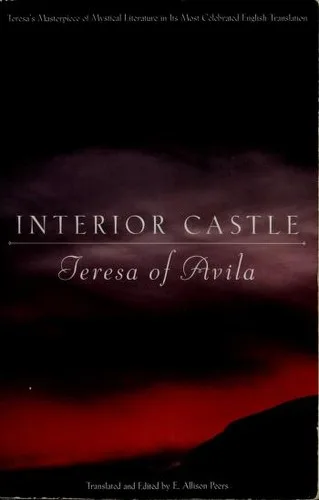
Castillo interior o las moradas
 72
72

Castillo interior o las moradas



Evander Ashcroft (Alchemy & Hermeticism Editor) — Evident in 'The Interior Castle' is Teresa of Ávila's profound grasp of the soul's alchemical journey. She meticulously details the stages of inner transformation, akin to the successive operations in the Great Work. Her descriptions of the soul's 'mansions' offer a symbolic blueprint for spiritual purification and the attainment of divine union, resonating deeply with hermetic principles of ascent and integration. This is essential reading for anyone exploring the esoteric dimensions of Christian mysticism, revealing hidden pathways to inner illumination and spiritual mastery.
📝 Description
72
Teresa of Avila's 1577 work maps the soul's journey through seven spiritual mansions.
Written in 1577, 'Castillo interior o las moradas' (The Interior Castle) by Teresa of Avila details the soul's progress toward divine union. Teresa describes seven 'mansions' or dwelling places within the soul, each representing a distinct stage of spiritual development. She uses vivid imagery and personal experience to explain the soul's relationship with God, the obstacles encountered on the spiritual path, and the transformations that occur through prayer and divine grace. The book is not a theoretical manual but a practical guide for those seeking a deeper connection with the divine. It emphasizes the importance of humility, detachment, and interior solitude as means to advance through these stages.
Teresa's prose is direct, yet rich with metaphor. She illustrates the soul's inner landscape, comparing it to a castle with various rooms. Moving through these rooms signifies increasing closeness to God. The final mansions represent the highest levels of mystical union. The work aims to encourage readers to turn inward, recognizing the presence of God within their own souls and cultivating the interior life.
Teresa of Avila's 'The Interior Castle' is a significant text within Christian mysticism, a tradition often categorized under esoteric spirituality. It reflects the contemplative practices and theological frameworks prevalent in 16th-century Spain, particularly the Carmelite reform. The book's focus on direct experience of the divine, the inner journey, and the transformation of the self aligns with broader esoteric concepts of spiritual alchemy and the ascent of the soul. It explores the hidden dimensions of consciousness and the soul's potential for union with the absolute, drawing from a rich heritage of ascetical and mystical theology.
💡 Why Read This Book?
This seminal work offers an unparalleled roadmap for the inner life, guiding seekers through the 'mansions' of the soul toward divine union. It provides profound insights into prayer, contemplation, and the nature of spiritual progress, making it indispensable for those on a path of self-discovery and mystical exploration. Scholars and practitioners alike will find its symbolic language and spiritual depth endlessly rewarding.
⭐ Reader Reviews
Honest opinions from readers who have explored this book.
❓ Frequently Asked Questions
What is the main allegory in 'The Interior Castle'?
The central allegory is the soul as a castle with seven 'mansions' or rooms, representing stages of spiritual development and closeness to God.
Is this book solely for Catholics?
While rooted in Catholic tradition, its exploration of the soul's inner journey and mystical ascent transcends denominational boundaries, offering universal wisdom.
What is the significance of the 'mansions'?
Each mansion signifies a different level of spiritual advancement, from initial self-awareness to profound union with the Divine, marked by increasing purity and divine indwelling.
How does this book relate to mysticism?
It is a foundational text in Christian mysticism, detailing the practices and experiences of contemplative prayer and the soul's direct encounter with the divine.
Can beginners benefit from 'The Interior Castle'?
Yes, while profound, Teresa's accessible language and vivid metaphors make it a rewarding read for beginners seeking to understand spiritual growth and inner contemplation.
🔮 Key Themes & Symbolism
The Architecture of the Soul
Teresa of Ávila masterfully constructs an interior landscape, portraying the soul as a many-sided castle. Each of the seven 'mansions' represents a distinct stage of spiritual development, a progressively deeper dwelling within oneself that mirrors the soul's journey toward divine union. This intricate architecture serves as a profound metaphor for the stages of prayer, purification, and the soul's capacity to receive divine grace. It invites readers to visualize their own inner world as a sacred space, capable of profound transformation and divine indwelling.
The Alchemical Nature of Prayer
Within the 'Interior Castle,' prayer is not merely recitation but an alchemical process of transformation. Teresa elucidates how different modes of prayer act as catalysts, refining the soul and drawing it closer to its divine source. The journey through the mansions mirrors the stages of spiritual alchemy, where impurities are burned away, and the soul is transmuted into a purer essence, capable of direct communion with the Beloved. This perspective elevates prayer to a transformative art, a deliberate engagement with the divine for spiritual purification and enlightenment.
The Unveiling of Divine Presence
The ultimate goal of the soul's journey through the 'Interior Castle' is the direct experience and unveiling of God's presence. Teresa describes this as a process of growing intimacy, moving from distant awareness to profound union. The later mansions are characterized by an overwhelming sense of God's immanence and transcendence, where the soul recognizes its inherent divinity and participates in the divine life. This theme speaks to the esoteric promise of spiritual realization – the deep knowing that the Divine is not external but immanent within the very core of our being.
💬 Memorable Quotes
Direct passages from the work, attributed to the author.
“Prayer is not a matter of many words, but of great love.”
— This highlights that the essence of prayer lies not in eloquent discourse but in the depth of one's heartfelt devotion and sincere desire for connection.
“All the torments of hell are nothing compared to the suffering of a soul that has offended God.”
— This emphasizes the profound spiritual agony of separation from the divine, portraying the offense against God as the ultimate source of suffering.
“Let nothing disturb you, let nothing frighten you; all things are passing away; God never changes.”
— A mantra of spiritual stability, reminding the reader that transient earthly matters hold no true power over an unshakeable faith in the eternal nature of the Divine.
“There are souls who have such a strong desire for virtue that they would rather die than commit a mortal sin.”
— This speaks to the profound commitment and unwavering resolve of the truly virtuous soul, prioritizing spiritual integrity above all else, even life itself.
“It is not necessary to think of the things of God with the understanding; it is enough to love them.”
— This encourages a non-intellectual, heart-centered approach to spirituality, suggesting that divine connection is often found through pure, unadulterated love rather than complex reasoning.
🌙 Esoteric Significance
Tradition
This work is a central to Christian Mysticism, particularly within the Carmelite tradition. It aligns with the broader esoteric pursuit of direct, unmediated experience of the Divine, mirroring concepts found in Neoplatonism and Sufism regarding the soul's ascent and union with the Absolute. Teresa's methodical approach to inner transformation and her focus on the 'prayer of union' resonate with the alchemical and Gnostic traditions' emphasis on inner gnosis and spiritual liberation.
Symbolism
The 'Interior Castle' itself is a powerful symbol of the soul, with its seven mansions representing stages of spiritual purification and growth. Water, light, and the imagery of the Beloved are recurring symbols, signifying divine grace, illumination, and the intimate relationship between the soul and God. The text is replete with metaphors that draw from everyday life, transforming them into vehicles for profound spiritual insight, akin to how alchemists used material processes to symbolize spiritual operations.
Modern Relevance
In a world often characterized by external distractions and spiritual disconnection, 'The Interior Castle' offers a timeless guide to cultivating inner peace and profound self-awareness. Its emphasis on the transformative power of contemplation and the inherent divinity within each individual resonates deeply with contemporary seekers of mindfulness, personal growth, and authentic spiritual experience. The book provides a robust framework for understanding and navigating one's inner landscape, making it relevant to anyone on a journey of self-discovery and spiritual deepening.
👥 Who Should Read This Book
This profound work is essential for anyone beginning a serious spiritual journey. Beginners will find a clear, albeit challenging, introduction to contemplative prayer and the nature of inner growth. Scholars of religious history and mysticism will appreciate its historical context and theological depth. Practitioners of meditation and mindfulness will discover a rich tradition of inner exploration. Seekers yearning for a deeper connection with the Divine, and those interested in the esoteric dimensions of faith, will find 'The Interior Castle' an indispensable guide to the hidden chambers of the soul.
📜 Historical Context
Written in the 16th century, 'The Interior Castle' emerged during the height of the Counter-Reformation and the Spanish Golden Age, a period marked by intense religious fervor and intellectual activity. Saint Teresa of Ávila, a Carmelite nun and mystic, penned this work amidst significant ecclesiastical reform and a flourishing of Spanish literature. Her writings reflect the spiritual anxieties and aspirations of an era seeking deeper, more personal engagement with faith. The book stands as a proof of the enduring power of contemplative spirituality, offering a profound counterpoint to more rigid theological doctrines and providing a wide range of personal mystical experience within the context of established Catholic doctrine.
📔 Journal Prompts
Meditate on the concept of a 'mansion' within your own soul. What does it represent, and what spiritual experiences have occurred there?
How does Teresa's description of prayer as 'great love' challenge your current understanding or practice of prayer?
Explore the symbolism of light and darkness in your own inner life. Where do you perceive divine illumination, and where do you encounter spiritual shadows?
Consider a time when you felt profoundly close to the Divine. How does this experience align with Teresa's descriptions of the later mansions?
What 'torments' of the soul do you currently experience, and how might understanding them as an 'offense against God' (in Teresa's context) offer a new perspective?
🗂️ Glossary
Mansion
In Teresa's text, a 'mansion' refers to a distinct dwelling place or stage within the soul, representing a level of spiritual development and proximity to God.
Spiritual Marriage
The highest state of union with God described by Teresa, characterized by profound intimacy, peace, and a mutual indwelling of the soul and the Divine.
Prayer of Union
A profound state of contemplative prayer where the soul experiences direct, intimate union with God, transcending discursive thought and sensory perception.
Discursive Prayer
A form of prayer that involves active thinking, reasoning, and reflection on spiritual matters, often used in the earlier stages of spiritual development.
Active Recollection
A state of inner quietude and focused attention on God, achieved through deliberate effort, often a precursor to deeper contemplative states.
This book appears in 3 collections
🔮 Readers Also Liked
Browse all →









More by Teresa of Avila
All books →
![Camino de perfección [por] Santa Teresa de Jesús](/img/thumb/camino-de-perfecci-n-por-santa-teresa-de-jes-s-teresa-of-avila.webp)




From the “Tarot” Collection
View all →







More Free Divination & Tarot Books
View all →