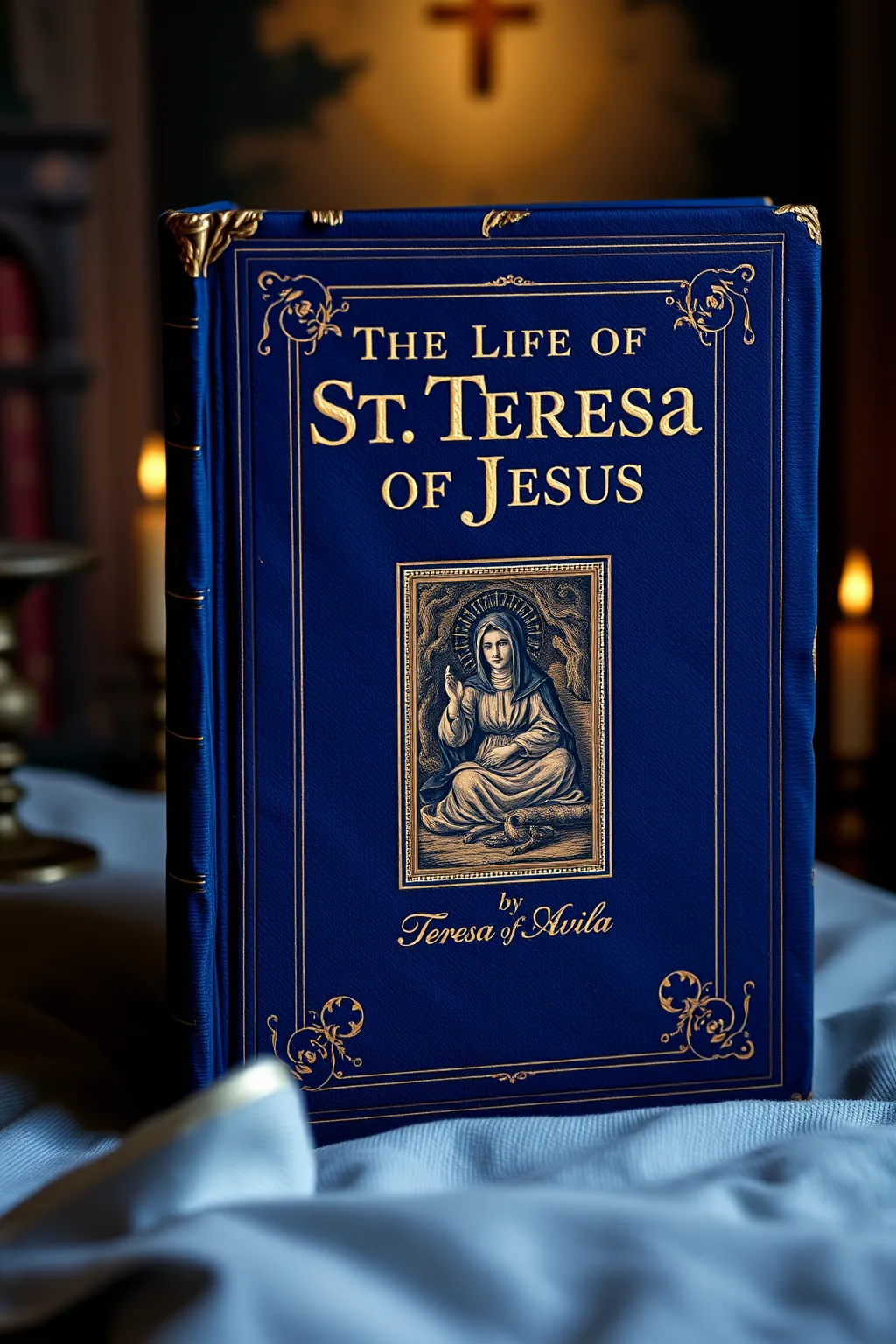
The Life of St. Teresa of Jesus
 84
84

The Life of St. Teresa of Jesus



Silas Hawthorne (Hermetic Studies Editor) — The Life of St. Teresa of Jesus stands as a monumental testament to the heights of Christian mystical experience. Teresa's unflinching honesty in detailing her interior battles and divine encounters offers a rare glimpse into the alchemical transformation of the soul. Her descriptions of the stages of prayer and the soul's journey are not merely devotional but contain profound psychological and spiritual insights, resonating with ancient wisdom traditions. This is essential reading for anyone exploring the esoteric dimensions of faith, particularly those interested in the integration of the human and divine, and the disciplined pursuit of ultimate truth. A cornerstone of mystical literature.
📝 Description
84
Written in 1588, Teresa of Avila's autobiography records her spiritual experiences and teachings on prayer.
Teresa of Avila's autobiography, published posthumously in 1588, details her spiritual life and her understanding of divine union. She recounts her prayer experiences, including ecstasies and trials, as she sought a closer relationship with God. The book acts as a record of her personal ascent, describing the inner workings of the soul and the presence of the divine.
Her writings illuminate the path of Christian mysticism, offering specific insights into contemplative prayer and the direct experience of God. Teresa presents a structured approach to the spiritual life, guiding the reader through different stages of interior prayer. This account is a significant document for understanding 16th-century Spanish mysticism and its emphasis on inner transformation.
This work is a central text within Christian esotericism, specifically the tradition of Spanish mysticism. Teresa of Avila describes a direct, unmediated experience of the divine, a hallmark of esoteric practice across various traditions. Her articulation of the soul's journey through distinct states of prayer and union with God provides a detailed map for the interior life. It reflects a lineage of mystical thought that emphasizes inner transformation and direct apprehension of ultimate reality, often drawing on a rich symbolic language to describe ineffable experiences.
✍️ Author
💡 Why Read This Book?
Uncover the secrets of direct divine communion as revealed by one of history's most potent mystics. Teresa of Ávila's autobiography is a profound exploration of the soul's journey, offering practical wisdom and inspiration for seekers of all traditions. Ideal for those drawn to contemplative practices, esoteric theology, and the rich tapestry of Christian mysticism. This book provides a roadmap to inner transformation.
⭐ Reader Reviews
Honest opinions from readers who have explored this book.
❓ Frequently Asked Questions
What is the primary focus of "The Life of St. Teresa of Jesus"?
The book primarily chronicles Saint Teresa of Ávila's personal spiritual journey, her profound experiences of prayer, mystical encounters, and the founding of her reformed Carmelite convents, offering insights into the ascent of the soul towards divine union.
Is this book suitable for beginners in mysticism?
While profound, Teresa's direct and honest style makes it accessible. Beginners seeking a foundational understanding of Christian mysticism and contemplative prayer will find it illuminating, though some esoteric concepts may require deeper reflection.
What does St. Teresa mean by "interior castle"?
The "interior castle" is a powerful metaphor Teresa uses to describe the soul, envisioning it as a dwelling with many mansions. Each mansion represents a stage of spiritual progress, with the ultimate goal being to reach the innermost chamber where God resides.
How does St. Teresa's work relate to other esoteric traditions?
Teresa's emphasis on direct experience, inner transformation, and the ascent of consciousness echoes themes found in Hermeticism, Neoplatonism, and Sufism, demonstrating universal principles of spiritual seeking across diverse traditions.
Can this book be read as a historical document or a spiritual guide?
It serves both purposes. As a historical document, it offers invaluable insight into 16th-century Spain and religious reform. As a spiritual guide, it provides timeless wisdom and practical guidance for anyone on a path of inner growth and divine seeking.
🔮 Key Themes & Symbolism
The Ascent of the Soul
Teresa meticulously maps the soul's journey towards God, often described through the metaphor of a castle with various chambers. This theme explores the stages of prayer, from initial engagement to the highest forms of contemplative union, detailing the purification and transformation required. It speaks to an inner alchemy, where the soul sheds worldly attachments and vices to become a pure vessel for divine grace. The book offers a blueprint for spiritual evolution, emphasizing the active role of the individual in this sacred ascent, guided by faith, love, and persistent prayer.
Divine Union and Ecstatic Experience
At the heart of Teresa's narrative lies the ecstatic apprehension of the Divine. She recounts profound mystical experiences, including visions and locutions, not as mere supernatural events, but as the natural culmination of a soul intensely seeking God. This theme explores the nature of divine love, the sweet suffering of spiritual longing, and the profound peace that accompanies moments of direct communion. It explores the ineffable quality of these encounters, where the boundaries between the human and the divine blur, leading to a transformation of consciousness and a deep, abiding sense of God's presence.
The Foundation of Spiritual Discipline
Beyond the rapturous visions, Teresa's life and writings are a proof of the necessity of rigorous spiritual discipline. Her autobiography details the practicalities of prayer, the importance of humility, obedience, and detachment, and the constant battle against the ego and worldly distractions. This theme highlights the active, disciplined approach required for spiritual growth, demonstrating that profound mystical experiences are often built upon a foundation of consistent practice and inner fortitude. It underscores that the spiritual life is not solely passive reception but also active striving and dedicated effort.
💬 Memorable Quotes
Direct passages from the work, attributed to the author.
“I do not want to create the impression that I am a learned person.”
— This humble declaration reveals Teresa's reliance on direct divine inspiration over academic knowledge, a hallmark of true mystical insight that transcends intellectual dogma.
“Prayer is not asking. Prayer is putting oneself in God's presence.”
— A profound shift in understanding prayer from a transactional request to a state of being, emphasizing presence and communion as the essence of connection with the Divine.
“Let nothing disturb you, let nothing frighten you, all things pass, God never changes.”
— A mantra of inner peace and resilience, anchoring the soul in the immutable nature of God amidst the fleeting impermanence of worldly affairs.
“The soul is not a thing that can be bought or sold.”
— An assertion of the soul's inherent sacredness and its indivisible connection to the Divine, beyond any material or external valuation.
“We must not be discouraged by the difficulties of the spiritual path.”
— An encouragement to perseverance, acknowledging the inherent challenges of inner work while affirming that steadfastness leads to ultimate spiritual fulfillment.
🌙 Esoteric Significance
Tradition
St. Teresa's work is a central to Christian Mysticism, specifically within the Carmelite tradition. However, its profound exploration of the soul's journey, inner transformation, and direct apprehension of the Divine resonates deeply with broader esoteric currents. It shares common ground with Hermeticism's focus on inner alchemy and the ascent of consciousness, Neoplatonism's concept of emanation and return to the One, and even Sufi mysticism's emphasis on divine love and annihilation of the self in union with God. Her writings offer a unique Christian interpretation of universal esoteric principles.
Symbolism
The "interior castle" is the most prominent symbol, representing the soul as a complex dwelling place where one journeys inward to encounter God. Water, often appearing in her visions, symbolizes divine grace, purification, and the life-giving presence of the Holy Spirit. The "wound of love" signifies the soul's intense longing for and connection with the Divine, a painful yet ecstatic state of being. Light and darkness are also prevalent, representing spiritual illumination and the obscurities of the ego or worldly attachments, respectively. These symbols form a rich lexicon for understanding the inner spiritual landscape.
Modern Relevance
In an age often characterized by external distractions and a perceived disconnect from the spiritual, Teresa's autobiography offers a vital anchor. Her emphasis on cultivating inner stillness, fostering a deep personal relationship with the Divine, and finding profound meaning within the ordinary provides a timeless antidote to modern spiritual malaise. The principles of self-awareness, disciplined practice, and the pursuit of authentic connection she espouses are directly applicable to contemporary seekers looking to work through the complexities of life with greater peace, purpose, and spiritual depth. Her legacy inspires a return to the essential, the eternal within the self.
👥 Who Should Read This Book
This profound autobiography is essential for anyone beginning or deepening their spiritual journey. **Beginners** will find a clear, albeit intense, introduction to the field of Christian mysticism and contemplative prayer. **Scholars of religious history and comparative mysticism** will discover a rich primary source offering outstanding insight into 16th-century spirituality and its universal themes. **Seekers of divine connection** will be inspired by Teresa's unwavering devotion and her practical guidance on cultivating inner peace. **Practitioners of meditation and contemplative disciplines** will find valuable wisdom on reading through the interior life and fostering a deeper, more intimate relationship with the Sacred. It is a book for the soul in earnest pursuit of truth.
📜 Historical Context
Written in the tumultuous 16th century, a period of intense religious fervor and upheaval following the Protestant Reformation, Teresa of Ávila's autobiography emerged as a powerful counter-narrative within Catholicism. The Counter-Reformation was a time of both rigid doctrine and deep spiritual exploration, and Teresa, a key figure in this era, navigated these currents with remarkable grace and conviction. Her work provided a much-needed emphasis on interiority and personal experience, offering a vibrant alternative to purely scholastic or external forms of devotion. The founding of her reformed Carmelite convents, a direct outcome of her spiritual insights, represented a radical return to asceticism and contemplation, challenging the prevailing norms within religious orders.
📔 Journal Prompts
Reflect on your own "interior castle." What are its current "mansions" or stages of spiritual development?
How does Teresa's description of "prayer as putting oneself in God's presence" challenge or affirm your current understanding of prayer?
Identify a "disturbance" or "fright" in your life and apply Teresa's wisdom: 'Let nothing disturb you, let nothing frighten you.'
Consider the "wound of love" Teresa describes. How might this concept relate to your own experiences of longing and connection?
What "worldly attachments" does Teresa suggest we shed? How can you begin to detach from them in your daily life?
🗂️ Glossary
Mysticism
The direct, intuitive, and often ineffable experience of the divine or ultimate reality, transcending ordinary sensory perception and intellectual understanding.
Contemplation
A deep, silent, and attentive form of prayer that focuses on the presence of God, characterized by passive reception and loving gaze rather than active petition or discursive thought.
Locutions
Inner voices or divine messages perceived by a mystic as originating from God, distinct from one's own thoughts or imagination.
Ecstasy
A state of profound spiritual rapture or transport, where the individual's consciousness is temporarily elevated beyond normal experience, often characterized by a feeling of overwhelming divine presence and union.
Asceticism
A spiritual discipline involving rigorous self-denial, austerity, and the renunciation of worldly pleasures or comforts to achieve spiritual purity and draw closer to God.
This book appears in 2 collections
🔮 Readers Also Liked
Browse all →



More by Teresa Of Avila
All books →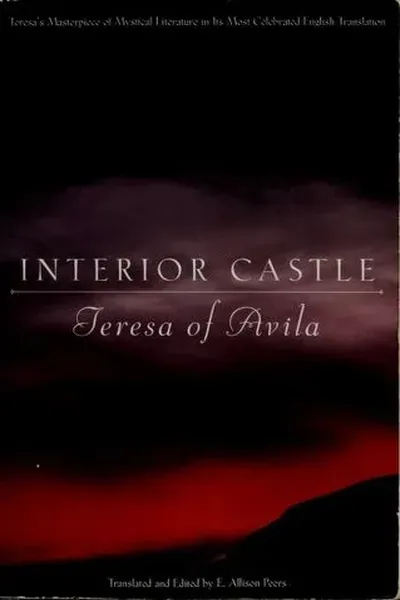
![Camino de perfección [por] Santa Teresa de Jesús](/img/thumb/camino-de-perfecci-n-por-santa-teresa-de-jes-s-teresa-of-avila.webp)




From the “Meditation” Collection
View all →




More Free Mysticism & Contemplation Books
View all →