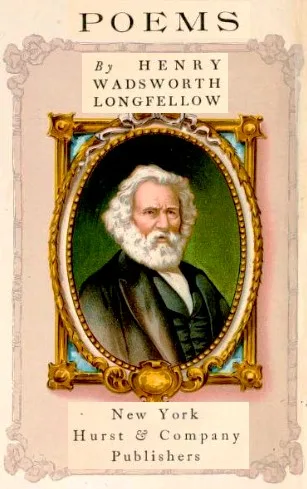
The Song of Hiawatha and Other Poems
 73
73

The Song of Hiawatha and Other Poems



Review by Isolde Whitaker (Sacred Texts Editor) — Henry Wadsworth Longfellow's "The Song of Hiawatha and Other Poems" offers a surprising depth for the discerning reader seeking esoteric resonance. While ostensibly a collection of narrative and lyrical poetry, its true strength lies in the subtle archetypes and universal themes it invokes. Longfellow, through his masterful command of language and imagery, taps into primal human experiences and the spiritual landscape of Native American lore, presenting a potent blend of myth and introspection. The collection serves as an accessible entry point for those new to mystical thought, while offering seasoned practitioners layers of symbolic meaning to ponder. Its enduring appeal lies in its ability to evoke a sense of the sacred within the ordinary.
📝 Description
73
Henry Wadsworth Longfellow published 'The Song of Hiawatha' in 1855, a narrative poem drawing from Native American legends.
Henry Wadsworth Longfellow's 1855 collection, 'The Song of Hiawatha and Other Poems,' goes beyond its well-known title piece. While Hiawatha retells Indigenous myths through a unique meter, the volume also includes other verses that touch on themes of nature and human experience.
Longfellow engaged with elements of symbolism and myth, suggesting connections between the natural world and deeper realities. The poems invite reflection on existence and the unseen forces that influence life. This collection appeals to readers interested in how poetry can touch upon spiritual or philosophical ideas, aiming to evoke imagination and a sense of the extraordinary within the ordinary.
While not explicitly occult, Longfellow's work in this collection engages with themes that resonate with esoteric traditions. His interest in myth, symbolism, and the interconnectedness of nature suggests an awareness of deeper, often unseen, structures of reality. The poems can be read as meditations on universal principles and the spiritual dimension of human life, drawing parallels between the natural world and inner states of being. This approach aligns with certain Romantic era interests in finding spiritual meaning in myth and the natural world, a current that often intersects with broader esoteric thought.
💡 Why Read This Book?
Uncover the hidden wisdom woven into classic American verse. This collection offers a gateway to understanding ancient myths, archetypal symbolism, and the universal search for meaning. Ideal for seekers of spiritual insight, students of comparative mythology, and anyone drawn to the profound beauty of language that speaks to the soul.
⭐ Reader Reviews
Honest opinions from readers who have explored this book.
❓ Frequently Asked Questions
What esoteric themes are present in "The Song of Hiawatha"?
The poem explores themes of nature's spirituality, shamanistic journeys, the power of spoken word, and the interconnectedness of the physical and spiritual realms, reflecting indigenous wisdom traditions.
Are there hidden meanings in Longfellow's symbolism?
Yes, Longfellow employs rich symbolism drawing from natural elements, animal spirits, and celestial bodies, inviting readers to interpret deeper spiritual and philosophical concepts.
Is this book suitable for beginners in esoteric studies?
Absolutely. Longfellow's accessible narrative and evocative language make it an excellent starting point for exploring themes of mythology and spirituality in a poetic context.
How does "The Song of Hiawatha" connect to divination?
The poem often depicts characters seeking guidance from nature spirits and dreams, mirroring elements of natural divination and intuitive connection to the unseen world.
What is the philosophical significance of Hiawatha's journey?
Hiawatha's journey symbolizes the quest for knowledge, the integration of different spiritual paths, and the understanding of humanity's place within the cosmic order.
🔮 Key Themes & Symbolism
Nature's Sacred Symphony
Longfellow masterfully portrays nature not merely as a backdrop, but as a sentient entity imbued with spiritual power. The elements—wind, water, fire, earth—are depicted as active participants in the human drama, carrying messages and offering guidance. This perspective aligns with animistic traditions where the natural world is seen as alive with spirit, and understanding its subtle language is key to unlocking deeper truths about existence and humanity's place within the grand cosmic design.
The Archetype of the Shamanic Journey
Hiawatha's narrative, in particular, speaks to the archetype of the shamanic journey—a quest into the spirit world for healing, wisdom, and transformation. The poem evokes the power of visions, the communion with spirit guides, and the integration of otherworldly knowledge into the material realm. This theme speaks to the universal human desire to transcend ordinary consciousness and connect with the hidden dimensions of reality, seeking answers to life's most profound questions.
The Eloquence of the Spoken Word
The collection emphasizes the potent, almost magical, force of language and storytelling. Words are not just conveyors of information but are shown to possess the power to shape reality, create connection, and preserve ancient wisdom. This highlights the esoteric principle of the power of the mantra and the spoken invocation, suggesting that through careful and intentional articulation, one can influence both the inner and outer worlds, echoing the creative potential inherent in sound and narrative.
💬 Memorable Quotes
Direct passages from the work, attributed to the author.
“"All these things shall be a legend, A tradition of the elders, A story for the children, A song for the future ages."”
— This highlights the importance of oral tradition and the transmission of wisdom across generations, a core concept in many esoteric lineages for preserving knowledge.
“"By the shores of Gitche Gumee, / By the shining Big-Sea-Water, Stood the wigwam of Nokomis, / Daughter of the Moon, aged and wrinkled."”
— This evokes a sense of ancient lineage and connection to celestial bodies, linking earthly existence to cosmic cycles and lunar mysteries.
“"Then the Master of Life, descending, From the heavens, calm and silent, Spake in accents mild and solemn, Words of peace and words of wisdom."”
— This illustrates the concept of divine revelation and the descent of higher consciousness, a recurring motif in spiritual narratives across traditions.
“"And the wind, the wind of the prairie, Whispered secrets to the grasses."”
— This personifies the wind and grass, suggesting that even the most common elements of nature hold hidden knowledge waiting to be perceived by those who listen.
💡 Key Ideas
Editorial paraphrase of the work's core concepts — not direct quotes.
"And the night shall be filled with music, / And the cares that infest the day / Shall fold their tents like the Arabs, / And as silently steal away."
This passage speaks to the restorative power of nature and the night, suggesting a spiritual cleansing and peace that can be found when one attunes to the subtle energies beyond the mundane.
🌙 Esoteric Significance
Tradition
While not explicitly tied to a single esoteric school, Longfellow's work deeply speaks to indigenous spiritual traditions, animism, and the universal archetypes explored in comparative mythology and Jungian psychology. It reflects a pre-Christian, nature-centric worldview where the spiritual is immanent in all things, echoing elements found in shamanism and ancient pagan beliefs.
Symbolism
Key symbols include the Great Spirit (Gitche Manito) representing the cosmic consciousness; animals as spirit guides or totems (e.g., the eagle for vision, the bear for strength); the natural elements as conduits of spiritual energy; and the journey itself as a metaphor for spiritual growth and enlightenment. The moon, often associated with intuition and the feminine divine, also plays a significant role.
Modern Relevance
In an age increasingly disconnected from nature and indigenous wisdom, Longfellow's "Song of Hiawatha" offers a vital reminder of our interconnectedness with the natural world and the spiritual forces that govern it. Its themes of harmony, respect for the earth, and the power of collective memory provide valuable insights for contemporary seekers of balance and ecological consciousness.
👥 Who Should Read This Book
This collection is a rich source for anyone drawn to the mystical dimensions of language and narrative. **Beginners** will find an accessible entry point into themes of nature spirituality and myth. **Scholars** of literature and folklore will appreciate the historical context and symbolic depth. **Seekers** of spiritual insight will discover profound reflections on existence and the cosmos. **Practitioners** of various spiritual paths may find resonance in its archetypal themes and its evocation of a sacred connection to the natural world.
📜 Historical Context
Written during the mid-19th century, a period of fervent nationalism and romanticism in America, "The Song of Hiawatha" emerged as a significant cultural artifact. Longfellow drew inspiration from European epic traditions and indigenous folklore, aiming to create a distinctly American mythos. This era saw a burgeoning interest in the spiritual and the sublime, with movements like Transcendentalism exploring the divine in nature and the individual. The poem reflects this zeitgeist, blending historical narrative with mythic elements and an idealized vision of Native American culture, which, while romanticized, contributed to a broader cultural dialogue about spirituality and heritage.
📔 Journal Prompts
Reflect on a time you felt a profound connection with nature. What message did the natural world seem to convey to you?
Consider Hiawatha's role as a peacemaker and teacher. How can these qualities be applied in your own life and community?
Explore the concept of 'spirit guides' as depicted in the poem. What personal insights do you have regarding unseen influences or mentors?
The poem emphasizes the power of stories. What personal story or legend holds significant meaning for you, and why?
Meditate on the 'Great Spirit' as portrayed. What does this concept of universal consciousness mean to your personal spiritual understanding?
🗂️ Glossary
Wigwam
A dome-shaped dwelling historically used by Indigenous peoples of North America, symbolizing a close connection to the earth and traditional ways of life.
Gitche Manito
The Great Spirit, a supreme being in Ojibwe cosmology, representing the ultimate creator and pervading force of the universe.
Nokomis
Hiawatha's grandmother in the poem, representing wisdom, ancestral knowledge, and a connection to lunar cycles.
Manoomin
Wild rice, a sacred plant to many Indigenous peoples of North America, symbolizing sustenance, tradition, and the bounty of the land.
Midewiwin
A spiritual society among some Algonquian peoples, associated with healing, prophecy, and the preservation of traditional knowledge.
This book appears in 3 collections
🔮 Readers Also Liked
Browse all →








More by Henry Wadsworth Longfellow
All books →

From the “Tarot” Collection
View all →









More Free Divination & Tarot Books
View all →