52,000+ Esoteric Books Free + Modern Compare Prices
Home Collections Out-of-Body Experience
📖

Out-of-Body Experience Books: Essential Reading List

Accounts of out-of-body experiences (OBEs) span personal narratives and esoteric studies. Cora L. V. Richmond's "My experiences while out of my body" details her return after many days, while Francis King's "Astral Projection Ritual Magic and Alchemy" delves into Golden Dawn material. These texts, alongside others exploring consciousness and altered states, provide a foundation for understanding OBEs. This guide outlines key resources for beginners, intermediate students, and advanced researchers.

Top Out-of-Body Experience Books

25 Out-of-Body Experience books

What is an Out-of-Body Experience?

An out-of-body experience (OBE) is a sensation of floating outside one's physical body, observing it and the surroundings from a distance. It is often described as a dissociative state where one's consciousness is perceived to be separate from the physical form. These experiences can occur spontaneously, be induced through various techniques, or be associated with altered states of consciousness, such as sleep paralysis or deep meditation.

Best Books for Complete Beginners

For those new to the subject, starting with direct accounts can be illuminating. Cora L. V. Richmond's "My experiences while out of my body" offers a firsthand narrative of OBEs and their aftermath. Robert J. Evans' "Dorothy's Mystical Adventures in Oz" presents a fictionalized yet accessible exploration of non-physical journeys. Beginners can also find introductory concepts in broader occult works that touch upon astral travel, providing a gentle introduction to the phenomena without overwhelming technical detail.

Intermediate Reading

Moving beyond introductory accounts, intermediate readers can explore more structured approaches. Francis King's "Astral Projection Ritual Magic and Alchemy" provides insights into Golden Dawn practices related to astral projection. Robert Wang's "The Qabalistic Tarot" (1983) offers a framework for understanding esoteric symbolism that can be applied to interpreting OBEs. These texts require a greater engagement with symbolic language and ritualistic context.

Classical / Advanced Texts

Advanced study involves engaging with primary source material and complex theoretical frameworks. Works like "The Sacred Books of the East (2 of 14)" contain ancient traditions that inform many concepts of consciousness and spiritual travel. The writings of figures associated with Rosicrucianism and alchemy, such as those referenced in "Doctor Robert Fludd (Robertus De Fluctibus) The English Rosicrucian Life And Writings" (1902), offer historical depth. These texts demand careful study and contextual understanding.

Reading Order — Step by Step

Begin with personal narratives to grasp the subjective experience. Cora L. V. Richmond's "My experiences while out of my body" is a strong starting point. Follow with works that introduce foundational concepts, such as those found in general occult studies or accessible fictional explorations like "Dorothy's Mystical Adventures in Oz." As familiarity grows, delve into structured techniques in books like Francis King's "Astral Projection Ritual Magic and Alchemy." Finally, engage with primary historical texts and complex symbolic systems from "The Sacred Books of the East" or works on Qabalistic Tarot and Rosicrucianism for advanced understanding.

Frequently Asked Questions

Which out-of-body experience book should I read first?

For a direct, personal perspective, start with Cora L. V. Richmond's "My experiences while out of my body." It offers a clear narrative of OBEs and their subjective impact, making it accessible for newcomers.

Are OBEs related to dreams?

OBEs and lucid dreaming share similarities, such as the sensation of consciousness being detached from the physical body. However, OBEs are typically experienced as occurring while awake or in a state of deep trance, distinct from the REM sleep state of dreaming.

Can OBEs be induced safely?

Many esoteric traditions describe techniques for inducing OBEs, often through deep meditation, visualization, or specific ritualistic practices. Safety depends on the individual's psychological state and the method employed; consulting experienced practitioners or reliable texts is advised.

What is the difference between an OBE and astral projection?

While often used interchangeably, astral projection specifically refers to the belief that consciousness travels on an 'astral plane,' a non-physical realm. An OBE is the broader term for any experience of consciousness leaving the body, regardless of the perceived destination.

Are there scientific explanations for OBEs?

Scientific research has explored OBEs, with some theories suggesting they may be related to neurological phenomena, such as disturbances in the brain's temporal-parietal junction, or psychological factors like dissociation.

Do these books discuss the 'silver cord'?

Many texts on OBEs and astral projection, particularly within esoteric and spiritualist literature, refer to a 'silver cord' believed to connect the out-of-body consciousness to the physical body, ensuring a safe return.

Why Each Book Matters

China Mail 1950-05-15

China Mail 1950-05-15

This specific issue of the "China Mail" from May 15, 1950, provides a snapshot of daily life and news from Hong Kong during the mid-20th century. As a historical newspaper, it contains reports on local and international events, advertisements, and social commentary of the era. While not directly related to an Out-of-Body Experience, such archival documents offer a unique historical context, allowing readers to "travel" back in time and observe a past reality, providing a different kind of perspective shift within the broader Esoteric Library collection.

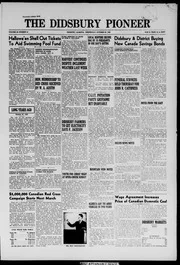
Didsbury pioneer (1946-10-30)

Didsbury pioneer (1946-10-30)

This issue of the "Didsbury Pioneer" from October 30, 1946, serves as a local historical record, providing insights into the community life, news, and advertisements of Didsbury, Alberta, shortly after World War II. It offers a snapshot of post-war society and local concerns. While its content is primarily secular, its presence in the Esoteric Library highlights the value of preserving all forms of human documentation, allowing for a comprehensive understanding of historical consciousness and the diverse realities people have inhabited, distinct from an Out-of-Body Experience.

Western globe (1926-09-23)

Western globe (1926-09-23)

This specific issue of the "Western Globe" newspaper, published on September 23, 1926, offers a window into local news and events from a specific Western community during the Roaring Twenties. It would contain articles on community happenings, advertisements, and potentially national or international news summaries relevant to its readership. While not discussing an Out-of-Body Experience, such historical newspapers are crucial for understanding the collective consciousness and daily realities of people in the past, serving as tangible records within the Esoteric Library's broader collection of human knowledge.

Coleman miner (1909-07-09)

Coleman miner (1909-07-09)

This edition of the "Coleman Miner" newspaper, dated July 9, 1909, documents the life and news of a mining community, likely in Coleman, Alberta, during the early 20th century. It would typically feature reports on mining operations, local events, social news, and perhaps labor issues pertinent to its specific readership. As a historical document, it provides a direct link to the concerns and daily experiences of a past era, offering a grounded perspective on human existence that contrasts with the ethereal nature of an Out-of-Body Experience, yet forms part of our collective history.

Western globe (1907-05-28)

Western globe (1907-05-28)

This particular issue of the "Western Globe" from May 28, 1907, provides a historical snapshot of a community in the early 20th century. It would likely contain local news, advertisements, and reports on regional or national events, reflecting the concerns and daily life of its readers. While its content is secular and focused on mundane affairs, its preservation in an esoteric library emphasizes the breadth of human experience and the importance of historical context in understanding the evolution of thought, even for concepts as profound as an Out-of-Body Experience.

Western globe (1932-08-04)

Western globe (1932-08-04)

This edition of the "Western Globe" newspaper, published on August 4, 1932, offers a historical record of a community during the Great Depression era. It would feature news, social reports, and economic updates, reflecting the challenges and resilience of the period. Such archival materials, though not directly related to an Out-of-Body Experience, are invaluable for understanding the cultural and societal consciousness of the past, providing a tangible link to how people perceived and navigated their world during significant historical moments.

Western globe (1934-11-29)

Western globe (1934-11-29)

This issue of the "Western Globe" from November 29, 1934, provides a historical record of a community's life during the mid-1930s, offering insights into the ongoing impact of the Great Depression and local affairs. It would feature news, advertisements, and social commentary relevant to its readership. While its content is primarily secular, its inclusion in the Esoteric Library underscores the institution's commitment to preserving diverse forms of human knowledge, allowing for a multifaceted understanding of consciousness and historical experience, even far removed from an Out-of-Body Experience.

Western globe (1935-06-13)

Western globe (1935-06-13)

This specific edition of the "Western Globe" newspaper, dated June 13, 1935, captures a moment in time during the 1930s, likely detailing local news, community events, and broader societal issues of the era. As a historical document, it offers a glimpse into the daily lives and concerns of people from a bygone period. While not directly discussing an Out-of-Body Experience, these newspapers contribute to a holistic understanding of human history and consciousness, providing context for how perceptions of reality have evolved over time.

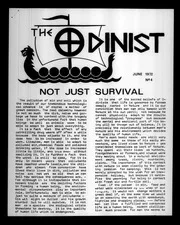
The Odinist 1972-06: Iss 4

The Odinist 1972-06: Iss 4

"The Odinist" was a publication focused on the modern revival of Odinism, a contemporary pagan religion inspired by historical Germanic paganism. This specific issue from June 1972 (Issue 4) would contain articles, essays, and news related to Odinist beliefs, practices, and community. While not directly about an Out-of-Body Experience, pagan traditions often explore spiritual connection to nature, ancestral wisdom, and altered states of consciousness through ritual, offering a different cultural and spiritual lens on experiences beyond the mundane.

China Mail 1926-04-17

China Mail 1926-04-17

This particular edition of the "China Mail" newspaper, dated April 17, 1926, offers a fascinating glimpse into Hong Kong's society and global affairs of the 1920s. It features news articles, editorials, and advertisements reflecting the political, economic, and social concerns of the time. While its content is primarily secular, its inclusion in an esoteric library underscores the value of historical records in understanding the human condition across different eras, providing a tangible connection to past consciousness, far removed from an Out-of-Body Experience but valuable for historical context.

China Mail 1891-09-28

China Mail 1891-09-28

This issue of the "China Mail" from September 28, 1891, serves as a valuable historical artifact, documenting events and daily life in late 19th-century Hong Kong. It provides insights into colonial administration, trade, local news, and social customs of the period. As a primary source, it allows researchers to understand the prevailing worldview and concerns of a bygone era. While not directly addressing an Out-of-Body Experience, these archival newspapers enrich the Esoteric Library's collection by offering diverse perspectives on human experience and historical consciousness.

Visual Alchemy

Visual Alchemy

by Catherine McIntyre

Catherine McIntyre's "Visual Alchemy" explores the symbolic and transformative power of alchemical imagery. Alchemy, historically, was not merely about turning lead into gold but also about spiritual purification and the transformation of the self. This book delves into the rich iconography and philosophical underpinnings of alchemical art, demonstrating how visual metaphors were used to represent profound psychological and spiritual processes. It offers a unique perspective on how inner states, akin to those experienced during an Out-of-Body Experience, were historically understood and depicted.

Vaim

Vaim

by Fosse, Jon

Jon Fosse is a Nobel laureate known for his minimalist and existential plays and prose. "Vaim" (likely a mistranslation or typo, perhaps "Varm" or "Varmt" meaning 'Warm' in Norwegian, or 'Vaim' as a character name) represents his profound exploration of human existence, memory, and the boundaries of reality. His work often delves into the inner lives of characters, touching upon the ephemeral nature of consciousness and the feeling of being detached from one's own experiences. Readers seeking to understand the psychological nuances that might parallel an Out-of-Body Experience through literary art will find Fosse's unique voice compelling.

Plotin et l'Occident

Plotin et l'Occident

by Henry, Paul

Paul Henry's "Plotin et l'Occident" (Plotinus and the West) explores the profound influence of Plotinus, the founder of Neoplatonism, on Western thought. Plotinus's philosophy, particularly his concept of the soul's ascent to the One, delves into the nature of consciousness and its potential to transcend the material world. Henry's scholarship illuminates how Plotinus's ideas about the soul's detachment from the body and its journey through different hypostases laid a crucial philosophical groundwork for later mystical and esoteric traditions, offering a historical lens through which to understand the spiritual dimensions of an Out-of-Body Experience.

Le città invisibili

Le città invisibili

by Italo Calvino

Italo Calvino's "Le città invisibili" (Invisible Cities) is a masterful work of postmodern fiction, presenting a series of fantastical conversations between Marco Polo and Kublai Khan about imaginary cities. Each city is a poetic meditation on memory, desire, signs, and the nature of urban existence. While not directly about an Out-of-Body Experience, Calvino's intricate descriptions evoke a sense of mental travel and detached observation, where the mind constructs and perceives realities beyond the immediate physical. It offers a literary exploration of how consciousness shapes our perception of the world.

Robert Fludd

Robert Fludd

by Joscelyn Godwin

Joscelyn Godwin, a renowned scholar of esotericism, presents a detailed study of Robert Fludd (1574–1637), a prominent English physician, astrologer, and mystic. Fludd's complex cosmological system integrated Christian theology, Hermeticism, and alchemy, envisioning the universe as a vast macrocosm mirroring the human microcosm. This book explores Fludd's intricate diagrams and philosophical ideas about the divine influx and the structure of reality, offering insights into historical attempts to comprehend consciousness and the subtle interconnections that might facilitate an Out-of-Body Experience.

The aspiring adept

The aspiring adept

by Lawrence Principe

Lawrence Principe, a distinguished historian of science, provides a scholarly examination of early modern alchemy in "The Aspiring Adept." This book meticulously details the practical and theoretical pursuits of alchemists, revealing their blend of empirical experimentation with mystical philosophy. Principe highlights the alchemists' quest for both material transmutation and spiritual perfection, often involving intense inner work and contemplation of the subtle forces of nature. His work sheds light on the intellectual and spiritual landscape that informed historical understandings of consciousness and transpersonal states, relevant to an Out-of-Body Experience.

Sartre

Sartre

by Peter Caws

Peter Caws's book provides a comprehensive analysis of Jean-Paul Sartre's influential existentialist philosophy. Sartre's work, particularly "Being and Nothingness," delves deeply into the nature of consciousness, freedom, and the self. Caws illuminates how Sartre grappled with the distinction between "being-in-itself" and "being-for-itself," concepts highly relevant to understanding subjective experience and the feeling of detachment from one's physical form. This philosophical exploration offers a rigorous intellectual framework for contemplating the profound implications of an Out-of-Body Experience and the nature of human existence.

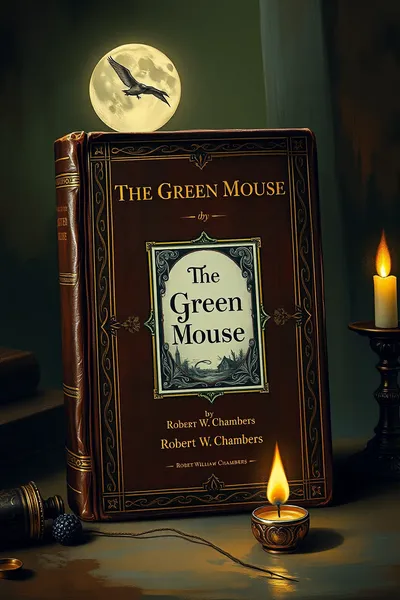
The Green Mouse

The Green Mouse

by Robert W. (Robert William) Chambers

"The Green Mouse" is a collection of short stories by Robert W. Chambers, an American author best known for his influential weird fiction collection "The King in Yellow." This particular volume, published in 1905, showcases Chambers's diverse storytelling, often blending romance with elements of the fantastical and the uncanny. While not explicitly dealing with an Out-of-Body Experience, his narratives frequently explore themes of alternate realities, psychological mystery, and the subtle shifts in perception that hint at worlds beyond the mundane, characteristic of early 20th-century speculative fiction.

Fames trumpet soundinge. 1589

Fames trumpet soundinge. 1589

by Roberts, Henry.

"Fames trumpet soundinge" is a rare historical text published in 1589 by Henry Roberts, a minor Elizabethan poet and pamphleteer. This work, typical of its era, often features allegorical narratives or social commentary, using the metaphor of "Fame's trumpet" to discuss reputation, virtue, or historical events. As a piece of 16th-century literature, it offers a glimpse into the linguistic and cultural landscape of the Elizabethan age, providing a valuable historical context for how concepts of renown and perception were understood, offering a unique, albeit indirect, lens on human experience.

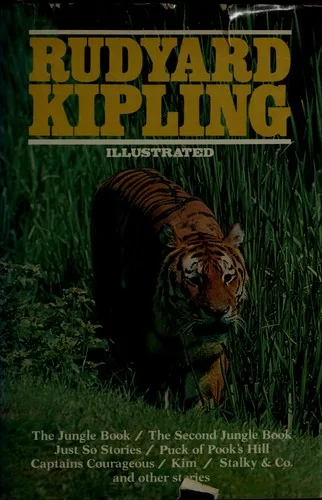
Poems

Poems

by Rudyard Kipling

This collection showcases the diverse poetic talents of Rudyard Kipling, the celebrated author of "The Jungle Book" and "Kim." While not directly addressing an Out-of-Body Experience, Kipling's verses often explore themes of adventure, mysticism, and the human spirit's journey through different cultures and landscapes. His vivid imagery and narrative power can transport the reader, metaphorically echoing the detachment and expansive perspectives sometimes associated with experiences beyond the physical body. These poems offer a rich literary context for understanding the broader human quest for meaning and connection.

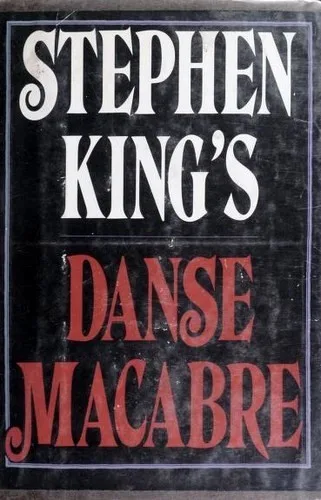
Danse Macabre

Danse Macabre

by Stephen King

Stephen King's "Danse Macabre" is a non-fiction exploration of the horror genre in literature, film, and television. Within its insightful analysis, King discusses the psychological impact of horror and its ability to tap into primal fears and the unknown. While not directly about an Out-of-Body Experience, the genre often plays with themes of altered perception, the fragility of reality, and the uncanny feeling of being disconnected from one's body or environment, providing a cultural lens through which to examine experiences that transcend ordinary perception.

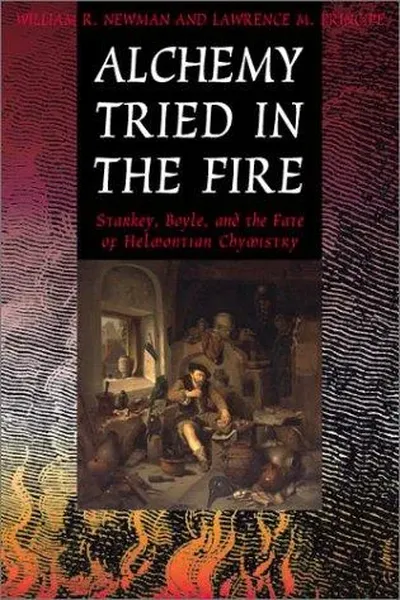
Alchemy tried in the fire

Alchemy tried in the fire

by William R. Newman

William R. Newman's "Alchemy Tried in the Fire" offers a meticulous historical and scientific examination of alchemy, particularly focusing on the work of George Starkey, an American alchemist of the 17th century. Newman debunks many myths surrounding alchemy, revealing its sophisticated experimental practices alongside its philosophical and spiritual dimensions. The book highlights the alchemists' rigorous pursuit of transformation, both material and spiritual, which often involved intense mental focus and an understanding of subtle processes, providing a scholarly context for understanding historical quests for altered states of consciousness.

Science of Breath

Science of Breath

"Science of Breath" is a foundational text by Yogi Ramacharaka (a pseudonym for William Walker Atkinson), introducing readers to the ancient yogic practices of pranayama, or breath control. The book systematically explains various breathing techniques and their physiological and spiritual benefits, emphasizing how conscious breathwork can enhance mental clarity, vitality, and spiritual awareness. These practices are often considered essential preparatory steps in many esoteric traditions for achieving altered states of consciousness, including those that can lead to an Out-of-Body Experience.

The Divine Pymander

The Divine Pymander

"The Divine Pymander" is a central text within the Hermetic Corpus, attributed to the legendary figure Hermes Mercurius Trismegistus. This ancient philosophical and spiritual work presents dialogues and treatises on cosmology, the nature of God, the human soul, and spiritual regeneration. It outlines a path to gnosis, or divine knowledge, often involving the ascent of the soul and the understanding of universal principles. This foundational esoteric text provides profound insights into the spiritual journey and the potential for consciousness to transcend the physical, deeply relevant to an Out-of-Body Experience.

Esoteric Library
Browse Esoteric Library
📚 All 52,000+ Books 🜍 Alchemy & Hermeticism 🔮 Magic & Ritual 🌙 Witchcraft & Paganism Astrology & Cosmology 🃏 Divination & Tarot 📜 Occult Philosophy ✡️ Kabbalah & Jewish Mysticism 🕉️ Mysticism & Contemplation 🕊️ Theosophy & Anthroposophy 🏛️ Freemasonry & Secret Societies 👻 Spiritualism & Afterlife 📖 Sacred Texts & Gnosticism 👁️ Supernatural & Occult Fiction 🧘 Spiritual Development 📚 Esoteric History & Biography
Esoteric Library
📑 Collections 📤 Upload Your Book
Account
🔑 Sign In Create Account
Info
About Esoteric Library